

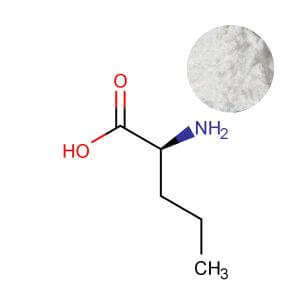
L-Citrulline Powder
| Product Name | L-Citrulline Powder |
| CAS Number | 372-75-8 |
| Appearance | White crystalline powder |
| Purity | ≥ 99.0% (by HPLC) |
| Packaging | 1 kg/bag, 5 kg/bag, 25 kg/drum |
| MOQ | 25 kg |
HPLC-Verified L-Citrulline Powder: Clinical Nitric Oxide Positioning for Premium Pre-Workout Formats
Fermentation-derived L-Citrulline Powder has become the active ingredient of choice for premium nitric oxide positioning, outpacing direct L-arginine supplementation across global sports nutrition portfolios. Bulk L-Citrulline Powder sourced from a spec-verified L-Citrulline Powder supplier now anchors pre-workout, stick-pack, and RTD formats that require clinical dosing without capsule-volume constraints. Formulators and procurement teams evaluating L-Citrulline Powder wholesale channels increasingly prioritize fermentation provenance over synthetic routes. Lot-to-lot COA consistency, audit-ready traceability, and USP-aligned HPLC identity testing close the trust loop between R&D validation and procurement risk control.
Clinical Nitric Oxide Evidence and the Arginine Paradox
Clinical differentiation in nitric oxide supplementation rests on a well-documented physiological mechanism, yet translating that science into compliant DTC claims remains the central challenge for brand owners. L-Citrulline bypasses splanchnic first-pass arginase metabolism, converting to L-arginine in the kidneys rather than the liver. This pathway delivers significantly higher peak plasma L-arginine AUC and Cmax than direct L-arginine supplementation (P < 0.01), with oral bioavailability near 80% versus 20-50% for L-arginine.
| Pharmacokinetic Parameter | L-Citrulline | L-Arginine |
|---|---|---|
| Oral bioavailability | ~80% | 20-50% |
| Peak plasma arginine | Higher AUC/Cmax (P < 0.01) | Baseline |
| First-pass metabolism | Bypassed | Extensive |
| Tmax (plasma arginine, 6g free base) | 120 min | Variable |
Plasma citrulline peaks within 60 minutes of oral dosing, while plasma arginine Tmax following citrulline supplementation reaches 120 minutes for the free base form. However, EFSA rejected the citrulline-malate fatigue claim (EFSA-Q-2011-00931); no authorized citrulline health claims exist under EU Regulation 432/2012, meaning EU-market products cannot carry functional statements. US-market brands may use structure-function claims such as "supports nitric oxide production" under DSHEA with appropriate disclaimers. The clinical evidence base supports premium positioning only when paired with audit-ready documentation and batch-specific COA verification.
Format Feasibility and Synergistic Stacking for High-Dose Nitric Oxide Delivery
Clinical dosing established, the next commercial bottleneck is format feasibility. At 3-6g per serving, L-Citrulline exceeds the fill capacity of standard capsules and gummies, restricting viable delivery to powder blends, stick packs, and RTD beverages. Hygroscopicity compounds this challenge: powder clumping accelerates active degradation and dilutes assay results, directly triggering Supplement Facts label failures during third-party verification.
- Beta-Alanine: supports muscular endurance when stacked at 2-3g per serving, with tingling sensation managed through dose titration
- L-Ornithine HCl: serves as a metabolic precursor in the urea cycle, supporting ammonia detoxification alongside NO pathway activity
- Agmatine Sulfate: chemically stable but more hygroscopic, requiring isolated blending or moisture-barrier packaging
Non-stimulant pre-workout formats command premium pricing, supported by consumer willingness to pay for clinically-backed ingredient matrices. RTD formats are growing faster than other sports performance categories, driven by convenience and clean-label transparency. Stick packs and liquid concentrates offer format flexibility for pre-workout and endurance scenarios. These format choices directly influence TTM: powder blends can reach market in 8-12 weeks versus 20-24 weeks for gummy or capsule formats requiring stability testing.
Particle Engineering and Air-Freight Protection for CMO Line Efficiency
Compressing TTM to 8-12 weeks burdens CMO lines with processing high-dose actives without throughput loss. With format selection settled, CMO production lines now face the physical reality of L-Citrulline handling. Standard 80 mesh specification with ≥95% passing through 80 mesh supports direct compression and high-speed capsule filling without secondary granulation. Loss on Drying ≤0.5% and controlled bulk density ensure uniform blend homogeneity, reducing waste rate and machine downtime during stick-pack and sachet filling.
- Particle size ≥95% through 80 mesh: eliminates secondary milling, supporting direct compression and high-speed filling
- Loss on Drying ≤0.5%: minimizes clumping risk during blending and extends powder flow stability
- Water solubility ~200 g/L: supports cold-water dissolution for RTD and stick packs
- 24-month shelf life reduces inventory write-offs for bulk buyers
Air freight introduces additional risk: low-pressure cargo holds and tarmac temperature swings between -20°C and 50°C can trigger moisture migration and caking. Moisture-barrier packaging with desiccant liners preserves powder integrity across intercontinental shipping. These physical safeguards yield measurable financial protection: reduced rejection rates, fewer production stoppages, and shorter TTM by 8-12 weeks compared to formats requiring additional processing steps.
Global Regulatory Navigation and Label Claim Safe Zones
Production efficiency secured, the next gate is regulatory clearance across export markets. L-Citrulline holds GRAS status under FDA regulations for conventional foods and dietary supplements in the United States. In the European Union, it is classified as Not Novel Food, permitting free sale across member states. No restrictions apply under international narcotics or precursor chemical conventions.
Titration-based COAs were historically accepted as sufficient identity proof. USP has published an L-Citrulline dietary supplement monograph with an HPLC identity method capable of distinguishing L-citrulline from N-acetyl-leucine - a critical safeguard following the 2014 Medisca recall, where a COA claiming 99.88% purity contained no L-citrulline at all. Non-specific titration methods produced identical readings for both compounds, exposing a gap that established HPLC identity testing as the minimum audit threshold.
- United States: structure-function claims permissible under DSHEA with disclaimer; no FDA supplement approval exists
- European Union: zero authorized health claims; EFSA rejected citrulline-malate fatigue recovery claim (EFSA-Q-2011-00931)
- Label claim substitution: "supports nitric oxide production" replaces "muscle pump" in EU-compliant positioning
- Tier-1 audit requirement: HPLC identity confirmation, L-isomer verification, batch-specific COA with method specification
Brand owners targeting multiple markets must maintain separate claim libraries and label templates. This regulatory complexity directly impacts brand equity: a single non-compliant claim can trigger market withdrawal, while audit-ready documentation accelerates retailer onboarding by 6-10 weeks.
Total Cost of Ownership and Supply Chain Resilience for Bulk Procurement
Regulatory pathways mapped, the final decision layer belongs to procurement directors and brand CFOs. China accounts for over 80% of global L-Citrulline production, with Shaanxi province hosting more than 70% of active suppliers, while large-scale fermentation capacity is concentrated in Shandong and other provinces serving high-volume export contracts. In 2024, global supply constraints introduced measurable volatility in raw material availability, pressuring pricing stability and manufacturer output.
- Dual sourcing strategy: India and North America as secondary origins, maintaining China contracts for cost efficiency
- Safety stock buffer: 4-6 weeks of finished powder inventory insulates against lead time volatility
- Batch consistency: ≥99.0% HPLC purity with ≤0.5% LoD reduces secondary purification, cutting waste rate and rework
- Formulation flexibility: temporary switches to citrulline malate or arginine/ornithine blends maintain NO pathway coverage
Total cost of ownership extends beyond per-kilogram pricing. 99% HPLC purity eliminates secondary refining steps. Standardized 80 mesh particle size reduces tablet rejection and filling line downtime. A 24-month shelf life lowers inventory write-offs and supports extended supply chain flexibility. When evaluating L-Citrulline Powder wholesale channels, procurement teams should calculate cost per effective dose rather than cost per kilogram. Effective dose cost incorporates assay purity, overfill loss, and moisture-related rejection - variables per-kilogram pricing ignores. A 1% overfill loss on a 25 kg batch, for instance, represents 250 g of active material that never reaches the finished product.
Accelerate R&D Validation and Procurement Approval with a Documented Sample
Technical specification review and supply chain risk assessment converge at a single decision point: sample evaluation with complete documentation. A sample request returns not only material but a full technical and compliance package - HPLC assay data, ICP-MS heavy metal screening, USP <61/62> microbiological results, allergen and GMO statements, and batch-specific COA. This eliminates the R&D verification bottleneck and removes procurement compliance uncertainty before commercial commitment. Secure a lot-specific L-Citrulline Powder sample dossier to begin formulation trials with audit-ready confidence.
Frequently Asked Questions
Related Products

Request a Quote for L-Citrulline Powder
Tell us your required quantity and application. Our team will help you evaluate product specifications, pricing, samples, and supply options.