
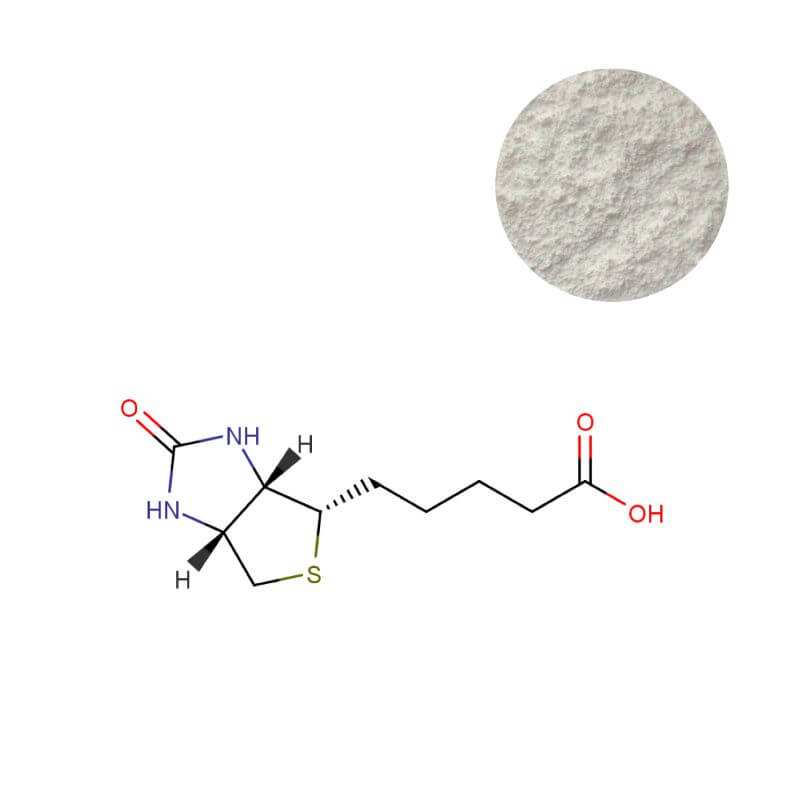
Biotin Powder
| Product Name | Biotin Powder (Vitamin B7) |
| CAS Number | 58-85-5 |
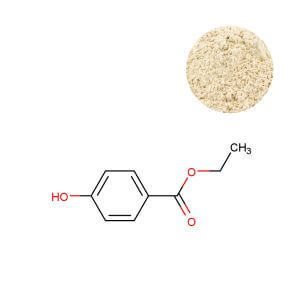
| Appearance | White or off-white crystalline powder |
| Purity | 99% min. (Pure), 1% & 2% (Trituration grades) |
| Packaging | 1 kg/tin, 5 kg/tin, 25 kg/drum |
| MOQ | 1 kg |
Biotin Powder (≥99% HPLC): Science‑backed Versatility for Premium Hair, Skin & Metabolic Health Formulations
Formulators face a common challenge: how to turn a well‑known vitamin into a true competitive differentiator. Biotin (Vitamin B7) is widely recognised by consumers, yet most finished products rely on minimal doses without leveraging its full molecular potential. A premium Biotin Powder – assayed at ≥99% by HPLC and supported by a comprehensive Certificate of Analysis (COA) – changes this dynamic. It allows brands to build evidence‑informed formulas that go beyond superficial “beauty from within” claims, addressing energy metabolism, inflammatory modulation and structural tissue integrity. For procurement teams looking for a bulk Biotin supplier that guarantees batch‑to‑batch consistency, the critical question is no longer “does it work?” but “how consistently can it perform under real‑world production conditions?” From a strategic brand perspective, locking in a verified ≥99% purity grade is the single most effective way to differentiate a premium supplement line from mass‑market alternatives, directly supporting higher price points and consumer trust.
Molecular Mechanisms: Why Biotin Acts Beyond Basic Metabolism
Biotin functions as an essential cofactor for five human carboxylases – acetyl‑CoA carboxylase, pyruvate carboxylase, propionyl‑CoA carboxylase, 3‑methylcrotonyl‑CoA carboxylase and β‑methylcrotonyl‑CoA carboxylase. These enzymes govern fatty acid synthesis, gluconeogenesis and branched‑chain amino acid catabolism. However, recent research has uncovered a second layer of activity: biotin modulates gene expression through histone biotinylation and influences nuclear factor‑κB (NF‑κB) signalling pathways (doi: 10.3390/nu16152444). From a strategic formulation perspective, this dual role means that a properly dosed Biotin ingredient can simultaneously support cellular energy production and help maintain normal inflammatory balance – a combination rarely exploited in mainstream supplement lines. Practically speaking, this NF‑κB modulation offers a mechanistic rationale for using biotin in inflammatory skin conditions or metabolic stress formulas – a layer of differentiation few brands currently exploit in their finished product narratives. For brands developing products aimed at metabolic wellness or skin resilience, referencing this mechanism adds genuine scientific depth to marketing claims, moving beyond generic “supports hair and nails” statements. This molecular versatility means formulators can design multi‑benefit products (e.g., a single tablet addressing both energy metabolism and skin health) without adding extra active ingredients – effectively reducing formulation complexity and per‑unit production costs.
Quality Benchmarks: What Defines a Reliable Biotin Powder Supplier
In a commodity ingredient market, quality differentiation starts with analytical transparency. A trustworthy Biotin Powder supplier will provide a batch‑specific COA covering three critical areas:
- Purity & identity: HPLC assay ≥99% (on dried basis) plus specific rotation (+89° to +93°) to confirm D‑biotin isomer integrity.
- Trace metal control: ICP‑MS limits for Pb (≤2.0 mg/kg), As (≤1.0 mg/kg), Cd (≤0.5 mg/kg) and Hg (≤0.1 mg/kg) – essential for global regulatory acceptance.
- Microbiological safety: TAMC ≤1,000 CFU/g, absence of E. coli and Salmonella spp.
For procurement teams, this directly translates to lower compliance risk and faster market access. A certified COA eliminates the need for duplicate testing and shortens the supplier qualification cycle. Moreover, a premium GMP Biotin partner will offer 1% and 2% trituration grades alongside the pure 99% powder, giving formulators flexibility for low‑dose blends without compromising homogeneity. When sourcing bulk Biotin, insist on residual solvent data (USP <467>) – a detail often overlooked but critical for clean‑label certifications. This level of analytical rigor means that a brand’s R&D team can bypass the usual 4‑6 week vendor validation phase and move directly to pilot batches, shaving significant time off the product launch calendar.
Formulation in Practice: Stability, Synergy & Delivery Solutions
Integrating Biotin Powder into finished products requires attention to three practical aspects: dosage accuracy, partner ingredients and stability safeguards. Below is a typical dosage matrix for common supplement formats:
| Application | Typical Daily Dose (Biotin) | Key Compatibility Notes |
|---|---|---|
| Hair / Skin / Nail tablets or gummies | 1,000 – 5,000 mcg | Often combined with zinc, collagen or silica for synergistic effect. |
| Multivitamin / B - complex | 30 – 300 mcg | Works well with other B vitamins; pre‑blending with a carrier (e.g. MCC) prevents segregation. |
| Metabolic health powders | 300 – 900 mcg | Stable in neutral pH; avoid strong acidic conditions during wet granulation. |
An effective formulation requires careful management of two hidden challenges: light sensitivity and ultra‑low inclusion homogeneity. Biotin degrades slowly under direct light, so opaque packaging (foil bags, HDPE drums) is mandatory for raw material storage. For finished tablets, film‑coating or blister packs provide additional protection. It's worth noting that even at 99% purity, biotin constitutes a tiny fraction of the total formula (often <0.1% by weight). Therefore, a geometric dilution step using a non‑reactive carrier (e.g., rice hull powder or calcium phosphate) is a standard industry practice to guarantee content uniformity. A proven industry practice to mitigate this risk is the use of a pre‑blended trituration grade (e.g., 1% or 2% biotin in maltodextrin), which guarantees particle‑level distribution and eliminates the need for in‑house geometric dilution – saving both time and analytical validation costs. From a strategic formulation perspective, relying on a Biotin exporter that provides pre‑dispersed trituration grades (1% or 2%) can completely eliminate the risk of hot spots and rejected batches.
Supply Chain Resilience & Total Cost of Ownership for Biotin Procurement
Price per kilogram is only one variable in the total cost equation. A smart sourcing strategy evaluates three hidden factors: batch‑to‑batch consistency, documentation lead time and backup supply options. Premium Biotin suppliers invest in HPLC‑verified production that maintains assay variation within ±1.5% across lots. For a brand producing 500,000 bottles per year, this consistency avoids costly reformulations or product recalls due to potency drift. Additionally, a responsive partner delivers a complete technical dossier (COA, allergen statement, GMP declaration) within 24 working hours – a critical advantage when regulatory bodies request documentation during import clearance. From a total cost of ownership (TCO) perspective, a single recall caused by out‑of‑spec biotin can wipe out the cost savings of 50,000 kg of cheaper powder – making documented quality the true long‑term value driver.
Consider a typical procurement checklist for buying Biotin in bulk:
- Does the supplier offer both pure (99%) and diluted (1%, 2%) grades to match your production scale?
- Are ICP‑MS heavy metal results included for every lot – not just once per year?
- Can they provide a stability study under ICH conditions (25°C/60% RH) for 24 months?
- Is there a secondary manufacturing site or safety stock to prevent force majeure disruptions?
For procurement teams, this directly translates to lower total ownership cost. Paying a slight premium for a fully documented, GMP‑certified Biotin Powder often proves cheaper in the long run than managing rejected shipments, production downtime or compliance fines.
Next Steps: Accelerate Your Product Launch with Reliable Technical Support
You now have a clear roadmap: from the molecular versatility of biotin (backed by 2024 mechanistic research) to the practical quality checks that separate a commodity powder from a strategic asset. Whether you are developing a high‑end beauty supplement, a metabolic support blend or a paediatric multivitamin, the right Biotin ingredient partner makes the difference between a “me‑too” product and a scientifically defensible formulation. Reduce your development risk and fast‑track your regulatory filing by requesting a complimentary sample and the complete technical dossier. Request Your Complimentary Sample & Technical Dossier – our team will deliver batch‑specific COA, stability summary and formulation guidance within one business day.
Frequently Asked Questions
Share this product
Related Products
Ready to get started?
Contact our team for technical specifications, pricing, and customized solutions.