

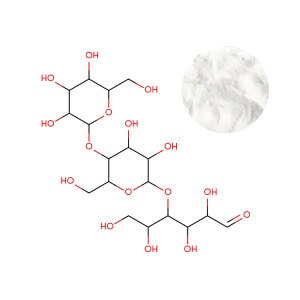
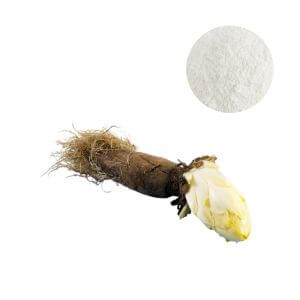
FOS Prebiotic Powder
| Product Name | Fructooligosaccharides (FOS) Powder |
| CAS Number | 308066-66-2 |
| Appearance | White to off-white fine powder |
| Purity | ≥ 95.0% (by HPLC) |
| Packaging | 25kg, 50kg, 100kg, etc./ drum |
| MOQ | 25 kg |
Clinically Dosed FOS Prebiotic Powder for Synbiotic Gummies and Direct-Compression Tablets
A clinically anchored prebiotic platform now defines Bulk Fructooligosaccharides (FOS) Powder, rewarding brands that source through a specification-verified FOS supplier. A meta-analysis of eight randomized controlled trials confirms that doses above 5 g/day produce a weighted mean difference of 1.116 in colonic Bifidobacterium counts, the dose-response window formulators now design around. Procurement confidence rests on lot-to-lot COA traceability and audit-ready documentation.
Clinical Dose-Response as the Foundation for Defensible DTC Claims
Unless the finished product delivers the preceding dose window, commercial value remains theoretical; formulators must close the gap between trial conditions and shelf-stable dosage forms. Dose and duration stratification in the same meta-analysis shows interventions above 5 g/day produced a Bifidobacterium effect size of 1.116 (95% CI 0.685-1.546), nearly double the 0.521 observed at or below 5 g/day, while durations beyond four weeks outperformed shorter regimens. Bacteroides and Enterobacteriaceae showed no significant shifts, and adverse gastrointestinal symptoms matched control, a tolerability profile that supports sustained daily use rather than trial-and-abandon behavior.
| Clinical Parameter | Observed Effect | Commercial Implication |
|---|---|---|
| Bifidobacterium spp. (overall) | WMD 0.579 (95% CI 0.444-0.714) | Supports structure/function prebiotic positioning |
| Dose >5 g/day | WMD 1.116 (95% CI 0.685-1.546) | Justifies a clinically studied daily serving claim |
| Duration >4 weeks | WMD 0.841 (95% CI 0.436-1.247) | Enables subscription and 30-day supply retail models |
| Harmful bacteria | No significant change | Reduces risk of off-target microbiome claims |
Animal studies suggesting a link between FOS fermentation and GABA synthesis further separate the ingredient from conventional fiber, and DTC teams gain a defensible science narrative supporting premium price-per-serving positioning rather than discount-driven volume. A wholesale FOS prebiotic powder program anchored to this evidence lets procurement defend a higher landed cost against marketing's margin targets.
Synbiotic Dosage Forms That Carry the Clinical Dose Without Sacrificing Stability
Clinical evidence sets the dose; dosage form decides whether it survives processing, a point where FOS 95% powder grades and co-ingredients diverge sharply. FOS is freely soluble in water but hygroscopic and prone to Maillard browning under heat, so gummy and bar formats require careful control of thermal exposure and moisture migration. Typical use levels run 5-20% in gummies and bars, 2-50% in powders, and 1-5% in beverages, giving product managers room to hit the 7.5-15 g clinical window through a single stick pack or a two-gummy serving.
- Pair FOS with specific probiotic strains in synbiotic capsules, where the prebiotic substrate supports viability of co-delivered strains in formulated synbiotic systems and gives the label a dual-mechanism story.
- Blend FOS with maltodextrin or microcrystalline cellulose as a carrier before low-dose dispersion to prevent localized moisture pockets in stick-pack powders.
- For gummy formats, pre-dissolve FOS into the syrup phase below 70 °C and pair with pectin or gelatin systems that tolerate its mild acidity without syneresis.
- In protein bars, combine FOS with soluble corn fiber or resistant dextrin to balance binding, sweetness, and the 7.5 g clinical threshold per bar.
- For synbiotic sachets, co-process FOS with silicon dioxide at 0.5-1% to maintain flow during high-speed vertical form-fill-seal dosing.
The synbiotic pairing of FOS with targeted probiotic strains supports premium pricing and brand differentiation in functional dairy and snack formats, and the global synbiotic product market is expanding at roughly 8% annually toward USD 1.78 billion by 2033. A locked 7.5 g clinical dose in a stable gummy or stick pack turns commodity prebiotic into a dosage-form asset, shortening R&D-to-SKU distance and defending margin.
Direct-Compression Grade FOS That Removes Wet Granulation from the CMO Route
Without agglomeration-free flow through capsule fillers and tablet presses, dosage-form ambition collapses; application-grade selection becomes a financial decision, not a technical footnote. Standard FOS is hygroscopic and prone to pseudo-agglutination under humid plant conditions, forcing many CMOs into wet granulation, drying, and sizing steps that add unit operations, cleaning validation burden, and batch-failure risk. Where a direct-compression grade is specified, FOS is engineered for flow and compressibility to enable tablet manufacture without wet granulation; application-optimized variants cover instantized, beverage-dispersible, and gummy-compatible premixes.
| Production Route | Unit Operations | Commercial Consequence |
|---|---|---|
| Standard FOS + wet granulation | Granulation, drying, sizing, blending, compression | Longer TTM, higher scrap risk, cleaning validation load |
| Direct-compression grade FOS | Pre-blend with 0.5-1% magnesium stearate, compress directly | Fewer unit operations, faster batch release, lower waste |
Formulation guidance for direct-compression grades is explicit: blend with 0.5-1% magnesium stearate and compress directly, or pre-blend small quantities with a carrier such as maltodextrin, MCC, or rice flour for uniform low-dose distribution. Removing wet granulation shortens the route from ingredient release to finished-goods release, reduces scrap attributable to granulation over-wetting and drying variability, and frees CMO capacity for additional SKUs. Low-pressure holds and tarmac temperature swings accelerate moisture pickup; foil-lined drums with desiccant preserve flowability, preventing assay-passing lots from failing on the filling line.
Regulatory Claim Architecture Across US and EU Markets
Line efficiency delivers a batch; claim architecture determines whether that batch can be sold with the wording the brand has already put into its DTC funnel. GRAS Notice No. 44 covers FOS at up to 20 g/day for adults and 4.2 g/day for infants under one year of age, excluding infant formula applications; "prebiotic" has no standalone regulatory definition in the US, allowing fiber and structure/function language within general labeling rules. EFSA found no established cause-and-effect relationship for FOS under Regulation (EC) No 1924/2006, and prebiotic and gut flora health claims for FOS are not authorized in the EU, while fiber content claims such as "source of fiber" follow separate nutrition claim thresholds.
- US labels can pair "prebiotic fiber" with digestive regularity and calcium absorption structure/function statements, provided disease claims are avoided.
- EU labels should lead with compliant fiber nutrition claims and avoid unapproved prebiotic or gut flora health claims.
- Canada, Australia, and India each maintain distinct prebiotic claim thresholds, so a single core claim set should be localized rather than translated.
- Batch-specific COA, TDS, and SDS files should travel with every sample so regulatory affairs can populate the destination-market dossier without a second request cycle.
A claim matrix locked before label artwork prevents the most expensive compliance failure: a packaging reprint after the first production run. A FOS raw material partner supplying COA, TDS, SDS, and heavy-metal reports per lot turns regulatory review into a document check, compressing multi-market launch and protecting margin premium.
Accelerate R&D Validation with a Documented FOS Sample
Two bottlenecks separate a promising specification from a purchase order: analytical verification and pilot-scale trials. Requesting a sample of this FOS 95% powder routes directly to a technical package that includes the lot-specific COA, TDS, SDS, heavy-metal report, and application-grade guidance for direct compression, synbiotic sachets, and gummy premixes. R&D gains a clinically anchored dose starting point and the powder for bench trials; procurement gains the documentation set needed to clear supplier qualification before the first commercial batch is quoted. Secure a documented FOS prebiotic powder sample kit for formulation trials.
Frequently Asked Questions
Related Products
Request a Quote for FOS Prebiotic Powder
Tell us your required quantity and application. Our team will help you evaluate product specifications, pricing, samples, and supply options.