
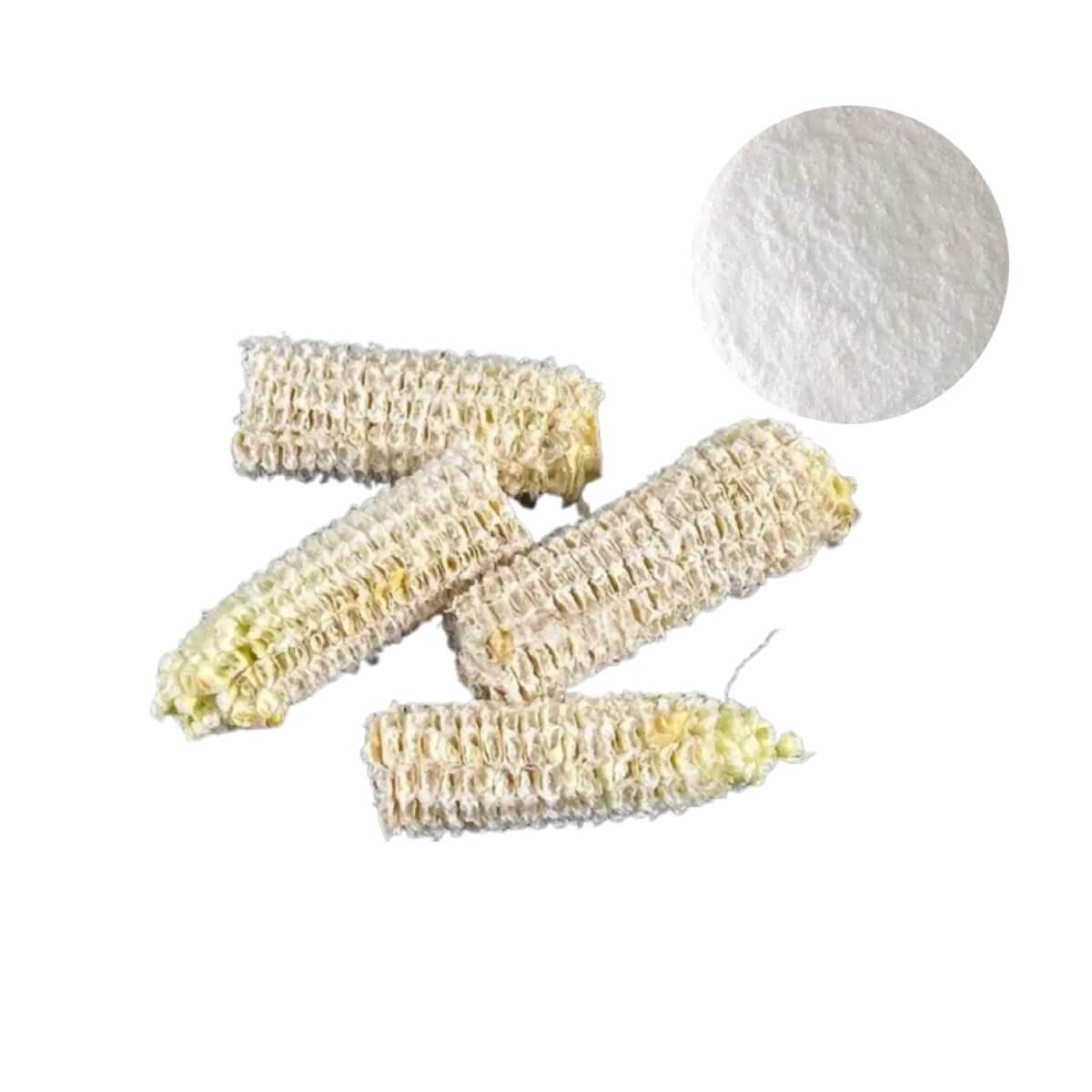
XOS Prebiotic Powder
| Product Name | XOS Prebiotic Powder (Xylooligosaccharide) |
| CAS Number | 87-99-0 |
| Appearance | White to off-white fine powder |
| Purity | ≥95.0% / ≥70.0% (by HPLC) |
| Packaging | 1 kg/bag, 5 kg/bag, 25 kg/drum |
| MOQ | 5 kg |
Clinically Validated Low-Dose Prebiotic for Premium Gummies, RTD Beverages & Capsules — XOS Prebiotic Powder
Bulk XOS Prebiotic Powder delivers bifidogenic efficacy at one-fifth the dose of traditional prebiotics, unlocking premium formulation flexibility and DTC differentiation. Spec-verified XOS Prebiotic Supplier documentation — including lot-to-lot COA, stability archives, and audit-ready traceability — bridges R&D validation with procurement risk control.
Low-Dose Clinical Efficacy as a Brand Trust Anchor and DTC Differentiation Lever
Mechanistic precision drives consumer trust. XOS exploits a narrow enzymatic gate: beta-1,4 xyloside linkages are cleaved selectively by intracellular beta-xylosidases expressed predominantly in Bifidobacterium adolescentis, B. longum, and B. infantis. Most Bacteroides, Clostridium, and Enterobacteriaceae species lack this enzymatic machinery, rendering XOS "invisible" to gas-producing competitors. The fermentation outcome shifts toward short-chain fatty acids with markedly reduced gas generation — a tolerability advantage that directly protects brand reputation and repeat-purchase metrics.
| Clinical Endpoint | XOS (0.7 g/day for regularity; 1.4 g/day for bifidobacteria) | FOS (5-10 g/day) / GOS (≥8 g/day) | Reference |
|---|---|---|---|
| Bifidobacteria increase | Statistically significant | Statistically significant | Yi et al., 2023 |
| Effective daily dose | 0.7 g (regularity) / 1.4 g (bifidobacteria) | 5-10 g (FOS) / ≥8 g (GOS) | NCT01861964 |
| Gastrointestinal distress | Minimal | Higher incidence | Yi et al., 2023 |
Supporting premium DTC claims such as "Clinically shown to boost bifidobacteria at 1 gram daily" and "Supports gut microbiome balance with minimal bloating" becomes commercially defensible when anchored to this low-dose profile. For brand owners, this evidence base provides a scientific narrative that differentiates XOS-formulated products at retail, justifying premium price points while lowering the risk of consumer complaints related to digestive discomfort — a direct safeguard for brand equity and customer lifetime value.
Formulation Agility Across High-Growth Dosage Forms and Ingredient Synergies
Clinical efficacy, however, remains theoretical unless translated into stable, consumer-ready finished formats. The same low-dose advantage that drives clinical outcomes becomes a formulation engineer's strategic asset: at 1-2 grams per serving, XOS occupies minimal formula real estate, freeing capacity for complementary actives without exceeding capsule count, gummy weight, or RTD volume constraints. This real-estate efficiency proves especially valuable in zero-sugar gummies, where every gram affects texture, mouthfeel, and processing behavior.
- Zero-sugar gummies: A flagship 2025 product launch of a 3-in-1 zero-sugar gummy (XOS prebiotic + probiotic + postbiotic) validated commercial scalability, with the formulation delivering XOS at 50 mg per piece — a dosing strategy that supports multi-piece daily consumption rather than single-piece high loading; XOS withstands 120°C processing for up to 1 hour without degradation across pH 2.5-8.0, enabling direct incorporation into hot-pour gummy manufacturing.
- RTD beverages & functional shots: XOS dissolves completely in water with zero precipitation or clouding, maintaining clarity through HTST pasteurization (pH 2.5-4.0, 72°C for 15 seconds) — an ideal fit for premium functional waters and wellness shots.
- Capsules & stick packs: A compact daily dose (1,000-1,400 mg) enables single-capsule delivery, reducing production bottlenecks and improving consumer adherence.
Strategic ingredient pairings further amplify formulation impact: combining XOS with spore-forming probiotics (Bacillus coagulans, Bacillus subtilis) creates synbiotic systems where XOS acts as a selective fuel source; pairing with postbiotic yeast ferments (Saccharomyces cerevisiae) delivers a triple-action gut health proposition; blending with other low-dose fibers such as partially hydrolyzed guar gum (PHGG) supports "prebiotic fiber blend" claims that resonate with fiber-conscious consumers. For brand product managers, this formulation agility directly accelerates concept-to-commercialization timelines and builds a defensible innovation pipeline that competitors cannot easily replicate.
Powder Physicals as CMO Line Efficiency Drivers and Air-Freight Integrity Protectors
Formulation concepts succeed or fail on the production floor — and physical parameters are the decisive factors. ≥95% through 80 mesh ensures uniform die filling during high-speed tableting, eliminating secondary granulation and cutting 2-3 weeks from lead time while reducing manufacturing costs by an estimated 12-18% — savings attributable to potential reductions in granulation steps, energy consumption, and QA retesting overhead. Moisture content held at ≤5.0% and ash at ≤0.3% minimize punch sticking and die adhesion, lowering scrap rates and unplanned downtime — two critical levers for protecting both TTM and gross margin.
Air freight introduces a separate set of physical stressors. Cargo holds on transpacific routes operate at cabin pressures equivalent to 2,400-meter altitude, with tarmac temperature swings from -20°C to +40°C. These extremes accelerate moisture migration and surface crystallization in powders with marginal stability. The ≤5.0% LOD specification provides a buffer against deliquescence during transit; combined with triple-layer moisture-barrier packaging — aluminized composite bags, desiccant sachets, and corrugated outer cartons — the powder reaches the CMO facility with physical properties unchanged from factory release. For procurement teams, this performance predictability eliminates the cost and delay of incoming material rejection or process re-validation, directly protecting supply-chain continuity and landed-cost integrity.
Regulatory Pathways as Market Access Accelerators and Label Claim Enablers
Regulatory clearance remains the gatekeeper to commercial launch. XOS holds both FDA GRAS status (GRN 000458 and GRN 000543, with FDA no-objection letters) and EU Novel Food authorization under Regulation (EU) 2015/2283, covering human nutrition applications across general populations. Brands should note, however, that FDA has not issued a formal fiber recognition letter for XOS; fiber claims on U.S. labels require AOAC method validation. These pre-existing determinations spare new entrants the 8-12 week novel food submission window, accelerating market access and reducing regulatory risk exposure. For brand compliance officers, the ingredient arrives "shelf-ready" for major markets — no bespoke toxicology packages or application-specific dossiers required.
| Market | Regulatory Status | Key Authorization |
|---|---|---|
| United States | FDA GRAS | GRN 000458 (2013), GRN 000543 (2015) |
| European Union | Novel Food authorized | Regulation (EU) 2015/2283 |
| Japan | FOSHU recognized | Foods for Specified Health Uses system |
| China | GB/T 35545-2017 | National standard compliance |
From a DTC marketing standpoint, structure-function claims — "supports digestive health," "promotes gut microbiome balance," "helps maintain healthy bifidobacteria levels" — are permissible in the U.S. without pre-approval, enabling brands to communicate clinical benefits directly to health-conscious consumers. The EU's Novel Food authorization (2018, Regulation EU 2015/2283) provides the foundational regulatory clearance for European market access, while the globally harmonized GRAS/Novel Food framework supports a unified label strategy across regions, reducing artwork variations and compliance overhead. For brand owners, this regulatory foundation compresses total market-access timelines by 3-4 months and cuts legal/regulatory spend by an estimated 25-30% compared with ingredients requiring de-novo clearance — capital that can be redirected toward consumer acquisition and product innovation.
Accelerate R&D Validation with Full Technical Dossiers and Reserved Samples
R&D teams evaluating XOS Prebiotic Powder need immediate access to batch-specific analytical data — not generic specifications. Each sample shipment includes complete technical documentation: 24-month stability archives, allergen and GMO declarations, residual solvent testing per USP <467>, and microbiological certificates covering all five USP <61>/<62> parameters. Procurement receives traceability records linking each batch to raw-material sourcing, production parameters, and third-party verification results — enabling rapid internal qualification and audit-ready compliance. Secure a reserved XOS Prebiotic Powder sample with full compliance dossier and validate your target formulation within a single development cycle.
Frequently Asked Questions
Share this product
Related Products
Ready to get started?
Contact our team for technical specifications, pricing, and customized solutions.