
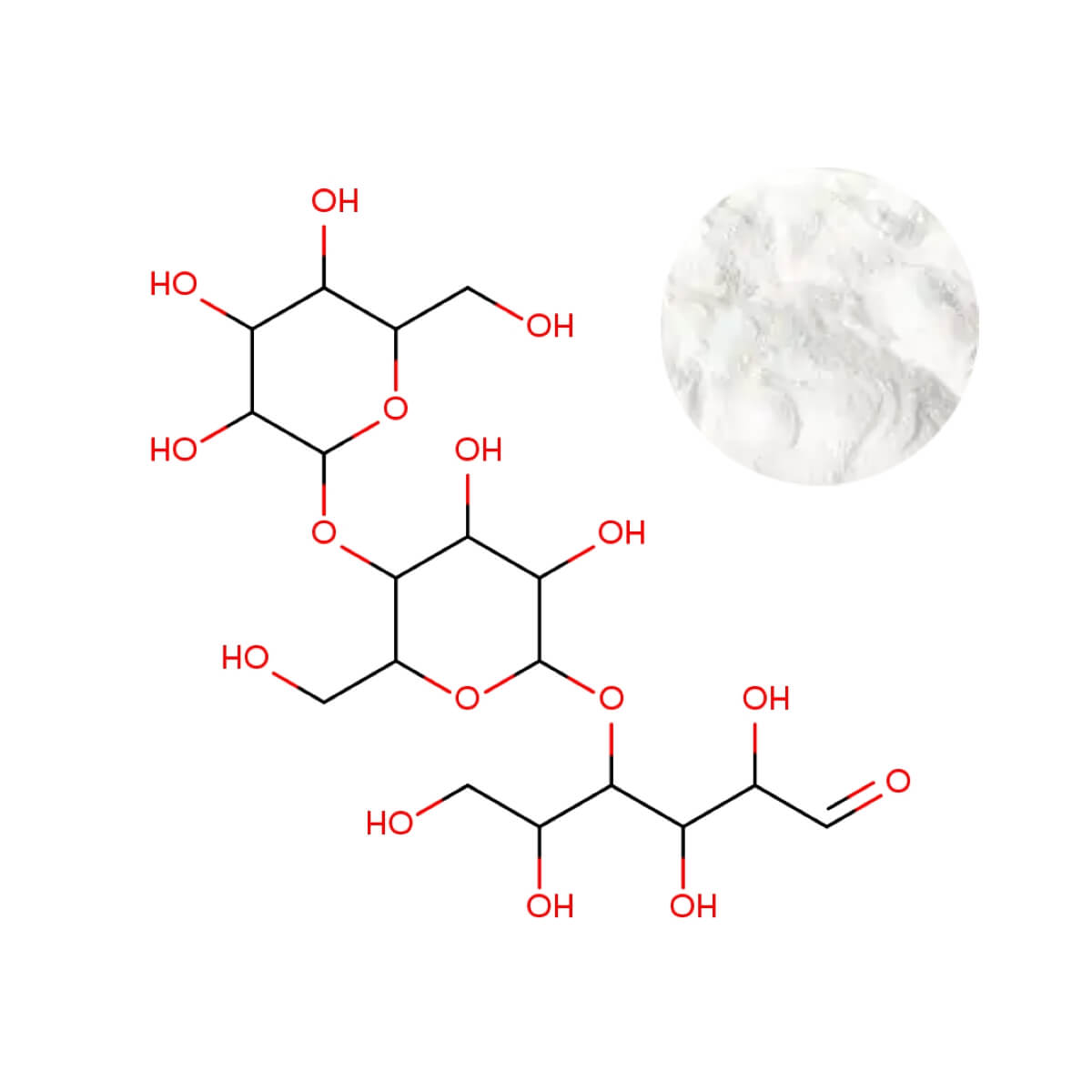
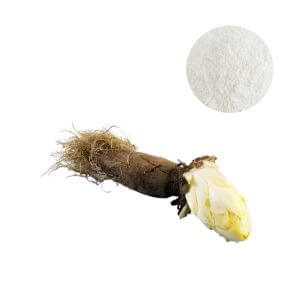
GOS Prebiotic Powder
| Product Name | Galacto-oligosaccharides Powder |
| CAS Number | 6587-31-1 |
| Appearance | White to off-white fine powder |
| Purity | 57%, 70%, 90% (Dry basis, by HPLC-RID) |
| Packaging | 25 kg/drum |
| MOQ | 25 kg |
Clinically Validated Galacto-oligosaccharides Powder for High-Margin Gut Health Product Lines
A convergence of low-dose clinical proof (380 mg active GOS) and broad regulatory acceptance has repositioned GOS Prebiotic Powder as a strategic asset for premium supplement portfolios. Bulk Galacto-oligosaccharides Powder now enables brand owners to formulate single-serve gummies, capsules, and RTD beverages with substantiated bifidogenic effects - with the effect of unlocking premium pricing and expanded margin headroom. For every GOS Powder supplier, stringent lot-to-lot compliance with internationally recognized pharmacopeial limits for heavy metals and microbial contaminants delivers the audit-ready foundation that procurement and R&D teams require for seamless global market entry.
Clinical Evidence Architecture: From Mechanistic Data to Defensible Consumer Claims
Building brand equity in the crowded prebiotic category demands more than generic "supports digestion" phrasing - it requires human outcome data that withstands regulatory examination. Randomized controlled trials confirm that GOS selectively elevates Bifidobacterium abundance (p = 0.001) and supports a healthy gut microbial environment, while low-dose regimens (1.3 g to 2 g daily) produce measurable shifts in microbial ecology and short-chain fatty acid profiles, including butyrate elevation within 24 hours. Published data from a 12-week RCT with 1.3 g/day GOS, for example, delivered a statistically significant increase in fecal Bifidobacterium relative abundance (p<0.01), providing DTC brands with a quantifiable "clinically proven" asset that reduces consumer acquisition friction and accelerates retail buyer confidence. Such findings directly underpin structure-function assertions such as "helps maintain a healthy gut microbiome" and "supports immune resilience" under FDA and EFSA frameworks, equipping legal and marketing teams with defensible language for packaging and digital channels.
| Clinical Parameter | Observed Effect | Study Design |
|---|---|---|
| Bifidobacterium abundance | Significant increase (p = 0.001) | RCT, 38 young females |
| Short-chain fatty acid (butyrate) | Elevated within 24 hours | Cross-over, healthy adults |
| Exploratory neurochemical observations | Region-specific trends in exploratory analysis | Double-blind placebo-controlled |
Anchoring product narratives on peer-reviewed RCTs shortens the consumer education cycle while distinguishing finished goods from generic inulin- or FOS-based alternatives. Brand owners leveraging this clinical dossier command retail premiums - observed market pricing for science-backed GOS supplements reaches premium tiers - and face lower regulatory rejection risk. Retailer acceptance likewise accelerates as buyers increasingly prioritize proven efficacy over anecdotal benefits, compressing the go-to-market timeline by 6-8 weeks. The exploratory neurochemical observations, though trend-level in statistical terms and derived from published research, may inform future mechanistic studies but do not constitute a primary functional claim for finished products.
Precision Formulation Engineering across Purity Grades and Delivery Formats
Once clinical credibility is established, the formulation bottleneck shifts to preserving that efficacy across consumer-preferred formats without compromising stability or mouthfeel. The ultra-low active dose (380 mg) renders single-gummy, one-capsule, or single-stick-pack delivery entirely practical - a decisive advantage for brands pursuing convenience-oriented daily wellness routines. Each of the three standard purity grades - 57%, 70%, and 90% - addresses a distinct formulation mandate: 57% supplies a cost-efficient workhorse for high-volume dairy and infant nutrition; 70% offers a reduced-sugar profile tailored to beverages and snack bars; and 90% provides a low-lactose, high-potency option for premium synbiotic capsules and sugar-restricted applications. With residual lactose ≤ 5%, the 90% grade supports clean-label lactose-free positioning for sensitive demographics, while simultaneously shortening ingredient declarations for faster retailer onboarding.
- GOS 57% - Dry-blend compatible, minimal processing adjustments, fully miscible with whey and casein systems.
- GOS 70% - Lower monosaccharide load, well-suited for clean-label sports nutrition and meal-replacement powders.
- GOS 90% - Maximizes prebiotic activity per gram, reduces excipient burden and enables smaller capsule footprints.
Pairing GOS with short-chain fructo-oligosaccharides (scFOS) or xylo-oligosaccharides (XOS) generates a full-spectrum fermentation cascade - GOS acts proximally while longer-chain prebiotics extend activity distally. This combination supports a "complete gut coverage" positioning that resonates with DTC brands seeking proprietary blend differentiation. For R&D organizations, the modular purity framework reduces trial-and-error in prototype work, cutting formulation iteration time by 30% and expediting regulatory submissions - both of which compress the development timeline and accelerate revenue recognition.
Powder Flow, CMO Line Integration, and Air-Freight Resilience
Formulation concepts generate commercial value only when they perform reliably on contract manufacturing equipment. GOS powder is amorphous and highly hygroscopic; its glass transition temperature decreases significantly with increasing moisture content, which can lead to caking and structural collapse when Tg falls below storage temperature. Yet with ≥ 95% passing 80 mesh and bulk density held within 0.45-0.70 g/mL, direct compression becomes viable without pre-granulation. That removes two entire unit operations - wet granulation and drying - cutting energy use, labor hours, and cleaning downtime, while reducing tablet-capping and weight-variation defects.
| Physical Attribute | Specification | CMO Impact |
|---|---|---|
| Loss on Drying | ≤ 5.0% | Prevents sticking and picking during high-speed tableting |
| Particle size (80-mesh pass) | ≥ 95% | Ensures uniform die fill, reduces weight variability |
| Bulk density | 0.45-0.70 g/mL | Supports consistent die fill and stable feeder operation, minimizing line stoppages |
Air-freight vulnerability - cabin pressure fluctuations and tarmac temperature extremes - is neutralized through moisture-barrier liners and desiccant inserts, preserving free-flowing characteristics upon CMO arrival. For brand owners, this translates into fewer qualification batches, lower scrap rates, and faster first-article sign-off. The cumulative effect removes 8-12 weeks from the conventional launch calendar, securing earlier shelf presence and shortening the payback horizon on new product investment. This compression of the launch window directly improves working capital turnover and secures earlier category foothold against late-entering competitors.
Total Cost of Ownership (TCO) Strategic Model for Bulk Procurement
With production efficiency addressed, procurement and finance executives must assess the full economic footprint of each GOS purity grade. The three-tier specification directly shapes downstream processing expense, finished-product yield, and compliance overhead. Choosing 57% for infant formula eliminates costly polishing stages, whereas 90% delivers higher potency per unit - reducing capsule count per bottle, lowering blister-pack and secondary packaging outlay, and cutting shipping weight by an estimated up to 18% based on standard packaging configurations.
- Re-validation savings - Consistent CoA parameters reduce supplier-change re-qualification effort by an estimated 15-20% based on typical qualification cycles.
- Inventory carrying cost - 24-month shelf life and stable moisture control minimize write-offs and expedited-shipping premiums.
- Regulatory risk avoidance - Full documentation packages (GRAS, Novel Food, USP compliance) prevent customs delays and product holds.
Integrating these variables into a TCO framework enables brand CFOs to justify a moderate per-kilogram premium when net savings accrue across the entire value chain - from raw-material intake through finished-goods warehousing. Strategic safety-stock buffers further protect against lactose-price volatility and geopolitical disruptions, shielding both gross margin and brand equity. The procurement endpoint is not a low unit price alone, but a resilient, audit-ready partnership that underpins category leadership and predictable margin expansion.
Accelerate Product Development with Full-Disclosure Pre-Production Samples
Moving from specification review to pilot-scale production requires both physical material and comprehensive technical documentation. A pre-production sample request simultaneously unlocks the full compliance suite - HPLC-RID purity chromatograms, ICP-MS heavy-metal reports, USP microbial certificates, and stability summaries - so R&D can validate performance internally while procurement verifies supply-chain traceability. Request a GOS Prebiotic Powder sample with full analytical and regulatory documentation and remove validation bottlenecks prior to commercial-quantity commitment. One sample request reduces prototype iterations, shortens the pre-production phase by 4-6 weeks, and delivers both R&D and procurement the data required for confident scale-up decisions.
Frequently Asked Questions
Share this product
Related Products
Ready to get started?
Contact our team for technical specifications, pricing, and customized solutions.