
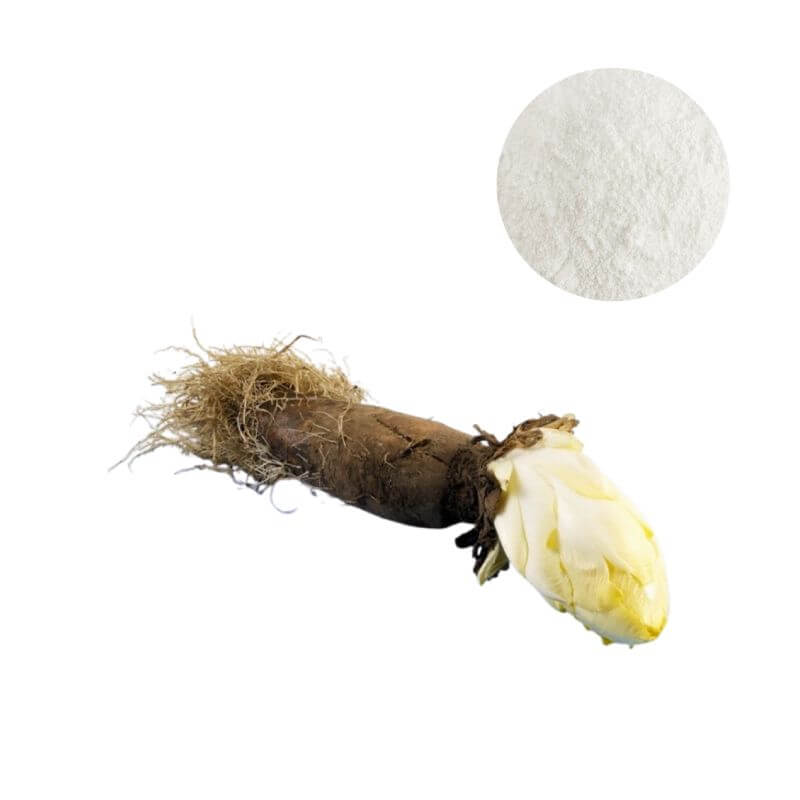
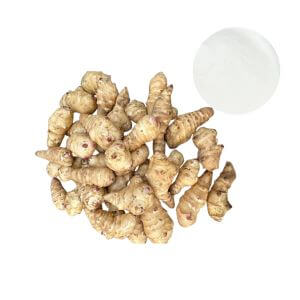
Inulin Powder
| Product Name | Inulin Powder (Chicory Root Derived) |
| CAS Number | 9005-80-5 |
| Appearance | Fine white to off-white powder |
| Purity | 90% min. (Dry basis) |
| Packaging | 25 kg/multi-wall paper bag or fiber drum |
| MOQ | 25 kg |
Inulin Powder (≥90% Purity): Clinically-Supported Prebiotic Fiber for Gut Health & Metabolic Formulations
Formulating a standout digestive health product faces a familiar hurdle: most prebiotic fibers lack the clinical depth to differentiate a brand. Consumer expectations now extend beyond generic “fiber” claims—they demand measurable outcomes backed by human data. For brands seeking to move past commodity positioning, a premium inulin powder standardized to ≥90% purity (dry basis) offers a proven foundation. Its efficacy is not theoretical; it is documented in recent randomized controlled trials, where 12 g daily intake of chicory-derived inulin improved stool frequency and constipation-related quality of life. From a strategic formulation perspective, this evidence directly supports structure/function claims that resonate with today’s label-conscious consumers, turning a simple ingredient into a credible marketing asset. In a market crowded with generic fibers, choosing a purity-graded, clinically-validated source creates a defensible science barrier—directly enabling premium pricing and faster retail adoption.
Clinical Mechanism: How Inulin Supports Gut Motility and Metabolic Balance
The efficacy of chicory-derived inulin lies in its β-(2→1) fructan structure, which resists hydrolysis by human digestive enzymes. Once it reaches the colon, it becomes a selective substrate for beneficial bacteria, primarily Bifidobacterium and Anaerostipes. The fermentation process generates short-chain fatty acids (SCFAs), particularly butyrate and propionate. A 2024 systematic review (doi: 10.3390/nu16172935) confirmed that this SCFA cascade not only lowers colonic pH and inhibits pathogens but also reduces systemic inflammation and improves insulin sensitivity. For procurement teams, this directly translates to a multi-functional ingredient: one that supports digestive regularity while offering secondary metabolic benefits—an advantage when formulating for weight management or glycemic control products. Key clinical takeaways from a 2025 RCT (doi: 10.1186/s12876-025-04409-6) include:
- Dose: 12 g/day of chicory inulin for 4 weeks significantly increased stool frequency (by 0.5 bowel movements/week).
- Quality of life: PAC-QOL scores improved by 0.41 points, indicating tangible symptom relief.
- Microbiota shift: Relative abundance of butyrate-producing genera (Anaerostipes and Coprococcus 1) increased.
From a strategic formulation perspective, these quantified endpoints enable brands to craft compliant, evidence-backed claims on packaging and marketing materials—moving beyond vague “supports digestion” to “helps improve bowel regularity in as little as four weeks.” This scientific depth creates clear differentiation on crowded retail shelves. Practically speaking, a clinically validated dose (12 g/day) also sets a formulation target that prevents under-dosing—a common reason for consumer disappointment and product returns, directly impacting repeat purchase rates.
Quality Benchmarks: What Defines a Premium Inulin Powder
In a category where many suppliers offer similar purity levels, discerning buyers look beyond the certificate of analysis (COA) to the rigor behind each specification. A premium bulk inulin ingredient must demonstrate consistent particle size (≥95% through 80 mesh), loss on drying ≤5.0%, and ash content ≤0.2%—parameters that directly affect flowability and blending uniformity. But the true hallmark of a reliable inulin powder supplier is the comprehensiveness of their quality program. Key sourcing considerations include:
- Microbiological safety: Total plate count ≤1,000 CFU/g, absence of E. coli, Salmonella, and Pseudomonas aeruginosa.
- Heavy metal control: Lead and inorganic arsenic each ≤0.5 mg/kg; cadmium and mercury ≤0.1 mg/kg (ICP-MS verified).
- Batch-to-batch traceability: Each shipment should come with a COA that includes the specific test methods (USP <61>, <62>, <731>, etc.).
For procurement teams, this directly translates to lower regulatory risk and faster finished product registration. A GMP-certified supply chain that routinely tests for residual solvents (USP <467>) and provides stability data (24 months in original packaging) reduces the need for internal re-testing. When evaluating a certified inulin partner, prioritize those who disclose full heavy metal panels and use HPLC for assay verification—this transparency signals operational maturity and protects your brand from costly recalls or compliance delays. This level of quality assurance effectively means that brand developers can bypass the typical 3–6 months of internal vendor qualification, shortening time-to-market while ensuring the ingredient meets global supplement standards.
Formulation in Practice: Stability, Synergy, and Delivery Solutions
Successfully incorporating inulin powder into finished products requires understanding its behavior under real-world manufacturing conditions. Inulin exhibits excellent thermal stability at neutral pH (5.0–7.0) but can hydrolyze when pH drops below 4.0 under prolonged heating. This means acidic beverage formulations (e.g., fruit-flavored prebiotic shots) should use lower processing temperatures or add inulin during the final cooling stage. For powder blends (stick packs, meal replacements), consistent particle size ensures homogeneous mixing with other dry actives. Below is a practical synergy guide for formulators:
| Co-ingredient | Synergistic Effect | Typical Ratio (Inulin:Co-ingredient) |
|---|---|---|
| FOS (fructooligosaccharides) | Faster fermentation profile for immediate SCFA production, complementing inulin’s sustained release. | 1:1 to 2:1 |
| Calcium or Magnesium | Inulin enhances mineral absorption in the colon, improving bioavailability. | 10:1 (inulin:mineral by weight) |
| Probiotic strains (Bifidobacterium) | Synbiotic effect: inulin selectively feeds the probiotic, boosting viability. | 10–20 g inulin per 1×10⁹ CFU |
From a strategic formulation perspective, these combinations allow brands to create differentiated “gut-brain” or “metabolic health” stacks without complicating the label. One common pitfall is ignoring water activity: inulin is slightly hygroscopic. In high-humidity environments, finished powders may cake. Practical mitigation includes using desiccant-lined packaging and controlling blending room humidity below 60% RH. For chewable tablets or gummies, inulin’s mild sweetness (about 10% of sucrose) can partially replace added sugars, aligning with clean-label trends.
Mitigating Risk: The Checklist for Sourcing Inulin
When procuring wholesale inulin, price per kilogram is only one variable. Supply disruptions, quality deviations, or incomplete documentation can derail product launches and damage brand reputation. A robust sourcing strategy for bulk inulin powder should include the following checks. For procurement teams, this directly translates to a framework that de-risks your supply chain:
- Traceability to botanical source: Does the supplier specify chicory root (Cichorium intybus L.) and provide origin documentation?
- Third-party audited facilities: Look for GMP, FSSC 22000, or equivalent certifications—not just self-declared compliance.
- Full disclosure COA: The COA must include heavy metals (Pb, As, Cd, Hg), microbiological panel, and loss on drying, not just purity.
- Stability and re-testing policy: Does the supplier offer a 24-month shelf life and provide re-testing services for long-held inventory?
- Regulatory support package: For exports to the US (GRAS status) or EU (novel food exemption), the supplier should provide a technical dossier including allergen and GMO statements.
From a strategic formulation perspective, partnering with a supplier that offers these elements transforms procurement from a cost center into a competitive advantage. It reduces the hidden costs of failed audits, production line stoppages, and rejected shipments. A reliable inulin distributor will provide batch-specific COAs within 24 hours and maintain safety stock to buffer against harvest fluctuations—especially critical because chicory root yields vary seasonally. Evaluating total cost of ownership (TCO) reveals that a slightly higher upfront price for a fully documented, GMP-certified inulin avoids the catastrophic expense of a finished product recall (which can exceed $2M in brand damage and logistics)—a risk no procurement head can afford to ignore.
Next Steps for Your Product Development
Leveraging a clinically validated prebiotic like inulin can elevate your gut health, weight management, or metabolic support product line. The key is to start with a material that offers not only ≥90% purity but also full traceability, rigorous microbial and heavy metal controls, and formulation-friendly physical properties. To accelerate your evaluation, request a complimentary sample and the complete technical dossier—including the specific COA for the current production lot, stability summary, and regulatory guidance for US and EU markets.
Request Your Complimentary Sample & Technical Dossier – test the powder’s solubility, blending behavior, and sensory profile in your own lab. Our team delivers documentation within 24 working hours to support your NDI or Novel Food filing.
Frequently Asked Questions
Share this product
Related Products
Ready to get started?
Contact our team for technical specifications, pricing, and customized solutions.