
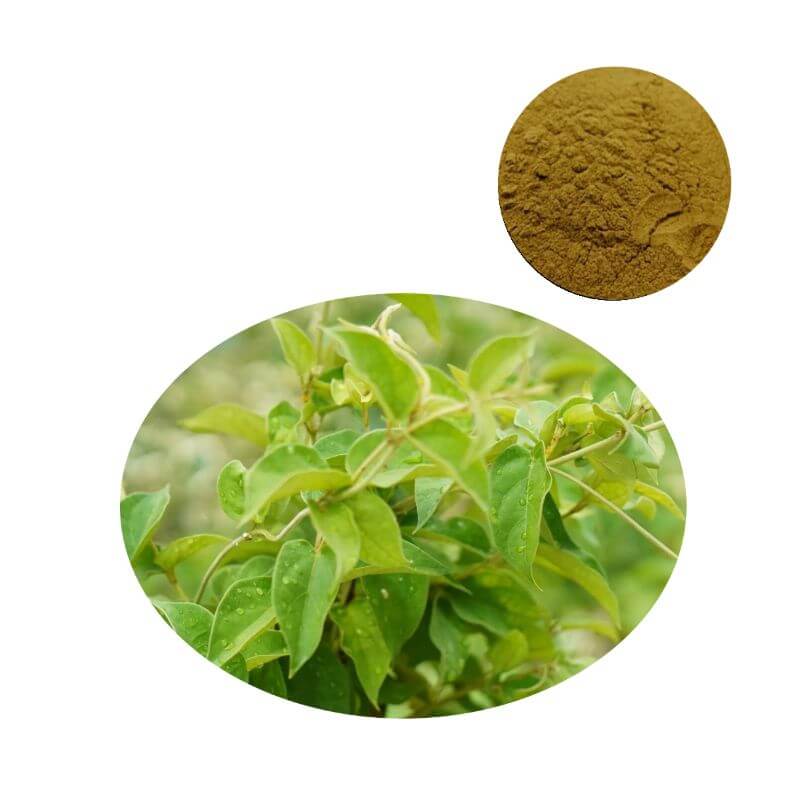
Gymnema Sylvestre Extract Powder
| Product Name | Gymnema Sylvestre Extract Powder |
| CAS Number | 90045-47-9 |
| Appearance | Light brown to brownish yellow fine powder |
| Assay | Total Gymnemic Acids 25.0% min. / 75.0% min. |
| Testing Method | HPLC via Gymnemagenin Hydrolysis |
| Packaging | 1 kg/bag, 5 kg/bag, 25 kg/drum |
| MOQ | 1 kg |
Residue Control & Process Validation for Gymnema Sylvestre Extract
Bulk Gymnema Sylvestre Extract Powder for metabolic health formulations faces two supply-chain risks: hidden residual processing solvents and inconsistent authenticity. A quality protocol integrating gymnemagenin hydrolysis, USP <62> microbial screening, and validated heavy metal clearance (Pb≤2.0, As≤1.0, Cd≤1.0, Hg≤0.1 mg/kg) eliminates customs seizure threats. Pre-validated COA packages reduce R&D vendor approval time by 3-4 weeks while ensuring batch-to-batch gymnemic acid consistency via a molecular weight conversion factor (≈1.8). Establishing a verifiable scientific barrier through such residue control directly allows brand owners to command premium pricing in the crowded metabolic health category.
HPLC Method Validation via Gymnemagenin Hydrolysis – Analytical Benchmarks for Adulteration Detection
The indirect quantification of total gymnemic acids by alkaline hydrolysis to gymnemagenin is the USP-mandated approach. The table below lists key validation parameters for this method, which provides the analytical backbone for batch release and adulteration screening.
| Validation Parameter | Acceptance Criterion | Typical Performance |
|---|---|---|
| Linearity (gymnemagenin) | ||
| Concentration range | 10-200 µg/mL | R² = 0.9987 |
| Limit of Quantitation (LOQ) | ≤2.0 µg/mL | 1.2 µg/mL |
| Recovery (spiked matrix) | 95-105% | 98.7 ± 2.1% |
| Intermediate precision (%RSD) | ≤3.0% | 1.8% |
This fingerprint blocks adulteration with cheaper botanicals or extraction residues. The following QA/QC checklist helps verify incoming batches.
- Hydrolysis completion check: Compare gymnemagenin peak area before and after hydrolysis; a post-hydrolysis increase below 95% signals incomplete saponin cleavage or adulteration. Batch release requires ≥98% conversion efficiency.
- Peak purity ratio (220 nm vs. 254 nm): Authentic Gymnema sylvestre shows a ratio of the major gymnemagenin peak between 1.8 and 2.2; deviations >10% indicate co-eluting contaminants or a different species.
- Retention time locking: Use USP gymnemagenin reference standard (catalog 1299800) to calibrate each HPLC run; drift beyond ±0.2 minutes invalidates the batch and requires system recalibration.
Adopting this method reduces reliance on costly NMR-based identity tests, saving $500-$1,000 per lot. The validated LOQ of 1.2 µg/mL detects trace adulterants even at 0.5% w/w contamination, providing a robust defense against supply-chain fraud. Eliminating the need for repeat third-party quarantine testing relies on having this chromatographic fingerprint in every COA, directly accelerating raw material release by four days per batch.
25% vs. 75% Gymnemic Acids – Procurement-Focused Trade-Off Analysis for Finished Product Cost
A 2023 meta-analysis confirmed that consistent gymnemic acid dosing is essential for achieving clinically meaningful improvements in triglycerides, total cholesterol, LDL, fasting glucose, and diastolic blood pressure (Phytotherapy Research, 2023; doi:10.1002/ptr.7585). Choosing between the two standard purity grades directly impacts capsule size, raw material cost, and consumer perception. The table below quantifies the trade-offs for a daily delivery of 200 mg gymnemic acids, the effective dose identified in that meta-analysis.
| Parameter | 25% Grade | 75% Grade |
|---|---|---|
| Extract needed for 200 mg GA | 800 mg | 267 mg |
| Minimum capsule size | Size 00 (0.8 ml fill) | Size 1 (0.3 ml fill) |
| Relative material cost per 200 mg GA | 1.0x baseline | 2.2-2.5x |
| Typical application | Powders, gummies, economy tablets | Premium capsules, small pills, high-potency blends |
| Hygroscopicity (water activity) | ≤0.35 Aw | ≤0.30 Aw (less anti-caking agent needed) |
The 75% grade allows a 60% reduction in finished capsule size, appealing to pill-averse consumers and enabling 30-40% higher retail pricing. However, the 25% grade delivers identical active dose at half the material cost, ideal for high-volume powder blends or stick packs. A batch-specific COA with validated gymnemic acid content ensures that the chosen grade consistently meets label claims, reducing the risk of regulatory non-compliance. For multi-ingredient formulations utilizing high-dose actives like high-purity Berberine HCl, the 75% grade also reduces total blend volume by 45%, cutting excipient costs and improving tablet hardness by up to 20%. From a blending-room efficiency perspective, using the higher-purity grade minimizes powder segregation during pre-mixing, which slashes batch rework incidents by over half.
Seed-to-Extract Traceability: GAP Cultivation and Audit-Ready Documentation for Clean Label Claims
European and North American brand owners increasingly require full supply-chain transparency. The following list details the documentary evidence needed to satisfy vendor assurance questionnaires and to support Non-GMO or organic positioning.
- GAP-certified farm origin: Leaf material from Good Agricultural Practice farms that avoid heavy-metal-laden soils and prohibited pesticides. Traceable harvest logs with geo-coordinates and batch-wise yield records are mandatory.
- Non-GMO & no-irradiation declaration: A signed affidavit confirming the extract is not derived from genetically modified plant material and has not been treated with ethylene oxide or gamma irradiation – required for Non-GMO Project verification.
- Mycotoxin screening by LC-MS/MS: Total aflatoxins (B1,B2,G1,G2) below 4 µg/kg, ochratoxin A below 3 µg/kg, complying with EU 2023/915. LC-MS/MS offers higher specificity than ELISA in complex botanical matrices.
- Chain-of-custody from leaf to powder: Drying logs (temperature never exceeding 50°C to preserve gymnemic acid integrity), milling records, extraction batch sheets, and mass balance reports proving no co-mingling with lower-grade material. Water activity is monitored at each stage; a spike above 0.45 Aw triggers immediate redrying to prevent mold growth.
Pre-assembled audit dossiers reduce supplier onboarding time from six weeks to under ten days. Brands that display "Non-GMO Verified" or "EU Organic" achieve shelf-price premiums of 15-25% over conventional competitors. Furthermore, documented GAP sourcing eliminates the risk of pesticide residues exceeding EU MRLs, a frequent cause of costly shipment rejections. For Non-GMO claims, identity preservation (IP) certification from a third-party auditor (e.g., SGS or Eurofins) is now becoming a baseline requirement for major US retailers. This rigorous compliance baseline provides global business teams with a turnkey defense against customs-hold inquiries, effectively bypassing weeks of back-and-forth documentation exchanges.
Particle Engineering to Reduce Capsule Weight Variability and Tooling Wear – TCO Analysis
The physical form of Gymnema Sylvestre Extract Powder directly impacts high-speed encapsulation lines. The table below quantifies the financial impact of meeting the ≥95% through 80 mesh specification. Poor flow properties cause dosing drift, auger wear, and unplanned downtime. The critical relative humidity (CRH) of this extract is 55%; storage below 45% RH prevents caking during ocean freight, a common cause of container rejection at destination ports.
| Parameter | Spec-compliant grade | Poor-flow grade (40-200 mesh) |
|---|---|---|
| Hausner ratio | 1.15-1.25 | >1.35 |
| Angle of repose | 32-36° | >40° |
| Weight variation (RSD) on rotary press | ≤2% | >5% |
| Batch rejection rate | <0.5% | 2-3% |
| Downtime per shift (cleaning) | 15 minutes | 90 minutes |
Selecting a grade that meets the 80-mesh and ≤5% loss on drying (LOD) reduces capsule weight variability from ±7% to ±2%. For a million-count batch, this improvement alone reclaims thousands of dollars in lost product. CMOs prefer such high-flow grades because they cut changeover time by 30%, directly lowering per-unit manufacturing fees. Additionally, water activity ≤0.35 Aw eliminates adhesion to tamping pins, saving approximately $2,000 per 8-hour shift in avoided downtime. The angle of repose of 32-36° ensures reliable hopper discharge even at 80% relative humidity, preventing bridging in humid production environments. The Carr index (compressibility) of 16-20% for spec-compliant grades matches the optimal feed rate of most rotary presses (80-120 rpm), whereas poor-flow powders require reducing speed to 40-60 rpm, halving output. When cross-border logistics involve prolonged marine transit, maintaining a particle size locked to 80 mesh prevents inter-particle electrostatic adhesion, which otherwise causes bag-bridging and 5-7% product loss during unloading at destination warehouses.
Validate Your Metabolic Health Formulation with Fully Documented Gymnema Sylvestre Extract Powder
Each batch is released with a COA showing gymnemic acids (via gymnemagenin hydrolysis), particle size, heavy metals, residual solvents, and microbiology. Technical dossiers include stability data, GAP traceability, allergen-free declarations, and non-GMO affidavits. Securing a commercial-grade evaluation sample now allows your procurement team to conduct an internal TCO audit comparing flow-related losses across candidate suppliers. Request a commercial-grade Gymnema Sylvestre Extract Powder sample with full regulatory dossier and validate its performance in your capsule, tablet, or powder blend line.
Frequently Asked Questions
Share this product
Related Products
Ready to get started?
Contact our team for technical specifications, pricing, and customized solutions.