
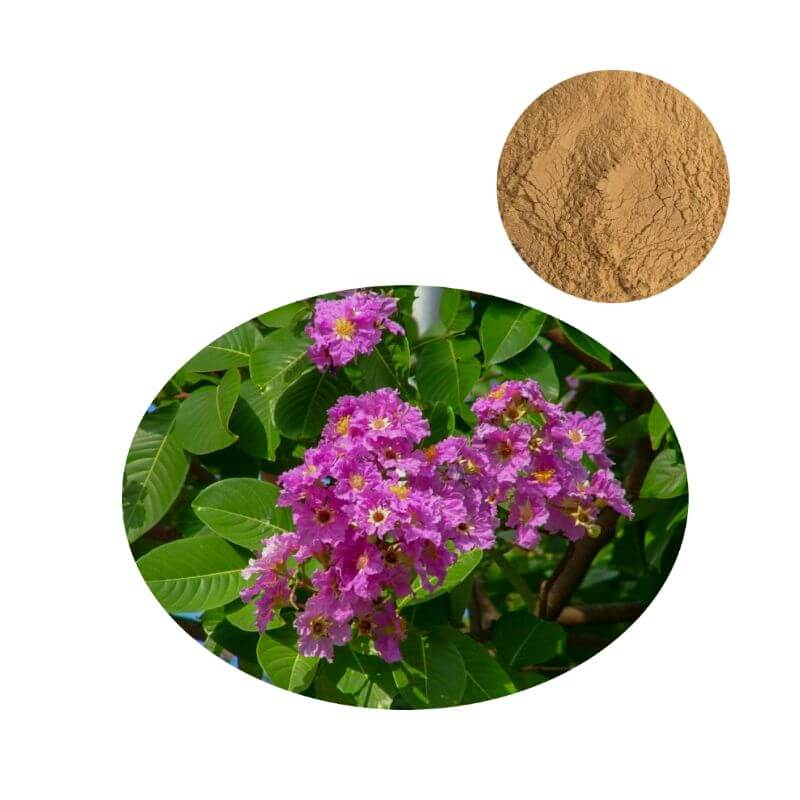
Banaba Leaf Extract Powder
| Product Name | Banaba Leaf Extract Powder |
| CAS Number | 4547-24-4 |
| Appearance | Light yellow to brown-yellow fine powder |
| Purity | 1.0%, 2.0%, 10.0% Corosolic Acid min. (by HPLC) |
| Packaging | 1 kg/bag, 5 kg/bag, 25 kg/drum |
| MOQ | 1 kg |
Standardized Banaba Leaf Extract: Solving Cross-Border Residue Compliance & High-Speed Line Performance
Premium Banaba Leaf Extract Powder for metabolic health formulas must simultaneously satisfy two conflicting demands: passing EU/US heavy metal and pesticide limits at import inspection, while maintaining consistent flow on rotary presses. Conventional extracts often fail one or both. This technical overview details how standardized 1%-10% corosolic acid grades resolve these trade-offs through process engineering and analytical rigor. Batch-specific COAs with full impurity profiling are available to accelerate R&D audits. Establishing this level of specification rigor early creates a scientific moat, allowing finished brands to command premium pricing while reducing downstream compliance firefighting.
Bulk Banaba Leaf Extract Powder: How Process Chemistry Drives Global Compliance and Intercepts Botanical Adulteration
Regulatory acceptance of a botanical ingredient starts with its contaminant clearance profile. Premium Banaba Leaf Extract Powder undergoes multi-step purification targeting the most common rejection triggers in Western markets. The table below summarizes critical residue limits and the corresponding process controls that keep shipments within safe harbor.
| Contaminant Category | Typical Export Limit (by ICP-MS / GC) | Process Control Applied |
|---|---|---|
| Lead (Pb) | ≤2.0 mg/kg | GAP cultivation + acid‑washing step on resin |
| Arsenic (As) | ≤1.0 mg/kg | Raw material sorting + chelation polishing |
| Cadmium (Cd) | ≤1.0 mg/kg | Source control from low-Cd soil zones |
| Mercury (Hg) | ≤0.1 mg/kg | Cold extraction avoids mercury contamination |
| Pesticides (396 items) | Complies with EU MRLs | Third‑party screening (Eurofins / SGS) |
| Residual solvents (Class 1 & 2) | Absent (USP <467>) | Water/ethanol extraction only; no dichloromethane |
For a glucose management finished product targeting the EU, using a fully tested lot with documented PAH (polycyclic aromatic hydrocarbon) and EtO (ethylene oxide) clearance removes a major supply chain risk. Additionally, chromatographic fingerprinting (HPLC at 210 nm) using USP Corosolic Acid RS (≥85.0%) verifies botanical authenticity, discriminating Lagerstroemia speciosa from cheaper adulterants like L. indica or synthetic corosolic acid isolates. This analytical layer protects brand owners against “greenwashing” accusations. For QA/QC directors, the elimination of ethylene oxide and full USP <467> residual solvent compliance shortens laboratory quarantine cycles by bypassing repetitive third‑party re-testing, accelerating material release into manufacturing.
Powder Rheology & CMO Line Efficiency: Why 80 Mesh and Tight Drying Loss Matter for Metabolic Supplement Manufacturing
High-speed encapsulation or tableting of Banaba Leaf Extract Powder can be compromised by poor flow, electrostatic charging, or moisture pick-up. Industry-optimized grades specify ≥95% through 80 mesh (US standard) and loss on drying ≤5.0%. These physical characteristics directly influence three manufacturing cost drivers:
- Elimination of bridge formation in hoppers – Fine but free-flowing powder (angle of repose ≤45°) prevents intermittent starvation of dosators, reducing capsule weight variation by up to 40%.
- Reduced press downtime from sticking – Low hygroscopicity (critical relative humidity >60%) avoids die wall adhesion, enabling run times of 8+ hours without cleaning stops.
- Consistent blend uniformity in multi-ingredient GDA formulas – Narrow particle size distribution minimizes segregation with other actives (e.g., berberine, chromium picolinate mineral complexes).
From a physical blending and stabilization standpoint, maintaining ≤5.0% loss on drying ensures that the extract does not compete for moisture with other hygroscopic actives (e.g., hygroscopic salts like berberine HCl), preventing eutectic pasting during high-humidity summer production. Selecting a Banaba Leaf Extract Powder that meets these rheological benchmarks does not increase per-kilo cost significantly, but it lowers total cost of ownership (TCO). For a brand producing 2 million bottles annually, a 3% reduction in tablet rejects and a 2% cut in labor hours for hopper cleaning can translate to a five-figure annual saving. Specifying “GMP-compliant, 80-mesh standardized extract” therefore becomes a procurement lever, not just a quality box-ticking exercise.
Documented Human Efficacy: Clinical Data for Precise Dosage and Metabolic Endpoints
Formulators need evidence that a specific corosolic acid level translates into predictable glycemic effects. A randomized, double-blinded, placebo-controlled crossover trial in middle-aged men with impaired fasting glucose (n=13, FPG=6.0±0.4 mmol/L) provided clear quantifiable outcomes (Journal of Functional Foods, 2022; doi: 10.1016/j.jff.2022.105256). Supplementation with only 1 mg/day of corosolic acid for two weeks produced significant reductions in the incremental area under the curve (iAUC) for plasma glucose after an OGTT (p=0.028), along with lowered serum insulin iAUC and improved liver insulin sensitivity. No significant changes in glucagon or GLP-1 were observed, indicating a direct insulin-sensitizing action rather than incretin modulation.
This data substantiates a recommended daily intake of 1-10 mg corosolic acid (equivalent to 100-1000 mg of 1% standardized powder or 10-100 mg of 10% grade). It also allows finished product labels to carry structure/function claims such as “helps maintain healthy post-meal glucose levels” or “supports insulin sensitivity in already-normal glucose populations.” The clinical endpoint – glucose iAUC – is specifically recognized by FDA and EFTA regulators as a valid biomarker for metabolic support claims, giving brand owners a lower regulatory hurdle.
Full Traceability from GAP Farm to Finished Extract: Meeting Clean Label and Non-GMO Audits
Western brand procurement teams increasingly demand seed-to-extract traceability, non-irradiation sterilization, and allergen-free certification. Banaba Leaf Extract Powder from controlled supply chains offers:
- GAP (Good Agricultural Practices) cultivation – Leaves harvested from specific Lagerstroemia speciosa varieties in low-metal, low-pesticide regions; each batch traceable to harvest week.
- Physical sterilization (no EtO or gamma irradiation) – Steam or high-pressure processing that maintains polyphenol integrity while meeting USP <61>/<62> microbial limits (TAMC ≤1,000 CFU/g, absence of Pseudomonas aeruginosa, Salmonella, E. coli).
- Allergen-free and Non-GMO Project Verified eligible – No common allergens (gluten, soy, dairy) introduced during extraction; identity preservation avoids cross-contact.
| Traceability Attribute | Documentation Provided | Benefit to Brand Owner |
|---|---|---|
| Harvest origin | Certificate of origin with GPS coordinates | Defends against illegal logging accusations |
| Extraction solvent log | Batch extraction record (food-grade ethanol only) | Supports organic / clean-label declaration |
| Sterilization method | Steam treatment record + microbial test COA | Meets EU ban on ethylene oxide |
| Chain of custody | Bill of lading + inland transport temperature logs | Verifies cold-chain integrity for sensitive cargo |
For a multinational supplement brand, this level of transparency reduces the burden of supplier audits and provides defensible evidence for sustainability reports. It also unlocks premium positioning: a “rainforest-friendly, non-irradiated Banaba extract” can command 15-20% higher wholesale pricing in the European sports nutrition channel. Integrating traceability data into the technical dossier is a direct value driver, not merely a compliance cost.
Request a Batch-Specific COA and Formulation Sample for Your Metabolic Health Line
Qualify the exact purity grade (1%, 2%, or 10% corosolic acid by HPLC) that matches your target dosage and tablet/capsule throughput. Each evaluation sample is accompanied by a complete technical dossier including heavy metal panel, residual solvent screen, and microbial release data. Procurement teams should note that full batch traceability and physical stability data directly mitigate the risk of cross-border container rejection and warehousing caking, protecting cash flow and inventory turns. Request a commercial-grade sample of Banaba Leaf Extract Powder with full compliance documentation today to de-risk your next glucose management or weight control formulation project.
Frequently Asked Questions
Share this product
Related Products
Ready to get started?
Contact our team for technical specifications, pricing, and customized solutions.