
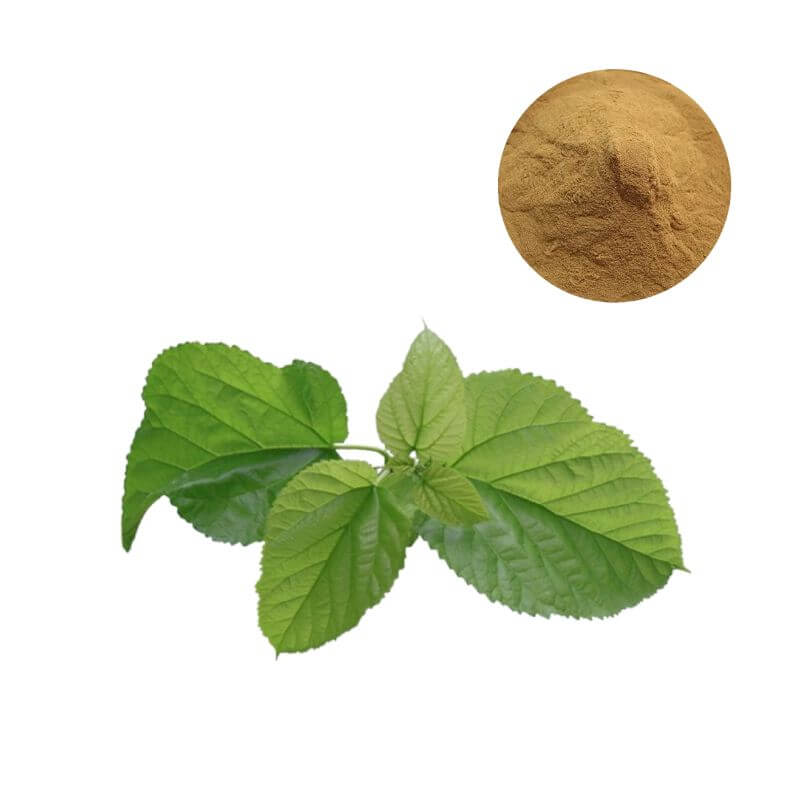
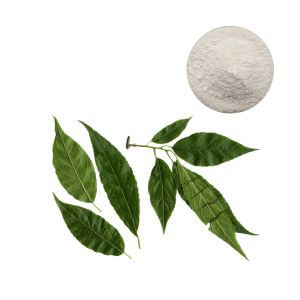
Mulberry Leaf Extract Powder
| Product Name | Mulberry Leaf Extract Powder |
| CAS Number | 19130-96-2 |
| Appearance | Brown-yellow to brown fine powder |
| Purity | 1.0% min., 2.0% min., 5.0% min. (1-DNJ by HPLC) |
| Packaging | 1 kg/bag, 5 kg/bag, 25 kg/drum |
| MOQ | 1 kg |
Controlling Batch Variability and Supply Chain Risks in Mulberry Leaf Extract Procurement
Bulk Mulberry Leaf Extract Powder standardized to 1-deoxynojirimycin (DNJ) 1%-5% by HPLC is widely adopted for metabolic health formulations. However, inconsistent impurity profiles, undocumented sourcing origins, and moisture-induced degradation during long-haul shipping remain critical pain points for global brand R&D and procurement teams. A batch-specific Certificate of Analysis (COA) from a reliable mulberry leaf extract supplier provides the necessary data foundation for formulation scale-up and regulatory filing. For brand owners, tight control over these three supply-chain variables directly determines finished-product differentiation in a crowded metabolic health category and prevents margin erosion from quality-related market withdrawals.
Verified Contaminant Clearance: From Agricultural Inputs to Final Extract
The primary route of residual risks in mulberry-derived ingredients originates from two sources: agrochemical residues in leaves and environmental pollutants such as polycyclic aromatic hydrocarbons (PAHs) from drying processes. Commercial-scale purification protocols now employ targeted physical removal steps rather than generic washing. A two-stage process using macroporous adsorption resin followed by 60% ethanol gradient elution has been shown to reduce pesticide residues to below EU MRL limits while preserving DNJ recovery above 92%.
- Heavy metal source mapping: Lead (Pb) and cadmium (Cd) accumulation in mulberry leaves correlates with soil pH and proximity to industrial zones. GAP-guided cultivation with periodic soil remediation cuts Pb to ≤1.0 mg/kg and Cd to ≤0.5 mg/kg verified by ICP-MS.
- PAH elimination route: PAHs (benzo(a)pyrene etc.) form during high-temperature drying of biomass. A low-temperature vacuum drying protocol (≤60°C) combined with activated carbon filtration depresses total PAH content to below 10 μg/kg, complying with EFSA’s stricter 2023 threshold.
- Solvent residue audit: Full water-ethanol extraction (no chlorinated solvents like methylene chloride or ethylene oxide) ensures residual solvents comply with USP <467> Class 2 and Class 3 limits. Each lot undergoes GC-MS screening for 1,2-dichloroethane and benzene – both must be below LOQ of 0.5 ppm.
Pharmacokinetic and safety profiling confirms that mulberry leaf iminosugars (MLIs) exhibit favorable oral absorption with low systemic toxicity when processing controls are applied (Crit Rev Food Sci Nutr, 2023; doi: 10.1080/10408398.2021.1989660). Eliminating verified heavy metals and PAHs at the source removes the need for downstream filtration or re-testing, thereby compressing the total cost of compliance per batch - a direct benefit for procurement budgets.
Full-Chain Traceability: From Mulberry Leaf Orchard to Factory Gate
Unannounced audits by multinational brands increasingly demand “seed-to-extract” traceability for botanical ingredients. In mulberry leaf supply chains, the critical control points are varietal authenticity (Morus alba L. versus other Morus species with lower DNJ content) and harvest timing – leaves collected in August-September exhibit DNJ levels 30%-40% higher than early spring leaves. Suppliers maintaining dedicated GAP farms with geolocated plot records and digital batch logs enable procurement directors to verify each step.
| Traceability Layer | Control Measure | Audit Evidence |
|---|---|---|
| Planting site | Soil heavy metal pre-screening (Pb, Cd, As, Hg) | Third-party soil test report |
| Cultivation | No synthetic pesticides post-flowering; manual weed control | Farm logbooks with timestamps |
| Harvest window | Leaf collection in August-September only (high DNJ accumulation) | Harvest certificate with GPS coordinates |
| Post-harvest | Low-temp vacuum drying ≤60°C; no ethylene oxide sterilization | Drying temperature chart; ETO-free declaration |
| Extraction | Water/ethanol extraction; no methylene chloride or hexane | Solvent use declaration; residual solvent COA |
This multilayered traceability framework directly addresses the procurement audit hurdle: a batch-specific COA that cross-references each layer allows brands to bypass redundant supplier qualification steps. The documented origin control also supports clean-label claims (“Non-GMO,” “No synthetic pesticides”) on finished product packaging without additional certification costs. Averting undisclosed origin substitutions eliminates the risk of finished-goods detention at EU borders due to non-compliant plant passports. This rigorous level of provenance control makes it seamless for premium clean-label brands to combine this ingredient with a standardized cinnamon bark extract, creating highly auditable, multi-target metabolic complexes that easily clear international regulatory hurdles.
Logistics-Proof Physical Stabilization Against Intermodal Degradation
The chemical Achilles’ heel of standardized mulberry leaf extract powder is its hygroscopic nature. At relative humidity above 65%, DNJ remains stable but the polysaccharide fraction absorbs moisture, leading to caking and reduced flowability. During 30- to 45-day ocean freight from Asia to Europe or North America, container temperature swings (from -10°C at altitude to 40°C on deck) cause condensation inside packaging. Unprotected powder then undergoes surface melting and re-crystallization - not DNJ degradation but physical clumping that jams CMO encapsulators and increases tablet weight variation.
- Barrier packaging specification: Triple-layer anti-static aluminum foil bag + desiccant pack + 25kg fiber drum. The foil’s water vapor transmission rate (WVTR) ≤0.05 g/m²·24h at 38°C/90% RH, verified by ASTM F1249.
- Container loading protocol: Insulated container liners and moisture-absorbing pallet covers maintain internal dew point below 15°C, preventing condensation even during 35°C deck exposure.
- Stability validation: Accelerated stability testing (40°C/75% RH for 6 months) shows DNJ potency within ±3% of initial assay and no clumping when packaging integrity is maintained.
Bulk buyers should request a stability summary from the mulberry leaf extract supplier that includes real-time temperature data loggers from a trial shipment. Eliminating caking risk saves 2-4% material loss from rejected batches and avoids 4-6 hours of CMO line downtime for auger cleaning - a direct procurement KPI improvement. Shifting focus to total cost of ownership, a powder that arrives free of compaction allows just-in-time manufacturing without pre-sieving, effectively removing one production bottleneck and its associated labor and energy overhead.
Moreover, the documented moisture-control protocol directly supports cross-border risk management: when a shipment’s packaging integrity is verified, the importer avoids costly quarantine delays or refusal at destination ports due to mold growth suspicion. Maintaining the glassy state throughout transit turns a physicochemical property into a supply-chain resilience asset.
HPLC Fingerprint Authentication: Eliminating Adulteration by Proxy Species
The most common quality fraud in mulberry leaf extract trade is partial substitution with leaves from other Morus species (e.g., Morus nigra or Morus rubra) that have lower DNJ and flavonoid content. Simple DNJ quantification alone cannot detect such fraud because blended extracts can be spiked with synthetic DNJ to meet specification while lacking the full phytochemical profile. A standardized HPLC fingerprint method that identifies 23 characteristic peaks – including chlorogenic acid, rutin, and astragalin – provides a forensic-level authentication tool.
| Fingerprint Parameter | Acceptance Criterion | Adulteration Detection Capability |
|---|---|---|
| Number of common peaks | ≥23 peaks in reference chromatogram | Missing peaks 3 or 7 (specific flavonoids) indicates non-Morus alba material |
| Similarity threshold | ≥85.7% vs. reference fingerprint | Similarity below 85% signals possible blending with lower-grade leaves |
| Peak 14 (rutin) to Peak 9 (chlorogenic acid) ratio | 0.8 – 1.2 | Ratio deviation >0.3 suggests solvent extraction manipulation |
A validated HPLC fingerprint study on mulberry leaves from different harvest periods and origins established this 23-peak profile with batch-to-batch similarity above 85.7% (J Food Compos Anal, 2024; doi: 10.1016/j.jfca.2024.106284). For incoming material inspection, requiring a full chromatogram – not just DNJ % – as part of the COA allows QA managers to reject fraudulent lots before they enter production, protecting brand reputation and formulation efficacy. From a compliance standpoint, a supplier that consistently delivers matching fingerprint data grants the buyer faster customs clearance and fewer surprises during FDA or EFSA document audits, effectively shortening the global market entry timeline.
Accelerate Formulation Development with Verified Mulberry Leaf Extract Data
Transitioning from ingredient specification to commercial production requires batch-specific analytical data, stability projections, and regulatory support documents. Request a sample kit that includes the HPLC fingerprint chromatogram, stability summary under ICH conditions, and a supplier declaration on residual solvent and PAH limits.
Request a qualified sample of Mulberry Leaf Extract Powder with full technical dossier for R&D audit
Frequently Asked Questions
Share this product
Related Products
Ready to get started?
Contact our team for technical specifications, pricing, and customized solutions.