
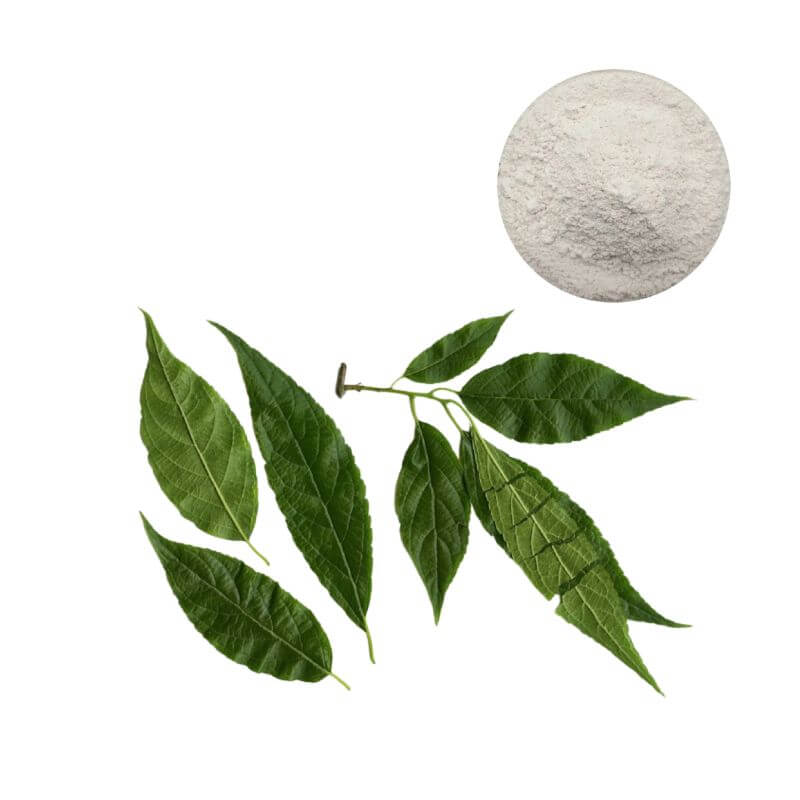
Chlorogenic Acid Powder
| Product Name | Chlorogenic Acid Powder |
| CAS Number | 327-97-9 |
| Appearance | White to off-white crystalline powder |
| Purity | 98.0% min. (by HPLC) |
| Packaging | 1 kg/bag, 5 kg/bag, 25 kg/drum |
| MOQ | 1 kg |
Chlorogenic Acid Powder – Eliminating Caking Risks & HPLC Batch Traceability
Bulk Chlorogenic Acid Powder sourced through a spec-verified distributor must overcome flowability bottlenecks and moisture-driven agglomeration during high-speed encapsulation. This 98% min purity material from Eucommia ulmoides leaves, with ≥95% through 80 mesh and Loss on Drying ≤5.0%, directly mitigates hopper bridging and tooling adhesion on CMO lines. Each shipment is released with a batch-specific Certificate of Analysis (HPLC purity chromatogram and heavy metal ICP-MS data), ensuring absolute batch-to-batch consistency for metabolic health formulators. Such particle-level control transforms a commodity ingredient into a strategic asset, securing finished product differentiation and margin protection in the crowded metabolic health category.
Carbon-14 Authenticity Lock – Distinguishing Natural Chlorogenic Acid from Petrochemical Adulteration
For high-purity botanical monophenols, the most critical procurement risk is undisclosed blending of synthetic material. Carbon-14 analysis via accelerator mass spectrometry (AMS) quantitatively measures the biobased carbon fraction, delivering legally defensible proof of 100% natural botanical origin. This analytical firewall rejects petrochemical-derived adulterants that otherwise bypass routine HPLC purity checks.
| Analytical Parameter | Authentic 100% Botanical CGA | Petrochemical-Adulterated Material |
|---|---|---|
| Biobased Carbon Content (pMC) | 100% (modern biomass) | <95% (up to full fossil carbon) |
| Detection Limit for Adulteration | Identifies as low as 3-5% synthetic blending | Quantifiable dilution |
| Legal Evidence for "Natural" Claim | Acceptable by FTC / EU regulators | Risk of misbranding |
Carbon-14/AMS verification directly protects the brand’s total ownership cost by eliminating supply-chain disputes, import detention risks, and reformulation expenses caused by undisclosed synthetic cuts (J. Agric. Food Chem., 2019; doi: 10.1021/acs.jafc.9b01821). Procurement directors can mandate this test in their quality agreements to secure genuine botanical identity.
Molecular Mechanism for Metabolic Health – AMPK Modulation and Clinical Endpoints
Chlorogenic acid exerts its glucose- and lipid-regulating effects primarily through AMPK activation, which promotes GLUT4 translocation to the plasma membrane and suppresses hepatic gluconeogenesis. This pathway directly supports postprandial glucose homeostasis and reduces lipid accumulation, addressing key metabolic syndrome components: insulin resistance, hyperglycemia, and dyslipidemia.
- AMPK-dependent glucose uptake: In insulin-resistant C2C12 cells, chlorogenic acid upregulates IR, IRS-1, p-Akt1 and p-AMPKα1, increasing 2-NBDG uptake and GLUT4 abundance. This mechanism translates into measurable improvements in fasting glucose and HbA1c.
- Lipid balance and energy homeostasis: AMPK activation also reduces hepatic steatosis and lowers circulating triglycerides, providing a multi-target approach for weight management and cardiovascular health formulas.
- Clinical relevance for finished products: Hard capsules and RTD beverages targeting postprandial glucose control can leverage this validated pathway. Validated oxidative stress reduction and direct AMPK signaling enhancement firmly ground the metabolic consensus that chlorogenic acid improves insulin sensitivity and lipid balance (Nutrients, 2025; doi: 10.3390/nu17203303).
Formulators can confidently cite this mechanism in consumer-facing claims (e.g., “supports healthy glucose metabolism”) while R&D teams rely on the same mechanistic data to screen synergistic actives like berberine or cinnamon extract for advanced blends.
Chromatographic Fingerprinting – Intercepting Adulteration from Inferior Botanical Sources
Routine HPLC assay for chlorogenic acid alone cannot differentiate Eucommia ulmoides leaf material from cheaper substitutes (e.g., Lonicera japonica or post-extraction residues). A multi-component UPLC fingerprint, combined with chemometric models, establishes a species-specific peak pattern that verifies botanical origin and rejects off-specification batches.
- Distinct chemical markers: Geniposidic acid, aucubin, and specific flavonoids co-elute with chlorogenic acid; their relative peak area ratios serve as an identity barcode.
- Quantitative similarity threshold: Incoming inspection requires fingerprint similarity ≥0.95 against a reference standard from authenticated Eucommia ulmoides leaves.
- Interception of recycled residue: Batches produced from reprocessed marc show a depressed fingerprint profile (reduced minor peaks), triggering automatic rejection.
For procurement teams, this analytical layer reduces the risk of receiving mislabeled material. It also streamlines supplier qualification: vendors that cannot provide full chromatographic fingerprints are deprioritized, directly lowering the cost of non-conformance. Mandating fingerprint similarity ≥0.95 cuts incoming inspection lead time by half and minimizes customs hold risk across EU and North American ports.
Formulation Synergy and Processing Compatibility – Avoiding Co-melting, Discoloration, and Degradation
When formulating high-purity chlorogenic acid with minerals or amino acids, two critical incompatibilities emerge. First, co-melting can occur when mixed with certain sulfates or chlorides under relative humidity >60% and temperature >30°C for >48 hours. Second, the compound is highly sensitive to alkaline pH (≥7.5), where the ester bond hydrolyzes, producing a reddish-brown discoloration and precipitating caffeic acid.
| Process Parameter | Safe Operating Range | Failure Consequence |
|---|---|---|
| Water activity (Aw) of blend | ≤0.20 | Liquefaction / agglomeration |
| Final formulation pH (liquid systems) | 3.0-5.0 | Ester hydrolysis, color change (delta E >3) |
| Drying temperature (spray/granulation) | Inlet ≤180°C, product <60°C for <30 min | Up to 15% degradation |
Several synergistic co-ingredients have been validated alongside chlorogenic acid. Berberine HCl ingredient complements AMPK activation and lipid metabolism pathways. Cinnamon bark extract powder further supports postprandial glucose uptake. Magnesium (as citrate) enhances insulin signaling without introducing co-melting risks when the above parameters are respected. For RTD beverages, maintaining pH 4.0-5.0 and using chelators like sodium phytate retards oxidation. These actionable guidelines allow formulators to avoid costly rework and ensure label accuracy over an 18- to 24-month shelf life. Avoiding co-melting and hydrolysis discoloration translates into fewer tablet rejects per million units and extended die tooling life on high-speed encapsulation lines.
Degradation Kinetics and Cross-Border Logistics – Protecting 98% Purity Through the Cold Chain
Chlorogenic acid’s ester bond makes it susceptible to hydrolysis and oxidation, especially during 30-45 days of ocean freight where temperature may cycle between 15°C and 45°C with humidity spikes up to 85% RH. Under such conditions, a 98% pure material can degrade to ≤95% purity within 12 months if improperly packaged, causing finished product label claims to fail.
- Critical degradation drivers: Temperature >25°C accelerates first-order degradation (k ≈ 0.005 day⁻¹ at 25°C, doubling every 10°C increase). Moisture ingress catalyzes ester hydrolysis.
- High-barrier packaging: Triple-layer aluminium foil bags (PET12/Al7/PE80) deliver water vapor transmission rate ≤0.01 g/(m2·24h) at 38°C/90% RH and oxygen transmission rate ≤0.5 cm3/(m2·24h·atm).
- Cold chain recommendation: For sea freight crossing the equator or lasting >30 days, refrigerated containers (2-8°C) are advised. The additional 10-15% logistics cost reduces degradation from ~15% to <2% over 24 months, preserving batch conformity to the COA at port of entry.
Suppliers that pre-qualify their logistics with temperature data loggers and offer nitrogen-flushed, desiccant-equipped drums directly protect the buyer’s total ownership cost: no rejected batches, no reformulation penalties, and reliable on-time delivery of full-spec material. From a total cost of ownership perspective, temperature-controlled logistics and high-barrier primary packaging eliminate write-offs due to out-of-spec purity at destination port.
Procurement Validation Kit – Sample with Complete Technical Dossier
To accelerate supplier qualification, qualified brands can obtain a spec-verified sample lot accompanied by the full technical dossier: HPLC chromatograms, heavy metal ICP-MS reports (Pb ≤1.0 mg/kg, As ≤1.0 mg/kg, Cd ≤1.0 mg/kg, Hg ≤0.1 mg/kg), residual solvent GC analysis, and a sample Carbon-14 verification report. This package enables in-house cross-validation before committing to commercial volumes.
Request a spec-verified Chlorogenic Acid sample with full COA
Frequently Asked Questions
Share this product
Related Products
Ready to get started?
Contact our team for technical specifications, pricing, and customized solutions.