
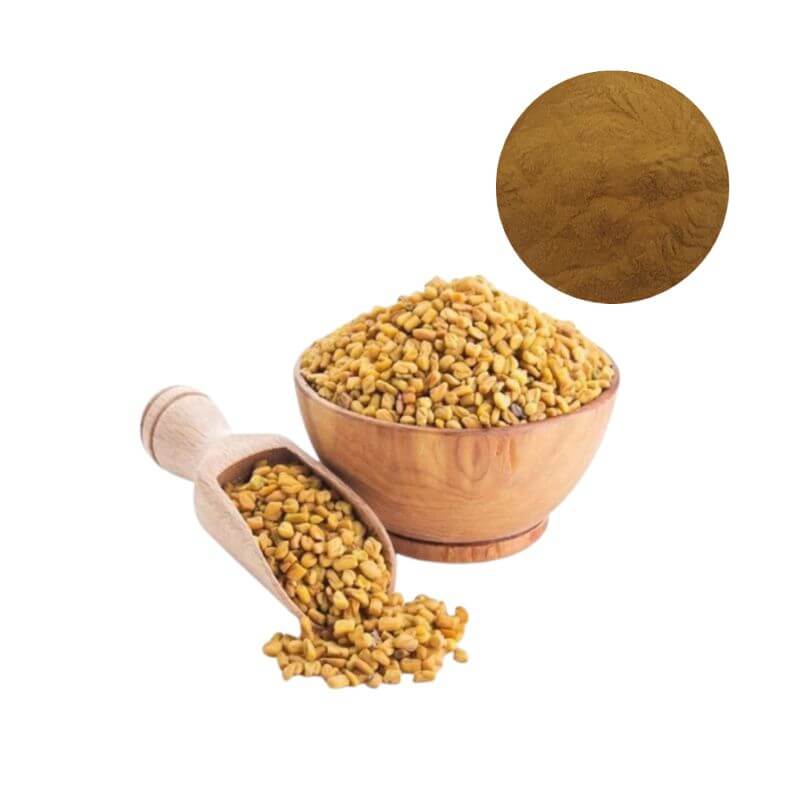
Fenugreek Seed Extract Powder
| Product Name | Fenugreek Seed Extract Powder |
| CAS Number | 84625-40-1 / 68990-15-8 |
| Appearance | Brownish-yellow fine powder |
| Purity | Total Saponins 50% min., 60% min. (by UV) |
| Packaging | 1 kg/bag, 5 kg/bag, 25 kg/drum |
| MOQ | 5 kg |
Standardized Fenugreek Seed Extract Powder - Mitigating High-Speed Compression Flow Failure
Bulk Fenugreek Seed Extract Powder entering high-speed encapsulation or tableting lines presents a documented physical challenge: the inherent galactomannan fraction (15-25% of dry mass) depresses powder flow when ambient humidity surpasses 55% RH, triggering hopper bridging and punch sticking on rotary presses operating above 80 rpm. This rheological constraint directly dictates that lot-to-lot production consistency cannot be verified by assay alone; validating flow-function parameters against a fixed physical specification constitutes the sole reliable method for preventing unplanned CMO downtime across multi-ton procurement contracts. Establishing strict physical specification baselines for this botanical intermediary is the strategic lever that differentiates finished formulations in an increasingly crowded vitality supplement market.
Galactomannan Hygroscopicity - Quantifying the CMO Throughput Loss from Moisture-Driven Flow Decay
The polysaccharide matrix in fenugreek endosperm exhibits a critical moisture uptake threshold: exposure to 60% RH for 60 minutes elevates the angle of repose from 38° to >45° and increases the Hausner ratio beyond 1.35, transforming free-flowing powder into a cohesive mass that bridges in feed hoppers.
| Physical Parameter | Baseline Specification | Post-Exposure (60 min at 60% RH) | CMO Line Consequence |
|---|---|---|---|
| Angle of Repose | ≤ 40° | ≥ 45° | Hopper bridging and flow interruption |
| Hausner Ratio | ≤ 1.25 | > 1.35 | Weight variation RSD exceeds 3.0% |
| Die Fill Weight Deviation | ± 2.0% | ± 5.5% | Reject rate climbs from 1.2% to 6.5% |
Each production shift operating under compromised flow conditions forfeits 18-22% of theoretical output due to forced cleaning cycles and recalibration of compression parameters. This OEE erosion remains invisible to procurement models until the first 48-hour production run is reconciled against the budget baseline.
HPLC Fingerprint Similarity - Intercepting Reprocessed Meal Substitution at Incoming Inspection
Industrial-scale adulteration of fenugreek extracts frequently employs defatted meal subjected to acidic back-extraction, which distorts the characteristic HPLC profile. The saponin peak cluster (retention window 22.5-28.3 min) shows a peak-area ratio shift from 1.0:0.4 (genuine) to 1.0:0.15 (adulterated), while cosine similarity evaluation drops below 0.85 - the industrial alert threshold for rejection.
- Authentic fingerprint: Eleven characteristic peaks with consistent saponin glycoside distribution; the two dominant peak clusters maintain a ratio of 1.0:0.4 ± 0.05 across all production lots.
- Adulterated profile: Peak-area ratio collapses to 1.0:0.15 or lower; the early-eluting trigonelline peak at tR 4.2 min becomes disproportionately elevated relative to saponin peaks.
- QC workflow: Implementing this fingerprint protocol at the receiving dock enables procurement to reject compromised lots prior to formulation, protecting finished brand integrity from silent efficacy failure.
Applying this chromatographic screening adds 4-6% to the material qualification cost per lot but delivers multiplicative risk mitigation. A single adulterated batch reaching retail shelves erases years of brand equity in one consumer complaint cycle.
Cross-Market Compliance Infrastructure - EU Allergen Considerations and Global Filing Requirements
Fenugreek belongs to the Fabaceae family and shares documented cross-reactivity with peanut- and chickpea-allergic populations. While not currently listed under Regulation (EU) 1169/2011 Annex II, responsible suppliers maintain validated line-cleaning verification and cross-contamination data to address potential allergen concerns in EU formulations. Generic "may contain traces" disclaimers no longer satisfy modern audit scrutiny.
- United States (FDA): Listed under 21 CFR § 182.20 as GRAS. NDI filing not required due to pre-1994 DSHEA use. A proposed FDA rule (tentatively scheduled for December 2026) would mandate formal GRAS notifications; proactive safety dossier compilation is advisable.
- European Union (EFSA): Not classified as Novel Food. Cross-contamination documentation must include validated line-cleaning verification. No Annex II allergen listing applies to fenugreek, though cross-reactivity risk warrants precautionary quality controls.
- China (PRC): GB/T 32734-2026 (effective October 1, 2026) applies to fenugreek quality assessment and trade.
This tri-market regulatory matrix requires a documentation infrastructure extending beyond standard COA issuance. Procurement must verify supplier-side dynamic regulatory tracking - capturing both current status and forward-looking rule changes. The cost of non-compliance (border detention, relabeling campaigns, market withdrawal) far exceeds the incremental investment in robust regulatory intelligence. Maintaining a fully documented quality traceability chain shortens customs clearance cycles by pre-empting regulatory queries, ensuring finished goods reach retail shelves without disruptive border holds.
Dual-Pharmacophore Mechanism - 4-Hydroxyisoleucine and Diosgenin-Mediated Androgenic Signaling
Two pharmacophores define fenugreek activity: 4-hydroxyisoleucine activates PI3K-p85/p110 and facilitates GLUT-4 vesicle translocation (glucose-dependent insulinotropic action); diosgenin-derived sapogenins downregulate hepatic SHBG mRNA expression, supporting healthy androgen metabolism without exogenous hormone introduction. This dual-pathway architecture provides a mechanistic rationale distinct from synthetic androgen precursors.
In a 12-week randomized double-blind trial (n=96, 40-80 years), the intervention arm recorded a 37.2% increase in salivary testosterone versus placebo (p=0.042) and a 12.2% change in free testosterone index at 1,800 mg/day (p=0.025) — observed biomarker shifts that support structure/function claims related to healthy androgen metabolism. Hepatic transaminase monitoring confirmed ALT/AST baselines remained unaffected, directly addressing formulator concerns about botanical-induced hepatotoxicity. These endpoints provide substantiated claim support for product positioning in the scrutiny-sensitive vitality supplement category (PLoS One, 2024; doi: 10.1371/journal.pone.0310170). Quantified biomarker data from controlled human trials offer formulators a precise efficacy baseline for smaller dose formats that improve consumer compliance and reduce per-serving material costs. These statements have not been evaluated by the Food and Drug Administration. This product is not intended to diagnose, treat, cure, or prevent any disease.
Synergistic Blending Architecture - Eutectic Prevention and Clean-Label Dosage Form Concepts
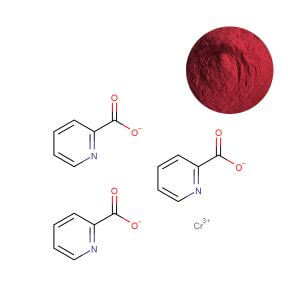
Ternary formulations combining fenugreek with standardized piperine extract (5-10 mg per serving) and zinc picolinate (10-15 mg per serving) deliver absorption synergy via P-glycoprotein inhibition and hypothalamic-pituitary-gonadal axis support. However, direct compression generates localized eutectic heating (4-6°C temperature rise) from galactomannan-zinc salt interaction, softening powder and inducing sticking. Dry granulation parameters are optimized to the Oclean Nutra specification, ensuring consistent particle morphology across all commercial lots.
- Formulation solution: Dry granulation via roller compaction (8-12 kN force, 30-mesh granulation) eliminates the eutectic risk while maintaining tablet hardness >10 Kp.
- Dual-layer tablet: Immediate-release 4-HIL layer paired with sustained-release saponin/zinc layer - mimics physiological nocturnal testosterone pulses. Target: 35-55-year-old males managing occupational burnout.
- Sugar-free gummy: Leverages inherent maple-like flavor to offset botanical bitterness, using isomalt as the sweetening matrix. Aligns with the 14% CAGR of the North American clean-label gummy segment.
Gummy formats command 25-35% premium over traditional tablets, while clean-label positioning (no TiO2, no PEG, no artificial colors) directly addresses sustainability procurement mandates now embedded in Tier-1 brand scorecards. The formulation engineering approach documented in Caco-2 permeability studies confirms that optimized delivery systems can address historically poor saponin oral bioavailability, with a 2.1-fold increase in apparent permeability coefficient (Papp) achievable via self-emulsifying formulations.
Spec-Verified Sample Program - De-risking the Supplier Qualification Pipeline
Current fenugreek supply remains tight: Indian exports grew 25-30% in FY 2024-25, yet acreage contracted in Rajasthan and Madhya Pradesh with weather-delayed new crops. Qualification lead times for spec-verified extracts now average 25-35 days vs. the 15-20-day baseline. Brands delaying qualification risk interruptions when allocations cap. The technical dossier and batch-specific COA (HPLC fingerprint, flow-function, and cross-contamination data) are available for pre-commitment review. A complete TCO audit reveals that investing in spec-verified botanical lots eliminates downstream rejects and moisture-related caking losses, directly protecting the procurement bottom line. Request a spec-verified bulk sample with complete technical dossier and validate against your CMO line before finalizing the supply agreement.
Frequently Asked Questions
Share this product
Related Products
Ready to get started?
Contact our team for technical specifications, pricing, and customized solutions.