
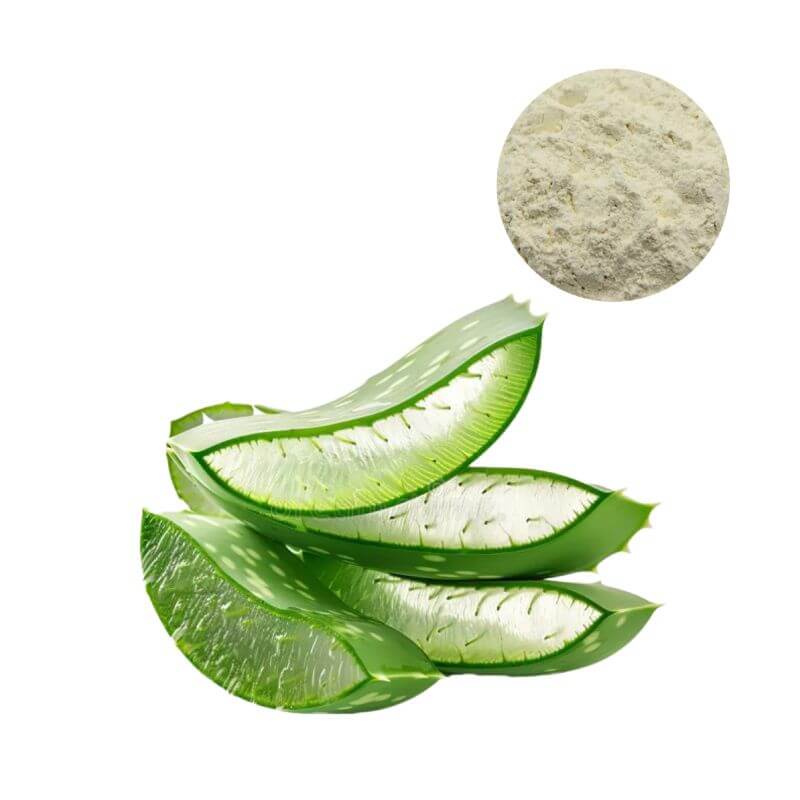
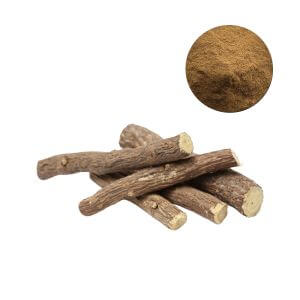
Aloe Vera Extract Powder
| Product Name | Aloe Vera Gel Extract Powder |
| CAS Number | 85507-69-3 |
| Appearance | Off-white to light yellow fine powder |
| Purity | 100:1 / 200:1 Concentration Ratio (Aloverose ≥ 5.0% / 10.0%) |
| Packaging | 1 kg/aluminum foil bag, 25 kg/paper drum |
| MOQ | 1 kg |
Aloe Vera Gel Extract Powder (100:1 / 200:1): A Strategic Ingredient for Gut Barrier Integrity & Immune Support
For supplement brands targeting gut health and immune resilience, the market now demands more than generic botanical blends. Clinically substantiated, batch‑to‑batch consistency has become a non‑negotiable procurement criterion. Standardized Aloe Vera Gel Extract Powder, derived exclusively from the inner leaf gel of Aloe barbadensis Miller, offers a solution defined by two verifiable metrics: a true 100:1 or 200:1 concentration ratio and guaranteed Aloverose (acetylated mannose) levels ≥5.0% or ≥10.0%. For procurement teams, these specifications directly translate to predictable functional performance and simplified regulatory filing. In a crowded gut‑health category, locking in a dual‑benchmark quality (Aloverose + low aloin) allows brands to bypass commodity pricing and build a defensible science‑backed premium position.
Science of Intestinal Protection: From Glucomannan to Nrf2 Activation
Aloe vera gel’s primary bioactive fraction is a β‑(1,4)‑acetylated mannan known as glucomannan. Recent research using a murine model and IEC‑6 intestinal epithelial cells has mapped out a precise protective pathway: glucomannan maintains intestinal barrier integrity by mitigating anoikis—a form of cell death triggered by loss of extracellular matrix attachment—via the Nrf2‑mitochondria axis (doi: 10.1016/j.ijbiomac.2023.123803). Practically, this means the polysaccharides help preserve tight junction proteins, reducing paracellular permeability. From a strategic formulation perspective, this mechanism allows brands to move beyond vague “digestive comfort” claims and instead support “gut barrier function” and “cellular antioxidant defense” – a positioning that resonates with educated consumers.
Key mechanistic insights for R&D teams:
- Nrf2 activation → upregulation of endogenous antioxidants (SOD, catalase)
- Mitochondrial protection → reduced ROS in intestinal epithelium
- Anoikis suppression → preserved epithelial monolayer integrity
For brands sourcing bulk Aloe Vera Extract, this molecular clarity directly supports structure/function claims on labels, provided the extract delivers consistent polysaccharide content. That is why Aloverose standardization becomes a critical quality anchor. For product developers, this means each batch’s Aloverose value directly determines label claim substantiation – a supplier that guarantees ≥10% in 200:1 cuts the need for costly re‑validation runs.
Quality Benchmarks: Aloverose, Aloin Control & Regulatory Alignment
Premium Aloe Vera Extract Powder is defined by two decisive parameters that go far beyond the 100:1 or 200:1 ratio. First, Aloverose (acetylated mannose) content, measured by UV‑HPLC, directly correlates with immunomodulatory and gut‑protective activity. Second, aloin (barbaloin) must be kept ≤10 ppm—or <1 ppm in decolorized grades—to avoid bitter taste, laxative effects, and regulatory scrutiny under California Prop 65 and EU restrictions on hydroxyanthraquinones. For procurement teams, this directly translates to lower risk of finished product rejection and easier market access.
| Quality Parameter | Why It Matters for Your Business |
|---|---|
| Aloverose ≥5% (100:1) / ≥10% (200:1) | Directly predicts bioactivity. Allows lower serving sizes and cleaner labels. Through a certified COA, buyers verify functional potency before production. |
| Aloin ≤10 ppm (decolorized) | Eliminates laxative risk. Meets US GRAS expectations for inner leaf gel. Avoids Prop 65 warning labels—a decisive retail advantage. |
From a compliance standpoint, a reliable Aloe Vera Extract supplier provides a full COA including heavy metals (Pb ≤1.0, As ≤1.0, Cd ≤0.5, Hg ≤0.1 mg/kg) and microbiological purity (TPC ≤1,000 CFU/g, absence of E. coli, Salmonella, Pseudomonas aeruginosa). Ensuring both high Aloverose and ultra‑low aloin on every batch directly reduces the risk of regulatory rejection and consumer complaints about aftertaste—making this dual benchmark a sourcing must. Regularly reviewing historical COA trends from your supplier provides early warning of process drift, protecting your brand’s market reputation over the long term. From a total cost of ownership angle, a single batch rejection due to excess aloin can cost more than $15,000 in testing and line downtime – paying a small premium for certified low‑aloin material is a direct risk avoidance measure.
Formulation in Practice: Dosage, Stability & Synergy for Capsules, Powders & Gummies
Integrating Aloe Vera Gel Extract Powder into finished products requires attention to several practical realities. The ingredient is water‑soluble and stable at pH 3.5–5.5, but polysaccharides begin to degrade above 60°C. For solid dosage forms like capsules, direct compression with microcrystalline cellulose is straightforward. For drink powders, pre‑blending with a carrier (maltodextrin or inulin) prevents clumping. For gummies, add the extract after cooling (below 55°C) to preserve Aloverose activity.
Recommended daily servings based on concentration ratio:
- 200:1 extract for gut support: 50–100 mg (equivalent to 10–20 g fresh gel)
- 100:1 extract for immune/antioxidant positioning: 100–200 mg
For liquid stick packs and ready‑to‑drink shots, the powder disperses readily in water; a natural citrus or berry flavor masks the mild earthy note effectively without added sweeteners. Synergy expands functional claims. Aloe Vera Gel Extract pairs effectively with zinc bisglycinate (immune cell function) and prebiotic fibers like FOS or inulin (microbiome support). An example capsule formula:
| Component | Dosage per cap | Role |
|---|---|---|
| Aloe Vera Gel Extract (200:1) | 75 mg | Gut barrier & antioxidant |
| Zinc Bisglycinate | 10 mg | Immune support |
| FOS | 100 mg | Prebiotic synergy |
An effective formulation requires careful sequencing. In hot‑fill processes (beverages, syrups), add the Aloe Vera extract after cooling below 60°C. The decolorized form eliminates most phenolics that cause browning over time, extending shelf‑life to 24 months. For purchasing managers, this directly translates to fewer stability‑related complaints and a cleaner label profile. When formulating low‑pH functional waters (pH 3.0–3.5), a brief stability trial over 14 days at 40°C is recommended to confirm that Aloverose remains above 90% of its initial value.
Mitigating Risk: A Procurement Checklist for Bulk Aloe Vera Extract
When evaluating wholesale Aloe Vera Extract suppliers, price per kilogram is a misleading metric. The total cost of ownership includes quality‑driven variables: failed batches, re‑testing, delayed launches, and regulatory rejections. A strategic sourcing framework should verify the following:
- Batch‑specific COA – includes Aloverose (by UV), aloin (by HPLC), heavy metals, and microbiology
- Decolorization process – ensures aloin <10 ppm (ideally <1 ppm) for safety and taste
- Stability data – 24‑month shelf life under cool, dry storage
- Certifications – GMP, ISO, HACCP, Kosher/Halal where applicable
From a strategic formulation perspective, partnering with a supplier that offers full traceability from farm to finished powder and can deliver technical documentation within 24 working hours reduces development risk significantly. Moreover, MOQ flexibility (starting at 1 kg for trials) allows small to mid‑sized brands to test formulations without container‑sized commitments. Insisting on a supplier that publishes batch‑to‑batch coefficient of variation (CV) for Aloverose—ideally below 5%—is a procurement best practice that directly translates to predictable finished product quality and fewer validation surprises. Requesting copies of the supplier’s raw material origin certificates and manufacturing batch records as part of your annual audit adds an extra layer of supply chain security. Applying a total cost of ownership lens, the incremental cost of a supplier with full traceability and low CV is often less than 2% of landed price – a trivial expense compared to a six‑figure recall caused by inconsistent raw material.
Next Steps: Accelerate Your Gut‑Health Product Launch with Verified Technical Support
You now have the scientific rationale, quality benchmarks, formulation guidance, and risk mitigation framework for Aloe Vera Gel Extract Powder (100:1 / 200:1). Whether developing a gut‑barrier capsule, an immune shot, or a clean‑label gummy, the critical first step is accessing a fully documented, batch‑specific COA and a technical dossier. To remove uncertainty from your sourcing decision, request a complimentary sample and the complete technical package—including stability data and regulatory guidance. Request your complimentary sample & technical dossier here and move from concept to commercial formulation with confidence.
Frequently Asked Questions
Share this product
Related Products
Ready to get started?
Contact our team for technical specifications, pricing, and customized solutions.