
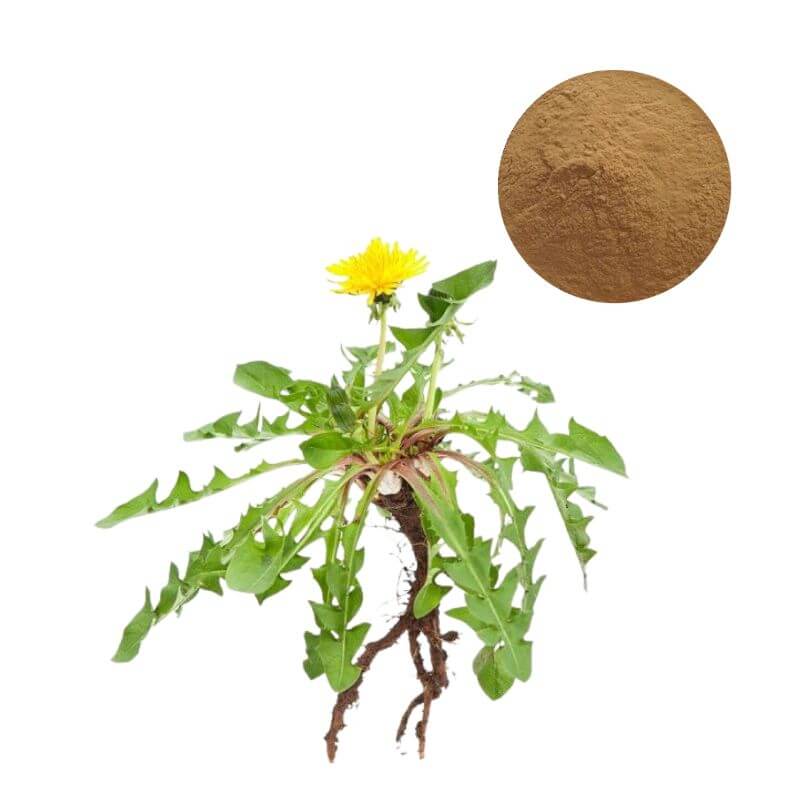
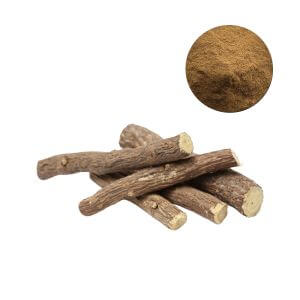
Dandelion Root Extract Powder
| Product Name | Dandelion Root Extract Powder |
| CAS Number | 68990-74-9 / 84775-55-3 |
| Appearance | Brown to yellow-brown fine powder |
| Extract Ratio | 4:1, 10:1 (by TLC) |
| Packaging | 1 kg/bag, 5 kg/bag, 25 kg/drum |
| MOQ | 25 kg |
Dandelion Root Extract Powder: Industrial-Grade Heavy Metal Control & CMO-Ready Flow Assurance
Bulk Dandelion Root Extract Powder from Taraxacum officinale root exhibits a cadmium bioaccumulation factor of 2.5-4.0, requiring validated sourcing and selective adsorption to guarantee trace-level contaminant control across seasonal harvest variations while preserving 4:1 and 10:1 TLC ratio integrity. Strict particle-size control and extract-ratio fidelity directly underpin finished-brand pricing power and consumer confidence in a commoditized botanical ingredient market.
GAP-Framed Cultivation & Resin-Adsorption Decoupling: The Only Auditable Path to ≤1.0 mg/kg Heavy Metals
Root morphology dictates contaminant profile. The cadmium BAF (2.5-4.0) and lead retention in periderm demand pre-emptive soil remediation. GAP protocols enforce GPS-tagged plots, pH-adjusted irrigation, and organic matter to suppress metal ion mobility before extraction.
| Contaminant | Oclean Nutra Specification | Industry Benchmark (USP <232>) | Auditable Control Point |
|---|---|---|---|
| Lead (Pb) | ≤ 1.0 mg/kg | ≤ 10.0 mg/kg (oral) | Root zone soil Pb immobilization + chelating resin filtration |
| Cadmium (Cd) | ≤ 1.0 mg/kg | ≤ 1.0 mg/kg | Low-Cd cultivar selection + GAP plot mapping |
| Arsenic (As) | ≤ 1.0 mg/kg | ≤ 1.5 mg/kg | Speciated As(III/V) monitored via ICP-MS |
| Mercury (Hg) | ≤ 0.1 mg/kg | ≤ 0.1 mg/kg | Raw material GAP screening + resin purification |
Resin-assisted adsorption (D101 + cation-exchange) strips multivalent heavy metals while preserving the inulin backbone. This eliminates inbound QC rejections and avoids $2,500-$4,500 per-batch re-testing.
HPLC Fingerprinting vs. Species Substitution: Reject Adulterants at the Dock
Substitution with Taraxacum koksaghyz (rubber root) or juvenile specimens remains the most insidious adulteration in dandelion supply chains. Conventional UV or gravimetric assays fail to differentiate these species, but HPLC-DAD fingerprinting-calibrated to 20 consensus peaks-provides an unambiguous spectral signature exposing fraudulent lots within 45 minutes.
- Five discriminatory markers (2026 validation): Caffeic acid, neochlorogenic acid, ferulic acid, cichoric acid, and chlorogenic acid show distinct ratio variations; cultivated origins consistently exhibit an 18-22% relative increase in caffeic acid content compared to wild-harvested materials, enabling origin authentication.
- Pass/fail threshold: A deviation exceeding ±15% in the cichoric acid-to-chlorogenic acid peak-area ratio from the reference fingerprint triggers immediate rejection-no confirmatory testing required, saving 72 hours of QC hold time per container.
- TLC verification for ratio fidelity: 4:1 and 10:1 extract ratios are visually validated against reference standards of caffeic acid and chlorogenic acid, ensuring concentration linearity meets contract specifications.
For QC directors, this fingerprinting workflow provides an objective package intercepting adulterated lots before production-eliminating downstream liability and recalls costing $50k-$200k per incident. This analytical rigor streamlines customs clearance, minimizes duplicate retesting, and enhances regulatory resilience when exporting to EU and Asian markets with divergent monograph requirements.
Powder Engineering & Air-Freight Security: Defeating Hygroscopicity-Induced Line Downtime
Dandelion root powder CRH is 65-70%. Exceeding this during tarmac transshipment (65°C) raises the angle of repose from 38° to >50°. High-speed rotary presses (Korsch XL 800, 1.2M tablets/hr) then exhibit forced-feeder bridging, picking/sticking, and scrap rates rising from 1% to 5-8%, requiring 45-minute cleaning every 2-3 hours.
- Air-freight specific risk: Cargo-hold pressure variation is less damaging than tarmac thermal spikes; internal container temperatures reaching 65-70°C drive moisture redistribution from particle cores to surfaces, artificially elevating loss-on-drying (LOD) upon arrival.
- Protective specification: Double-layer anti-static vacuum-aluminum foil liners + HDPE drums with medical-grade low-release desiccants (Sorbead Orange) maintain internal RH ≤ 30% for 21 days, ensuring angle-of-repose shift ≤ 5% and 80-mesh pass rate ≥ 93% post-transit.
- CMO financial impact: Utilizing the Oclean Nutra grade, contract manufacturers report sustained throughput at 92-95% of theoretical maximum, with scrap rates maintained below 2.2% across 8-hour shifts-yielding $14,000-$18,000 monthly savings in rework and downtime for a mid-volume production line.
A 2026 AAPS PharmSciTech review maps excipient selection and granulation strategies to overcome these barriers, providing the technical blueprint for hygroscopic botanical extracts into viable solid dosage forms (AAPS PharmSciTech, 2026; doi:10.1208/s12249-025-03255-9). For procurement directors auditing total cost of ownership, this flow assurance prevents air-freight-induced clumping that adds 8-12% to landed cost and avoids unplanned production holds.
Neural-Microbial Dual Pathway: From Bitter Taste Receptors to Mucosal IgA Elevation
Dandelion root acts through two synergistic axes. The neuronal axis: sesquiterpene lactones activate TAS2R10/14 on tongue and gastric antrum, triggering PLC-IP3 and calcium release. This vagal reflex enhances antral contractility and gastrin-17 secretion. A 500 mg dose elevates postprandial gastrin AUC (0-120 min) by 22-28%.
- Gastric emptying acceleration: T1/2 shortened by 18 minutes in a randomized crossover trial (n=24), directly supporting motility claims without drug-like terminology.
- Microbiome-metabolite modulation: Dandelion polysaccharides (30-50% of root dry weight) selectively proliferate Faecalibaculum populations while increasing fecal N-butyric acid levels-a key regulator of epithelial tight-junction integrity (occludin, ZO-1).
- Mucosal immune readout: An 8-week intervention (2 g/day, 10:1 extract) in subjects reporting mild digestive discomfort showed serum pepsinogen I/II ratio improvement of 15.6% and fecal secretory IgA (sIgA) elevation of 32.4%.
In in-vitro intestinal barrier models, dandelion polysaccharides demonstrated modulation of Bacteroides populations and showed metabolomic shifts toward reduced oxidative stress-evidence that the microbiome-metabolite axis bridges botanical intake and intestinal barrier protection (Metabolites, 2024; doi:10.3390/metabo14070351). For finished-brand R&D, this dual pathway offers gastric motility support and immune gut ecology, backed by biomarker quantitation. Connecting these quantified biomarker readouts to formulation engineering reduces pilot trial iterations and accelerates dose-response validation with greater statistical confidence before scale-up.
Formulation Synergies & Delivery Concepts: Navigating Inulin Hydrolysis and Phase Separation
Dandelion root inulin-type fructans deliver prebiotic benefits but have pH vulnerabilities. At pH ≤3.0 (common in vitamin C liquids), hydrolysis releases fructose, causing browning and flocculation within 6-8 hours. Softgel encapsulation with MCT oil (HLB 10-12) and 0.5-2% beeswax isolates physically, while pectin gummies require Aw ≤0.55 and pH 4.2-4.8 to suppress hydrolysis and mold.
- Proven synergists: Curcuma longa exhibiting high-purity active curcuminoids (choleretic synergy), zinc gluconate (epithelial repair), and spore-forming Bacillus coagulans cultures (supporting gut ecology) are commercially validated co-formulants that amplify hepatic-intestinal crosstalk.
- Processing constraint: Blending with magnesium stearate under high shear at RH > 55% induces polarity-driven phase separation-countered by low-humidity granulation (RH ≤ 35%) and pre-blended lipid coating of the extract fraction.
- Dual-phase delivery concept: Immediate-release layer delivers dandelion bitters for gastric pre-stimulation; enteric-coated beads release artichoke + betaine for enterohepatic recycling-targeting the 25-million-strong US keto diet population.
The 2026 AAPS PharmSciTech review affirms that systematic excipient optimization and granulation can overcome poor flowability and compression of dried botanicals-transforming dandelion root into a predictable, CMO-friendly input meeting dissolution and uniformity specs across batches.
Secure Spec-Verified Dandelion Root Extract Powder with Full Dossier Support
Scale digestive-health portfolios with heavy-metal-verified Dandelion Root Extract Powder. Each lot ships with HPLC fingerprints, TLC confirmation, and non-irradiated certification-eliminating QC surprises. Pre-emptive formulation risk assessments for pH, Aw, and thermal degradation specific to delivery formats are available. Batch COAs and stability data are accessible before purchase, ensuring CMO trials proceed without holds.
Frequently Asked Questions
Share this product
Related Products
Ready to get started?
Contact our team for technical specifications, pricing, and customized solutions.