
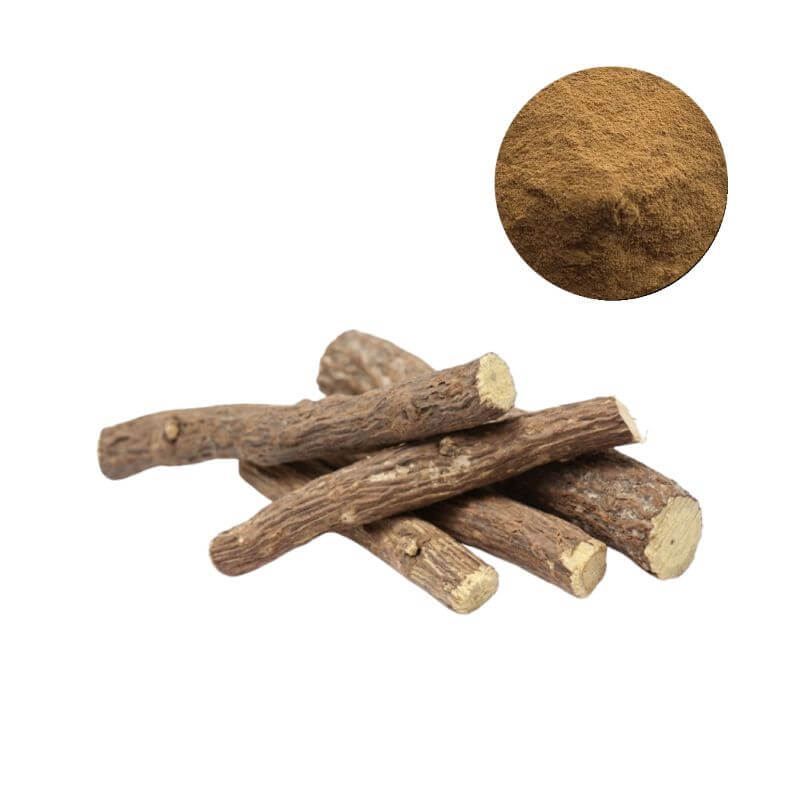
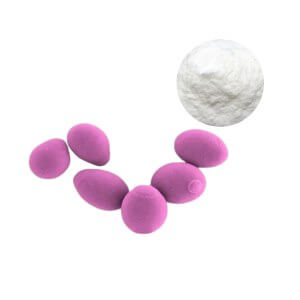
Licorice Root Extract Powder
| Product Name | Licorice Root Extract Powder |
| CAS Number | 1405-86-3 |
| Appearance | Light yellow to brown fine powder |
| Purity | 10%, 20%, 40%, 98% min. (by HPLC) |
| Packaging | 1 kg/bag, 5 kg/bag, 25 kg/drum |
| MOQ | 1 kg |
Licorice Root Extract Powder (10%-98% Glycyrrhizic Acid): Multi‑Grade Flexibility for Targeted Liver, Immune & Flavor Formulations
Formulators often face a dilemma: how to leverage licorice root’s proven benefits without compromising taste, cost, or regulatory compliance. Standardized extracts with defined glycyrrhizic acid content solve this by decoupling sweetness from bioactivity. Premium licorice root extract powder is now available in four HPLC‑verified purity grades (10%, 20%, 40%, 98% min.), allowing brands to match ingredient performance to specific product goals—from natural sweetening to evidence‑based functional support. What follows is a technical framework for integrating this versatile ingredient into your development pipeline. In a market where regulatory scrutiny and formulation science drive consumer trust, offering a four‑grade spectrum transforms a commodity extract into a strategic tool for product line differentiation and premium pricing.
Clinical Foundation: How Glycyrrhizic Acid Supports Liver Function & Immune Balance
Glycyrrhizic acid (GL) is the primary bioactive saponin responsible for licorice’s hepatoprotective and immunomodulatory effects. A 2024 systematic review and meta‑analysis of 15 randomized controlled trials (1,367 patients) demonstrated that licorice root extract standardized to GL significantly reduces serum ALT (‑15.63 U/L, p=0.001) and AST (‑7.37 U/L, p=0.01) in individuals with primary liver disease (doi: 10.1002/ptr.8288). From a strategic formulation perspective, this provides quantifiable support for liver health claims using dietary supplement‑appropriate language—without overstepping into drug territory. Additionally, GL and its metabolite glycyrrhetinic acid monoglucuronide (GAMG) exhibit antiviral activity against enveloped viruses, including influenza and coronaviruses, as reviewed in 2023 (doi: 10.3390/ph16050641). For procurement teams, this directly translates to a single ingredient that serves both liver health and immune support categories, simplifying inventory and supplier qualification. It’s worth noting that the degree of effect is purity‑dependent; lower grades (10‑20%) are ideal for sweetening and flavor masking, while higher grades (40‑98%) optimize active delivery. This flexibility means brands can launch a portfolio of products—from daily wellness beverages to high‑potency capsules—using the same raw material source, reducing qualification costs and batch‑to‑batch variation. For R&D teams, having clinical data tied to specific purity tiers shortens the formulation validation phase by providing clear dose‑response benchmarks, ultimately accelerating time‑to‑market for new SKUs.
Quality Benchmarks: What a GMP‑Certified Licorice Root Extract COA Must Contain
When evaluating bulk licorice root extract powder, the Certificate of Analysis (COA) is your most critical tool. However, many buyers focus solely on assay value while neglecting parameters that directly impact safety and shelf life. A reliable licorice root extract supplier provides batch‑specific data on:
- Heavy metals (ICP‑MS): Pb ≤2.0, As ≤1.0, Cd ≤1.0, Hg ≤0.1 mg/kg – ensures compliance with international supplement limits.
- Microbiological purity: TAMC ≤1,000 CFU/g, yeast/mold ≤100 CFU/g, absence of E. coli, Salmonella, and Pseudomonas aeruginosa.
- Loss on drying & ash: Both ≤5.0% – prevents caking and microbial growth during storage.
- Particle size: ≥95% through 80 mesh – guarantees flowability and blend uniformity.
From a compliance standpoint, a GMP certified licorice root extract powder with full traceability reduces your regulatory filing burden. The table below highlights hidden risks often missed in basic COAs:
| Parameter | Common Pitfall | Why It Matters for Your Product |
|---|---|---|
| Residual solvents | Not tested unless USP <467> requested | Ethanol or ethyl acetate residues can affect taste and label claims. |
| Pesticide screen | Often omitted for “extracts” | Licorice root is prone to organochlorine residues; absence of testing risks rejection in EU/Japan. |
| Glycyrrhizic acid profile | Reported only as total, not by HPLC | HPLC chromatogram confirms absence of adulteration with other Glycyrrhiza species. |
For procurement teams, this directly translates to lower rejection rates at incoming inspection and fewer surprises during finished product stability studies. An overlooked detail: high‑purity (98%) material is hygroscopic; requesting foil‑lined bags or desiccant packs as standard packaging is a simple way to extend its shelf life beyond 24 months. From a total cost of ownership (TCO) perspective, investing in a fully documented COA reduces the risk of failed market access due to heavy metal or pesticide exceedances—a single recall can erase years of brand equity.
Formulation in Practice: Matching Purity Grade to Dosage Form & Synergy Partners
An effective formulation requires selecting the right purity grade for the target delivery format. The table below provides a practical starting guide:
| Purity Grade | Best‑Suited Formats | Primary Function | Typical Use Level (per serving) |
|---|---|---|---|
| 10% – 20% | Beverage powders, chewables, soft lozenges | Natural sweetener & bitterness mask (50‑100x sucrose) | 200‑500 mg extract |
| 40% | Hard capsules, tablets, functional bars | Bioactive support (liver/immune) | 150‑300 mg extract |
| 98% | Small capsules, sublingual strips, R&D prototypes | High‑intensity active delivery, minimal herbal taste | 50‑150 mg extract |
Practically speaking, lower purity grades are more forgiving in aqueous systems because co‑extracted polysaccharides act as natural stabilizers. However, for high‑loading capsules, the 98% grade reduces fill weight and capsule size, improving consumer compliance. Common synergistic pairings include:
- With standardized milk thistle (80% silymarin): Complementary hepatoprotection via different mechanisms (antioxidant + anti‑inflammatory).
- With ascorbic acid (Vitamin C) or zinc: Enhanced immune support, often in lozenges for throat comfort.
- With high-purity curcumin extract (self‑emulsifying systems): GL’s surfactant properties improve curcumin dispersion in beverages.
A hidden practical detail: when blending 98% grade in high‑humidity environments (>50% RH), pre‑drying excipients or adding a flow aid (e.g., silicon dioxide) prevents agglomeration. From a strategic formulation perspective, this knowledge allows you to specify blending conditions in your manufacturing protocol, avoiding costly production stoppages. Adopting a purity‑specific formulation map directly improves batch consistency and reduces production waste, two KPIs that directly impact your product’s gross margin.
Supply Chain Resilience & Total Cost of Ownership for Bulk Licorice Root Extract
When sourcing wholesale licorice root extract powder, the lowest unit price rarely delivers the lowest total cost. Key sourcing considerations include:
- Dual‑sourcing flexibility: Can the supplier provide the same specification from multiple production lines or botanical origins (G. glabra vs. uralensis)? This mitigates crop failure risks.
- Certification suite: Beyond GMP, look for ISO 22000, Kosher, and Halal where required – this reduces your regulatory filing burden.
- Sample qualification: Reputable distributors provide 10‑20g free samples (MOQ 1kg for commercial orders) and deliver batch‑specific COA within 24 working hours.
- Custom blending capability: Pre‑mixing with other dry ingredients or offering bespoke packaging sizes (1kg, 5kg, 25kg) eliminates middle‑step handling and contamination risk.
From a total cost of ownership perspective, value lies not only in price per kilogram but also in the consistency of the glycyrrhizic acid assay. A variation of ±2% in a 20% grade may cause sweetness fluctuations that force reformulation. Therefore, reliable licorice root extract powder suppliers employ HPLC testing every batch and retain reference standards. It’s also worth noting that the 98% grade commands a premium (industry reference ~$11‑15/kg for large volumes), but its intense sweetness allows using less filler, often reducing overall formulation cost for high‑potency products. For brands launching multiple SKUs, having a single partner that supplies all four purity grades simplifies vendor management and volume discounts. A disciplined supplier qualification process that includes raw material traceability and reserve sample retention acts as insurance against batch‑to‑batch variability, preventing costly production halts and finished product rework.
Next Steps: De‑risk Your Formulation Program with a Technical Sample & Dossier
The four‑gradient approach to licorice root extract powder provides formulation flexibility without compromise: 10‑20% for natural sweetening, 40% for targeted liver/immune support, and 98% for high‑intensity, low‑volume applications. To validate these benefits in your own production environment, request a complimentary sample paired with a full technical dossier including batch‑specific COA, stability data, and suggested usage levels for your target dosage form. Request Your Complimentary Sample & Technical Dossier – typically delivered within 5 business days, enabling rapid prototyping and regulatory review.
Frequently Asked Questions
Share this product
Related Products
Ready to get started?
Contact our team for technical specifications, pricing, and customized solutions.