
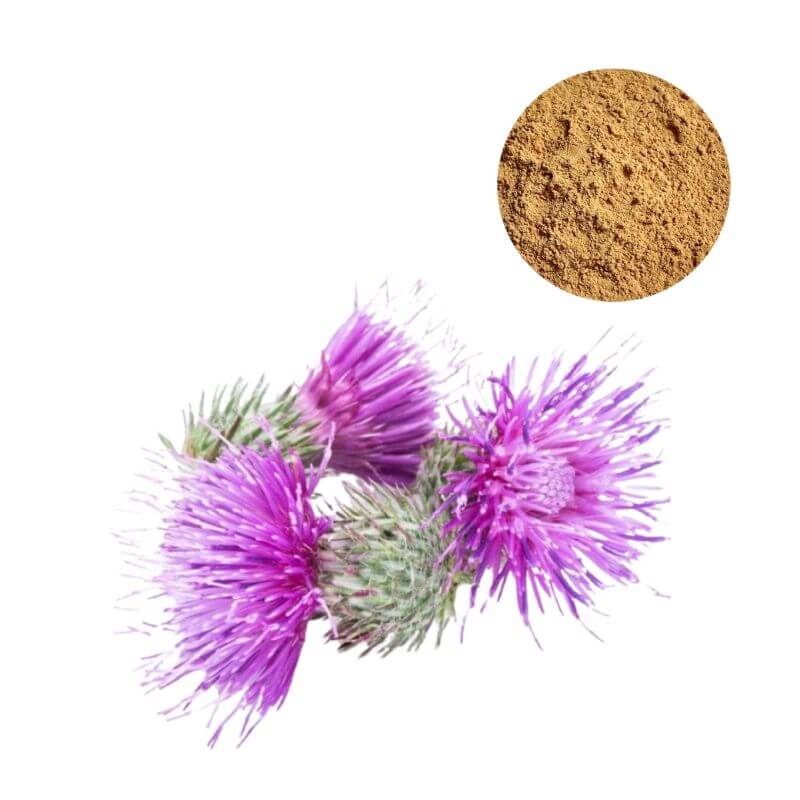
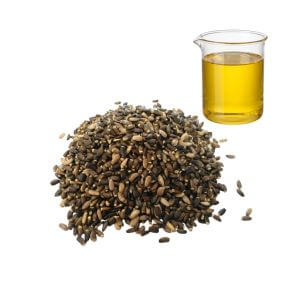
Milk Thistle Extract Powder
| Product Name | Milk Thistle Extract Powder |
| CAS Number | 84604-20-6 |
| Appearance | Light yellow-brown to brown fine powder |
| Purity | 80% UV / 50% HPLC (Silymarin); 30% HPLC (Silibinin) |
| Packaging | 1 kg/bag, 5 kg/bag, 25 kg/drum |
| MOQ | 1 kg |
Milk Thistle Extract Powder: Enabling Differentiated Liver Health & Metabolic Support Formulations
For brands developing next-generation hepatoprotective and metabolic wellness products, relying solely on generic antioxidant blends no longer creates competitive distance. A clinically-substantiated botanical like standardized silymarin offers a clear path to evidence-backed claims. Premium Milk Thistle Extract Powder, standardized to 80% silymarin (by UV) (also available in 50% Silymarin by HPLC and 30% Silibinin by HPLC specifications), sourced from Silybum marianum seeds, provides the analytical fingerprint required for batch-to-batch consistency. From a strategic formulation perspective, this purity threshold ensures that every production lot delivers a predictable flavonolignan profile – the foundation for reproducible clinical outcomes and regulatory confidence. For brand owners, locking in a verified 80% grade directly builds a scientific moat: it supports premium pricing by linking your product to published clinical data, while reducing the risk of reformulation due to inconsistent raw material.
Clinical Foundation: How 80% Silymarin Modulates Liver Health Biomarkers
Silymarin's hepatoprotective mechanism operates through multiple pathways: direct radical scavenging, NF-κB pathway inhibition, and modulation of hepatic stellate cell activity. A 2024 systematic review and meta-analysis of 26 randomized controlled trials (2,375 patients with NAFLD/NASH) quantified these effects. The analysis reported that silymarin administration significantly reduced ALT (SMD = -12.39) and AST (SMD = -10.97) while improving steatosis with an odds ratio of 3.25 (Annals of Hepatology, 2024; doi: 10.1016/j.aohep.2023.101174). Beyond liver enzymes, silymarin also lowered total cholesterol, triglycerides, LDL-C, and fasting insulin, while raising HDL-C.
- What this means for your product claims: The meta-analysis provides regulatory-friendly support for structure/function statements such as "helps maintain healthy liver enzyme levels" or "supports lipid metabolism."
- Practical insight: Because the effect is context-dependent (strongest in NAFLD populations), positioning your final product for metabolic health or weight management synergy adds credibility.
For procurement teams sourcing bulk Milk Thistle Extract Powder, this data directly translates into lower formulation risk - a standardized 80% grade ensures your clinical substantiation remains reproducible across batches, unlike non-standardized whole herb powders.
From a brand differentiation standpoint, the meta-analysis also reveals a dose-response pattern: higher total daily silymarin (420-700 mg) tends to drive stronger biomarker improvements. This gives you flexibility to design entry-level and premium product lines using the same raw material. Concretely, this means a single supply contract can serve two distinct SKUs - a value 140 mg capsule and a clinical-strength 420 mg softgel - without requalifying the ingredient, cutting development lead time by weeks.
Quality Benchmarks: Why 80% Silymarin (UV) Sets the Industry Standard
In B2B trade, "80% silymarin by UV" is not merely a purity claim - it reflects a complete flavonolignan complex including silybin, isosilybin, silychristin, and silydianin. While HPLC methods resolve individual components, UV-based total silymarin quantification remains the accepted industry benchmark for routine quality control because it aligns with USP dietary supplement monographs. Key sourcing considerations for premium Milk Thistle Extract Powder include:
| Quality Attribute | Specification (Typical Premium Grade) | Why It Matters for Formulators |
|---|---|---|
| Loss on Drying | ≤5.0% | Low moisture prevents microbial growth and caking during blending. |
| Sulfated Ash | ≤5.0% | Indicates minimal inorganic residues - cleaner for encapsulation. |
| Particle Size | ≥95% through 80 mesh | Ensures uniform flow in high-speed capsule fillers and powder blends. |
From a compliance standpoint, a certified COA with heavy metals (Pb≤2.0, As≤1.0, Cd≤1.0, Hg≤0.1 mg/kg) and residual solvents (USP <467>) is non-negotiable. For brands targeting the US or EU markets, partnering with a Milk Thistle Extract Powder supplier that routinely provides USP-compliant documentation reduces registration delays and audit risks.
The 80% UV specification is not an arbitrary number - it corresponds to the minimum total flavonolignan content required to achieve the hepatoprotective effects demonstrated in most clinical studies. Requesting a batch-specific COA that also reports the individual flavonolignan profile (silybin A+B, isosilybin, silychristin, silydianin) gives you an extra layer of quality assurance. From a production efficiency standpoint, tight control of particle size (≥95% through 80 mesh) directly reduces die fill variation on high-speed rotary presses, lowering tablet rejection rates by up to 2-3% - a measurable saving on large-volume runs.
Formulation in Practice: Overcoming Solubility & Bioavailability Hurdles
Standard Milk Thistle Extract Powder is practically insoluble in water, which creates a primary formulation challenge for liquid shots or ready-to-mix beverages. For dry powder blends (stick packs, tablets), direct incorporation with flow agents like silicon dioxide or microcrystalline cellulose works reliably. For higher bioavailability requirements, consider two proven strategies:
- Phospholipid complex technology (silybin-phosphatidylcholine complex) - increases oral absorption by 3-4× compared to non-complexed silymarin.
- Liposomal encapsulation - advanced lipid-based delivery systems that improve solubility and cellular uptake, widely used in premium nutraceutical lines.
A 2024 RCT further revealed that silymarin (103.2 mg/day for 24 weeks) significantly reduced liver stiffness and GGT in MASLD patients, partly via gut microbiota modulation (Lipids in Health and Disease, 2024; doi: 10.1186/s12944-024-02220-y). For procurement teams, this underscores that even moderate daily doses can deliver measurable benefits - allowing you to optimize cost structures without sacrificing efficacy. An effective formulation often pairs silymarin with artichoke extract or vitamin E to amplify antioxidant synergy.
For synergistic blends, consider the following pairing guide - each combination addresses a specific metabolic pathway while keeping silymarin as the lead active:
- Silymarin + Artichoke (Cynara scolymus) extract: Enhances bile flow and digestion, ideal for digestive wellness formulas.
- Silymarin + Vitamin E (mixed tocopherols): Provides complementary membrane protection in lipid-based softgels.
- Silymarin + N-acetylcysteine (NAC): Supports glutathione regeneration for comprehensive liver detoxification support.
Supply Chain Resilience & Total Cost of Ownership for Bulk Milk Thistle Extract
When evaluating bulk Milk Thistle Extract Powder offers, unit price alone is a misleading metric. The true total cost of ownership includes quality-related risks: off-spec heavy metals leading to customs rejection, inconsistent silymarin content causing batch failures, or insufficient documentation delaying product launches. Premium certified ingredients typically feature:
- Full traceability - from seed source to final extract.
- Annual stability studies confirming 24-month shelf life.
- Third-party GMP audits (e.g., FSSC 22000 or equivalent).
From a strategic formulation perspective, working with a Milk Thistle Extract Powder distributor that holds safety stock of multiple batches ensures your production line never halts due to raw material shortages - a critical advantage for brands with tight launch calendars. For procurement teams, this directly translates to lower inventory carrying costs and faster speed-to-market.
An often-overlooked factor: verify your bulk Milk Thistle Extract Powder supplier conducts ICH stability testing (25°C/60% RH, 40°C/75% RH). This confirms 24-month shelf life for your packaging (foil, drums, HDPE) and prevents requalification-critical for wholesale programs. Applying a Total Cost of Ownership lens: a rejected shipment due to off-spec heavy metals costs not only the raw material but also production downtime and regulatory resubmission fees - easily exceeding 5-10× the batch's purchase price. A certified COA from a GMP partner is therefore a risk-mitigation asset, not a paperwork formality.
Next Steps: De-risk Your Product Development with Technical Documentation
You now have a clear framework: 80% silymarin as the clinically-validated standard, key quality metrics to verify on each COA, and practical formulation tactics to solve solubility challenges. The most efficient way to move forward is to test the ingredient in your actual matrix. Request a complimentary 10-20 g sample and the full technical dossier - including batch-specific COA, stability summary, and suggested starting use levels for capsules, tablets, and powder blends. Click here to request your sample and compliance package - your R&D team can have it in hand within five working days, and our technical support team will provide formulation advice within 24 hours if needed.
Frequently Asked Questions
Share this product
Related Products
Ready to get started?
Contact our team for technical specifications, pricing, and customized solutions.