
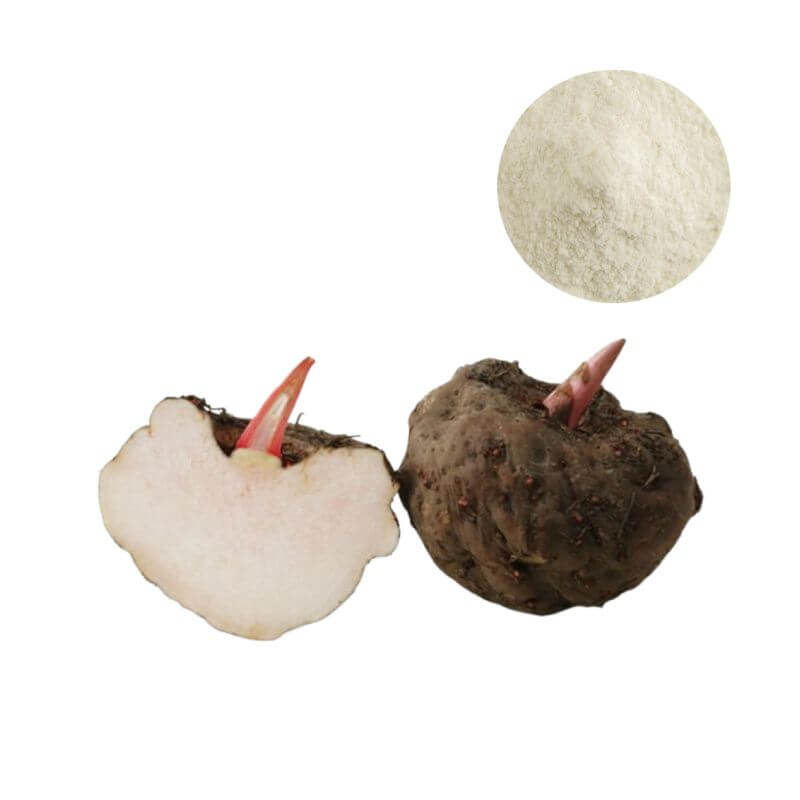
Konjac Phytoceramides Powder
| Product Name | Konjac Phytoceramides Powder |
| CAS Number | 100403-19-8 |
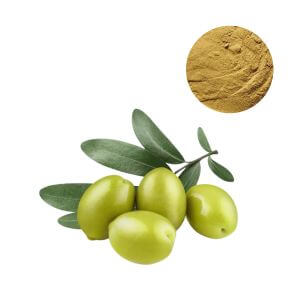
| Appearance | Light yellow to off-white fine powder |
| Purity | 1%, 3%, 5%, 10% (by HPLC) |
| Packaging | 1 kg/bag, 5 kg/bag, 25 kg/drum |
| MOQ | 1 kg |
Konjac Phytoceramides Powder (1%-10%): Clinical Evidence for Skin Barrier Support in Oral Beauty Formulations
Developing a differentiated beauty-from-within product requires more than adding a trending ingredient to a label. Formulators need clinically supported actives with transparent quality control and flexible dosing options. Konjac Phytoceramides Powder, extracted from Amorphophallus konjac tuber, is standardized to four purity grades (1%, 3%, 5%, 10%) by HPLC. This plant-derived, non-GMO ingredient helps maintain skin hydration and barrier integrity, backed by a randomized human trial. For brands sourcing bulk konjac phytoceramides powder wholesale, purity grade selection directly impacts label claims, capsule size, and production cost. In a crowded oral beauty market, matching the clinical dose (5 mg active/day) with the right purity grade is the single most effective lever to justify premium pricing while avoiding over-formulation costs.
Clinical Mechanism: How Oral Phytoceramides Reduce Transepidermal Water Loss
Ceramides are the primary structural lipids in the stratum corneum, forming a lamellar matrix that prevents excessive water evaporation. As endogenous ceramide production declines with age or environmental stress, skin barrier function weakens, manifesting as dryness, roughness, and increased sensitivity. Oral supplementation with konjac-derived glycosylceramides replenishes these lipids systemically. After intestinal absorption, they are transported to the epidermis and incorporated into the intercellular lipid layers. A rat lymph model reports up to 1.17% absorption for the konjac-derived long-chain base 18:2(4E,8Z);2OH (Lipids Health Dis, 2021; doi: 10.1186/s12944-021-01448-2).
A 2020 randomized, placebo-controlled, double-blind trial (BMC Complement Med Ther, 2020; doi: 10.1186/s12906-019-2721-3) involving 51 healthy adults demonstrated that daily intake of 100 mg konjac extract (standardized to 5% glycosylceramides, equivalent to 5 mg active phytoceramides) over six weeks produced statistically significant improvements (p<0.05):
- Reduced skin dryness and scaling
- Decreased hyperpigmentation and redness
- Less itching and improved sebum balance
- No adverse events reported
The clinical dose of 5 mg active phytoceramides per day becomes the anchor for product development. This means a brand can choose the 5% purity grade to deliver 100 mg extract per serving, or the 10% grade to achieve the same active dose in a 50 mg fill, reducing capsule size and excipient load for premium positioning. This directly translates to formulation flexibility: one raw material covers multiple product tiers without requalifying a new supplier. This purity-grade flexibility effectively cuts R&D lead time by allowing simultaneous prototyping of economy and premium lines from a single batch-qualified ingredient.
Quality Benchmarks: What Defines a Reliable Bulk Konjac Phytoceramides Supplier
Not all konjac phytoceramides powder offers the same batch-to-batch reliability. Experienced buyers evaluate three core quality indicators before approving a supplier. These benchmarks go beyond the purity percentage on a spec sheet.
- HPLC-verified phytoceramide content - each shipment must include a COA confirming the exact grade (1%, 3%, 5%, or 10%) with chromatogram.
- Heavy metal compliance - lead ≤2.0 mg/kg, inorganic arsenic ≤1.0 mg/kg, cadmium ≤1.0 mg/kg, mercury ≤0.1 mg/kg (ICP-MS).
- Microbiological safety - total aerobic count ≤1,000 CFU/g, yeasts/molds ≤100 CFU/g, absence of E. coli, Salmonella, and Staphylococcus aureus.
Premium konjac phytoceramides also meet USP specifications for loss on drying (≤5.0%), residue on ignition (≤5.0%), and particle size (≥95% through 80 mesh). Residual solvents must comply with USP <467>. From a compliance standpoint, having a batch-specific COA that includes all these parameters allows brands to directly support NDI or Novel Food filings. This translates to lower risk of regulatory rejection and fewer production line stoppages due to off-spec materials.
The table below maps purity grades to formulation strategies, a practical reference for sourcing decisions.
| Purity Grade | Extract for 5 mg Active | Ideal Finished Formats | Cost-Value Position |
|---|---|---|---|
| 1% | 500 mg | Drink mixes, stick packs | Lowest cost, high-volume |
| 3% | ~167 mg | Multi-ingredient capsules | Balanced potency & cost |
| 5% | 100 mg | Premium softgels, single-ingredient | Clinical dose match |
| 10% | 50 mg | High-potency, clean-label tablets | Smallest footprint, premium |
Selecting a konjac phytoceramides supplier that offers all four grades from one source simplifies scale-up. A brand can launch a premium product with 5% and later introduce a value line using 1% without requalifying a new vendor. From a production efficiency standpoint, a single-supplier model for multiple purity grades ensures identical particle size and flow properties across all SKUs, eliminating re-validation costs estimated at $3,000-$5,000 per new material.
Formulation in Practice: Stability, Synergy, and Production Tips
Konjac phytoceramides powder is lipophilic and moderately hygroscopic. Effective formulation requires attention to moisture, heat, and co-ingredient compatibility. Industry best practices include:
- Moisture control - keep blending area humidity below 60% RH; use desiccant packs in bulk containers.
- Thermal limits - stable during ambient processing; avoid prolonged exposure above 40°C.
- Excipient compatibility - microcrystalline cellulose, silicon dioxide, and magnesium stearate work well. Avoid strong alkaline ingredients that may hydrolyze the glycosylceramide bond.
For powder blends (drink mixes, stick packs), direct blending with maltodextrin or isomaltulose yields homogeneous dispersion. For softgels, dissolve the powder in MCT oil at 10-20% w/w. Using the 10% grade reduces oil volume and softgel size, improving consumer acceptance. Always request a retained sample and batch COA before large-scale production. Particle size variations as small as 5% can affect flowability on high-speed encapsulation lines, causing costly downtime.
Synergistic combinations enhance finished product differentiation. Pairing konjac phytoceramides with hydrolyzed collagen addresses both hydration (ceramides) and elasticity (collagen). Adding vitamin C provides antioxidant protection and supports endogenous collagen synthesis. A typical daily serving for a premium oral beauty supplement might contain:
- 100 mg of 5% konjac phytoceramides (5 mg active)
- 2,500 mg collagen peptides
- 80 mg vitamin C
This combination allows a single supplement to support multiple skin health pathways, barrier function, moisture retention, and structural integrity, which directly translates to higher perceived value and premium pricing.
Mitigating Risk: The Total Cost of Ownership Checklist
For brands scaling from R&D to full production, the true cost of an ingredient includes far more than the per-kilogram price. Hidden expenses arise from batch failures, regulatory delays, and supply chain disruptions. A professional sourcing strategy focuses on risk mitigation.
Essential documentation to request from any konjac phytoceramides supplier:
- Batch-specific COA (HPLC chromatogram, heavy metals, microbiology, LOD, particle size)
- 24-month stability summary with storage conditions
- Allergen declaration - konjac is naturally gluten-free, soy-free, non-GMO
- GMP certificate (and ISO 9001/FSSC 22000 if available)
- Residual solvent analysis per USP <467>
- Free sample (10-20g) for in-house R&D testing
For procurement teams, a batch that fails heavy metal or microbial testing due to inadequate supplier QA can cost upwards of $15,000 in wasted materials, downtime, and re-certification. Requiring USP-compliant COAs with every shipment eliminates this risk. From a compliance standpoint, having full traceability and stability data directly supports NDI or Novel Food applications, reducing regulatory hurdles. Applying a Total Cost of Ownership lens, paying a 5-10% premium for a fully documented, GMP-certified konjac phytoceramides supplier avoids the 20-30% hidden cost of batch rejection or production stoppage, a direct margin protection for your brand.
Selecting a konjac phytoceramides supplier that provides free samples and technical dossiers allows brands to validate solubility, blend uniformity, and finished product stability before committing to bulk orders. This lowers decision risk and accelerates time-to-market.
Next Steps: Validate Konjac Phytoceramides for Your Product Line
You now have a clinically supported, multi-grade ingredient with documented stability, rigorous quality testing, and formulation flexibility. Core advantages: human RCT evidence, four purity options for cost optimization, GMP-certified production, and full COA transparency. To accelerate your development timeline, request a complimentary sample (10-20g) paired with a batch-specific COA and technical data sheet. Test blending, stability, and finished product performance under real conditions, with no upfront commitment.
Frequently Asked Questions
Share this product
Related Products
Ready to get started?
Contact our team for technical specifications, pricing, and customized solutions.