
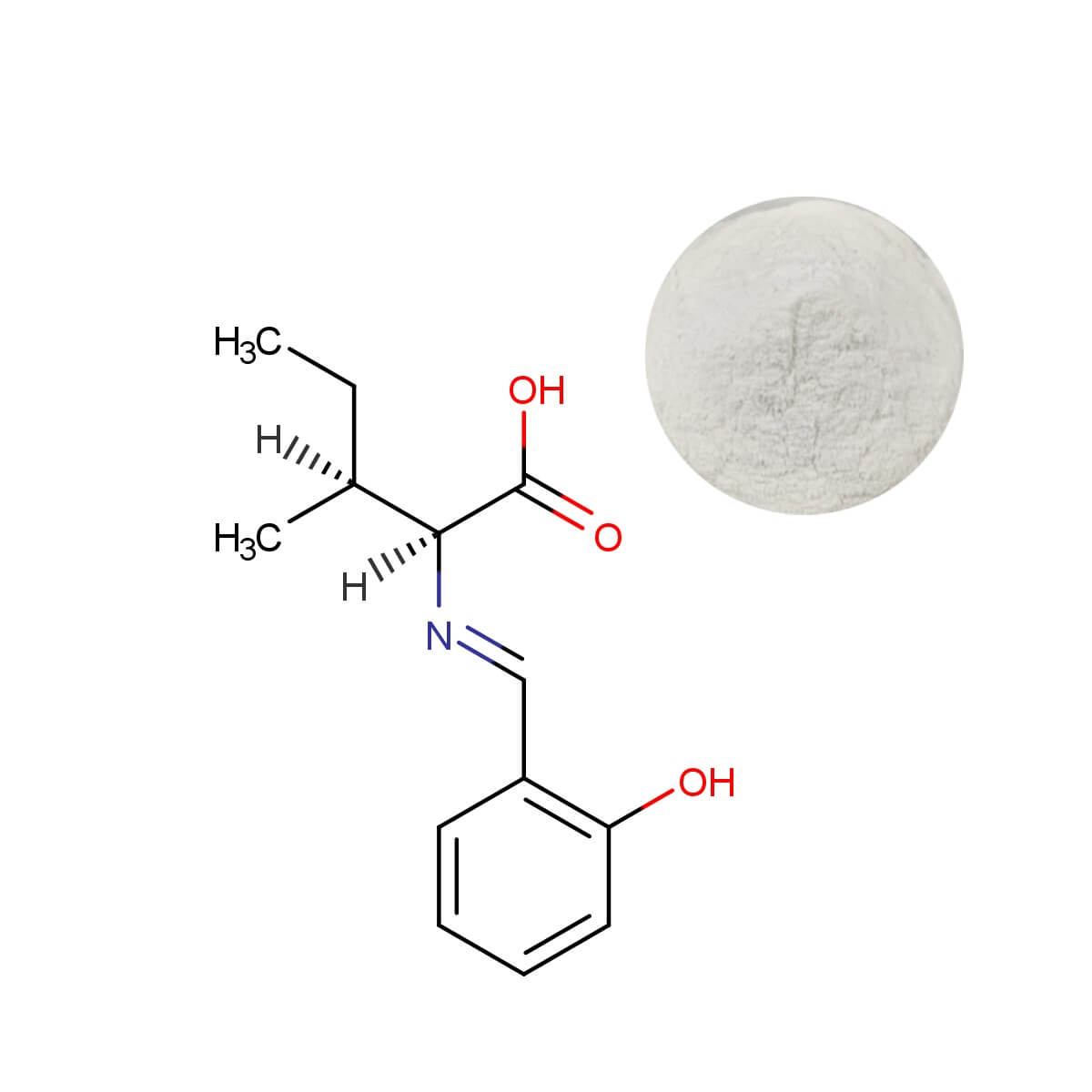
L-Isoleucine Powder
| Product Name | L-Isoleucine Powder |
| CAS Number | 73-32-5 |
| Appearance | White to off-white crystalline powder |
| Purity | ≥ 99.0% (by HPLC) |
| Packaging | 1 kg/bag, 5 kg/bag, 25 kg/drum |
| MOQ | 5 kg |
Metabolic Signaling Precision: L-Isoleucine Powder for Premium BCAA and RTM Formulations
Bulk L-Isoleucine Powder has outgrown its ratio-filler role, and the L-Isoleucine supplier landscape has reorganized around that shift. Insulin-independent glucose-uptake mechanisms now anchor premium formulation strategies across sports nutrition and metabolic-health categories. HPLC purity documentation, chiral isomer exclusion data, and audit-ready traceability separate qualified vendors from commodity traders. Lot-to-lot COA consistency and complete regulatory dossiers convert procurement risk into a controllable variable, letting R&D teams validate specifications against real material before commercial commitment.
The Insulin-Independent Metabolic Pathway That Differentiates Premium BCAA Positioning
Mechanistic separation between isoleucine and leucine determines how premium BCAA products can be positioned in DTC channels. Leucine activates mTOR-driven protein synthesis; isoleucine stimulates muscle glucose uptake through an insulin-independent pathway that does not require PI3K or AMPK activation. That distinction creates defensible claim territory for brands differentiating beyond generic recovery messaging.
- GLUT4 translocation via a signaling pathway independent of PI3K and AMPK activation
- Insulin-independent glucose uptake regulation - unique among the three BCAAs
- Cmax of 141 μM, Tmax of 0.7h, and T1/2 of 0.8h at 1.5g dose in human PK data
- Metabolic crossover positioning relevant to endurance, glucose management, and recovery formulations
- Structure/function claim support under US DSHEA and EU Article 13.1 frameworks
Premium DTC claims built around "insulin-independent glucose regulation" and "accelerated amino acid absorption" resonate with the metabolic-health crossover audience. These PK parameters provide quantitative anchors for bioavailability messaging. Scientific depth at this level justifies retail positioning above commodity recovery powders and reduces dependence on crowded leucine-centric marketing. Formulation teams gain claim territory that generic BCAA blends cannot occupy.
Formulation Engineering for Ready-to-Mix and Stick Pack Delivery
Clinical differentiation achieves commercial value only when the active translates into stable, scalable dosage forms. Isoleucine's hydrophobicity and bitter profile create formulation barriers in ready-to-mix beverages and stick packs - challenges requiring co-ingredient engineering rather than commodity blending. Formulators must also account for the 2:1:1 BCAA ratio standard dominating 87% of global trade.
| Formulation Challenge | Engineering Solution | Commercial Impact |
|---|---|---|
| Hydrophobic dispersion in RTM | Lecithin-instantized grade (sunflower or soy) | Enables transparent RTM beverage launch without sedimentation |
| Bitter taste masking in stick packs | Co-spray drying with mild acidulants | Supports clean-label claims without artificial maskers |
| Capsule fill weight uniformity | 80-mesh crystalline grade (≥95% through) | Reduces fill weight variation and rejects |
| BCAA ratio consistency | Pre-blended 2:1:1 premix | Eliminates in-house weighing errors |
Instantized or 80-mesh crystalline grades allow brands to bypass in-house granulation, compressing the timeline from concept to shelf-ready product by several weeks - a critical advantage for DTC subscription models. Pre-blended 2:1:1 ratio options eliminate in-house weighing errors and simplify CMO quality documentation. For premium RTM launches, lecithin-instantized isoleucine provides a validated path to shelf stability without artificial masking agents.
Beyond single-ingredient engineering, L-Isoleucine's value compounds when formulated into complete BCAA or EAA matrices. Formulators building complete BCAA profiles pair isoleucine with L-Leucine and L-Valine at the 2:1:1 ratio. This triad delivers complementary mechanisms: leucine triggers protein synthesis, isoleucine regulates glucose uptake, valine supports energy metabolism. For EAA-complete positioning, isoleucine integrates into nine-essential-amino-acid matrices without ratio conflicts.
Particle Physics and Air-Freight Integrity in Commercial Powder Handling
Powder that cannot move through a CMO line at commercial speed renders even the most elegant formulation commercially unviable. Isoleucine's natural flaky crystal habit produces low bulk density and poor flowability, creating sticking and capping problems during direct compression - bottlenecks that inflate production costs and delay batch release.
- 80-mesh specification (≥95% through) reduces fines generation and improves die-fill uniformity
- Flaky crystal morphology mitigation through controlled crystallization or spherical granulation
- Bulk density optimization reduces transport volume and warehouse footprint per kilogram
- Sealed packaging prevents odor cross-contamination and physical spillage during multi-modal freight
An 80-mesh crystalline grade flowing consistently through high-speed capsule fillers reduces line stoppages, cuts rejected batches, and minimizes product loss - all lowering per-unit manufacturing cost. For air-freighted orders, sealed drums with desiccant maintain material integrity when cargo holds depressurize and tarmac temperatures swing. While L-Isoleucine's hydrophobicity presents dispersion challenges in RTM systems, it also supports the material's stability against moisture ingress during freight. Avoiding a single moisture-related rejection saves the full replacement cost plus the lost production window.
Regulatory Pathways and Label Claim Safety Across US and EU Markets
Physical reliability means little without regulatory clearance in destination markets. Isoleucine occupies a favorable but nuanced legal position: permitted under 21 CFR 172.320 in the United States as a food additive and GRAS for conventional foods, yet carrying no authorized health claim under EU Regulation 432/2012.
| Market | Regulatory Status | Claim Framework |
|---|---|---|
| US | 21 CFR 172.320 food additive; GRAS | Structure/function claims under DSHEA |
| EU | No E number; not in 432/2012 health claims list | Article 13.1 "role in normal function" descriptors |
| EU Feed | (EU) 2026/1117 authorized for all animal species | Nutritional additive - amino acids group |
| JECFA | Evaluated 2012, no safety concern at flavor levels | Flavoring agent No. 2118 |
The absence of an EU-authorized health claim is a compliance discipline rather than a barrier. Brands building European labeling around structural "role in normal physiological function" descriptors avoid the enforcement risk that has hit competitors relying on disease-specific language. For feed-grade applications, the May 2026 authorization under (EU) 2026/1117 opens a decade of regulatory certainty. Procurement teams standardizing on a compliance-ready L-Isoleucine supplier reduce the cost of label revisions across multiple market entries.
Procurement Economics and Supply Chain Resilience for Amino Acid Sourcing
Regulatory clearance opens market access; procurement economics determine whether that access converts to margin. Label compliance represents only one cost line; raw material pricing and supply volatility determine the larger share of landed cost. Global BCAA raw material pricing has fallen toward USD 9-14 per kilogram due to Chinese fermentation overcapacity, yet retail prices per serving have remained relatively sticky at USD 0.70-1.20 - a gap that rewards buyers who lock supply correctly.
- China is the largest BCAA production country, holding approximately 34% of global production output
- The top five BCAA producers - Ajinomoto, Kyowa Hakko, Evonik, Fufeng Group and Luzhou - collectively account for approximately 73% of global L-valine production output, and represent the dominant supplier base across the BCAA category
- Spot price volatility has ranged 20-30% within single quarters during 2023-2025
- Annual framework agreements stabilize input costs against quarterly swings
- Pre-shipment samples plus lot-specific COAs reduce incoming inspection cost at the CMO
Locked L-Isoleucine wholesale pricing at agreed tiers lets procurement directors forecast landed cost with confidence, protect contribution margin per unit, and avoid emergency spot buys. Batch-to-batch consistency further reduces incoming inspection sampling, cutting QC labor hours at the receiving CMO. Supply chain resilience becomes a competitive asset - the ability to maintain shelf presence when competitor stockouts occur.
From Specification Review to Pilot Batch Approval
Submitting a sample request triggers delivery of the complete technical and compliance dossier - lot-specific COA, chiral purity data, heavy metals profile, and regulatory statements. The sample request locks specifications including 80-mesh particle size, ≥99.0% HPLC purity, and batch-specific chiral isomer data, ensuring the delivered material matches the technical dossier. Formulation teams validate dispersion behavior, flow characteristics, and bioavailability assumptions against real material rather than literature values. Procurement groups simultaneously assess lead times, packaging integrity, and batch consistency. The sample package removes the back-and-forth that delays the transition from technical evaluation to commercial scale-up.
Secure a specification-locked L-Isoleucine sample with full compliance dossier
Frequently Asked Questions
Share this product
Related Products

Ready to get started?
Contact our team for technical specifications, pricing, and customized solutions.