
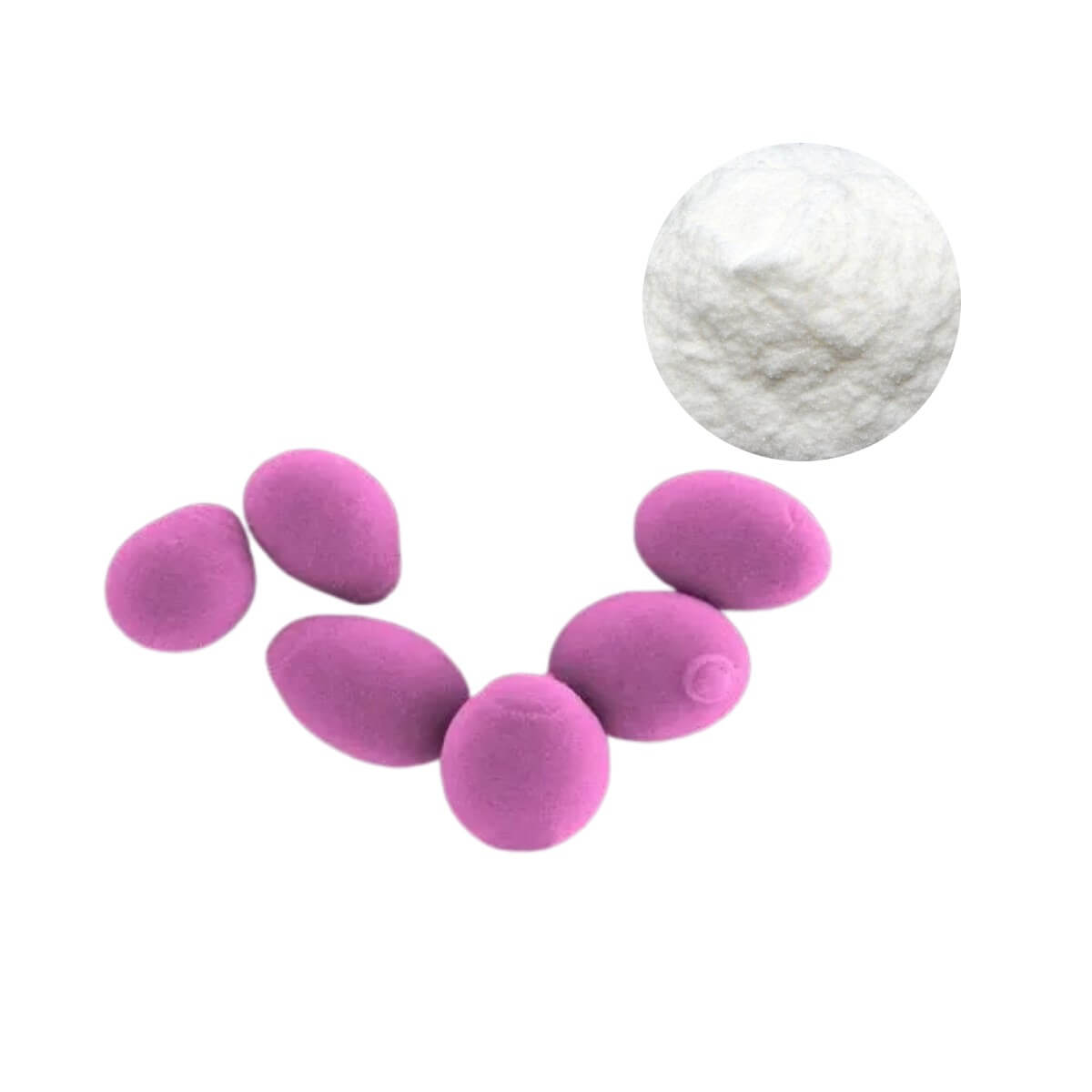
Saccharomyces Boulardii Powder
| Product Name | Saccharomyces Boulardii Powder |
| Appearance | Off-white to light beige fine powder |
| Potency | 20B, 50B, 100B CFU/g |
| Assay Method | Plate Count Method (YPD/PDA Agar) |
| Packaging | 1 kg/bag, 5 kg/bag, 25 kg/drum |
| MOQ | 1 kg |
Bulk Saccharomyces Boulardii Powder - Viability-First Supply Chain
Water activity (Aw) above 0.25 triggers metabolic respiration in bulk Saccharomyces Boulardii powder concentrates, progressively depleting intracellular glycogen and accelerating viability decay even under refrigerated 2-8°C storage. Spec-verified distributor programs for live probiotic yeast must therefore prioritize Aw control as the primary gatekeeper of label-claim integrity. Plate-count verification across 20B-100B CFU/g lots, combined with third-party stability dossiers, establishes the batch-to-batch consistency that brand R&D teams demand for multi-year formulation contracts. In a crowded probiotic yeast market, stringent Aw and particle-size control directly underpin finished-product differentiation and justify premium pricing.
Saccharomyces Boulardii Powder Stability - Aw Restriction as the Primary Viability Gatekeeper
Commercial-scale lots standardizing Aw ≤ 0.25 effectively suspend cellular respiration, locking S. boulardii into deep metabolic dormancy. The 24-month shelf-life commitment relies on this thermodynamic threshold - moisture ingress above 0.25 reawakens enzymatic activity, cutting viable count retention by 40-60% within 6 months of ambient storage. Alginate-demineralized whey microencapsulation matrices with lactobionic acid elevate S. boulardii survivability during extended bulk storage (Int J Biol Macromol, 2024; doi: 10.1016/j.ijbiomac.2024.132406), directly translating to shelf-life predictability for procurement managers.
- Loss on Drying (≤ 5.0%): a direct physical proxy for Aw; minimizing LOD reduces inter-particle adhesion during high-speed encapsulation, cutting die-fill variability by 15-20%
- Aw ≤ 0.25 validation: refrigerated transit windows (2-8°C) can be extended by 48-72 hours without triggering viability drift - absorbed by standard courier routing variability
- Plate count verification: quantifies the differential between labeled and actual viable organisms post-transit; spec-verified lots arriving with COA-matched counts eliminate inbound re-testing cycles
This stability-focused specification directly lowers total cost of ownership by eliminating co-packer rework triggered by out-of-spec viability at blending stage - the 20B-100B CFU/g tiers remain fully intact after 24 months when Aw metrics are maintained. Minimizing inter-particle adhesion through LOD control directly curtails die-fill variability during high-speed encapsulation, reducing scrap rates and extending production run durations without manual intervention.
Air-Freight Thermal and Pressure-Induced Viability Stressors
Intercontinental air transit imposes two distinct physicochemical stressors on S. boulardii powder: tarmac heat spikes (45-55°C) accelerate Arrhenius-driven decay, while low-pressure cabin environments stress aluminum laminate seals, increasing moisture ingress risk. Sustained 40°C exposure at 75% RH reduces viable counts below label thresholds within 3 months, directly setting the maximum allowable cumulative temperature dwell time for logistics routing.
- Pressure-cycled barrier integrity: polyamide-nylon composite structures demonstrate ≤ 1% oxygen transmission over 72-hour continuous pressure cycling, safeguarding the 20B-100B CFU/g declaration against courier-level handling variations
- Insulated secondary packaging: triple-walled corrugated shippers with phase-change gel packs extend safe thermal dwell times by 48-72 hours during customs holds
- Vacuum-sealed aluminum pouches: prevent headspace expansion at altitude, eliminating seal delamination and maintaining moisture-barrier performance throughout the entire freight segment
These physical protections preserve the active count profile from factory gate to warehouse receiving dock, ensuring that in-process validation testing at the brand's CMO matches the original COA data, mitigating costly production line holds and raw material rejection at inbound inspection. By attaching validated thermal mapping data and barrier-performance metrics to each shipment, procurement teams can lock out moisture-induced caking risks and quarantine-related chargebacks before they reach the receiving dock.
Anti-Inflammatory Mechanisms Validated in Preclinical Models
S. boulardii-derived bioactives suppress TNF-α, IL-1β, and IL-6 secretion while preserving occludin and ZO-1 distribution across colonic epithelia, as demonstrated in DSS-induced colitis models (Foods, 2025; doi: 10.3390/foods14071109). The Bacteroidota/Firmicutes ratio rebalancing effect correlates with reduced mucosal permeability markers, providing formulation scientists with quantitative endpoints for gut-support finished products.
- Cytokine suppression (TNF-α, IL-1β, IL-6): directly translatable to "intestinal barrier support" positioning on gut-health product labels
- Tight junction protein preservation: occludin/ZO-1 maintenance validates structure-function claims without overstepping regulatory compliance boundaries
- Global UC prevalence (~3.3 million diagnosed cases across major markets in 2025): creates sustained downstream demand - brand R&D teams actively screen patent-free, well-characterized probiotic yeast strains
This mechanistic profile substantiates clean-label positioning for digestive health formulations, reducing reliance on synthetic actives while offering a traceable, single-ingredient solution. Incoming bulk lots with verified plate-count viability ensure these benefits survive the full manufacturing-to-consumer supply chain.
Formulation Compatibility and Multi-Strain Co-Delivery Strategies
S. boulardii powder exhibits broad pH tolerance (2.5-8.0) and gastric juice resistance, yet co-formulation with high-dose minerals (calcium carbonate, magnesium oxide) elevates localized ionic strength - potentially impacting cell membrane osmotic gradients. Balanced ratio design - pairing with prebiotic fructans or prebiotic inulin polymers - offsets osmotic stress via water-binding macromolecules that stabilize the hydration shell surrounding yeast cell walls.
| Co-Formulation Partner | Interaction Profile | Commercial Advantage for Finished Products |
|---|---|---|
| Prebiotic fructans / inulin | Synergistic water-binding offsets osmotic stress; stabilizes S. boulardii metabolic activity in lower GI tract | Dual-action gut comfort angle on finished product labels without added synthetic stabilizers |
| Multi-strain blends with lactic acid bacteria | Neutral or positive interaction when CFU ratio with S. boulardii remains ≤ 1:10 in the blend | Broad-spectrum microbiome support positioning on supplement panels |
| Soft-gel / gummy matrices | 80-mesh particle size integrates without sedimentation or texture defects; ≤ 2% fill-weight variance | Consistent dosing in novel formats without specialized formulation adjustments |
Alginate-demineralized whey microencapsulation produces 3-10 μm microspheres that enable homogeneous dispersion in both dry-powder blends and liquid suspensions, eliminating the need for additional wetting agents in finished formulation. This geometric consistency directly reduces blending cycle times at the CMO, cutting processing costs by eliminating the secondary mixing steps required for non-uniform particle batches.
Cross-Market Regulatory Benchmarks for Probiotic Yeast Procurement
S. boulardii occupies a dual regulatory position: classified as a dietary supplement under US FDA NDI framework, while EFSA evaluates submissions under Novel Food Regulation (EU) 2015/2283 or QPS pathways. This dual-track positioning creates formulation flexibility for brands launching region-specific SKUs - but demands precise compliance documentation.
| Market | Regulatory Pathway | Key Compliance Threshold for Bulk Procurement |
|---|---|---|
| United States | FDA Dietary Supplement / GRAS-affirmed | NDI notification required for novel strains; reference dosage of 250 mg (approx. 4.5×10⁹ viable cells, 1-2×/day) is cited from historical safety evaluations of S. boulardii as a food ingredient |
| European Union | Novel Food (EU 2015/2283) or QPS | Pre-1997 EU use defines Novel Food trigger; EFSA requires strain-specific characterization with genotypic identification |
| China | Food-grade probiotic (GB standards) | Import license required; microbiological limits align with USP Chapter <62> criteria for probiotic raw materials |
The historical FDA NDI notification precedent serves as a master-file reference for new brands, compressing time-to-market for finished products by 4-6 months. Spec-verified lots accompanied by strain identification certificates (genotypic, 16S rRNA) directly satisfy EFSA QPS scrutiny, reducing the auditing burden on in-house regulatory teams. Shortened customs clearance cycles and reduced audit frequency are achieved when COA-matched documentation and strain identification certificates accompany each shipment, eliminating redundant port-of-entry testing.
Streamline Procurement with Full Technical Dossiers
Supply chain volatility in yeast substrate markets has elevated lead-time variability across the segment, creating a distinct advantage for procurement teams maintaining qualified alternative sources with documented reliability. Standard packaging configurations (1 kg/bag, 5 kg/bag, 25 kg/drum) accommodate both pilot-scale trials and commercial-volume production runs. Spec-verified bulk Saccharomyces Boulardii powder lots are accompanied by strain identity certificates and batch-specific stability profiles, eliminating inbound re-testing delays and compressing the supplier-qualification window by 2-3 weeks per new source evaluation. Request spec-verified samples with full COA documentation to accelerate procurement workflows and validate formulation fit before full-volume commitment.
Frequently Asked Questions
Share this product
Related Products
Ready to get started?
Contact our team for technical specifications, pricing, and customized solutions.