
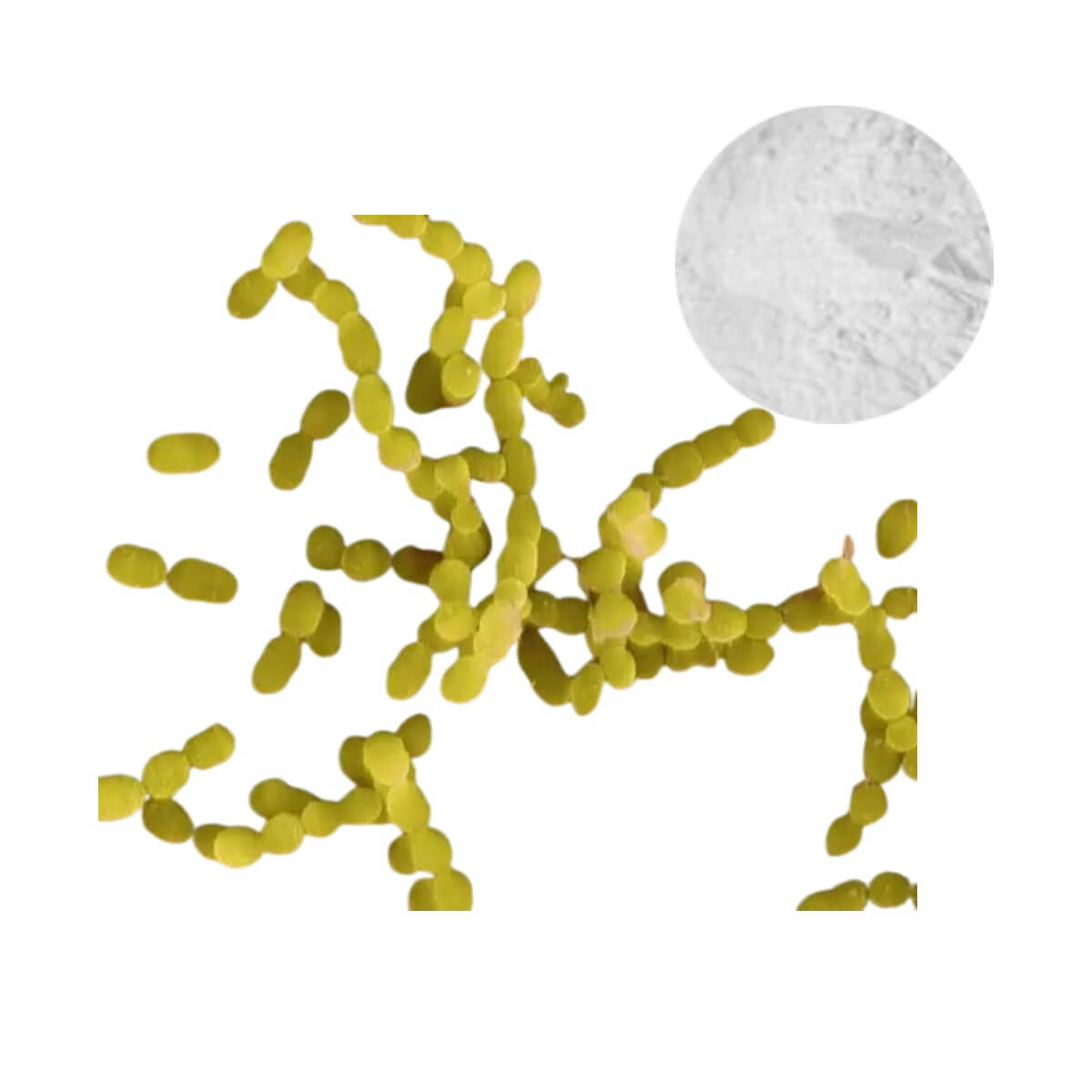
Streptococcus Thermophilus Probiotic Powder
| Product Name | Streptococcus Thermophilus Probiotic Powder |
| Appearance | White to off-white fine powder |
| Purity | 100 Billion (10^11) CFU/g Min. |
| Packaging | 1 kg/bag, 5 kg/bag, 25 kg/fiber drum |
| MOQ | 1 kg |
Streptococcus Thermophilus Probiotic Powder: Expanding Formulation Horizons Beyond Digestive Health
For brands developing next‑generation probiotic products, the challenge is no longer simply adding a live culture—it is selecting strains with documented, differentiated benefits that resonate with today’s health‑conscious consumers. While digestive support remains a cornerstone, recent high‑quality clinical research has uncovered unexpected systemic applications for specific strains of Streptococcus thermophilus. This article provides an evidence‑based framework for sourcing, formulating, and positioning probiotic products containing this versatile ingredient. We examine how its newly demonstrated effects on joint comfort and eye moisture, alongside its established gut health properties, can help you create truly distinctive offerings in an increasingly competitive market.
The Science Behind Streptococcus thermophilus: From Gut Modulation to Systemic Benefits
For a formulation team aiming to build credible, differentiated claims, understanding the mechanistic reach of this probiotic is the logical starting point. Streptococcus thermophilus is one of the most thoroughly studied lactic acid bacteria, with a long history of safe use in fermented dairy. Its primary physiological role is to support lactose digestion through β‑galactosidase production and to help maintain a healthy intestinal barrier. Yet the mechanistic reach of this probiotic extends well beyond the gut. Through the production of bioactive metabolites (e.g., exopolysaccharides, short‑chain fatty acids) and modulation of the gut–immune axis, specific strains have been shown to influence distal sites such as joints and eyes.
A landmark randomised, double‑blind, placebo‑controlled trial in 80 subjects with knee osteoarthritis reported that daily intake of S. thermophilus TCI633 for 12 weeks significantly reduced the cartilage degradation marker sCTX‑II by 41.6 % and the inflammatory marker CRP by 39.6 % (doi: 10.1016/j.heliyon.2020.e03757). These quantifiable improvements point to a genuine “gut‑joint axis” that can be leveraged in formulations targeting active ageing and joint comfort. For brands targeting this demographic, such biomarker data translate directly into claims that resonate with evidence‑savvy consumers.
More recently, another randomised clinical trial involving 68 volunteers demonstrated that the S. thermophilus iHA318 strain alleviates dry eye symptoms after 35 days. The study recorded objective gains in tear secretion and tear‑film stability, along with a reduction in the Ocular Surface Disease Index (OSDI). Mechanistically, the strain lowered NLRP3 inflammasome activation and increased serum sialic acid levels (doi: 10.3390/biomedicines13040931). For formulators, this opens the door to “eye‑gut axis” products—a largely untapped category that aligns with the rising consumer focus on digital wellness.
What these studies mean commercially is clear: a well‑chosen S. thermophilus strain allows a brand to build a multifaceted product story, combining traditional digestive health with science‑backed claims for joint mobility and visual comfort—all from a single probiotic ingredient.
Quality Benchmarks for Sourcing Streptococcus thermophilus: Beyond CFU Counts
For procurement teams evaluating a probiotic supplier, the decision goes far beyond verifying the CFU count on a datasheet. When sourcing bulk Streptococcus thermophilus powder, potency expressed in colony‑forming units (CFU/g) is the obvious starting point. The industry standard for a high‑activity material is ≥ 1.0 × 10¹¹ CFU/g (100 billion CFU/g). However, for a certified ingredient that will perform consistently in finished products, several additional quality parameters deserve equal attention:
- Strain identity – Because functionality is strain‑specific, a responsible supplier provides the exact strain designation (e.g., ST‑G68 or ATCC‑comparable reference) and can supply its 16S rRNA sequencing report. For regulatory filings and brand protection, this documentation is non‑negotiable.
- Water activity (aw) – For live probiotics, moisture control is critical. Premium material typically specifies aw ≤ 0.12 (USP <922>), a level that prevents metabolic activity during storage and preserves viability throughout shelf life. This directly reduces the risk of out‑of‑spec batches and costly returns.
- Microbiological purity – Beyond standard pathogen testing (E. coli, Salmonella), leading suppliers also verify the absence of Staphylococcus aureus and comply with USP <62> specifications for objectionable organisms. A clean microbiological profile avoids failed finished‑product tests.
- Heavy metals – Limits of ≤ 0.5 mg/kg for Pb, As, Cd and ≤ 0.1 mg/kg for Hg are the accepted benchmarks for international food‑grade ingredients. Meeting these limits is a prerequisite for global market access, especially in regions with strict heavy metal regulations.
From a risk‑mitigation standpoint, requiring a full Certificate of Analysis (COA) that includes these parameters is the most efficient way to guarantee batch‑to‑batch consistency. A transparent COA, together with evidence of GMP‑compliant production, directly reduces the likelihood of failed stability tests or regulatory surprises later in your product development cycle.
Formulation in Practice: Stability, Synergy, and Delivery Systems
For a product developer, understanding the physical and biological limits of Streptococcus thermophilus is essential—both for translating clinical potential into a stable, market‑ready product and for successfully integrating it into finished dietary supplements. The powder is typically an off‑white fine material that flows well, but its viability is sensitive to heat, moisture, and oxygen. Practical formulation guidelines include:
- Processing environment – Maintain relative humidity below 45 % during blending and encapsulation to avoid moisture uptake that could trigger premature germination.
- Temperature control – Avoid unit operations that generate heat above 40 °C; if dry granulation is needed, use low‑shear methods.
- Protective matrices – For extended shelf life, microencapsulation or co‑processing with protective carriers (e.g., maltodextrin, trehalose) can be considered.
In terms of daily dose, clinical evidence supports a range of 10⁹ to 10¹¹ CFU per serving depending on the target health outcome. The table below outlines common delivery forms and synergistic partners, helping your R&D team quickly assess feasibility:
| Delivery format | Typical addition level (CFU/serving) | Common synergistic ingredients | Key formulation notes |
|---|---|---|---|
| Capsules / tablets | 5 × 10⁹ – 2 × 10¹⁰ | Lactobacillus strains, prebiotic fibres | Use desiccant in packaging; avoid high‑compression forces |
| Powder sachets | 1 × 10¹⁰ – 1 × 10¹¹ | Vitamins, minerals, flavouring agents | Control water activity of complete blend; foil‑based sachets preferred |
| Fermented dairy | 1 × 10⁸ – 1 × 10⁹ (per g) | L. delbrueckii subsp. bulgaricus | Classic yoghurt symbiosis; strain compatibility must be verified |
An often‑overlooked point is that S. thermophilus can be paired with other bacterial strains to create a multifunctional blend. For instance, combining a gut‑supporting strain with a clinically studied joint‑health strain (such as TCI633) allows a single product to address two consumer concerns, increasing its shelf appeal and perceived value. This approach also streamlines inventory and raw material management.
Market Trends: Leveraging New Clinical Evidence for Product Differentiation
Today’s probiotic marketplace is crowded with products that claim generic “digestive health”. Brands seeking a competitive edge are increasingly turning to targeted, condition‑specific formulations. The recent clinical validation of Streptococcus thermophilus in joint and eye health provides exactly that kind of differentiation. Here are three concept directions that capitalise on the available science, each with clear implications for your product pipeline:
- Active joint & mobility probiotics – Position a product for middle‑aged and senior consumers using the osteoarthritis study. Emphasise the objective biomarker improvements (sCTX‑II, CRP) to build credibility. For brands targeting the active ageing segment, this provides a unique angle that sets the product apart from standard joint offerings.
- Screen‑eye defence – Target the growing population experiencing digital eye strain. The iHA318 trial offers quantifiable endpoints (tear secretion, TBUT) that translate into consumer‑friendly claims like “supports natural tear production” and “helps maintain visual comfort”. This is particularly relevant for brands aiming at the workplace wellness market.
- Multi‑system wellness blends – Combine a gut‑focused strain with a systemic‑benefit strain (e.g., TCI633 for joints, iHA318 for eyes) to create a comprehensive daily probiotic that addresses digestive, immune, and structural health simultaneously. From a portfolio strategy perspective, such a product can anchor a premium line.
Early adopters of these evidence‑backed concepts will not only capture premium positioning but also build a scientific barrier that is harder for competitors to cross. From a sourcing perspective, working with a certified Streptococcus thermophilus supplier who can provide full traceability and strain‑specific documentation is the first step toward securing that advantage.
Next Steps for Your Product Development
Whether your goal is to refresh an existing probiotic line or to create a breakthrough product in joint or eye health, Streptococcus thermophilus powder (100 Billion CFU/g) offers a versatile, clinically substantiated foundation. The key is to select a source that guarantees strain identity, consistent potency, and full regulatory support—from GMP‑compliant manufacturing to comprehensive COAs. These elements together reduce your time‑to‑market and increase the likelihood of a successful launch.
To accelerate your evaluation, we invite you to request a complimentary sample and technical dossier. The dossier includes the full clinical references, stability data, and suggested formulation guidelines—everything needed to move from concept to commercial launch with confidence.
Frequently Asked Questions
Share this product
Related Products
Ready to get started?
Contact our team for technical specifications, pricing, and customized solutions.