
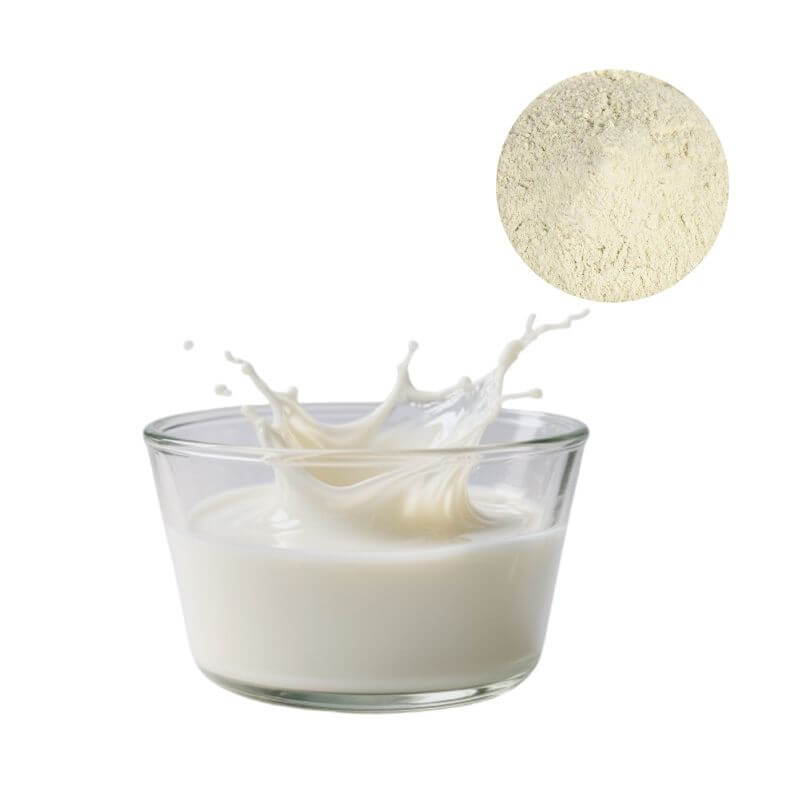
Whey Protein Isolate Powder
| Product Name | Whey Protein Isolate Powder |
| CAS Number | 91082-88-1 |
| Appearance | White to off-white free-flowing powder |
| Purity | 90.0% min. (Dry Basis) |
| Packaging | 1 kg/bag, 25 kg/bag (Standard) |
| MOQ | 1 kg |
Whey Protein Isolate: Precision Muscle Support for Age-Targeted and Performance Formulations
For brands developing the next generation of sports nutrition, healthy aging products, or clinical nutrition formulas, the choice of protein source is no longer a commodity decision. Consumers and healthcare professionals increasingly scrutinize protein quality, digestibility, and specific health outcomes. Whey protein isolate (WPI), with a protein content ≥90% on a dry basis, has emerged as the gold standard for formulations requiring high biological value, low lactose, and a clean amino acid profile. Yet, not all WPI delivers the same functional benefits. The processing method—microfiltration versus ion-exchange—directly influences the preservation of bioactive subfractions such as lactoferrin and glycomacropeptide, which in turn impact immune support and digestive tolerance. For procurement and R&D teams aiming to differentiate their product lines in a crowded market, understanding these nuances is the first step toward building formulations that command consumer trust and regulatory confidence. This article provides an evidence-based framework for sourcing and formulating with premium whey protein isolate, translating clinical research into tangible product differentiation.
Sustaining Muscle Health Across Life Stages: The Dose-Dependent Role of Whey Protein Isolate
The anabolic response to dietary protein is driven primarily by the essential amino acid leucine, which activates the mTOR signaling pathway. Whey protein isolate is uniquely rich in leucine and is rapidly digested, making it an efficient trigger for muscle protein synthesis (MPS). However, the optimal dose is not static; it varies with age, metabolic state, and energy balance. A controlled trial in overweight postmenopausal women undergoing energy restriction demonstrated that while 15 g of whey protein stimulated MPS, a dose of 35 g produced a significantly greater response, with no further increase at 60 g (doi: 10.1016/j.tjnut.2023.08.011). This plateau effect has direct commercial implications: for weight-management products targeting body composition improvement during calorie deficit, a formulation delivering 35 g of WPI per serving offers the highest anabolic efficiency without unnecessary protein excess. For general wellness or older adult formulas, slightly lower doses may suffice, but the leucine content—typically around 2.5–3 g per 25 g of WPI—remains the critical benchmark. When evaluating suppliers, forward-thinking procurement teams prioritize access to complete amino acid profiles per batch, enabling precise formulation adjustments and substantiated label claims.
From a sourcing perspective, verifying the leucine profile and ensuring batch-to-batch consistency via a comprehensive Certificate of Analysis (COA) is essential for brands that intend to make structure-function claims related to muscle maintenance. Reputable bulk whey protein isolate suppliers routinely provide this data, enabling formulators to calculate precise amino acid contributions during recipe development. For a brand targeting the active aging demographic, this level of transparency directly supports the creation of clinically relevant products that resonate with evidence-minded consumers.
Beyond Protein Content: Quality Indicators That Define a Premium Whey Protein Isolate
While a protein level ≥90% is the entry criterion for WPI, the true markers of quality lie in the processing residuals and microbial purity. For brand owners and formulators, these indicators determine not only consumer experience but also long-term supply chain reliability. Two key parameters distinguish premium-grade material:
- Lactose and fat residuals: High-quality microfiltration (cross-flow) yields WPI with lactose ≤0.5% and fat ≤1.0%, minimizing gastrointestinal discomfort and ensuring a clean flavor profile. Ion‑exchange processed WPI can achieve similar purity but often at the cost of removing bioactive whey fractions that contribute to immune support. From a product positioning standpoint, brands aiming for “clean label” or “gentle digestion” claims should prioritize microfiltered sources.
- Particle size distribution: For ready-to-mix powders or beverages, a particle size where ≥95% passes through 80 mesh guarantees instant solubility and prevents clumping. This physical characteristic, often overlooked, directly affects consumer experience and repeat purchases. In practice, purchasing managers who include particle size specifications in their vendor scorecards reduce the risk of downstream manufacturing issues and costly rework.
Microbiological and heavy metal limits are equally critical. GMP-certified whey protein isolate adheres to total plate counts ≤10,000 CFU/g and absence of pathogens (Salmonella, E. coli, S. aureus). Heavy metals such as lead and arsenic must meet food safety standards (e.g., ≤0.5 mg/kg). Sourcing from a distributor that provides full panel COAs for each lot eliminates the risk of contamination and ensures compliance with international regulations, including those of the FDA and EFSA. Practically speaking, reviewing a supplier’s historical COA data can reveal consistency trends that are more telling than a single certificate. For a procurement team, this historical view is a powerful tool to de‑risk supplier selection and ensure that the ingredient will perform identically batch after batch.
Formulating for Specific Demographics: From Sports Nutrition to Healthy Aging
The versatility of whey protein isolate allows it to be tailored to distinct consumer segments. Below is a summary of evidence-based formulation strategies for two high-growth markets, each tied to a specific clinical endpoint that can be used to support product positioning:
| Target Population | Recommended Dose (per serving) | Synergistic Ingredients | Clinical Endpoint Supported |
|---|---|---|---|
| Athletes & active adults | 25–35 g (post-exercise) | Creatine Monohydrate, BCAAs, electrolytes | Muscle protein synthesis, recovery |
| Older adults with sarcopenia | ≥30 g (with resistance exercise) | Vitamin D3, L-Leucine, HMB | Handgrip strength (+2.31 kg in meta-analysis) |
| Weight management (energy restriction) | 35 g (to maximize MPS) | Fiber, green tea extract | Lean mass preservation during fat loss |
A recent systematic review and meta-analysis confirmed that whey protein supplementation (including isolates) during resistance training significantly increases handgrip strength and skeletal muscle mass in older people with sarcopenia (doi: 10.3390/nu15153424). For formulators, this means that positioning a WPI-based product for healthy aging requires not only adequate protein content but also a formulation that supports vitamin D status and overall bone health. Moreover, in ready-to-drink (RTD) applications, selecting a low‑mineral WPI (produced by microfiltration) ensures clarity and stability at acidic pH—a key technical consideration for clear protein waters and shelf-stable beverages. For a brand launching a premium RTD line, this processing detail can be the difference between a product that separates on the shelf and one that maintains visual appeal throughout its shelf life.
Supply Chain Assurance: Key Criteria for Sourcing High-Quality Whey Protein Isolate
For procurement professionals, the total cost of ownership extends far beyond the per‑kilogram price of bulk whey protein isolate. Hidden costs—such as product rework due to inconsistent solubility, rejected shipments from microbial contamination, and delayed market entries from incomplete compliance documentation—can erode margins. To mitigate these risks, a rigorous supplier evaluation should include:
- Full traceability and manufacturing transparency: Does the supplier provide the origin of the raw milk, the processing method (e.g., cross‑flow microfiltration), and a facility audit report? Brands that invest in this level of diligence protect their reputation and avoid supply chain disruptions.
- Comprehensive COA per batch: Beyond protein content, the COA should include lactose, fat, ash, particle size, heavy metals, and microbial counts, all tested by recognized methods (AOAC, USP). For R&D teams, access to this data accelerates formulation development and reduces the need for redundant testing.
- Third-party certifications: GMP, FSSC 22000, or ISO 22000 certification indicates a mature quality management system. Kosher and Halal certifications may also be required for certain markets. These certifications are non-negotiable checkpoints for any brand with global ambitions.
- Supply reliability and safety stock: A distributor that maintains safety stock of multiple lots can buffer against dairy market volatility and ensure uninterrupted supply for your production. For a brand manager, this translates directly to on-time launches and consistent retail availability.
Choosing a partner that offers these assurances effectively reduces the risk of costly formulation failures and compliance issues. It also allows your R&D team to focus on innovation rather than troubleshooting raw material variability. In short, a robust sourcing strategy is a competitive advantage in itself.
Next Steps for Your Product Development
Incorporating a clinically supported, premium whey protein isolate into your product pipeline begins with accessing the right technical data and raw material samples. A well-documented dossier—including batch COAs, stability studies, and regulatory guidance—accelerates formulation development and de‑risks the scale‑up process. For qualified brands, we offer complimentary samples of our certified whey protein isolate, accompanied by full technical documentation to support your quality filing and label claims. Request your sample and technical dossier to evaluate how this ingredient can elevate your next sports nutrition, healthy aging, or weight management product. This upfront investment in validation ensures that when you scale to production, your ingredient performs exactly as the data predicts.
Frequently Asked Questions
Share this product
Related Products
Ready to get started?
Contact our team for technical specifications, pricing, and customized solutions.