
The Trans-MK-7 Purity Trap: Navigating Chiral Degradation and Regulatory Thresholds in K2 Formulation
Navigating K2 chiral degradation and new GB standards is critical for compliance. This guide reveals how all-trans MK-7 secures stability and protects brand equity.

The vitamin K2 sourcing landscape has moved beyond the MK-4 versus MK-7 debate into a more exacting technical frontier: chiral integrity. With China's GB 1903.81-2025 now in effect and fermentation-specific purity rules nearing finalization, relying on total assay alone invites compliance risk. This article dissects the isomer-level science, maps regulatory hard lines, and provides a procurement framework to secure supply chains against potency erosion and label failures.
Why All-Trans Purity Now Defines Premium K2 Sourcing
Global demand for vitamin K2 powder continues its double-digit trajectory, with the segment projected to grow at an 8.1% CAGR through 2032. Volume expansion, however, masks a widening quality gap: chemical synthesis inevitably generates multiple cis-geometric isomers, while fermentation can directionally produce the bioactive all-trans form. The functional value of any MK-7 lot is exclusively determined by its all-trans content—cis isomers contribute negligible carboxylation activity.
Routine HPLC screening of commercial materials has revealed isomer profiles where cis/trans pairs can exceed the all-trans fraction. Such lots meet total purity specs but fail functional potency, undermining bone and cardiovascular support claims. For formulators, the shift toward "functional purity" rather than simple assay is now a competitive differentiator.
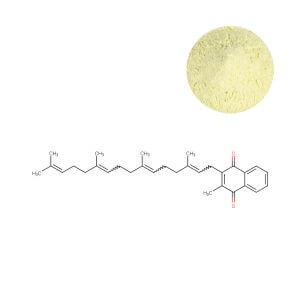
When developing high-performance skeletal or vascular health products, pairing a fermentation-derived all-trans Vitamin K2 MK-7 Powder with complementary actives ensures both partners deliver their full biological potential. Any cis contamination in the K2 component compromises the entire formulation strategy.
Isomer-Level Biology: Cis Is Not Just Inert - It Signals Degradation
The carboxylation gap between trans and cis MK-7 is now quantified. A landmark 2022 study directly compared the two isoforms: in a cell-free system, reduced trans-MK7 (MK7H₂) stimulated GGCX-dependent carboxylation at 166 ± 48% relative to vitamin K1H₂, while cis-MK7H₂ reached only 90 ± 11% (BioFactors, 2022; doi: 10.1002/biof.1844). In cellular models, cis-MK7 induced Gla protein carboxylation only to a "small extent" versus the all-trans form. Thus, any cis burden directly reduces vitamin K-dependent protein activation - the mechanism underlying clinical efficacy. For formulators, this activity gap means that a high-cis feedstock requires overages to meet label claims - directly inflating raw material costs and compromising dose accuracy.
Beyond bioactivity, cis isomers act as an early degradation flag. Light and heat convert all-trans MK-7 into cis forms; a rising cis percentage signals improper handling or aging. For R&D teams, monitoring the cis/trans ratio via silver-ion HPLC provides a stability early-warning system far more sensitive than total assay. Procurement specs that ignore this ratio accept hidden potency loss during shelf life.
The clinical anchoring for MK-7 efficacy - including the recent VitaK-CAC trial (360 µg/day, 2-year, p=0.02 for CAC progression) - is predicated on the all-trans purity of the investigational material. Any generic high-cis feedstock would not deliver the same response, making isomer-specific COA review a non-negotiable step for credible label claims.
Without all-trans specification on the COA, your MK-7 faces customs detention, delisting, or label-claim rejection - regardless of total assay.
Pivoting from molecular mechanisms to global trade frameworks: the same all-trans specificity that governs carboxylation efficiency now dictates whether a shipment clears customs or faces rejection - forcing procurement to treat isomer profiles as a compliance prerequisite, not a quality nicety.
Regulatory Hard Lines: 2026 GB Standards and the Purity Cliff
China's GB 1903.81-2025 for synthetic vitamin K2 took effect on March 2, 2026, establishing purity and quality specifications for chemically synthesized vitamin K2 across all homologues - a regulatory baseline that directly impacts MK-4 and MK-7 sourcing alike. Concurrently, the draft fermentation-method GB has moved toward a 96% pure-grade requirement for fermentation-derived MK-7. Parallel USP and EP monographs set specific residual alkane limits below 50 ppm for parenteral-grade compatibility. This effectively excludes low-purity, high-cis intermediates from the qualified supplier pool.
| Market | Regulatory Status | Implication for All-Trans Purity |
|---|---|---|
| China (GB) | GB 1903.81-2025 in force; fermentation GB draft finalizing 2026 | Pure-grade (≥96%) standard disqualifies high-cis synthetic blends |
| EU (Novel Food) | EFSA-approved only for fermentation-derived MK-7 | Chemical synthesis variants not permitted; implicitly favors all-trans |
| USA (FDA GRAS) | GRAS status; no explicit isomer limit | Structure/function claims require bioactivity - cis forms do not support efficacy |
| Australia (FSANZ) | Permitted in FSMP (gazetted Feb 2025; approved Dec 2024) | Safety assessment referenced fermentation-derived MK-7 |
For compliance officers, the message is clear: sourcing fermentation-route MK-7 that inherently produces all-trans configurations is the safest path to satisfy both current and imminent global standards. Brands that lock in all-trans specification ahead of the enforcement curve secure both regulatory grandfathering and a premium pricing lever, while competitors scrambling for compliance post-enforcement absorb reformulation penalties.
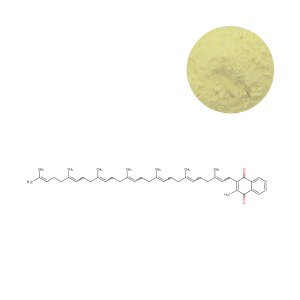
Heavy metal and microbial limits are baseline - the true differentiator is chiral purity. A COA that does not explicitly report all-trans percentage (ideally ≥98%) is insufficient for multi-market launches. For formulators developing high-dose bone health applications, a verified synthetic Vitamin K2 MK-4 Powder with documented purity provides the pharmacological consistency required for regulated markets - distinct from the low-dose MK-7 used in daily supplementation.
Fermentation Evolution: From Titer to Isomer-Specific Manufacturing
Next-generation fermentation processes now prioritize isomer-directed biosynthesis. Strain engineering and media optimization routinely achieve all-trans MK-7 concentrations above 85 mg/L while keeping cis byproducts below 2% of total. This contrasts sharply with chemical synthesis, where cis isomers inevitably form during coupling and require costly preparative chromatography for removal.
For strategic procurement, the critical metrics to audit on supplier COAs are:
- All-trans MK-7 content (HPLC area-%) - target ≥98%
- Sum of individual cis-isomers - target ≤1.0%
- Ratio of all-trans to total menaquinone-7 - should approach unity
- Accelerated stability data showing all-trans retention >98% over shelf life
Materials manufactured under the Oclean Nutra specification represent a tier where all-trans purity is guaranteed through validated fermentation and isolation protocols, with each batch verified via chiral HPLC and ASTM D6866 bio-based carbon testing. This ensures batch-to-batch consistency for predictable pharmacokinetic performance. From a cost-in-use perspective, premium all-trans MK-7 requires lower inclusion rates to achieve target biomarkers, reducing tablet size and minimizing stability surprises - ultimately lowering total formulation cost.
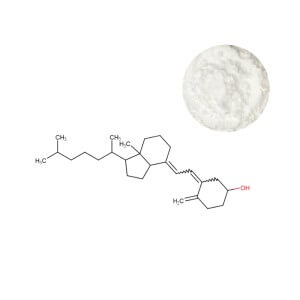
When designing combination products, the synergy between K2 and high-potency Vitamin D3 Powder depends on both actives delivering their full physiological effect; a high-cis K2 dilutes the combined impact, undermining the very rationale for co-supplementation.
Strategic Roadmap for Brand Owners and Formulators
To de-risk your K2 supply chain and build credible labels, adopt this actionable framework:
- Specify all-trans purity - set a minimum of 98% by HPLC and require cis-isomer reporting on every lot.
- Prefer fermentation over synthesis - fermentation inherently yields all-trans MK-7; synthesis introduces cis impurities that are costly to remove.
- Align with regulatory trajectories - the Chinese GB shift toward pure-grade fermentation signals a global trend; early adoption avoids reformulation costs.
- Validate stability - request real-time and accelerated data showing all-trans content remains above 98% under typical storage.
- Leverage clinical equivalence - ensure your MK-7 matches the all-trans profile used in pivotal RCTs to substantiate structure/function claims.
The vitamin K2 category is maturing from generic assay to functional purity as the true quality gate. Brands that proactively adopt all-trans-specific specifications will mitigate compliance risks and gain a marketing edge - communicating that their formulations are built on the same isomerically pure foundation as the clinical evidence.
For a deeper technical review - including sample COA templates, isomer-analysis protocols, and the latest regulatory updates - our technical team has compiled a comprehensive dossier. Contact our formulation support group to request the dossier or to discuss your specific sourcing requirements. We also offer reference samples of verified high-all-trans MK-7 materials for internal evaluation; reach out to initiate the qualification process.
Share this article
Found this helpful? Share it with others!
Related Products
Products mentioned in this article
Related Articles
You might also be interested in
Mastering K2 MK-7, D3 & Magnesium Glycinate Premixes: Stability, Uniformity, and Scale-Up Integrity
Mastering K2 MK-7, D3, and magnesium glycinate premixes requires solving solid-state particle segregation and degradation. Learn how microencapsulated grades ensure batch uniformity and shelf-life stability.
Want to learn more?
Explore our products or contact our team for personalized solutions and expert advice.