
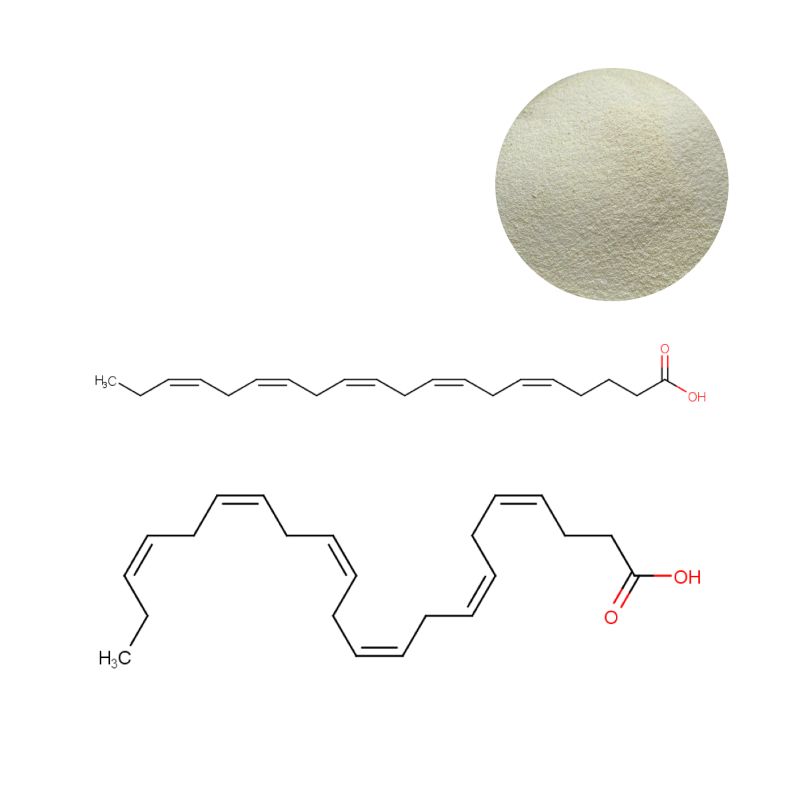
Algae Omega-3 Powder
| Product Name | Algae Omega-3 Powder |
| CAS Number | 10417-94-4 (EPA), 6217-54-5 (DHA) |
| Appearance | Off-white to light yellow fine powder |
| Purity | Total Omega-3 Fatty Acids ≥ 15.0% (by GC-FID) |
| Active Components | EPA ≥ 5.0%, DHA ≥ 10.0% (by GC-FID) |
| Packaging | 1 kg/bag, 5 kg/bag, 25 kg/drum |
| MOQ | 1 kg |
Algae Omega-3 Powder for High-Speed Nutraceutical Processing
Bulk Algae Omega-3 Powder exhibits a binary flow behavior: the solid wall system (starch/protein matrix) dictates powder flow, while the entrapped oil phase (≥15% total omega-3) governs die-wall lubrication. Spec-verified lots require validated particle size (≥95% through 80 mesh) and surface oil (≤1.0%) to maintain feeding uniformity. Each batch confirms the EPA/DHA ratio (5.0%/10.0%) and USP <61>/<62> clearance, ensuring lot-to-lot consistency for multinational brands. Establishing robust physical specification control represents the strategic pivot for brands to secure finished-product differentiation and defend pricing power in saturated cardiovascular supplement aisles.
Powder Rheology and High-Throughput Line Integration
Algal omega-3 microcapsules show a 65% critical RH threshold: above this, wall plasticization elevates surface stickiness and depresses flow. In rotary tablet presses, friction-generated heat (40-50°C) induces surface oil exudation from poorly encapsulated particles, initiating sticking and picking that halt production. Lots with surface oil ≤1.0% and loss on drying ≤5.0% demonstrate reduced die-wall adhesion, translating into extended press runs and fewer cleaning cycles.
| Parameter | Specification | Industrial Impact on High-Speed Lines |
|---|---|---|
| Particle Size | ≥95% through 80 mesh | Ensures uniform die filling; prevents segregation in blend |
| Surface Oil | ≤1.0% | Minimizes punch sticking; reduces mid-run cleaning stops |
| Loss on Drying | ≤5.0% | Prevents hygroscopic caking in feed hoppers |
| Bulk Density | 0.40-0.60 g/mL | Stable weight uniformity across high-speed encapsulation |
| Hausner Ratio | 1.20-1.40 | Below 1.25 ensures continuous feeder operation |
| Angle of Repose | 30°-45° | Maintains gravimetric feed consistency; prevents arching |
- Punch sticking mitigation: A 0.5% absolute reduction in surface oil correlates with a 40% extension in uninterrupted press runtime before mandatory cleaning, directly depressing per-tablet overhead.
- Feed hopper bridging avoidance: Particle size distributions centered within 80-120 mesh, combined with an Angle of Repose within the validated 30°-45° range, eliminate arch formation in gravimetric feeders, ensuring continuous mass flow and consistent tablet weight control.
- Die fill uniformity: Bulk density controlled at 0.50±0.05 g/mL secures ±3% fill weight variation across eight-channel rotary presses, eliminating reject rates from weight deviation.
- Flowability benchmarking: A Hausner ratio between 1.20 and 1.40 - values below 1.25 indicate good flow - provides CMO engineering teams with a validated predictor of feed consistency, reducing downtime from hopper starvation.
Processing parameters from spray-dried microcapsule optimization (180°C inlet, 80°C outlet) produce wall structures with glass transition temperatures above 60°C, retarding surface oil migration during compression. Microcapsules fabricated with these parameters demonstrate 24-month ambient shelf stability, correlating with reduced validation burdens for contract manufacturers handling multi-ton lots. Compressing validation time through predictable powder behavior curtails batch release delays and depresses per-unit conversion costs.
Cross-Border Logistics Integrity and Oxidative Stabilization
Schizochytrium-sourced algal oil exhibits autoxidation susceptibility in maritime transits. The free radical chain propagation accelerates as container temperatures cycle between -5°C and 40°C, with peroxide induction time reduced 60% at 40°C vs. 25°C. Without intervention, this elevates lot rejection risk upon arrival.
- Multilayer barrier packaging: PET/AL/PA/PE laminate structures with OTR ≤5 cm³/(m²·24h·atm) reduce oxygen ingress by 95% compared to single-layer alternatives, extending oxidation onset by multiple months.
- Active oxygen scavenging: Molecular sieve desiccants maintain headspace RH below 30%, while nitrogen flushing reduces residual O₂ to ≤2%, quenching the primary oxidant required for radical formation.
- Thermal buffer design: Corrugated outer cartons with insulating air pockets dampen tarmac temperature spikes during airfreight transshipment, protecting glass transition integrity of the microcapsule wall system.
Antioxidant synergy combining α, β, γ, and δ-tocopherol homologs with the microencapsulation matrix depresses primary oxidation products and secondary aldehydes simultaneously (Food Chem., 2023; doi: 10.1016/j.foodchem.2023.135835). This dual-mechanism defense enables ambient-temperature solid-state lipid ingredients that consistently arrive at overseas warehouses with POV within ±0.5 meq/kg of the ex-factory COA, preserving both the EPA/DHA ratio and the powder's free-flowing character for immediate production use. Verified oxidative control shortens port-hold quarantine windows and preempts customs-flagged re-testing, accelerating inbound release for just-in-time schedules.
Cardiometabolic Mechanism and Clinical Quantification
EPA and DHA exert divergent yet complementary effects on triacylglycerol metabolism. DHA upregulates lipoprotein lipase activity in peripheral tissues, accelerating VLDL clearance from circulation. EPA suppresses hepatic triglyceride accumulation through AMPK-mediated inhibition of SREBP-1c and downstream lipogenic enzymes (FASN, ACC, DGAT2), while concurrently upregulating PPARα-driven fatty acid oxidation. This mechanistic profile positions EPA as a potent triglyceride-lowering agent, with clinical evidence demonstrating significant reductions in hepatic fat accumulation and circulating triglycerides.
| Biomarker | Change with EPA/DHA Supplementation | Clinical Significance |
|---|---|---|
| HDL-EPA incorporation | +131% | Direct enrichment of HDL particles with functional EPA |
| HDL-DHA incorporation | +62% | Parallel enrichment with DHA species |
| EPA/AA ratio | Doubled | Enhanced anti-inflammatory prostaglandin precursor balance |
| Flow-mediated dilation | Significantly improved | Quantifiable endothelial function enhancement |
- HDL functionalization: EPA incorporation into HDL phospholipids confers resistance to oxidative modification and enhances reverse cholesterol transport efficiency, moving beyond simple HDL-cholesterol quantification.
- EPA/AA ratio management: Doubling this ratio shifts the eicosanoid precursor pool toward anti-inflammatory series-3 prostaglandins, providing a mechanistic anchor for cardiovascular support claims.
- Vascular compliance: Flow-mediated dilatation improvements correlate with reduced arterial stiffness, linking fatty acid incorporation to physiological endpoints that resonate in cardiovascular product positioning.
In hypertriglyceridemic subjects receiving 920mg EPA/DHA for five weeks (Int. J. Mol. Sci., 2023; doi: 10.3390/ijms24065390), HDL-EPA rose 131%, HDL-DHA 62%, EPA/AA ratio doubled, and FMD improved significantly. These endpoints provide clinical anchors for labeling, converting generic claims into biomarker-verified efficacy.
Ingredient Synergy and Multi-Component Formulation Compatibility
Microencapsulated algal omega-3 powder exhibits distinct physicochemical behavior when combined with co-active ingredients. The hydrophilic starch/protein wall system interacts with moisture-sensitive components, while the entrapped oil phase contributes plasticizing effects to dry blends. Formulation architecture must account for these interactions to maintain finished-product stability.
- Phytosterol co-application: Combining with esterified phytosterols (1:1 to 2:1 mass ratio) targets both cholesterol absorption inhibition and triglyceride reduction through distinct intestinal pathways, enabling dual-mechanism cardiovascular formulations.
- Antioxidant system integration: Tocopherol-based stabilization systems at 0.2%-0.5% provide primary chain-breaking activity, with ascorbyl palmitate as an aqueous-phase synergist for emulsion-based delivery formats.
- Dry blending sequence: Premixing with microcrystalline cellulose (20-30%) before contacting directly compressible excipients reduces localized concentration gradients and prevents API segregation in hoppers.
- Functional gummy formulation: Water activity (Aw) control is critical - finished gummies typically sit at Aw 0.55-0.75, a range where lipid oxidation accelerates. Maintaining Aw < 0.60 through humectant selection and moisture-barrier packaging suppresses oxidative degradation of the microencapsulated oil phase. Rosemary extract, validated to double the oxidative stability index of microalgal oil, provides a clean-label antioxidant adjunct that preserves sensory profile and extends shelf life in gummy matrices.
Omega-3 loading in direct-compression tablets is optimally constrained to 15%-25% by weight. Higher loading depresses tablet hardness exponentially (from ≥15 kP to <8 kP) and delays disintegration beyond 45 minutes. Superdisintegrant inclusion (crospovidone at 4%-6%) counters this by generating rapid capillary action for water uptake. Pre-drying microcapsules to ≤3.0% moisture before blending with hygroscopic co-ingredients prevents moisture transfer that would otherwise plasticize the wall system and elevate surface oil. Stick-pack soluble formulations benefit from co-processing with emulsifying agents and cold-water-dispersible carriers, achieving dispersion stability without agglomeration.
Validating Process Performance with Production-Scale Samples
Batch-specific COA documentation and complete technical dossiers enable rapid supplier onboarding and master file compilation. Request qualification samples at production-representative quantities to validate press performance and dispersion behavior against contract manufacturing acceptance criteria. Rigorous lot traceability and stability data intercept downstream scrap events from moisture-induced caking or rancidity, protecting procurement's total cost position across multi-year supply agreements. Request a spec-verified sample with COA for direct line evaluation and batch continuity verification.
Frequently Asked Questions
Share this product
Related Products
Ready to get started?
Contact our team for technical specifications, pricing, and customized solutions.