
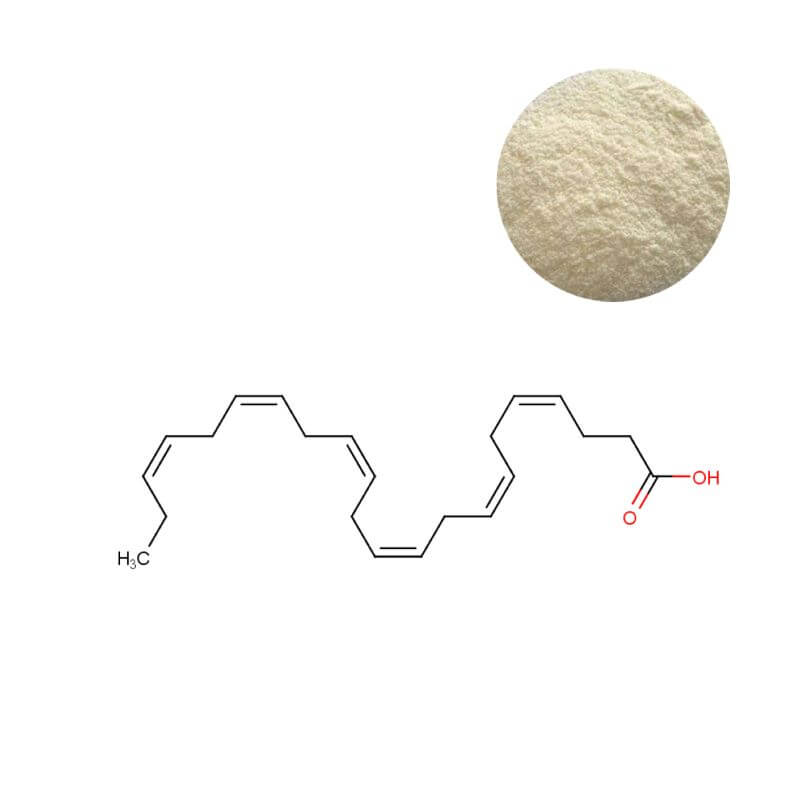
Algae DHA Powder
| Product Name | Algae DHA Powder |
| CAS Number | 6217-54-5 |
| Appearance | White to light yellow fine powder |
| Purity (DHA Content) | 10%, 20% min. (by GC-FID) |
| Packaging | 1 kg/bag, 5 kg/bag, 25 kg/drum |
| MOQ | 1 kg |
Bulk Algae DHA Powder Engineered for Cognitive Nutrition Stability
Bulk Algae DHA Powder demands rigorous oxidative stability management and precise particle engineering to survive global supply chains. The polyunsaturated fatty acid core (six non-conjugated double bonds) requires complete microencapsulation with wall matrix glass transition temperature (Tg) maintained above 45°C, ensuring structural integrity during transcontinental air freight ground handling. Commercial-scale spec-verified distributor networks enforce lot-to-lot consistency through mandatory in-process GC-FID verification and retained retention time fingerprinting against certified reference standards, maintaining surface oil below 1.0% across all production batches. Locking down Tg control and surface oil metrics establishes a defensible quality moat that directly supports premium brand positioning in the cognitive health category.
Air-Freight Degradation Barriers for Bulk DHA Powders
Spray-dried algal oil DHA microcapsules face critical thermal exposure during air freight tarmac handling, where container surface temperatures may reach 55°C to 65°C within 30 minutes. This thermal load directly depresses the wall matrix glass transition threshold (Tg 40-50°C), triggering irreversible core oil migration to particle surfaces. Surface oil values escalate from ≤1.0% to 3.0%-5.5% within 3-5 days post-shipment, while peroxide values frequently breach the 5.0 meq/kg trade rejection threshold upon customs inspection.
| Stability Parameter | Post-Production (Baseline) | Post-Air Freight (Unprotected) | Post-Air Freight (Protected) |
|---|---|---|---|
| Surface Oil | ≤ 1.0% | 3.0% - 5.5% | ≤ 1.2% |
| Peroxide Value (meq/kg) | ≤ 5.0 | > 10.0 | ≤ 4.5 |
| Particle Size (>40 mesh) | ≥ 95% | < 75% (agglomerated) | ≥ 95% |
Commercial-grade Algae DHA Powder deploys multi-layer air-freight packaging integrating a 12 μm aluminum foil oxygen barrier, 5mm EPE foam shock protection, and molecular sieve desiccants with ≥25% moisture absorption capacity. In-package residual oxygen is depressed to ≤0.5% via oxygen scavengers (300 mL O2 absorption capacity). ISTA 3A-verified shipments demonstrate surface oil stability ≤1.2% and POV ≤4.5 meq/kg upon arrival, with temperature data loggers confirming ≤40°C exposure throughout the entire transit window and humidity sensors recording ≤60% RH, maintaining physical specifications fully aligned with batch COA documentation (Algal Research, 2023; doi: 10.1016/j.algal.2023.102992). This thermal-shielded packaging architecture directly protects brand owners from customs rejection penalties and raw material write-offs. Eliminating port-of-entry inspection failures through validated transport data shortens customs clearance cycles and secures predictable material availability for production scheduling.
CMO-Compatible Powder Flow Engineering for High-Speed Lines
Bulk Algae DHA Powder (10% and 20% DHA content grades) exhibits bulk density ranging 0.35 to 0.55 g/mL with a natural weak lipophilic surface character from the encapsulated oil core. The standard industrial particle size specification (≥95% through 40 mesh) requires narrower distribution control (60-100 mesh) to guarantee content uniformity in high-speed encapsulation and tableting operations. Humidity exposure above 50% relative humidity triggers rapid moisture film formation on particle surfaces, elevating Hausner ratios from ≤1.25 to ≥1.40.
- Powder bridging and ratholing in forced-feed hoppers: Flowability degradation directly causes fill weight RSD exceeding 6% (compliance limits typically ≤3%) on high-speed capsule fillers (>150,000 caps/hour).
- Die sticking and punch picking on rotary tablet presses (>60 rpm): Sticking incidents require line stoppages every 15-20 minutes for die cleaning, depressing overall equipment effectiveness (OEE) by 30%-40% and elevating scrap rates from <1% to 4%-8%.
- Custom particle morphology engineering: Spray drying with inlet air at 160-180°C and atomizer speeds ≥10,000 rpm produces roughened particle surfaces, reducing inter-particle van der Waals contact area and liquid bridge forces.
Pre-conditioning protocols mandating production hall dew points ≤ -20°C (equivalent to <20% RH at 25°C) and continuous environmental monitoring during batch runs restore Hausner ratios to ≤1.20, delivering process capability (Cpk) values ≥1.33 for fill weight consistency across extended production shifts. These particle engineering interventions eliminate CMO line stoppage penalties and compress batch cycle times, directly protecting brand owner total cost of ownership through reduced manufacturing overhead. Assessing total cost of ownership compels procurement directors to weigh these flowability metrics against downstream labor, scrap, and downtime exposures that erode gross margins over multi-year supply agreements.
MFSD2A-Transported DHA and Cognitive Protection Quantification
Dietary DHA absorption proceeds primarily through the intestinal lymphatic system, with subsequent blood-brain barrier penetration mediated exclusively by the MFSD2A (Major Facilitator Superfamily Domain-Containing Protein 2A) transporter. This dedicated carrier facilitates DHA uptake into brain parenchyma as lysophosphatidylcholine esters. MFSD2A knockout models demonstrate >60% reduction in brain DHA accumulation, establishing the definitive molecular foundation for DHA's role in cognitive function maintenance. A 2023 dose-response meta-analysis integrating 48 prospective cohort studies with 103,651 participants quantified a 20% risk reduction in all-cause dementia or cognitive decline associated with dietary omega-3 intake (RR: 0.82, I²=63.6%, P=0.001). Each 0.1 g/d increment in DHA intake depresses cognitive decline risk by 8% to 9.9% (Plinear<0.0005) (Am J Clin Nutr, 2023; doi: 10.1016/j.ajcnut.2023.04.001). The Alzheimer's Disease Neuroimaging Initiative (ADNI) cohort further confirms a 64% risk reduction for Alzheimer's disease among long-term omega-3 supplement users (HR: 0.36; 95% CI: 0.18-0.72; P=0.004). This quantified dose-response relationship directly equips formulators with evidence-based justification for label claims, eliminating consumer skepticism regarding cognitive supplement efficacy. Translating these clinical endpoints into formulation architecture allows R&D teams to design higher-strength, smaller-footprint dosage forms that improve consumer adherence while maintaining full label compliance.
Synergistic Formulations and Process Compatibility Controls
Algae DHA Powder integrates optimally with phosphatidylserine (50-100 mg/serving) and synergistic alpha-lipoic acid (150-300 mg/serving) in cognitive health supplements, creating complementary structure-function networks. DHA provides neuronal membrane architectural support while co-formulated phosphatidylserine enhances synaptic neurotransmitter release efficiency. The cold-water dispersible (CWS) characteristic renders this ingredient highly compatible with vegan softgels and stick-pack instant powders—the latter segment grew 17% in the 2024 North American cognitive nutrition market.
- Metal ion catalyzed oxidation: Co-formulation with ferrous iron (Fe2+) or cupric copper (Cu2+) in aqueous suspensions (pH > 6.5) triggers Fenton-type radical chain reactions. Laboratory stress testing at pH 7.0 with 5 ppm Fe2+ elevates POV from 2.0 to 18.5 meq/kg within 7 days at 40°C, accompanied by yellow-brown discoloration and rancid odor development.
- pH buffer system engineering: Citrate buffer systems locking suspension pH between 4.5-5.5, combined with 0.02%-0.05% mixed natural tocopherols and carnosic acid from rosemary extract, effectively quench radical propagation.
- Sequential dry blending protocols: A "metal chelate encapsulation first, DHA powder second" staged addition sequence physically isolates the polyunsaturated core from pro-oxidant catalysts.
These formulation architecture controls ensure finished product oxidative stability throughout the labeled shelf life, preventing rancidity-related consumer complaints and batch recall events that directly erode brand equity and retail placement continuity.
Thermal-Shielded Logistics and CMO-Ready Specifications for Global Procurement
Spec-verified Algae DHA Powder integrates validated air-freight packaging (ISTA 3A) that preserves surface oil below 1.2% upon arrival, combined with particle engineering that eliminates high-speed line sticking and bridging. Comprehensive technical dossiers include GC-FID chromatograms, residual solvent profiles, and non-irradiated/non-ETO sterilization declarations meeting EU 2024 limits. This full-spectrum compliance documentation package accelerates supplier onboarding and master file auditing. Secure spec-verified Algae DHA Powder with full dossier for immediate formulation qualification and procurement workflows. Robust traceability documentation and validated transport protocols provide procurement auditors with verifiable risk-mitigation evidence, ensuring uninterrupted supply continuity and protecting against costly spot-market substitutions during capacity-constrained seasons.
Frequently Asked Questions
Share this product
Related Products

Ready to get started?
Contact our team for technical specifications, pricing, and customized solutions.