
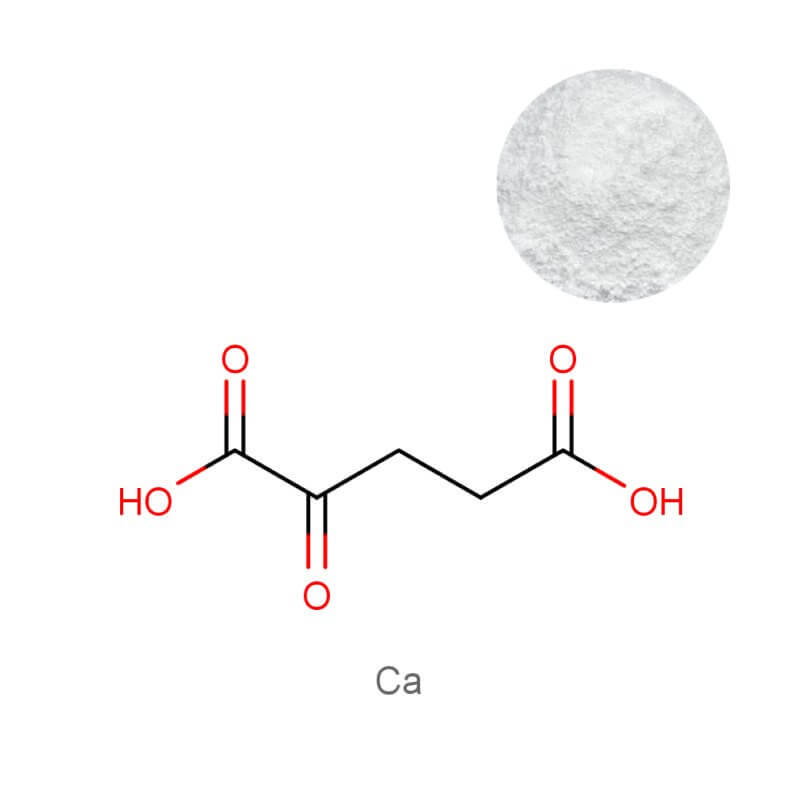
Calcium Alpha-Ketoglutarate (Ca-AKG) Powder
| Product Name | Calcium Alpha-Ketoglutarate Powder |
| CAS Number | 71686-01-6 |
| Appearance | White to off-white crystalline powder |
| Purity | 98.0% min. (by HPLC) |
| Packaging | 1 kg/bag, 5 kg/bag, 25 kg/drum |
| MOQ | 1 kg |
Bulk Calcium Alpha-Ketoglutarate Powder for Advanced Supplement Formulations
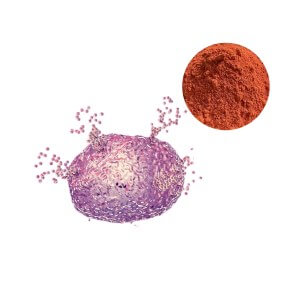
Crystalline morphology and moisture-sensitive flow behavior of bulk Calcium Alpha-Ketoglutarate Powder, sourced through spec-verified distributors, dictate die-fill uniformity and tableting speed in commercial-scale CMO operations. This physical profile directly impacts production uptime and scrap rates, making particle engineering a primary procurement criterion. Batch-specific HPLC fingerprinting and validated particle size distribution protocols provide the technical backbone for guaranteeing lot-to-lot consistency across multi-ton supply agreements. Controlling these powder attributes enables brand owners to differentiate finished products in a crowded longevity market, securing formulation exclusivity and premium pricing margins.
Commercial Demand Surge Drives the Ca-AKG Ingredient Market Expansion
The global Ca-AKG ingredient market is expanding at a CAGR of 8.9%-12.2%, driven by surging biohacker and aging-population demand for cellular energy and longevity-supporting formulations. This trajectory reflects the compound's transition from niche research chemical to mainstream formulation staple, with North America and Europe leading finished-product launches.
- Biohacker target demographic: Ca-AKG resonates strongly with the quantified-self community, particularly consumers following Dr. Sinclair's longevity protocols. This segment demands high-purity, third-party-tested bulk powders for DIY capsule-filling or stack customization.
- Longevity SKU proliferation: Market data indicates that Ca-AKG is rapidly gaining recognition within longevity-focused product lines, with brands increasingly positioning it alongside NAD+ enhancers and spermidine. The growth is underpinned by clinical protocols like the ABLE trial.
- Formulation flexibility demand: The ingredient's compatibility with both capsule and powder delivery systems makes it a versatile choice for brands entering the longevity space. Its stable crystalline form also allows for clean-label positioning without flow aids.
For procurement directors, this demand surge translates into a need for reliable supply chains with documented batch-to-batch consistency, specifically regarding particle size distribution and moisture content below 5% to maintain flowability in high-speed filling lines.
US GRAS Status Establishes the Regulatory Backbone for Market Entry
Calcium Alpha-Ketoglutarate has been recognized as a Pre-DSHEA dietary ingredient (marketed in the U.S. prior to October 15, 1994) and completed Self-GRAS scientific evaluation under FDA guidelines in January 2026. This qualification provides a cleared pathway for formulators to incorporate the ingredient into dietary supplements without filing a new dietary ingredient notification (NDN).
| Region | Regulatory Status | Key Restriction / Daily Intake |
|---|---|---|
| United States | Pre-DSHEA Dietary Ingredient / Self-GRAS (2026) | No specific ADI limit; safety confirmed at up to 6 g/day |
| European Union | Novel Food classification for certain AKG salts | Ca-AKG status: further verification required |
| Global Trade | Food Grade / Nutritional Grade | Heavy metals: Pb ≤ 1.0 mg/kg, As ≤ 1.0 mg/kg |
This Self-GRAS dossier, backed by long-term human safety studies at high dosages (up to 4.5 g/day over three years) and validated by the 1 g/day active intervention parameters of the ABLE trial, provides a robust compliance foundation for brand owners seeking to launch longevity-positioned SKUs without individualized FDA determinations. Maintaining documented impurity controls at sub-ppm levels not only satisfies US requirements but also pre-emptively addresses EU and other major market thresholds, thereby shortening port-of-entry inspection cycles and reducing regulatory hold risks.
Source Purity Differentiation: Processing Routes and Impurity Profiles of Bulk Ca-AKG
Bulk Ca-AKG is manufactured via a two-stage industrial process: upstream fermentation of alpha-ketoglutaric acid followed by aqueous-phase neutralization and crystallization. The upstream stage employs microbial fermentation—using strains such as Yarrowia lipolytica or Corynebacterium glutamicum on glucose or glycerol substrates—to produce the free acid (U.S. Pat. No. 11,802,103). The downstream stage neutralizes this acid with calcium hydroxide or carbonate in aqueous medium, then concentrates, crystallizes, centrifuges, and dries to yield stable crystalline powder.
- Fermentation-derived acid with documented yield: Industrial strains such as Yarrowia lipolytica have demonstrated alpha-ketoglutarate accumulation up to 117.7 g/L, providing a bio-based source with low organic solvent exposure prior to neutralization.
- Aqueous-phase crystallization and solvent control: Neutralization with calcium hydroxide followed by controlled crystallization minimizes Class 1 and Class 2 organic solvent risks. Adherence to USP <467> residual solvent limits—particularly for ethanol and ethyl acetate—differentiates premium grades for clean-label markets.
- Chromatographic verification of source integrity: Reverse-phase HPLC with ICP-MS heavy metal profiling (Pb, As, Cd, Hg at sub-ppm limits) enables buyers to verify processing route consistency and flag deviations before batch acceptance.
Suppliers providing complete impurity profiles, residual solvent panels, and transparent source documentation enable procurement teams to audit manufacturing authenticity and safeguard brand equity across regulated markets.
Clinical Protocol Validates Ca-AKG's Role in Healthy Aging Formulations
Ca-AKG functions as a tricarboxylic acid (TCA) cycle intermediate, supporting cellular ATP generation, amino acid synthesis, and epigenetic regulation—all processes implicated in biological aging. Its calcium salt form provides a pH-neutral (6.0-8.0 in 1% solution) alternative to free AKG acid (pH 2-3), enabling direct incorporation into standard capsules without enteric coatings.
- mTOR and autophagy modulation: Ca-AKG participates in nutrient-sensing pathways that regulate cellular maintenance and protein homeostasis. This mechanism supports its inclusion in formulations targeting age-related metabolic decline and tissue integrity.
- Clinical-grade intervention blueprint: The ABLE trial protocol defines a 9-month double-blind RCT administering 1 g/day sustained-release Ca-AKG to 120 middle-aged adults, with PhenoAge DNA methylation as the primary endpoint. Secondary endpoints cover inflammatory markers, muscle strength, arterial stiffness, cognitive function, metabolic health, and quality of life (GeroScience, 2023; doi: 10.1007/s11357-023-00813-6).
- Enhanced solid-state stability: Ca-AKG powder exhibits extended shelf life compared to free acid forms, with less than 3% degradation observed under accelerated stability conditions (40°C / 75% RH over six months) in sustained-release prototypes.
- Direct formulation compatibility: The neutral pH and crystalline morphology of Ca-AKG eliminate the need for acid-neutralizing buffers or specialized coating equipment, reducing both raw material costs and production complexity.
This clinical framework directly addresses brand owners' need for substantiated claims in the longevity space. By aligning formulation dosage with the ABLE protocol's active comparator arm (1 g/day), developers can leverage the same intervention parameters vetted through formal regulatory-grade research design as a reference point for claim development.
Combinatorial Formulation Synergies and Compatibility Mapping
Ca-AKG demonstrates strong pairing compatibility with NAD+ precursors such as nicotinamide mononucleotide substrates and nicotinamide riboside, alongside autophagy-supporting autophagy-supporting spermidine substrates and senolytic flavonoids including fisetin flavonoids and quercetin—enabling multi-target longevity formulations. Its crystalline powder form, featuring ≥ 95% through 80 mesh and loss on drying ≤ 5.0%, processes cleanly with these co-ingredients without clumping.
| Co-Ingredient | Synergistic Target | Formulation Compatibility Note |
|---|---|---|
| NAD+ precursors (NMN/NR) | Dual support for cellular energy + DNA repair | Compatible in HPMC capsules; avoid high shear mixing which may degrade NR |
| Spermidine | Autophagy + mTOR pathway synergy | Both are stable in dry blends; moisture content below 5% critical |
| Fisetin / Quercetin | Senolytic + metabolic support | Monitor pH shifts; Ca-AKG buffering capacity helps stabilize flavonoid degradation |
For CMO production planning, the excipient-free capsule format is viable due to the powder's inherent flowability and compressibility. At a 500 mg capsule fill weight, the 95% through 80 mesh particle size ensures uniform die filling, reducing weight variation and scrap rates during high-speed encapsulation runs.
Secure Technical Samples for Formulation Feasibility Verification
This ingredient's documented particle size specification (≥ 95% through 80 mesh) and moisture control (≤ 5.0% LOD) directly translate into production predictability—reducing CMO adjustment time, minimizing die wear, and preventing flow-related machine stoppages. For R&D teams, the availability of batch-specific HPLC fingerprints and impurity profiles accelerates feasibility assessment and supplier approval workflows. A total-cost-of-ownership audit reveals that selecting this controlled-morphology grade eliminates downstream rework expenses and protects against cross-border logistics-induced caking, ensuring that every delivered container arrives in a state that matches the original COA signature.
Request a spec-verified Ca-AKG sample with complete COA packages to validate its performance on your specific production equipment.
Frequently Asked Questions
Share this product
Related Products
Ready to get started?
Contact our team for technical specifications, pricing, and customized solutions.