
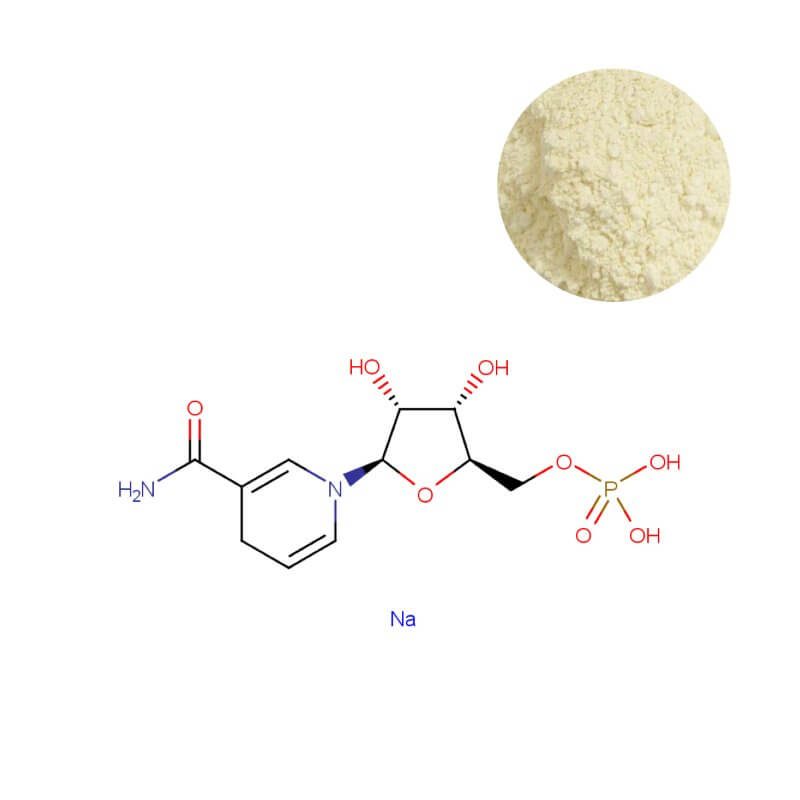
NMNH Powder
| Product Name | NMNH Powder (Reduced Nicotinamide Mononucleotide Disodium) |
| CAS Number | 108347-85-9 |
| Appearance | White to light yellow powder |
| Purity | 99.0% min. (by HPLC) |
| Packaging | 1 kg/bag, 5 kg/bag, 25 kg/drum |
| MOQ | 1 kg |
Bulk NMNH Powder: Industrial-Grade Processing Solutions for Encapsulation
Strong hygroscopicity inherent to bulk NMNH powder from spec-verified distributors directly compromises powder flow and promotes die sticking in high-speed encapsulation lines, elevating tablet weight variability and production downtime. Mitigating these physical failure modes requires systematic lot-to-lot verification of moisture sorption profiles and particle morphology through batch-specific water activity monitoring and laser diffraction particle sizing, ensuring processing predictability across commercial-scale manufacturing campaigns.
NMNH Regulatory Landscape: FDA NDI Reopening and EFSA Positive Safety Opinion for NMN
FDA's September 2025 reversal confirmed NMN is not excluded from the dietary supplement definition, reopening the NDI notification pathway for NAD+ precursors. In May 2026, EFSA issued a positive safety opinion on β-NMN as a Novel Food, concluding that the ingredient is safe for the adult population (excluding pregnant and lactating women) at a daily intake of 300 mg. While these actions directly address NMN, they establish regulatory benchmarks for reduced analogs such as NMNH.
| Jurisdiction | Current NAD+ Precursor Status | Key Restriction / Daily Limit | Strategic Implication for NMNH Procurement |
|---|---|---|---|
| US FDA | NMN not excluded (2025); NDI pathway formally open | NDI notification mandatory for new ingredients | Suppliers must provide full toxicology and stability data to support brand NDI submissions |
| EU EFSA | Positive safety opinion issued (May 2026; PC-1537) | 300 mg/day for adults (non-pregnant/non-lactating) | Approval harmonizes maximum daily intake and permitted claims across EU member states; finished products must comply with 300 mg daily cap |
Batch-specific ICP-MS speciation, residual solvent profiles per USP <467>, and microbial panels allow compliance teams to pre-clear shipments against FDA and EFSA import criteria. Shortened customs examination windows and accelerated regulatory sign-off for both US and EU markets are direct outcomes of this documentation rigor.
Anti-Aging Market Trajectory: NMNH in the Expanding NAD+ Segment
The global NAD+ precursor supplement market grows at 8-10% CAGR; the NMN segment alone reached ~USD 1.37 billion in 2024. NMNH gains recognition for 5-10x higher NAD+ elevation efficiency at equimolar doses. Core consumers (health-active adults aged 40-65) drive demand for cellular rejuvenation products, shifting from capsules to functional beverages, gummies, and stick packs requiring superior solubility and clean-label credentials.
- Format flexibility: NMNH dissolves readily at neutral pH, compatible with ready-to-drink shots and effervescent tablets. Its enhanced stability over NMN reduces degradation in liquid systems, extending finished product shelf life and minimizing waste.
- Clean-label compatibility: Enzymatic synthesis eliminates Class 1 and Class 2 organic solvents, supporting Non-GMO and allergen-free claims – critical differentiators for premium longevity brands targeting health-conscious consumers.
Multi-tissue NAD+ elevation – observed in liver, kidney, muscle, and brain – enables multi-benefit product positioning addressing both energy metabolism and cognitive support. Sustained intracellular NAD+ elevation allows lower effective doses versus NMN, improving cost-per-serve economics and finished goods gross margins for brand owners (Food Res. Int., 2023; doi: 10.1016/j.foodres.2023.112560).
NMNH Chiral Authentication: Eliminating Downstream Contract Manufacturing Risks and Batch Failures
High-purity NAD+ precursors are frequent targets for synthetic adulteration, where petrochemical-derived nicotinamide analogs are blended to mimic authentic NMNH. Advanced QC protocols employ chiral chromatography to resolve enantiomeric purity, as the reduced nicotinamide moiety exhibits a specific optical rotation of [α]20D = +25.0° to +35.0° (c=1, H2O). Deviation signals potential racemization or synthetic contamination. HPLC with chiral stationary phases provides definitive identity verification, with retention time and peak symmetry matched against certified reference standards.
- Chiral HPLC verification: Incoming NMNH lots must undergo chiral chromatography to confirm optical purity. Retention time deviations exceeding 5% from the reference standard trigger immediate rejection.
- Orthogonal complementary verification (IRMS): Carbon-14 AMS analysis serves as an independent orthogonal verification layer, confirming botanical origin via modern carbon signature versus dead-carbon values from petrochemical routes. This dual-layer approach—chiral purity plus natural origin authentication—closes the verification loop against synthetic adulteration and establishes irrefutable proof of natural sourcing for premium brand positioning.
Implementing chiral HPLC combined with ICP-MS elemental profiling allows quality teams to reject adulterated lots before they enter production. This pre-emptive screening reduces brand reputation damage and prevents costly finished-product recalls – a measurable return on quality assurance investment.
Mechanistic Superiority: NMNH via NRK- and NAMPT-Independent NAD+ Elevation
Intracellular NAD+ elevation via NMNH proceeds with significantly higher amplitude and faster kinetics compared to NMN or NR. The compound enters mammalian cells via a distinct transporter and is converted to NADH/NAD+ through a salvage pathway that bypasses the rate-limiting enzymes NRK and NAMPT. This pathway independence ensures robust NAD+ restoration even when NAMPT activity is compromised – a common condition in aged or metabolically stressed tissues, making NMNH particularly relevant for anti-aging formulations.
In murine models, oral NMNH yields 5-10x greater hepatic NAD+ elevation versus equimolar NMN, with substantial accumulation in brain, kidney, muscle, and brown adipose tissue. Raising both NAD+ and NADH pools confers superior redox buffering, supporting sirtuin activation and DNA repair (FASEB J., 2021; doi: 10.1096/fj.202001826R). This mechanistic edge enables lower effective doses, reducing fill weights and improving encapsulation efficiency. Achieving dose-optimized tablet geometries with minimal excipient burden reduces per-unit manufacturing cost and enhances patient/consumer adherence through smaller, easier-to-swallow formats.
- Rapid absorption: Rodent studies show NMNH reaches peak blood concentration (Tmax) within 15-30 minutes, significantly faster than NMN's 60-90 minute profile – ideal for acute energy and performance products.
- Tissue penetration: Brain NAD+ levels increased by over 50% post-administration, validating cognitive health application potential.
Synergistic Formulation Design and Processing Safeguards for NMNH
To maximize biological impact, NMNH is often paired with complementary actives such as high-purity resveratrol resveratrol or pterostilbene, which activate sirtuins and amplify NAD+-dependent cellular stress responses. Both polyphenols are oxidation-sensitive and moisture-reactive; combining them with NMNH demands strict environmental controls to prevent color change and potency loss. Processors must maintain ambient relative humidity below 30% during blending and encapsulation, as NMNH's critical RH threshold of approximately 40% triggers rapid moisture uptake, leading to caking, flow inconsistency, and weight variation in final doses.
- Processing parameters: Silica-based desiccants in primary packaging and dry granulation enhance powder flow. In liquid formulations, chelating agents (e.g., sodium phytate) mitigate metal-catalyzed oxidation of both NMNH and polyphenolic partners.
- Stability profile: NMNH remains stable at pH 6.0-8.0 and temperatures ≤ 40°C for up to 24 hours in solution. Long-term storage requires temperatures below 4°C under inert atmosphere to preserve the reduced state.
A rational co-formulation approach – e.g., NMNH with standardized pterostilbene in enteric capsules – enables differentiation while minimizing stability risks. Each lot should undergo accelerated stability testing (40°C/75% RH, 6 months) to validate label claims and ensure consistent performance, protecting brand reputation and reducing complaint-related costs.
Secure Spec-Verified Samples with Complete Technical Documentation
To de-risk product development and streamline regulatory submissions, request a spec-verified NMNH sample accompanied by a full analytical dossier – including HPLC assay, ICP-MS heavy metal speciation, residual solvent profiles, and microbial purity. The sample package also includes stability summary data and handling protocols tailored to specific formulation platforms. Proper due diligence on lot-to-lot COA traceability and packaging integrity directly protects procurement teams against expensive cargo rejection, warehousing segregation, and finished-goods write-offs. Request a spec-verified NMNH sample with complete COA packages to initiate in-house evaluation and accelerate your brand's entry into the premium NAD+ supplementation market.
Frequently Asked Questions
Share this product
Related Products
Ready to get started?
Contact our team for technical specifications, pricing, and customized solutions.