
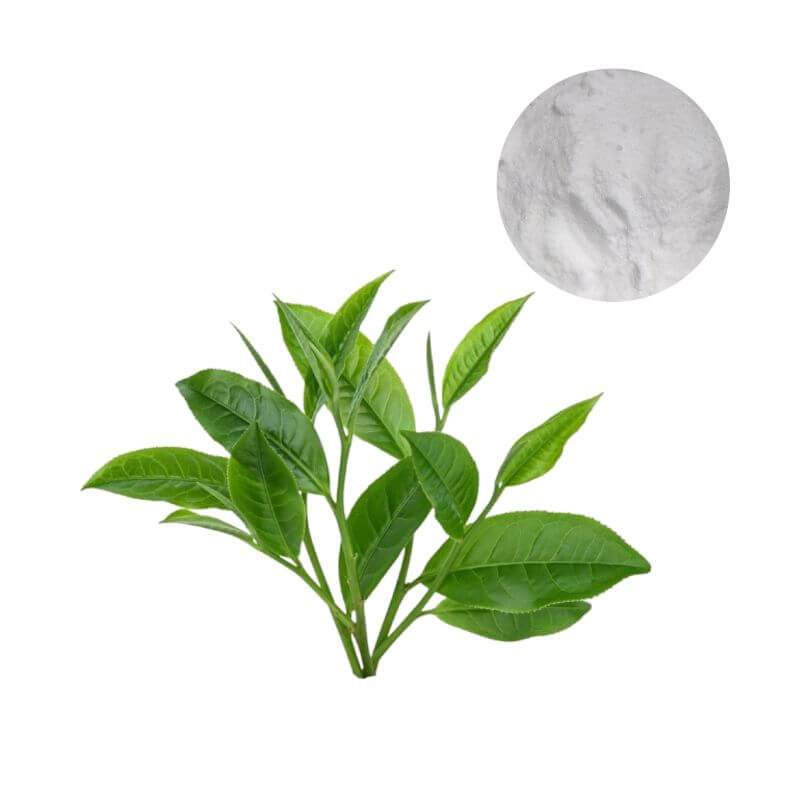
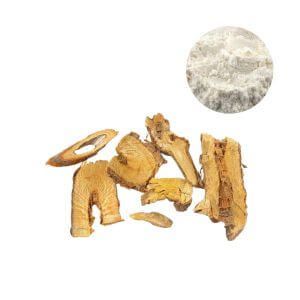
EGCG Powder
| Product Name | EGCG Powder |
| CAS Number | 989-51-5 |
| Appearance | White to off-white fine powder |
| Purity | 90%, 95%, 98% (by HPLC) |
| Packaging | 1 kg/foil bag, 5 kg/tin, 25 kg/cardboard drum |
| MOQ | 1 kg |
EGCG Powder (98% Purity): A Technical Framework for Stable, High-Bioactivity Formulations
For brands developing dietary supplements, the gap between EGCG's documented potential and its real-world formulation behavior often lies in two variables: stability and bioavailability. Standard green tea extracts may introduce batch-to-batch variability, oxidation, or epimerization during production. A premium EGCG powder – standardized to 98% purity with ≤0.1% caffeine – addresses these issues directly. This article examines the science, quality benchmarks, and sourcing considerations that allow formulators to build predictable, compliant products around this well-researched catechin. From a commercial standpoint, locking in a high-purity, low-caffeine grade is not a cost center but a strategic lever: it enables cleaner labels, reduces reformulation risk under tightening EU rules (800 mg/day EGCG cap), and supports premium pricing through demonstrable quality differentiation.
Beyond Antioxidant Labels: What Clinical Research Reveals About EGCG's Mechanism
Epigallocatechin gallate (EGCG) is the most abundant catechin in green tea, representing roughly 50% of total catechins. Its primary mechanism involves Nrf2 activation and modulation of NF-κB pathways – a dual action that supports cellular antioxidant defense and helps maintain healthy inflammatory balance. However, for procurement teams sourcing bulk EGCG for cognitive or metabolic health formulations, the practical question is not "does it work" but "how to preserve its activity." A 2025 systematic review on nanocarrier strategies highlighted that free EGCG suffers from rapid degradation under heat, alkaline pH, and oxygen exposure (doi: 10.1631/jzus.B2400040). The same review notes that encapsulation can improve pharmacological activity significantly. From a strategic formulation perspective, this means that relying on crude extracts without stability safeguards may lead to underperforming finished goods – a risk that high-purity, low-caffeine EGCG helps mitigate. In practical brand terms, this level of purity directly supports shorter time‑to‑market for clinical‑grade supplements, as fewer variables need revalidation during scale‑up.
Key clinical insights supporting EGCG's application include:
- Metabolic support – EGCG supports thermogenesis and fat oxidation; the 98% grade's ≤0.1% caffeine enables stimulant‑free positioning.
- Cardiovascular function – RCT evidence shows that EGCG supplementation helps maintain healthy blood pressure and enhances sympathetic heart rate variability in obese subjects.
- Cognitive health – Through gut‑brain axis modulation, EGCG supports neuroprotective pathways, with research indicating potential benefits in delaying cognitive decline when part of a multimodal lifestyle intervention.
For brands, these findings translate into multiple claim opportunities – from weight management to vascular health – provided the ingredient's integrity is maintained from raw material to finished tablet. This leads naturally to the question: what quality indicators actually predict EGCG's real‑world performance?
Quality Benchmarks: What Defines a Premium EGCG Powder for Industrial Use
Not all EGCG ingredients are equal. While many suppliers list "98% purity," the true differentiators lie in secondary parameters that directly affect formulation stability and regulatory compliance. For certified EGCG intended for EU or US markets, the following benchmarks are non‑negotiable:
| Quality Parameter | Why It Matters for Your Product |
|---|---|
| Caffeine ≤0.1% (98% grade) | Enables clean‑label, stimulant‑sensitive formulations (evening use, caffeine‑free claims). Avoids unwanted CNS effects. |
| Loss on Drying ≤5.0% | Low moisture prevents hydrolysis and microbial growth, extending shelf life of bulk material and finished blends. |
| Heavy metals (Pb ≤1.0, As ≤1.0, Cd ≤0.5, Hg ≤0.1 mg/kg) | Meets USP and EU thresholds; essential for export to regulated markets without reformulation delays. |
| Particle size ≥95% through 80 mesh | Ensures blend homogeneity in tablet compression and powder mixes – a hidden factor in dose uniformity. |
Beyond these, a reliable EGCG supplier provides batch‑specific COA (Certificate of Analysis) including HPLC chromatograms for EGCG content and caffeine verification. For procurement teams, this directly translates to reduced qualification time and lower risk of finished product failing identity testing by third‑party labs. From a total cost of ownership view, verifying these parameters upfront avoids costly batch rejections, supply disruptions, and regulatory holds – each of which can erase any per‑kilo savings from lower‑grade alternatives.
Formulation in Practice: Stability, Synergy, and Delivery Solutions
Even a high‑purity EGCG powder will degrade if not handled correctly. Real‑world formulation challenges include epimerization (EGCG → GCG) under heat or neutral‑alkaline pH, oxidation in the presence of oxygen or metal ions, and poor oral bioavailability (only ~1–2% reaches systemic circulation). However, these are not insurmountable. A 2025 study in Food Chemistry demonstrated that β‑cyclodextrin‑EGCG nanoparticles achieved 89.78% retention after 10 hours at 80°C and improved bioavailability by 1.71 times compared to free EGCG (doi: 10.1016/j.foodchem.2025.143935). For formulators, this points to practical strategies:
- pH control – Keep finished product pH between 4.5 and 5.5 (e.g., using citric acid). Avoid alkaline excipients like calcium carbonate.
- Antioxidant synergy – Pair EGCG with vitamin C or rosemary extract to slow oxidative degradation. A common industry ratio is 1:1 EGCG to ascorbic acid.
- Delivery formats – For high‑bioavailability lines, consider liposomal or cyclodextrin complexes. For cost‑effective capsules, use moisture‑controlled blending (≤35% RH) and HPMC shells instead of gelatin.
The table below outlines recommended pairings and their functional rationale:
| Co‑ingredient | Synergistic Benefit | Typical Ratio (EGCG:Partner) |
|---|---|---|
| L‑Theanine | Promotes calm focus; offsets any residual caffeine; supports neuroprotection via BDNF modulation. | 1:1 to 1:2 |
| Vitamin C (Ascorbic Acid) | Reduces EGCG oxidation and epimerization; enhances iron absorption (but avoid co‑administering with iron in the same dose). | 1:1 |
| Piperine 95% (black pepper extract) | Inhibits glucuronidation, potentially improving EGCG bioavailability (though clinical evidence is mixed). | 10:1 |
From a strategic formulation perspective, adopting these protective measures allows brands to use lower EGCG doses while achieving equivalent biological activity – a direct cost‑saving lever that also simplifies compliance with the EU's 800 mg daily cap. This practical knowledge bridges the gap between raw ingredient quality and market‑ready products, but it hinges entirely on supply chain transparency. For product developers, mastering these stability levers can cut production losses from oxidation by over 20%, turning a technical requirement into a margin advantage.
Mitigating Risk: The Checklist for Sourcing a Reliable EGCG Supplier
For purchasing managers, the lowest‑cost wholesale EGCG often hides hidden risks – inconsistent purity, missing COAs, or undeclared solvents. To ensure a GMP EGCG supply that meets your product's lifecycle requirements, use this objective checklist when evaluating partners:
- Full disclosure COA – Does it include heavy metals, residual solvents (USP <467>), microbial limits (absence of E. coli, Salmonella, P. aeruginosa), and EGCG assay by HPLC?
- Traceability – Can the supplier provide botanical source documentation (Camellia sinensis leaf origin) and extraction solvent statement (e.g., water/ethanol)?
- Third‑party audits – Look for GMP certification (NSF or similar) and, for EU buyers, Novel Food compliance for ≥90% EGCG.
- Stability data – Request accelerated stability studies under 40°C/75% RH for 6 months to confirm shelf‑life claims.
It is equally important to assess the supplier's responsiveness to technical queries. A partner that provides within‑24‑hour access to batch‑specific documentation reduces your R&D cycle time. For procurement teams, this directly translates to lower inventory holding costs and faster time‑to‑market. Prioritize suppliers offering free samples for in‑house stability testing – the only way to verify compatibility. Adopting a total cost of ownership lens, paying a small premium for fully documented, low-caffeine 98% EGCG eliminates the risk of a finished product failing identity or purity tests – a failure that can cost more than ten times the ingredient savings in recall and requalification expenses.
Next Steps: De‑risk Your EGCG Formulation with Technical Validation
Choosing the right bulk EGCG powder is not about finding the cheapest certificate; it is about aligning purity, stability data, and regulatory support with your product's target market. By focusing on the 98% grade with ≤0.1% caffeine and demanding batch‑specific COAs that include heavy metals and epimerization checks, you avoid reformulation surprises later. To accelerate your development, request a complimentary 20g sample and the full technical dossier – including stability reports and a template for EU compliance declarations. Request your sample & technical dossier →
Frequently Asked Questions
Share this product
Related Products
Ready to get started?
Contact our team for technical specifications, pricing, and customized solutions.