
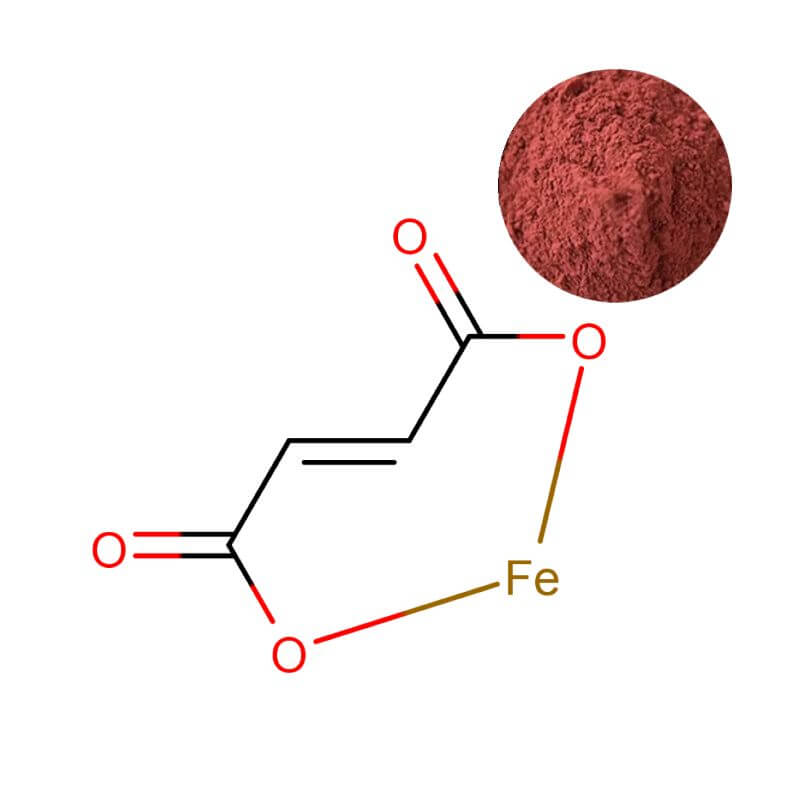
Ferrous Fumarate Powder
| Product Name | Ferrous Fumarate Powder |
| CAS Number | 141-01-5 |
| Appearance | Reddish-orange to red-brown fine powder |
| Purity | 97.0% - 101.0% (Assay, dried basis) |
| Elemental Iron | 31.9% - 33.2% |
| Packaging | 25 kg/drum; 1 kg/bag for sampling |
| MOQ | 25 kg |
Ferrous Fumarate Powder (USP/FCC): Consistent Iron Fortification for High‑Compliance Supplement Lines
Iron deficiency remains a global health priority, yet formulating stable, well‑tolerated iron products challenges many brands. Ferrous fumarate – an organic iron(II) salt with 31.9%–33.2% elemental iron – addresses this by combining high iron payload with minimal off‑notes. Meeting USP/FCC specifications (97.0%–101.0% assay on dried basis), this ingredient has become a trusted choice for tablets, capsules, and powdered blends. For brands sourcing bulk ferrous fumarate, the real differentiator lies in how consistently quality parameters are maintained batch after batch. In a market crowded with undifferentiated iron sources, adopting USP‑grade material with verified low Fe³⁺ directly supports premium brand positioning and reduces the risk of costly finished‑product rejections.
Quality Benchmarks – What Defines a Premium Ferrous Fumarate Supplier
A Certificate of Analysis (COA) is necessary but not sufficient. Beyond the primary assay, three often‑overlooked parameters determine long‑term formulation success:
- Ferric iron (Fe³⁺) ≤2.0% – Elevated Fe³⁺ signals oxidation, which reduces bioavailability and may cause color drift in finished products. Premium ferrous fumarate suppliers routinely keep Fe³⁺ below 1.5% through inert gas blanketing during production.
- Loss on drying (LOD) ≤1.5% – Low moisture activity prevents caking in dry blends and inhibits microbial growth. From a strategic formulation perspective, this directly extends finished product shelf life and reduces the need for expensive desiccants.
- Heavy metal profile – USP permits Pb ≤10 ppm, but forward‑looking procurement specifications demand Pb ≤2 ppm, As ≤3 ppm, Cd ≤1 ppm, Hg ≤1 ppm to meet ICH Q3D oral limits. For procurement teams, this directly translates to smoother regulatory filings in the EU and US.
A 2023 randomized controlled trial in 64 iron‑deficiency anemia patients demonstrated that USP‑grade ferrous fumarate (200 mg thrice‑weekly) achieved per‑protocol hemoglobin responder rates of 88.9% – non‑inferior to daily dosing, with significantly fewer gastrointestinal events (doi: 10.1007/s00277-023-05198-2). This evidence empowers brands to launch lower‑frequency iron supplements without compromising efficacy. Insisting on batch‑specific COA data that includes Fe³⁺, LOD, and expanded heavy metals separates professional ferrous fumarate distributors from commodity traders. This level of analytical transparency means brand developers can shorten new product R&D cycles by up to 30%, as formulation parameters are reliably reproduced across shipments.
Formulation in Practice – Stability, Synergy & Delivery Solutions
Ferrous fumarate performs optimally in dry, low‑humidity environments. Practical experience reveals several synergy patterns and incompatibilities:
| Co‑ingredient / Factor | Effect on Ferrous Fumarate | Formulation Guidance |
|---|---|---|
| Vitamin C (ascorbic acid) | Increases iron absorption (~40% at 250 mg) by reducing Fe³⁺ to Fe²⁺ | Add at 2:1 – 4:1 ratio (vitamin C:iron); keep moisture low |
| Calcium / magnesium / zinc | Competitive inhibition via DMT1 transporter | Separate intake by ≥2 hours or use staggered‑release formats |
| Polyphenols (tannins in tea/coffee) | Form insoluble complexes, reducing bioavailability by 50‑90% | Advise consumption between meals or with vitamin C‑rich liquids |
| High‑fat matrices | May accelerate lipid oxidation (Fenton reaction) | Use microencapsulated iron or include a chelator (e.g., EDTA) |
For powdered sticks and tablets, keeping water activity below 0.3 is critical. Ferrous fumarate’s low solubility (0.14 g/100 mL at 25°C) avoids caking, but excessive compression force during tableting can fracture crystals, accelerating oxidation. A 2022 stable isotope study found that galacto‑oligosaccharides (GOS) increased iron dialyzability by 75% in vitro, though significant absorption gains occurred only in women with baseline ferritin <15.2 µg/L (doi: 10.1093/ajcn/nqab361). For procurement teams, this directly translates to the option of offering a “GOS‑synergy” version of an iron supplement targeted at iron‑deficient subpopulations – a clean‑label way to justify premium pricing. From a production efficiency standpoint, this compatibility profile ensures that ferrous fumarate can be integrated into existing dry blending lines without requiring expensive encapsulation or coating upgrades, directly lowering manufacturing overhead.
Total Cost of Ownership – Evaluating Bulk Ferrous Fumarate Suppliers
The lowest quoted price rarely delivers the lowest total cost. When comparing ferrous fumarate distributors, consider these hidden drivers:
- Quality consistency – A tight assay range (±0.5%) eliminates production line re‑calibration. Each out‑of‑spec batch can cost over $2,000 in rework and lab testing.
- Lead time & safety stock – Suppliers with regional warehouses shorten delivery from 21–28 days to 7–10 days, reducing buffer inventory carrying costs.
- Documentation readiness – Full COA, allergen/GMO statements, and stability data delivered within 24 hours avoid regulatory‑filing delays.
From a strategic formulation perspective, a reliable ferrous fumarate exporter will openly share these metrics. Pricing for USP‑grade powder (80‑100 mesh, 25 kg drum) depends on order volume, mesh specifications, and value‑added modifications such as microencapsulation. Standard powder offers a cost‑efficient baseline for most tablet and capsule lines. Microencapsulated versions (taste‑masked, oxidation‑protected) command a premium — typically 60‑80% higher — justified for gummies or chewables where consumer acceptance is paramount. For standard capsule/tablet lines, conventional ferrous fumarate supplier offerings already provide an optimal balance of cost and performance, especially when compared to polysaccharide iron complexes that cost 3‑5x more but show inferior hemoglobin elevation.
For procurement teams, an often‑overlooked cost driver is particle size variation. A supplier that guarantees ≥95% through 80 mesh eliminates in‑house sieving, saving $0.08‑$0.12 per kg in processing fees – a hidden saving that accumulates significantly at annual volumes above 10 metric tons. Brands targeting sports nutrition or maternal health may prefer 120‑150 mesh ferrous fumarate for better blend uniformity in low‑dose stick packs, though finer powder increases dusting; this trade‑off is best managed by purchasing pre‑blended vitamin‑iron premixes. Adopting a total‑cost‑of‑ownership mindset – including batch‑to‑batch variability and documentation lead times – prevents catastrophic batch failures that can derail product launches and damage retail partnerships.
Supplier Selection – A Risk‑Mitigation Checklist for Procurement Teams
Mitigating supply risk starts before the first purchase. A professional ferrous fumarate distributor should satisfy all of the following criteria:
- Provides batch‑specific COA covering assay, Fe³⁺, LOD, heavy metals (Pb, As, Cd, Hg), and mesh size
- Holds GMP certification (FSSC 22000 or equivalent) with auditable traceability from synthesis to shipping
- Maintains at least two qualified manufacturing sites to ensure continuity during disruptions
- Delivers technical datasheets and formulation support within 24 working hours of request
Another red flag: suppliers unwilling to disclose their ferric iron (Fe³⁺) trend data across multiple batches. Consistent Fe³⁺ below 1.5% indicates superior process control, directly translating to fewer stability surprises during accelerated shelf‑life testing. Experienced buyers also verify that the supplier conducts residual solvent testing per USP <467> – a hidden parameter that affects final product compliance, especially for export to EU markets. For procurement teams, this directly translates to a simple decision rule: reject any ferrous fumarate supplier unwilling to share full COA data upfront. By choosing a certified GMP source that adheres to USP/FCC limits and offers custom mesh options (80‑150 mesh), brands can reduce their supplier audit burden and focus resources on product differentiation.
Next Steps – De‑Risk Your Product Launch
Iron‑fortified supplements succeed when the raw material consistently delivers bioavailability, stability, and regulatory compliance. A trusted ferrous fumarate partner provides more than powder – it provides batch traceability, formulation intelligence, and a responsive technical team. When every batch arrives with full traceability and consistent assay, your brand gains a reliable foundation for international expansion. Begin your evaluation with a no‑obligation sample and complete technical dossier. Request your complimentary sample and COA package today to accelerate your development timeline and mitigate formulation risks.
Frequently Asked Questions
Share this product
Related Products
Ready to get started?
Contact our team for technical specifications, pricing, and customized solutions.