
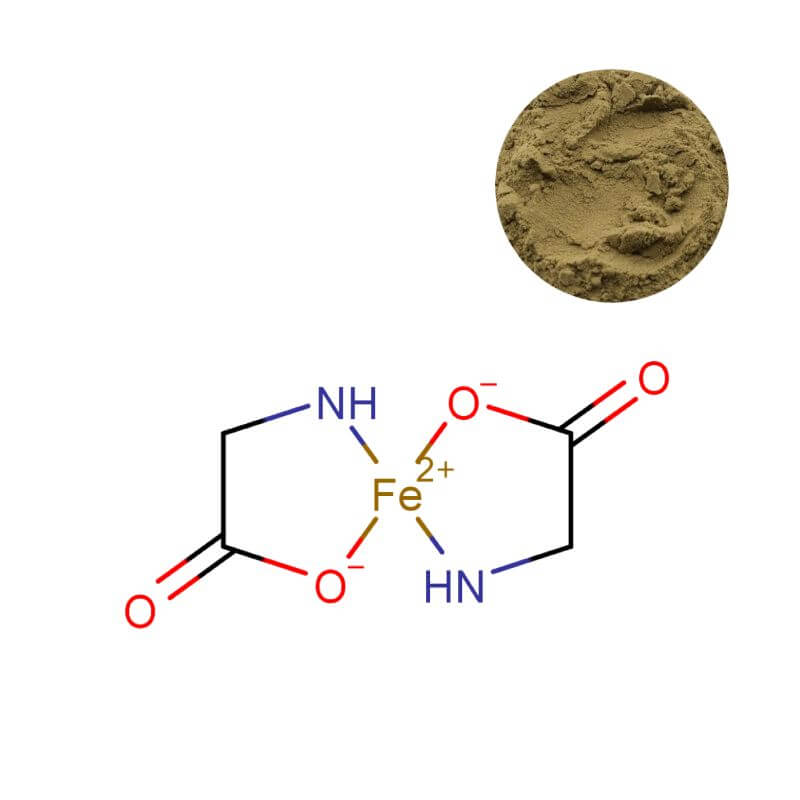
Iron Bisglycinate Powder
| Product Name | Iron Bisglycinate Powder |
| CAS Number | 20150-34-9 |
| Appearance | Light green to greyish-green fine powder |
| Purity | 98% min. (20.0% - 22.0% Elemental Iron) |
| Packaging | 1 kg/aluminum foil bag, 25 kg/cardboard drum |
| MOQ | 1 kg |
Iron Bisglycinate Powder (Fe 20.0%–22.0%): A Chelated Iron Source for High‑Compliance, Gut‑Friendly Formulations
Balancing clinical efficacy with consumer acceptability in iron supplements is a persistent challenge. Gastrointestinal side effects and low bioavailability often undermine adherence, especially for pregnant and active users. The solution lies in chelation chemistry. A premium iron bisglycinate powder — standardized to 20.0%–22.0% elemental iron and ≥98% chelate purity — provides a validated path to overcome these hurdles. This ingredient is a cornerstone for clean‑label, high‑tolerance interventions, from prenatal to sports nutrition. In a crowded iron market, adopting this specific chelated purity benchmark allows brands to bypass commodity pricing and build a defensible “gentle iron” premium position — directly addressing the rising consumer demand for better-tolerated daily essentials.
Clinical Rationale: Why Bisglycinate Chelation Improves Iron Absorption and Tolerance
The superior performance of ferrous bisglycinate stems from its molecular architecture: two glycine molecules chelated to ferrous iron (Fe²⁺). This neutral, low‑molecular‑weight complex bypasses the classical DMT1 pathway that is easily inhibited by dietary phytates, polyphenols, and calcium. Instead, it exploits the peptide transporter (PEPT1) route, which remains active even in the presence of common absorption antagonists. A 2023 systematic review and meta‑analysis of 17 randomized controlled trials confirmed this advantage (doi: 10.1093/nutrit/nuac106). In pregnant populations, ferrous bisglycinate produced a significantly higher hemoglobin increase (SMD 0.54 g/dL) compared to ferrous sulfate, while reducing gastrointestinal adverse event reports by 64% (IRR 0.36). This directly translates to lower return rates, better adherence, and a defensible “gentle iron” claim. Achieving comparable hemoglobin outcomes with lower elemental iron doses (e.g., 24 mg vs. 66 mg) reduces iron overload risk and allows smaller capsules — a clear advantage in prenatal and daily wellness. For formulation directors, this clinical profile delivers two key benefits: the lower GI side effects drastically improve real‑world compliance, while the smaller capsule size enhances consumer acceptance and repurchase potential — two key drivers of brand retention.
Quality Benchmarks: What Defines a Premium Iron Bisglycinate Powder for Global Compliance
Not all chelated iron ingredients perform equally. Two critical specifications separate high‑grade raw materials from commodity grades: the ratio of Fe²⁺ (ferrous) to Fe³⁺ (ferric) and the completeness of chelation. A premium bulk iron bisglycinate must maintain Fe²⁺ ≥ 98% of total iron and Fe³⁺ ≤ 2.0%, because ferric iron is poorly absorbed and can catalyze oxidative rancidity in lipid‑containing formulations. Equally important is the “glycine chelate purity” (≥98% by HPLC), which verifies that nearly all iron is bound to two glycine molecules rather than existing as free iron salts or unreacted glycine. Key sourcing considerations for a reliable iron bisglycinate supplier include:
- Full disclosure of Fe²⁺/Fe³⁺ speciation – not just total iron content.
- Batch‑specific COA (Certificate of Analysis) showing residual solvents complying with USP <467>, heavy metals (Pb ≤1.0 ppm, As ≤1.0 ppm, Cd ≤1.0 ppm, Hg ≤0.1 ppm), and microbiological purity (TPC ≤1000 CFU/g).
- GMP‑certified production with traceability from raw material (glycine and iron salt) to final powder.
For brands seeking to buy iron bisglycinate for the EU or US markets, verifying that the ingredient meets GRAS criteria (FDA) and the EFSA positive opinion for food fortification is non‑negotiable. A well‑documented COA also simplifies the Novel Food notification process when needed. It’s worth noting that many “chelated iron” products on the market are actually physical mixtures with incomplete chelation. Therefore, insisting on HPLC‑verified chelate purity is a prudent risk‑mitigation step for any professional formulator. From a commercial perspective, this purity level means developers can rely on consistent dissolution profiles and avoid costly reformulation due to batch‑to‑batch variations — directly shortening time‑to‑market for new product lines.
| Quality Attribute | Premium Iron Bisglycinate Specification | Why It Matters for Your Final Product |
|---|---|---|
| Iron (II) Content (elemental) | 20.0% – 22.0% (on dried basis) | Precise dosing for label claims; allows smaller capsule sizes. |
| Ferric Iron (Fe³⁺) | ≤ 2.0% | Prevents rancidity in softgels or gummies; ensures bioavailability. |
| Glycine Chelate Purity | ≥ 98.0% (HPLC) | Guarantees the absorption‑enhancing chelation structure is intact. |
| Loss on Drying | ≤ 5.0% | Improves flowability and long‑term stability in powder blends. |
Formulation in Practice: Stability, Synergy, and Delivery Forms
An effective formulation using iron bisglycinate powder for prenatal supplements, sports nutrition, or functional beverages requires attention to three practical aspects: compatibility, sensory profile, and processing conditions. Unlike ferrous sulfate, iron bisglycinate is virtually tasteless and does not produce a metallic aftertaste, even at 20–30 mg elemental iron per serving. This makes it ideal for chewables, gummies, and ready‑to‑mix drink powders. However, because Fe²⁺ is still susceptible to oxidation when exposed to high humidity (>60% RH) or prolonged heat (>60°C), formulators should follow these guidelines:
- For dry blends (capsules, tablets): Use a desiccant in primary packaging and keep blending room humidity below 45% to prevent iron‑induced Maillard reactions with amine‑containing actives (e.g., amino acids).
- For liquid or semi‑solid systems: Add a fat‑soluble antioxidant (natural mixed tocopherols or rosemary extract) and maintain pH between 4.5 and 7.0. Avoid direct contact with high‑vitamin C concentrations >500 mg/serving, as ascorbic acid can paradoxically accelerate Fe²⁺ oxidation in solution over time.
Synergy is straightforward: pairing iron bisglycinate with small doses of ascorbic acid (Vitamin C) (e.g., 25–50 mg) can help regenerate any Fe³⁺ back to Fe²⁺ in the gastrointestinal tract. More importantly, it is fully compatible with other mineral chelates (zinc bisglycinate, magnesium bisglycinate) without the antagonistic competition seen with inorganic salts. From a strategic formulation perspective, this allows creation of all‑in‑one prenatal or multimineral formulas without the need for divided dosing — a significant convenience claim that appeals to modern consumers.
Mitigating Risk: The Checklist for Sourcing Iron Bisglycinate from a Trusted Distributor
When evaluating a potential iron bisglycinate distributor or exporter, procurement managers should move beyond unit price and focus on supply chain transparency and technical support. The goal is to minimize “hidden costs” such as rejected batches, reformulation delays, or regulatory non‑compliance. A robust certified iron bisglycinate partner will provide, upon request:
- A fully traceable, batch‑specific COA including speciation data (Fe²⁺/Fe³⁺) and heavy metal analysis via ICP‑MS.
- Stability study reports under ICH conditions (25°C/60% RH and 40°C/75% RH) confirming 24‑month shelf life.
- Regulatory dossier covering GRAS notification, EU compliance for food fortification, and any Novel Food status updates (if applicable for your target market).
- Technical formulation assistance – e.g., recommended excipients, processing parameters, and troubleshooting for stickiness or discoloration.
For brands that source wholesale iron bisglycinate for large‑scale production, auditing the manufacturer’s GMP compliance and raw material origin (glycine from non‑animal, non‑GMO sources) adds an extra layer of brand protection. Practically speaking, requesting a 10–20 g sample and subjecting it to independent HPLC verification is a low‑cost, high‑impact due diligence step. A capable iron bisglycinate supplier will not hesitate to share these documents within 24 working hours, accelerating your product launch while safeguarding your reputational risk. Applying a Total Cost of Ownership lens: preventing a single batch rejection due to borderline Fe³⁺ or poor chelation purity avoids thousands in scrapped materials and delayed retail windows — making that specification table your most valuable quality insurance.
Next Steps: De‑risk Your Development with Verified Data and Technical Support
Moving from ingredient selection to market success requires more than a COA – it demands a collaborative technical partnership. We invite formulation scientists and procurement leaders to experience the difference of working with a solution‑oriented iron bisglycinate ingredient partner. Request your complimentary sample and complete technical dossier, including a batch‑specific COA, stability summary, and formulation protocol for your target delivery form. All technical documentation is delivered within 24 working hours, allowing you to accelerate your prototype testing and compliance filing with confidence.
Frequently Asked Questions
Share this product
Related Products
Ready to get started?
Contact our team for technical specifications, pricing, and customized solutions.