
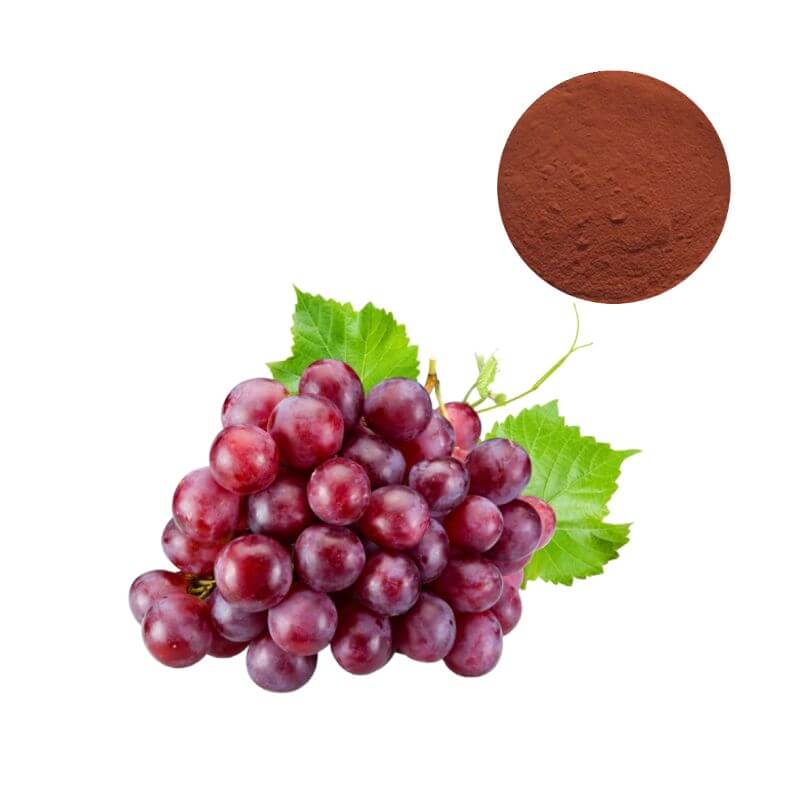
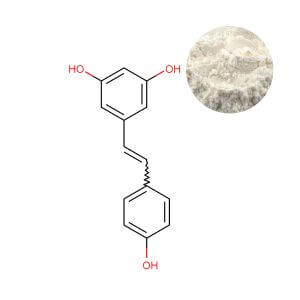
Grape Seed Extract Powder
| Product Name | Grape Seed Extract Powder |
| CAS Number | 84929-27-1 |
| Appearance | Reddish-brown fine powder |
| Purity | 95% min. OPC (by UV) |
| Packaging | 1 kg/bag, 5 kg/bag, 25 kg/drum |
| MOQ | 5 kg |
Clinical-Grade Grape Seed Extract Powder for Metabolic Health Supplements and Functional Beverage Applications
Clinical validation for cardiovascular risk reduction, combined with advanced particle engineering that enables high-speed gummy and RTD production, is redefining the commercial potential of Bulk Grape Seed Extract Powder. For formulators and procurement leads, sourcing from a Spec-Verified Grape Seed Extract Supplier ensures access to material that transitions seamlessly from proven human endpoints (hepatic steatosis severity at P=0.002; cardiovascular risk markers at P<0.05) to high-throughput CMO lines without re-formulation delays. A rigid commitment to lot-to-lot COA consistency and complete supply chain traceability de-risks the critical path from R&D bench validation to commercial batch release, securing both brand equity and supply continuity.
Human Clinical Endpoints That Translate Directly into Premium DTC Health Claims
While the antioxidant narrative is commoditized, the premium segment demands evidence-based specificity that justifies a $45+ retail price point. The core challenge for R&D teams is moving beyond generic "cell protection" claims to verifiable metabolic outcomes that resonate with discerning consumers. This module dissects the quantitative biomarker shifts observed in recent human interventions, providing the scientific ammunition needed for compliant and compelling DTC marketing campaigns.
| Clinical Biomarker | Quantitative Change vs. Placebo | Commercial Claim Translation |
|---|---|---|
| HOMA-IR (Insulin Resistance) | Significant reduction (P < 0.05) | Supports healthy glucose metabolism |
| TC, TG, LDL-c (Lipid Panel) | Significant reduction (P < 0.05) | Helps maintain healthy cholesterol levels |
| SBP and DBP (Blood Pressure) | Significant reduction (P < 0.05) | Supports normal cardiovascular function |
| Hepatic Steatosis (Fatty Liver) | Severity reduction (P = 0.002) | Promotes healthy liver fat metabolism |
A randomized double-blind placebo-controlled human trial (n=50) testing 520 mg/day Grape Seed Extract (95% OPC by UV) produced statistically significant improvements in insulin sensitivity, lipid panels, blood pressure, and hepatic steatosis severity (BMC Complementary Medicine and Therapies, 2024; doi: 10.1186/s12906-024-04477-3). For brand owners, this evidence directly supports structure/function claims for metabolic health supplements. Combining this high-purity standardized extract with synergistic co-ingredients like quercetin and ascorbic acid amplifies these pathways, enabling brands to claim superior antioxidant support backed by human data - a key differentiator in a crowded market.
Overcoming Thermal Sensitivity for Gummy, Beverage, and Capsule Success
Clinical efficacy does not guarantee commercial viability; the thermal degradation of OPCs above 60°C frequently derails gummy and RTD beverage projects, forcing costly reformulation cycles. Translating clinical endpoints into a stable, marketable finished format demands precise control of the processing window and protective matrix engineering.
| Process Parameter | Impact on OPC Stability | Formulation Strategy for Success |
|---|---|---|
| Temperature ≤ 60°C | Stable (Preserves bioactivity) | Standard hot-melt gummy processing; post-pasteurization addition for beverages |
| Temperature ≥ 80°C | Significant degradation over time | Cold-process encapsulation; alginate-whey protein matrix protection |
| Exposure to Metal Ions | Catalyzes oxidation and discoloration | Use of chelating agents (e.g., citric acid) in formulation |
Visible light stability data confirmed that encapsulation in an alginate-whey protein matrix protects polyphenols, flavonoids, and cyanidin-3-O-glucoside from photodegradation under red-orange light exposure (Food Chemistry X, 2024; doi: 10.1016/j.fochx.2024.101758). The same study, however, cautioned that cyan-blue-violet light induced the most intense polyphenol degradation, highlighting the need for spectral-selective packaging. For product managers, this mitigates degradation risks in light-exposed formats like clear RTD beverages. Combining Grape Seed Extract with high-purity vitamin C powder (oxygen scavenger) and green tea polyphenols powder (pathway amplifier) enhances stability during accelerated trials. This technical assurance supports premium gummy and shot launches, capturing higher margins in the expanding finished-product market (Research and Markets, 2025).
Optimizing CMO Line Efficiency through Granulation and Moisture Control
Even with a robust formula, the intrinsic physical properties of standard Grape Seed Extract powder - notably its poor flowability and wax-like compressibility - frequently cause "capping" and "streaking" on high-speed tablet presses, resulting in excessive scrap rates and significant unplanned downtime. Addressing this upstream is the definitive lever for protecting the Total Cost of Ownership (TCO) and safeguarding the promised 8-12 week launch timeline.
- Flowability and Direct Compression: The 2-3% lipid content typical of commercial grape seed extract grades creates adhesion issues. Switching to pre-engineered dry granules (≥95% through 80 mesh) improves flow index by over 40%, enabling direct compression and eliminating costly wet granulation steps.
- Bulk Density Standardization: Maintaining a tight range of 0.3-0.8 g/mL ensures consistent die filling across capsule and tableting machines, preventing weight variation and reducing QC rejection rates.
- Loss on Drying (LOD) Control: Hygroscopicity is a primary spoilage vector. Maintaining LOD ≤ 5.0% via dual-layer PE liner packaging ensures the powder remains free-flowing even after trans-oceanic air freight, preventing conveyor line blockages.
From a procurement perspective, leveraging these advanced physical specifications allows brand owners to bypass secondary processing steps entirely. The elimination of anti-caking agent adjustments and pre-mixing reductions translates directly to a 15-20% reduction in manufacturing overhead per batch. For CMOs, a physically robust material enables zero-sticking, high-speed encapsulation runs (exceeding 200,000 capsules/hour), effectively decoupling formulation complexity from production cost. This operational efficiency not only safeguards the launch timeline but also enhances net margins by minimizing waste and lowering the scrap rate to below 1%, turning a potential production bottleneck into a competitive cost advantage.
Building Brand Equity with HPLC Fingerprint Authentication and Traceability
With production efficiency secured, the ultimate threat to premium brand positioning shifts to supply chain integrity. Grape seed extract is a primary target for adulteration using cheaper pine bark or peanut skin extracts, which mimic the polyphenol profile but lack the validated clinical efficacy of Vitis vinifera L. This clandestine substitution directly erodes consumer trust and devalues the brand's hard-won "clean label" reputation.
| Authentication Technology | Target Contaminant/Adulterant | Brand Protection Outcome |
|---|---|---|
| HPLC Characteristic Fingerprint | Pine Bark Extract (Peak PB1) | Ensures 100% botanical identity and efficacy consistency |
| HPLC Characteristic Fingerprint | Peanut Skin Extract (Peaks PS1/PS2) | Prevents cost-cutting adulteration and protects clinical credibility |
| Eurofins/SGS Heavy Metal Screening | Pb ≤ 1.0 ppm; As ≤ 0.5 ppm (ICP-MS) | Exceeds EU 2023/915 finished product requirements, providing a safety buffer for formulators |
Implementing a Seed-to-Extract traceability system combined with routine adulteration screening (using validated patented HPLC methods) acts as an Anti-Copycat Shield for the brand. This system proactively intercepts foreign plant additives and synthetic polyphenol adulterants before they reach the finished dosage. By guaranteeing that each batch is matched against a standard reference fingerprint, brand owners can confidently market their products with a "Verified Grape Seed Extract" label - a premium claim that justifies the $46.99 price point observed in top-tier brands. This rigorous QA infrastructure, incorporating PCR identification for species verification and mass-balance closure for extraction yields, effectively insulates the brand's market share from cheap knockoffs while reinforcing the scientific integrity established in the clinical trials, meeting rigorous quality benchmarks established for specification-grade materials such as those characterized by the Oclean Nutra analytical framework.
Accelerate R&D Validation with Certified Reference Samples
De-risking the transition from bench-scale trials to commercial production requires immediate access to definitive technical data. The R&D bottleneck often lies in waiting for internal stability and compatibility testing. Initiating the qualification process now grants immediate access to a comprehensive technical dossier - including 3-Lot COAs with actual fingerprint chromatograms, real-time stability data, and the regulatory compliance dossier for the US and EU markets. Request a certified Grape Seed Extract Powder sample pack for your next metabolic health or functional beverage launch.
Frequently Asked Questions
Share this product
Related Products
Ready to get started?
Contact our team for technical specifications, pricing, and customized solutions.