
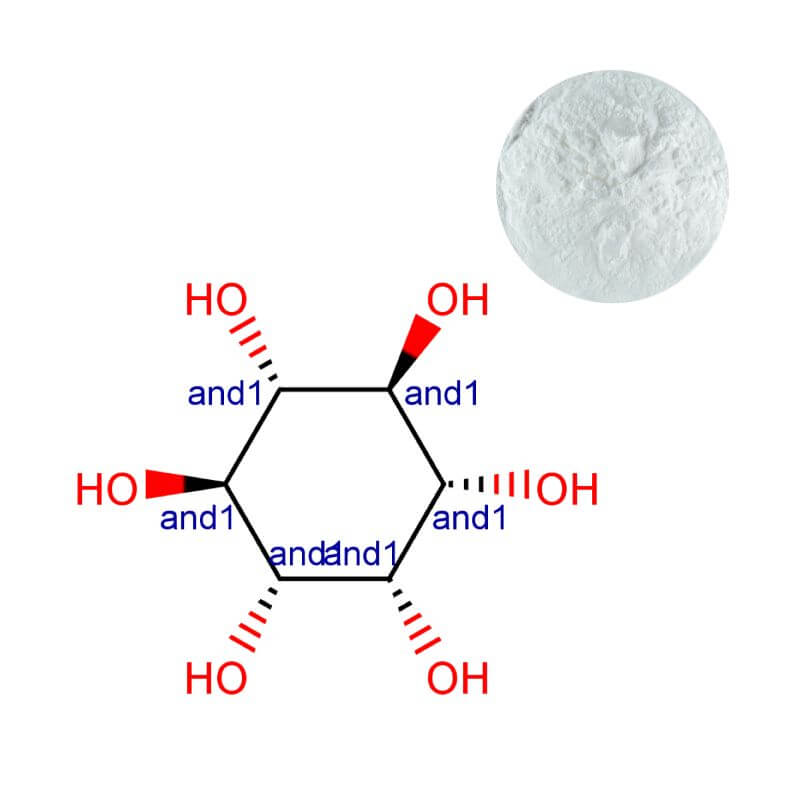
Myo-Inositol Powder
| Product Name | Myo-Inositol Powder |
| CAS Number | 87-89-8 |
| Appearance | White Crystalline Powder |
| Purity | ≥ 99.0% (by HPLC) |
| Packaging | 1 kg/bag, 5 kg/bag, 25 kg/drum |
| MOQ | 25 kg |
High-Purity Myo-Inositol Powder for Women's Health and Metabolic Formulations
Bulk Myo-Inositol Powder has become the formulation backbone for women's metabolic health, yet its commercial value depends not only on the molecule's established insulin-signaling mechanism but also on how a Myo-Inositol supplier controls isomer ratios, particle format, and batch documentation. Verified insulin-signaling evidence and a daily-cost spread across consumer formats define the opportunity. Brand owners who lock lot-to-lot COA consistency, audit-ready traceability, and USP/EP-compliant documentation convert a commodity ingredient into a defensible premium position.
Insulin-Signaling Evidence That Converts Into Compliant Label Claims
Surviving regulatory review is what turns clinical validation into commercial asset value. Myo-Inositol functions as an insulin-signaling second messenger, delivering measurable metabolic endpoints that support structure/function claims without crossing into drug territory. That boundary shapes every downstream claim a brand can legally publish.
An umbrella meta-analysis (Wang Rutong et al., Frontiers, 2025) quantified the effect at HOMA-IR SMD = -0.81 and SHBG SMD = 9.65. A head-to-head randomized trial comparing myo-inositol with metformin in 60 patients recorded more than 90% improvement in menstrual regularity in both groups (Gudović et al., Biomedicines, 2024), alongside a statistically significant reduction in insulin AUC during oral glucose tolerance testing.
- HOMA-IR reduction of SMD = -0.81 across pooled populations
- SHBG elevation of SMD = 9.65, supporting androgen-binding normalization
- Menstrual regularity improvement exceeding 90% in both treatment arms of a randomized trial
The commercial translation matters more than the biology. These endpoints allow insulin sensitivity, hormonal balance, and metabolic wellness claims, while disease-specific phrasing remains off-limits. The 2026 UK ASA ruling against Polybiotics Ltd confirmed that disease treatment claims cross into drug territory, while structure/function claims such as supports hormonal balance remain permissible, making claim-safe clinical sourcing a margin-protection decision for any Myo-Inositol wholesale buyer.
Stick Pack and Capsule Formats Built Around a 40:1 Ratio
Fitting a clinically studied 2 g daily dose into a consumer-friendly format remains the persistent bottleneck. Capsule delivery demands three to four swallows per day, whereas stick packs and effervescent sachets absorb the full load in a single serving. Premium launches increasingly favor powder formats for exactly this reason.
Formulators standardize around a 40:1 myo-to-D-chiro ratio that restores the physiological plasma balance. This ratio pairs bulk Myo-Inositol Powder with D-chiro-inositol (CAS 643-12-9), a distinct stereoisomer from myo-inositol (CAS 87-89-8) that is not interchangeable, alongside folate and chromium to reinforce insulin sensitivity and hormonal support. Premix specifications holding supplier-specified ratio precision within ±1.0% remove the blending burden from brand-side QC teams.
| Dosage Format | Typical Load | Formulation Consideration |
|---|---|---|
| Stick pack | 2,000 mg + 50 mg D-chiro | Single-serve compliance, flavor masking |
| Effervescent sachet | 2,000 mg | Rapid dissolution; requires moisture-controlled blending and packaging to prevent acid-induced caking |
| Hard capsule | 500 mg per unit | Dose-per-unit limited by capsule fill volume; verify bioequivalence with powder formats before substitution |
Format choice drives retail positioning. Powder-based women's health products command a daily-cost premium against value-tier capsules, because the format itself communicates convenience and dose adequacy. A Myo-Inositol wholesale program that supplies both standard powder and ratio-controlled premix lets a brand launch a stick-pack line and a capsule line from one qualification cycle, compressing development timelines and protecting shelf space across multiple price tiers.
Particle Engineering That Removes a Granulation Step
Imagine a high-speed tableting line running a premium women's health formula, only to stall because the incoming powder cannot compress. Standard ≥ 95% through 80 mesh Myo-Inositol performs well in sachets and capsules but lacks direct-tableting compressibility, pushing contract manufacturers into an extra granulation stage that adds weeks and cost.
- Standard specification: ≥ 95% through 80 mesh, suitable for capsules and dietary sachets
- Optional DC grade (20-60 mesh) available as custom specification upon request, not part of the locked standard parameters
- DC grade available as ≥ 99.0% pure, binder-free; custom binder-containing grades are non-standard and not covered by the locked specification
- Loss on drying at or below 0.50% for anti-caking stability
Choosing the right particle format converts directly into schedule and scrap savings. A DC-grade specification removes a granulation step, shortens time-to-market by eight to twelve weeks, and reduces capping, sticking, and rejected tablets on high-speed presses. Air-freight exposure adds a second risk layer: foil-laminated heat-sealed pouches, high-barrier HDPE containers, and silica gel desiccant packs, filled under 30% relative humidity as typical industry practice, prevent moisture-driven caking during low-pressure and temperature swings. For a brand scaling a premium line, this is where powder physics becomes working capital protection.
Regulatory Pathways and Claim Safety Zones Across Export Markets
Clearing customs and surviving label scrutiny are what preserve production efficiency gains. Myo-Inositol sits on firm regulatory ground in most major markets, yet permitted claim language and infant-formula thresholds differ enough that a single label cannot serve every destination.
| Market | Regulatory Identity | Key Constraint |
|---|---|---|
| United States | GRAS under 21 CFR §184.1370 | Structure/function claims only |
| European Union | Permitted nutrient in infant formula under 2016/127 | EFSA claim wording restrictions |
| United Kingdom | Food supplement ingredient | 2026 ASA ruling bans disease treatment claims; structure/function claims remain permissible |
| Global export | Specification: Pb ≤ 1.0 mg/kg; complies with EU Reg (EC) 1881/2006 and California Prop 65 | Heavy metal limits verified per batch |
Regulatory positioning protects brand equity in ways that are hard to quantify until a recall happens. A Myo-Inositol supplier that delivers batch COAs, residual solvent statements under USP <467>, allergen declarations, and market-specific claim guidance removes the audit friction that delays launches. Infant formula applications tolerate 4-40 mg per 100 kcal, a narrow window that rewards suppliers with verified assay control. Brands that build claim libraries around accepted structure/function language avoid the takedown and reformulation costs that follow a single aggressive disease claim.
TCO Logic That Protects Margin Across a Concentrated Supply Base
Defending total cost of ownership begins after compliance clears the path to market. Approximately 68% of global Myo-Inositol capacity sits in China (QYResearch, 2026), a concentration that rewards buyers who qualify multiple formats rather than chasing the lowest quotation.
- DC-grade and standard powder qualified under one supplier audit
- Ratio-controlled premix reducing brand-side blending and QC labor
- Lot-to-lot assay RSD ≤ 1.0%, cutting rejected batches and rework
- Safety stock planning against a concentrated production base
Risk-adjusted TCO changes the sourcing conversation. A slightly higher per-kilogram quotation for verified 99.0% HPLC assay, DC-grade flowability, and complete documentation often costs less than a cheap lot that fails QC, stalls a production run, or triggers a label correction. For buyers comparing bulk Myo-Inositol Powder quotations, the financial case rests on avoided scrap, reduced granulation outsourcing, and predictable replenishment. A disciplined Myo-Inositol wholesale strategy treats specification consistency as a supply-chain asset that protects margin through volatility.
Validate Specifications and Lock a Sample Before the Next Production Run
Technical review should not consume weeks of R&D capacity. A sample request can be paired with the full documentation set, including assay by HPLC, heavy metal reports, microbial screening, residual solvent statements, and market-specific claim guidance, so R&D validates the specification and procurement evaluates compliance in parallel. This shortens the qualification cycle and removes the audit gaps that delay first production. Secure a specification-verified Myo-Inositol sample with complete technical dossier and begin evaluation with complete technical evidence in hand.
Frequently Asked Questions
Related Products

Request a Quote for Myo-Inositol Powder
Tell us your required quantity and application. Our team will help you evaluate product specifications, pricing, samples, and supply options.