
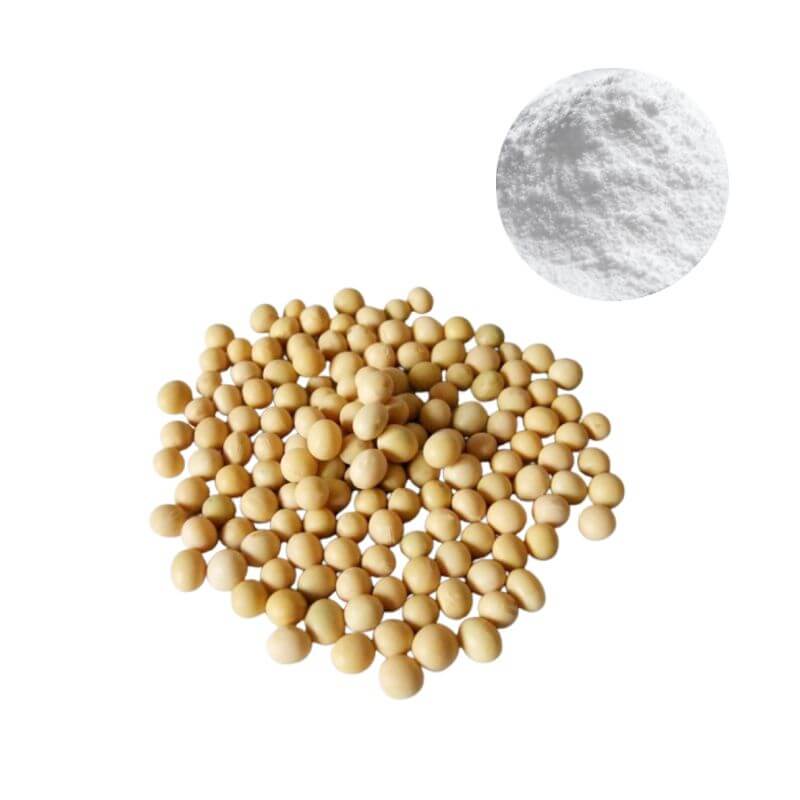
S-Equol Powder
| Product Name | S-Equol Powder |
| CAS Number | 531-95-3 |
| Appearance | White to off-white crystalline powder |
| Purity | 98.0% min. (by HPLC) |
| Chiral Purity | 98.0% min. (by Chiral-HPLC) |
| Packaging | 1 kg/bag, 5 kg/bag, 25 kg/drum |
| MOQ | 1 kg |
Spec-Verified S-Equol Powder for Evidence-Based Nutricosmetic Development
Bulk S-Equol powder sourced from fermentation routes carries an inherent chiral advantage that conventional HPLC cannot verify, yet this analytical blind spot permits synthetic racemates containing up to 50% inactive R-Equol to compete on price. Spec-verified S-Equol supplier protocols therefore mandate orthogonal chiral validation per lot, establishing batch-to-batch isomeric consistency through chromatographic and polarimetric cross-checking. This verification framework, documented in every COA with full chiral annexes, directly addresses procurement's need for guaranteed isomeric composition before material reaches the blending line. Positioning spec-verified chiral purity as the decisive differentiator elevates finished product credibility and secures premium retail positioning in an otherwise commoditized market.
Chiral Purity Verification as the Primary Defense Against Synthetic Adulteration
Standard HPLC quantifies total equol content but remains optically agnostic. A fermentation-derived batch at 98.0% total purity may contain up to 49% R-Equol if adulterated with synthetic material, rendering bioactivity claims misleading.
| Analytical Parameter | Fermentation-Derived S-Equol | Synthetic Racemate |
|---|---|---|
| Chiral-HPLC (S-Equol) | ≥ 98.0% min. | ~50% |
| Specific Rotation [α]20D | -21.0° to -23.0° | Approx. 0° |
| ERβ Binding Affinity | High (Ki = 0.73 nM) | Diluted by R-inactive form |
Chiral-HPLC with immobilized polysaccharide columns resolves both enantiomers at baseline (Rs > 1.5), operating at 25°C column temperature with 1.0 mL/min flow rate, delivering unambiguous S-Equol quantification at 280 nm. The enantiopure (S)-Equol bioavailability study in CD(SD)IGS rats reported female systemic exposure at 22.91-66.01% versus 1.59-8.14% in males at equivalent oral doses (Scientific Reports, 2025; doi: 10.1038/s41598-024-83901-7). This gender-dimorphic pharmacokinetic profile validates that only the pure S-isomer achieves therapeutic concentrations in female subjects. For procurement, this chiral specification eliminates the need for post-delivery in-house optical rotation verification, saving $1,200-1,800 per lot in external analytical costs while ensuring formulation bioactivity matches label claims. Eliminating post-delivery chiral re-verification reduces analytical lead time by 3-5 working days per batch, compressing the R&D-to-scale-up window for new product launches.
Clinical Evidence and Mechanistic Validation for Skin Aging Interventions
S-Equol activates ERβ and Nrf2 pathways, upregulating hyaluronan synthase 2 to stimulate endogenous hyaluronan synthesis and type I procollagen while suppressing MMP-1 expression. Unlike its upstream precursor daidzein isoflavone, this gut microbial metabolite bypasses conversion requirements and directly reaches dermal fibroblasts.
| Clinical Endpoint (12-Week RCT, n=66) | Isoflavone Group | Placebo Group |
|---|---|---|
| Crow's Feet Roughness Change | -5.6% | +1.6% |
| Skin Hydration (Cumulative D42-D84) | Statistically Significant Positive | Not Significant |
| Under-Eye Wrinkle Improvement | Dose-Response Trend | Marginal |
The 2025 randomized controlled trial in Frontiers of Nutrition tracked 66 postmenopausal women, recording a 5.6% reduction in crow's feet roughness versus a 1.6% increase in placebo, with higher urinary S-Equol levels significantly correlated to improved under-eye wrinkle parameters and reduced transepidermal water loss (Frontiers in Nutrition, 2025; doi: 10.3389/fnut.2025.1671835). This clinical profile enables brands to structure function claims around measurable hydration and wrinkle endpoints with peer-reviewed statistical backing, eliminating the need for proprietary clinical trials during initial product registration.
Processing Boundaries and Formulation Compatibility for Stable Oral Beauty Formats
The phenolic hydroxyl groups on the S-Equol chroman ring render the compound susceptible to metal-catalyzed oxidation and pH-driven degradation. Processing parameters directly dictate final product stability across oral beauty delivery systems.
- High-shear wet granulation: Binder pH must remain within 3.5-5.5; hold times beyond 2 hours at elevated temperatures accelerate oxidative dimerization, reducing potency by 8-12%, with continuous environmental RH monitoring below 40% during milling stages.
- Direct compression for tablets: Processing at ≤ 40% RH prevents surface adhesion on punches; magnesium stearate shows no adverse interaction with the crystalline matrix.
- Liquid shot formulations (pH 3.0-5.0): Stable for 24 months in amber glass or HDPE; nitrogen blanketing reduces dissolved oxygen below 2 ppm, mitigating off-color development.
- Softgel encapsulation: Fill temperatures must not exceed 45°C; the powder disperses in medium-chain triglycerides without recrystallization upon cooling.
Ferrous salts or zinc in aqueous systems trigger chelation-associated browning within 24 hours, reducing S-Equol content by 15-20%. For contract manufacturers, adherence to these defined processing windows eliminates in-process discoloration rejects, which typically account for 2-4% batch loss in oral beauty production runs, ensuring predictable scale-up and reducing material waste on high-speed encapsulation and tableting lines.
Regulatory Status and Market Access Across Major Jurisdictions
Regulatory standing for S-Equol varies significantly across regions, directly affecting product launch timelines and label claims. In the United States, self-affirmed GRAS status supports dietary supplement positioning at intakes up to 12 mg/day without requiring a New Dietary Ingredient notification.
- United States (FDA): Recognized as a dietary supplement ingredient under DSHEA; lawful sales at ≤ 50 mg/day with "For adult use only" labeling; GRAS-qualified suppliers exempt from NDI filing.
- European Union (EFSA): Novel Food authorization mandatory per Regulation (EU) 2015/2283 prior to commercialization; dossier requires strain identification, genetics, and full toxicology battery.
- Japan (FOSHU): Established functional food ingredient with multiple commercial products under the Foods with Function Claims framework; clear regulatory pathway exists.
- China (NMPA): Health food registration pathway requires preclinical safety assessment and domestic clinical trial data; timeline typically extends 12-18 months.
For procurement directors, these regulatory differentials represent critical go-to-market decision points. Sourcing a spec-verified distributor that maintains independent third-party batch testing and jurisdiction-specific compliance annexes facilitates smooth customs clearance and rapid import readiness across all four regions. A fully traceable chiral purity annex accompanying each shipment cuts through customs documentation reviews, minimizing port-of-entry hold periods and accelerating market release.
Consumer Trends and Differentiated Finished Product Concepts
Market data confirms the ≥ 99% purity tier captures 69.9% of global sales volume but 74.1% of revenue, indicating formulators prioritize premium specifications for higher retail price realization. The North American oral beauty segment, valued at approximately $3.4 billion, expands at an 8.2% CAGR, with women aged 45-65 as the primary buying cohort.
- Nighttime Skin Recovery Shots: A 10 mg S-Equol dose in a 60 mL liquid format paired with gamma-aminobutyric acid (GABA) and collagen peptides targets overnight repair; liquid delivery shortens Tmax to under 3.8 hours, enhancing absorption kinetics.
- Multi-layer Stick Packs: Microencapsulated S-Equol granules are physically isolated from vitamin C within a foil stick, preventing oxidation until user-activated mixing at consumption, resolving long-standing shelf-life stability challenges.
- Direct-compression Sublingual Tablets: A low-filler formulation under 500 mg allows sublingual delivery, bypassing gastric first-pass metabolism and enhancing systemic availability for rapid onset.
These concepts enable differentiated SKUs that avoid capsule market saturation. Complete documentation accompanying spec-verified material shortens the concept-to-shelf timeline by eliminating the 12-16 week supplier qualification cycle typical for unverified sources.
Technical Dossier Access and Sample Qualification Protocol
Complete chiral characterization, batch-specific stability data, and regulatory appendices covering GRAS assessments and Novel Food compliance across major markets are available for immediate audit. This documentation package supports rapid supplier onboarding and regulatory filing. Procurement directors leveraging this verified chiral documentation package effectively insulate supply contracts from rejection-triggered financial penalties tied to isomeric non-conformance.
Frequently Asked Questions
Share this product
Related Products
Ready to get started?
Contact our team for technical specifications, pricing, and customized solutions.