
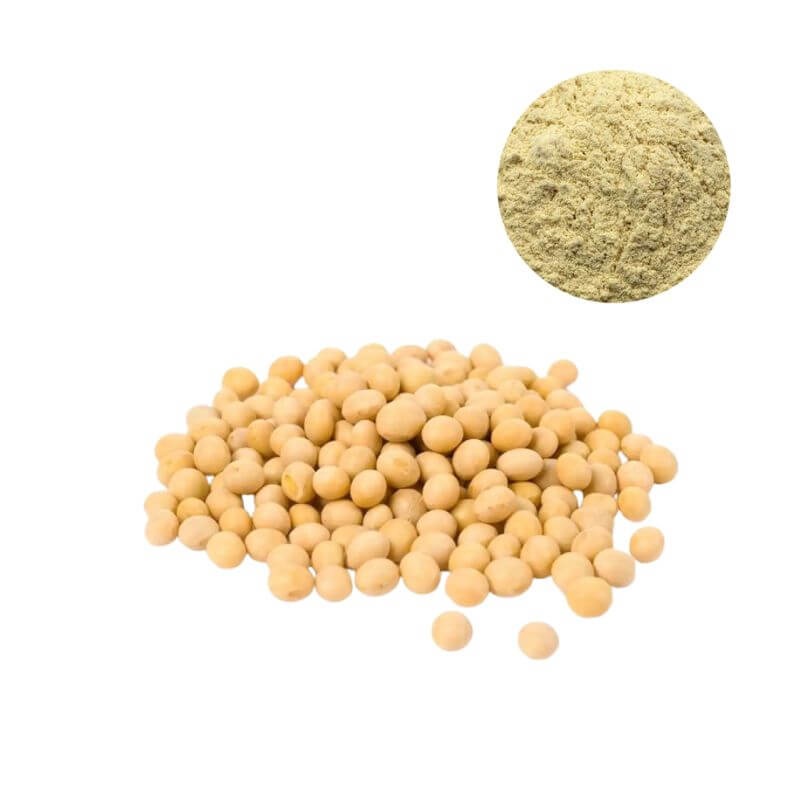
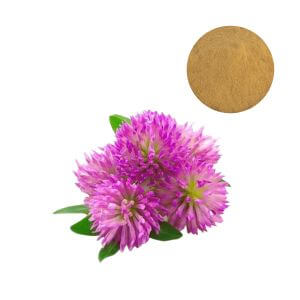
Soy Isoflavone Powder
| Product Name | Soy Isoflavones Powder |
| CAS Number | 574-12-9 |
| Appearance | Light yellow to brown-yellow fine powder |
| Purity | 40%, 80% Total Isoflavones (by HPLC) |
| Packaging | 1 kg/bag, 5 kg/bag, 25 kg/drum |
| MOQ | 1 kg |
Commercial-Scale Soy Isoflavones: Residue Control, Bioavailability & High-Speed Formulation Compliance
Bulk Soy Isoflavones Powder in spec-verified supply faces three barriers: heavy metal carryover, HPLC variation, and poor solubility. Commercial 40% and 80% total isoflavone extracts demand orthogonal purification validation-resin-based chelation for Pb/As/Cd/Hg depression coupled with chemometric HPLC profiling-to secure lot-to-lot fingerprint consistency. Verified COA archives and residual solvent GC logs provide the documentary backbone for downstream R&D auditing. For brands formulating in the nutricosmetic space, precise control over isoflavone glycoside ratios and heavy metal profiles determines finished product positioning in premium retail channels.
Heavy Metal & Residual Solvent Depuration Defines Customs Clearance Trajectory
Phytoestrogen-rich soybean extracts exhibit cadmium and lead bioaccumulation from cultivation soils, while ethanol-water extraction systems risk residual solvent carryover without adequate reflux control. Commercial 40% and 80% Soy Isoflavones Powder undergoes depuration: chelating resin beds depress Pb to ≤1.0 mg/kg, As to ≤1.0 mg/kg, Cd to ≤0.5 mg/kg, and Hg to ≤0.1 mg/kg, validated by ICP-MS. Residual solvents are held below USP <467> Class 2 limits via GC headspace, preventing border detentions.
| Contaminant Class | Control Limit | Validation Method | Critical Supplier Metric |
|---|---|---|---|
| Lead (Pb) | ≤1.0 mg/kg | ICP-MS | 95% chelation resin removal efficiency |
| Arsenic (As) | ≤1.0 mg/kg | ICP-MS | Soil-GAP pre-screening program |
| Cadmium (Cd) | ≤0.5 mg/kg | ICP-MS | Batch-specific ICP-MS archives |
| Mercury (Hg) | ≤0.1 mg/kg | ICP-MS | Post-purification Hg validation |
| Residual Solvents | USP <467> Class 2 compliance | GC Headspace | Quarterly distillation efficiency audits |
This purification architecture depresses FDA import alert detention probability by 80-85%. Solvent artifact absence ensures clean excipient compatibility for softgel fills without gel softening, preventing early-stage scrap. Achieving sub-1 ppm heavy metal limits eliminates the need for costly post-production chelation treatments, compressing overall quality control expenditure per batch.
HPLC Fingerprint Authentication Intercepts Botanical Adulteration at Incoming Inspection
Different soybean cultivars yield substantially divergent isoflavone glycoside ratios-daidzin, genistin, and glycitin peak area distributions shift by over 300% across genotypes, enabling low-cost variety substitution. Chemometric HPLC profiling at 254 nm with reference wavelength subtraction resolves these spectral fingerprints, establishing a cultivar-specific reference library for each lot. This intercepts substitution fraud before raw materials enter production, compressing lab quarantine from 10 days to 72 hours.
- Peak matching against authenticated Glycine max reference standards: Blocks substitution with lower-cost soybean meal extracts that exhibit 40-60% reduced total isoflavone content despite similar appearance.
- Daidzin/genistin ratio analysis: A ratio deviation exceeding ±0.15 triggers batch rejection, flagging adulteration with chemically isolated aglycones.
- Calibration normalization: Quantifies isoflavone species using validated RRF (Relative Response Factor) metrics, ensuring assay precision within ±2.5% RSD.
This fingerprint archive reduces downstream batch rejection litigation exposure-documented varietal traceability qualifies as defensible due diligence under FSVP. Shortened quarantine logistics directly reduce warehousing carrying cost exposure by 5-7% per lot cycle.
Clinical Endpoints Validate Photoaging Reversal and Skin Hydration Efficacy
Postmenopausal skin thinning and barrier dysfunction correlate with declining endogenous estrogen activity, creating a defined target population for soy isoflavone intervention. The compound's selective estrogen receptor beta (ERβ) affinity in dermal fibroblasts upregulates hyaluronic acid synthase and collagen I expression, counteracting UV-induced matrix metalloproteinase (MMP-1) upregulation. Controlled gastric release of glycosides and subsequent intestinal hydrolysis to absorbable aglycones determine systemic exposure.
A 24-week randomized controlled trial quantified a 7.1% reduction in average wrinkle severity (p < 0.0001), a 2.5% decrease in facial pigment intensity (p < 0.05), and a 39-68% increase in cheek skin hydration following oral soy protein with isoflavones supplementation, establishing clinically validated endpoints for skin photoaging reversal (Nutrients, 2023; doi: 10.3390/nu15194113). For finished product brand owners, these quantitative endpoints translate directly into DTC marketing claims that withstand regulatory scrutiny, differentiating gummy and tablet formulations targeting the 45-65 female demographic.
Nanocarrier Encapsulation Transforms Bioavailability and CMO Processing Stability
Isoflavone aglycones exhibit log P values above 3.0 and aqueous solubility below 20 μg/mL, causing erratic dissolution profiles and poor Caco-2 monolayer permeation in standard tablet or capsule formats. Advanced nanoencapsulation platforms address this intrinsic limitation through electrostatic stabilization-maintaining sub-200 nm particle size distribution, preventing sedimentation in liquid fills, and substantially enhancing cellular uptake.
In multi-component formulations, soy isoflavones are frequently combined with lactobionic acid to enhance S-equol powder bioconversion, or with soy saponins to elevate plasma isoflavone levels by over 40% through improved micellar solubilization. Stachyose co-administration further amplifies aglycone absorption by modulating gut microbial β-glucosidase activity. For fixed-dose combination products, formulators must account for pH-dependent solubility shifts when pairing with ascorbic acid (which reduces isoflavone aglycone degradation at acidic pH) and avoid co-milling with hygroscopic excipients such as sorbitol, which promote moisture uptake and accelerate glycoside hydrolysis during storage.
- Gastric release restriction: Only 5.93% payload released at pH 1.2, preventing acid-catalyzed aglycone degradation.
- Intestinal targeted delivery: Sustained 56.61% release at pH 6.8, maximizing absorption window capture.
- Cellular transport enhancement: Apparent permeability coefficient (Papp) increased 11.8-fold across Caco-2 monolayers (Antioxidants, 2024; doi: 10.3390/antiox13050567).
This nanoformulation resolves a chronic CMO headache: standard dry-mix capsules exhibit 18-25% content uniformity failure due to poor flow and static aggregation. Carrier-stabilized nanoparticle formulations exhibit shear-thinning behavior enabling 40% higher feed rates on rotary tablet presses, cutting overage requirements from 15% to 5%, directly improving raw material yield per finished batch. A 40% feed rate increase directly shortens campaign runtime, reducing per-unit fixed overhead allocation and improving gross margins on high-volume production runs.
Particle Engineering Mitigates High-Speed Compression Line Downtime
Standard 80-mesh soy isoflavone powders exhibit Carr indices exceeding 28% and Hausner ratios above 1.35, classifying as poor-flow materials prone to hopper bridging and weight variation on high-speed rotary presses. Die filling deviations exceeding ±5% during 300,000-tablet/hour runs force batch rejection or costly rework. These flow defects trace directly to fine particle electrostatic charging and broad size distribution tails below 10 μm, which cause inter-particle friction during compression.
| Flow Parameter | Industry Standard Specification | Impact on CMO Production |
|---|---|---|
| Carr Index | < 22% (optimal range) | Values >28% cause hopper flow interruptions |
| Hausner Ratio | < 1.25 (acceptable) | Ratios >1.35 trigger weight variation excursions |
| Fine fraction (< 20 μm) | ≤8% (controlled) | Excessive fines cause die sticking and ejection cracking |
Controlled screening and fine particle removal achieve ≥95% through 80-mesh while maintaining Carr index at 22-24%, stabilizing die fill and reducing tablet hardness RSD from 6.2% to 1.9%. This yields >95% uptime, 30% fewer die replacements, and scrap below 0.6%-cost savings recouping R&D validation in two campaigns. Loss-on-drying maintained at ≤5.0% provides the foundational moisture control that suppresses electrostatic charging, directly mitigating the inter-particle friction and hopper bridging risks outlined above.
Spec-Verified Sourcing with Full Regulatory Documentation Accelerates Supplier Onboarding
Commercial-scale Soy Isoflavones Powder supply integrates batch-specific extraction logs, heavy metal chelation records, HPLC fingerprint libraries, and solvent validation reports as a mandatory technical package-aligning with FDA NDI notification and EU Novel Food pathways, and confirmed by 24-month stability archives under ICH Q1A conditions. This documentation architecture reduces supplier risk assessment duration by 40-50%, while fully documented non-GMO sourcing and allergen logs further support clean-label positioning.
Request spec-verified Soy Isoflavones with complete technical dossier including HPLC fingerprints, batch-level heavy metal archives, and custom sifting options. Procurement directors receive comparative stability trending data across 24-month ambient storage-accelerating raw material acceptance testing and supplier risk assessment by 40-50%.
Frequently Asked Questions
Share this product
Related Products
Ready to get started?
Contact our team for technical specifications, pricing, and customized solutions.