
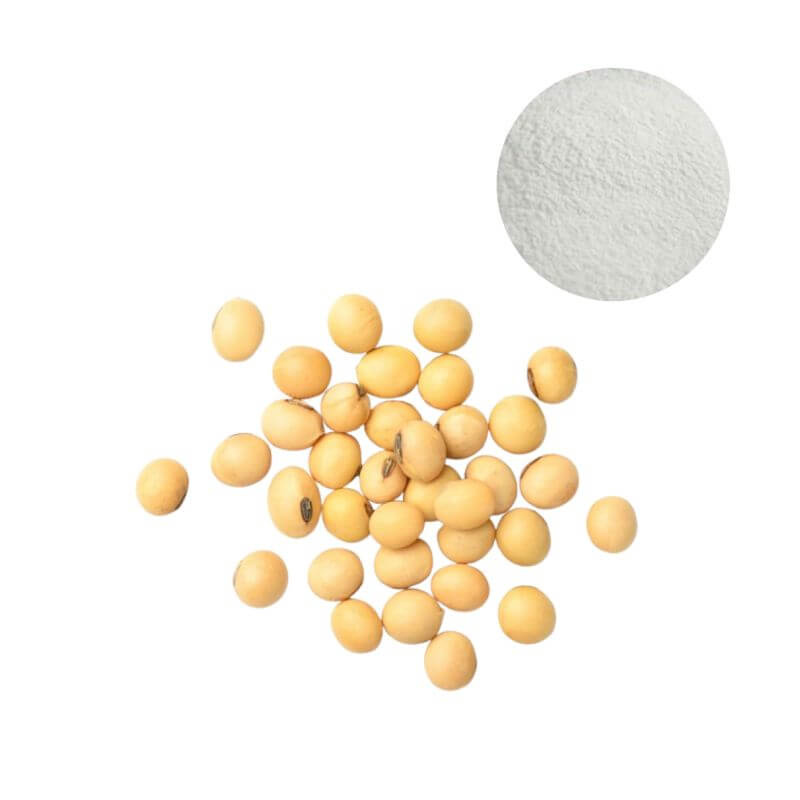
Daidzein Powder
| Product Name | Daidzein Powder |
| CAS Number | 486-66-8 |
| Appearance | Off-white to light yellow fine powder |
| Purity | 98% min. (by HPLC) |
| Packaging | 1 kg/foil bag; 5 kg/tin; 25 kg/cardboard drum |
| MOQ | 1 kg |
Daidzein Powder (98% Min. by HPLC): A Science-Backed Isoflavone for Premium Bone & Women’s Health Formulations
Formulators increasingly face a key challenge: moving beyond generic antioxidant blends to deliver ingredients with validated mechanisms for specific outcomes like bone density maintenance and menopausal comfort. Daidzein Powder, standardized to ≥98% purity via HPLC, offers a plant-derived phytoestrogen solution supported by decades of research. For brands sourcing bulk daidzein, the real value lies not just in the isoflavone itself, but in the batch-to-batch consistency and full traceability that a GMP-certified supply chain provides. For brands evaluating ingredient partners, the ability to provide a fully traceable, GMP‑certified daidzein powder with each batch’s COA is what separates a commodity supplier from a strategic formulation ally. In an increasingly crowded supplement market, locking in a ≥98% daidzein with batch-specific COA is the most direct route to building a scientifically defensible product that commands premium positioning. This article outlines how to evaluate, formulate, and source premium daidzein for market-ready supplements.
Mechanism & Clinical Relevance: Why Daidzein Supports Skeletal and Metabolic Health
Daidzein is a naturally occurring isoflavone from Glycine max (soybean) that acts as a selective estrogen receptor modulator (SERM) with a preferential affinity for ERβ. This distinct binding profile allows it to exert weak estrogenic or anti-estrogenic effects depending on endogenous hormone levels – a property that underpins its role in supporting bone remodeling and menopausal wellness. A comprehensive 2024 review highlights daidzein’s multi‑pathway actions: inhibition of osteoclastogenesis via RANKL/NF‑κB signaling, reduction of oxidative stress, and modulation of inflammatory cytokines (doi: 10.1055/a-2379-6849). From a strategic formulation perspective, this means daidzein is not a simple hormone mimic but a targeted ingredient for products aimed at preserving bone mineral density and supporting vascular health – two areas where consumers demand longer‑term, mechanistic support rather than acute stimulation. For procurement teams, this directly translates to choosing a daidzein supplier that can provide consistent HPLC-verified purity, ensuring the isoflavone profile matches the clinical literature. Practically speaking, clinical reviews confirm that daidzein’s effects on bone turnover markers become measurable within 12 weeks, giving formulators a clear timeline for product claim validation and consumer communication. Unlike short‑acting stimulants, daidzein’s benefits accrue over weeks of consistent intake, making it ideal for daily supplement regimens targeting perimenopausal and postmenopausal demographics. For brands, this translates into a reliable clinical foundation that supports consumer communication, shortens formulation validation time, and ultimately drives repeat purchases in the bone and women's health categories.
Quality Benchmarks: Moving Beyond “High Purity” to Formulation-Ready Specifications
While ≥98% purity is the industry standard, two additional quality metrics determine whether a daidzein powder will perform reliably in finished products: residue on ignition (≤0.1%) and loss on drying (≤1.0%). Low residue on ignition confirms minimal inorganic contaminants – critical for achieving clean label status and meeting USP heavy metal limits (Pb ≤2.0 mg/kg, As ≤1.0 mg/kg). Similarly, controlled loss on drying prevents moisture‑induced degradation during storage. Key considerations for evaluating a certified daidzein powder include:
- Full-panel COA per batch: Includes HPLC assay, residual solvents, and microbial testing (TAMC ≤1,000 CFU/g, absence of E. coli and Salmonella).
- Particle size consistency: 100% through 80 mesh ensures uniform blending in tablet or capsule fills.
- Third‑party audits: cGMP compliance and traceability from soybean source to final powder.
For a bulk daidzein distributor, providing such documentation is not an extra service – it is the baseline expectation of professional brands. From a compliance standpoint, this data directly supports NDI filings (US) and novel food self‑affirmation (EU) where required. It’s worth noting that many quality failures in botanical extracts stem not from the active content but from hidden contaminants or moisture variability, which a rigorous COA transparently addresses. For procurement managers, prioritizing a daidzein supplier that offers these tight specifications directly reduces the total cost of ownership by preventing batch rejections, avoiding production line stoppages, and ensuring first-pass quality release.
Formulation in Practice: Tackling Solubility, Bioavailability & Synergy
Daidzein’s aglycone form offers better intestinal absorption than its glycoside counterpart (daidzin) but still faces low aqueous solubility – a common challenge for isoflavones. A 2023 pharmacokinetic review details that daidzein’s bioavailability can be increased by 3‑ to 4‑fold using advanced delivery systems such as self‑emulsifying drug delivery systems (SEDDS), PLGA nanoparticles, or co‑crystal technology (doi: 10.1002/ptr.7852). For finished product developers, practical solutions depend on the dosage form:
| Dosage Form | Recommended Approach | Why It Works |
|---|---|---|
| Capsules / Tablets | Standard daidzein powder (100% through 80 mesh) with microcrystalline cellulose or starch. | Dry blending avoids solubility issues; low moisture formulation extends shelf life. |
| Powder sticks (sachets) | Use of cyclodextrin‑complexed or micronized daidzein. | Improves dispersion in water and masks any bitterness. |
| Liquid tinctures | Ethanol‑water co‑solvent system (≥30% ethanol). | Daidzein is freely soluble in ethanol; guarantees homogeneous dosing. |
Beyond delivery, synergy matters. Daidzein is often combined with genistein (another soy isoflavone) to mimic natural soybean extract profiles, or with calcium and vitamin D3 for bone health formulations. An effective formulation requires testing pH stability – daidzein is stable at neutral to slightly acidic conditions but may degrade under strong alkaline or prolonged high‑heat granulation. For procurement teams, this directly translates to requesting stability data from your daidzein exporter before full‑scale production, especially for gummy or beverage applications. Equally critical, this means prioritizing daidzein distributors who can supply both standard powder and specialized formulations – reducing the need for in‑house modification and accelerating time‑to‑market.
Market Trends & Smart Sourcing: Reducing Risk While Innovating
Consumer interest in “plant‑based hormone support” and “menopause comfort” has grown steadily, driving demand for clean‑label daidzein ingredients. Current successful product concepts include:
- Daily bone health sticks combining daidzein with vitamin K2 (as MK-7) and magnesium glycinate.
- Multi‑herbal menopause capsules featuring daidzein, black cohosh extract, and standardized ashwagandha extract for stress and hot flash management.
- Cardiovascular support powders using daidzein alongside CoQ10 (Ubiquinone) and plant sterols.
But product innovation is only half the equation. A robust sourcing strategy for wholesale daidzein must weigh more than unit price. Key risk‑mitigation questions for any daidzein supplier include:
- Do they provide a batch‑specific COA showing assay, heavy metals, and microbial results?
- Can they demonstrate audit‑ready traceability back to the soybean origin?
- What is their standard lead time and safety stock policy to prevent supply disruptions?
These three questions form the basis of a robust due diligence checklist; ignoring any of them exposes your brand to costly batch failures or customs holds – a risk no responsible formulator should take. From a strategic formulation perspective, selecting a partner that offers formulation support and regulatory dossiers (e.g., allergen statements, non‑GMO verification) reduces your time‑to‑market by weeks. It also allows you to claim “premium daidzein ingredient” on your label – a subtle but powerful differentiator in a category where transparency is increasingly demanded.
Next Steps: Accelerate Your Development with Verified Documentation
By now it is clear that a high‑quality daidzein powder, backed by consistent HPLC testing and full traceability, forms the backbone of credible bone, cardiovascular, and women’s health supplements. To move from planning to production, the most efficient route is to request a complimentary sample alongside a complete technical dossier, including batch‑specific COA, stability summary, and suggested formulation guidelines. This allows your R&D team to verify performance in your own matrix before committing to bulk volumes. Request your complimentary sample & technical dossier →
Frequently Asked Questions
Share this product
Related Products
Ready to get started?
Contact our team for technical specifications, pricing, and customized solutions.