
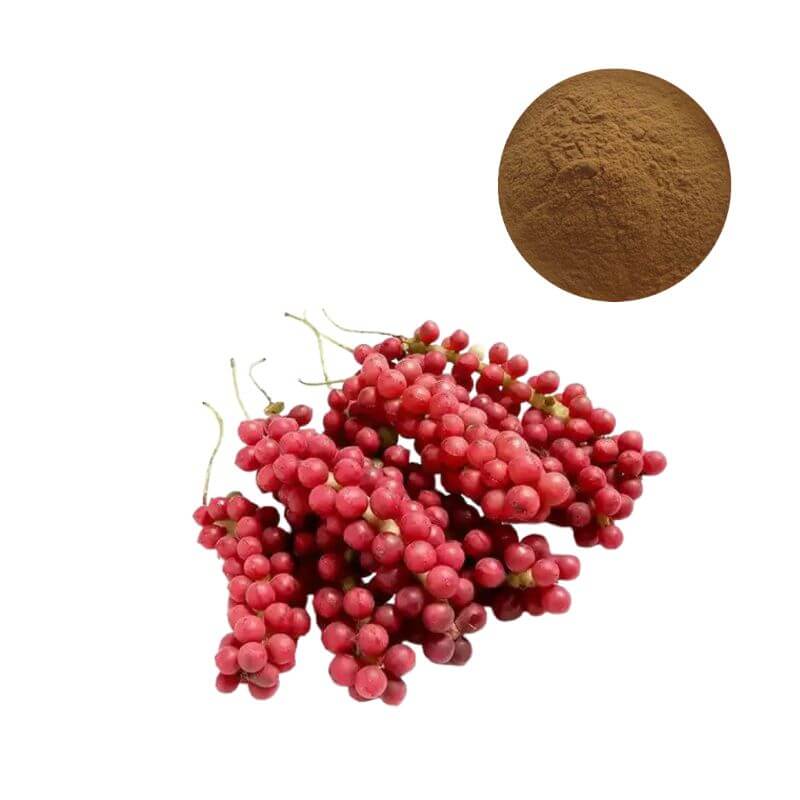
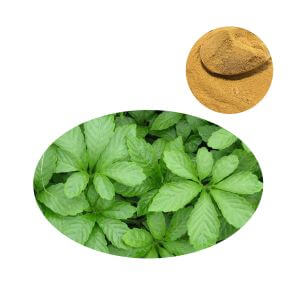
Schisandra Chinensis Extract Powder
| Product Name | Schisandra Chinensis Extract Powder |
| CAS Number | 7432-28-2 |
| Appearance | Brownish yellow fine powder |
| Purity | 2%, 5%, 9% Schisandrins (by HPLC) |
| Packaging | 1 kg/foil bag; 25 kg/paper drum |
| MOQ | 1 kg |
Schisandra Chinensis Extract Powder (2%, 5%, 9% Total Schisandrins): A Standardized Adaptogen for Cognitive & Liver Health Formulations
Formulating a truly differentiated adaptogen product requires more than adding a botanical label to the blend. For brands targeting stress resilience, cognitive clarity, and metabolic health, the challenge lies in securing an ingredient with verifiable phytochemical consistency. Premium Schisandra Chinensis Extract Powder addresses this need through rigorous HPLC standardization of total schisandrins—the bioactive lignans responsible for its dual‑phase adaptogenic activity. Key sourcing considerations include batch‑to‑batch reproducibility and full compliance with international contaminant limits, which directly impact the regulatory pathway of your finished supplement. Choosing a standardized 2%, 5% or 9% total schisandrins grade over non‑standardized ratio products allows brands to build a defensible scientific dossier—directly supporting premium pricing and reducing the risk of failed efficacy claims in competitive adaptogen markets.
Dual‑Mechanism Adaptogen: From Lignan Profile to Physiological Resilience
The pharmacological versatility of schisandra chinensis extract powder stems from its unique dibenzocyclooctadiene lignans—schisandrin (CAS 7432‑28‑2), schisandrin B, and schisandrin C. Unlike single‑target stimulants, this complex mixture modulates the hypothalamic‑pituitary‑adrenal (HPA) axis and enhances cellular antioxidant capacity through Nrf2 pathway activation. A 2025 comprehensive review systematically maps seven pharmacological domains: hepatoprotection, neuroprotection, anti‑inflammation, anti‑fatigue, anti‑diabetes, antimicrobial, and anti‑cancer activities (doi: 10.1186/s13020-025-01096-z).
Why this matters for your formulation strategy – The lignan profile’s bidirectional effect (low‑dose stimulation, high‑dose sedation) allows you to create products with differentiated dosing regimens. For example, a 2% total schisandrins grade supports daytime energy and focus, while a 9% grade can be positioned for evening relaxation and sleep support. From a strategic formulation perspective, this eliminates the need for multiple adaptogen classes in a single SKU, simplifying both your ingredient list and quality control.
Key physiological pathways validated in the review include:
- GPX4/glutathione‑mediated lipid metabolism – mitigates oxidative stress in hepatocytes.
- ASH1/ceramide homeostasis – reduces hepatic ceramide accumulation linked to metabolic dysfunction.
- Gut‑liver axis modulation – enriches Lactobacillus reuteri, restores indole‑3‑acetic acid, and strengthens intestinal barrier function.
For procurement teams, this directly translates to a single ingredient that supports multiple health claim categories—cognitive, liver, and stress management—thereby reducing your raw material SKU count and associated compliance documentation. This level of mechanistic validation means brand developers can confidently reference peer‑reviewed data in their regulatory submissions, shortening the R&D cycle by avoiding unsubstantiated structure‑function claims.
Quality Benchmarks: Why “Total Schisandrins” Is the True Specification
In B2B trade, bulk schisandra extract is often offered as crude ratio products (10:1, 20:1) or standardized powders. However, for brands requiring reproducible clinical outcomes, standardization to total schisandrins by HPLC is non‑negotiable. A 2025 preclinical meta‑analysis of 54 animal studies demonstrated that schisandra preparations significantly reduce ALT, AST, and ALP levels while elevating SOD and GSH (doi: 10.3389/fphar.2025.1627081). These quantitative endpoints were only achieved when the lignan content was verified—proof that “high‑purity” claims without HPLC verification lack predictive value for biological activity.
What distinguishes a certified schisandra extract powder from commodity material? Below is a checklist of quality attributes that a GMP‑compliant partner should provide with every shipment:
| Quality Attribute | Industry Benchmark | Why It Matters |
|---|---|---|
| Total Schisandrins (HPLC) | 2%, 5%, 9% (±10% tolerance) | Directly correlates with hepatoprotective & adaptogenic potency. |
| Loss on Drying | ≤5.0% | Prevents microbial growth and ensures storage stability. |
| Heavy Metals (Pb, As, Cd, Hg) | ≤2.0, 1.0, 1.0, 0.1 mg/kg | Essential for FDA/EU compliance; avoid costly product rejections. |
| Particle Size | ≥95% through 80 mesh | Ensures uniform blending in powders and capsules. |
For procurement teams, this directly translates to lower risk of finished product failure. Insisting on batch‑specific COAs that include these parameters allows you to reject non‑conforming material before your production line stops. An effective formulation requires aligning your supplier’s quality metrics with your internal acceptance criteria—never assume a generic “GMP certificate” guarantees batch‑to‑batch lignan consistency. From a total cost of ownership perspective, paying a slight premium for validated HPLC‑standardized schisandra extract prevents devastating large‑scale batch rejections, saving up to six figures in wasted encapsulation and repackaging expenses.
Formulation in Practice: Stability, Synergy & Dosage Guidelines
Translating schisandra’s science into a market‑ready supplement demands attention to three practical aspects: dosage, taste masking, and excipient compatibility.
Dosage anchoring – Based on the preclinical meta‑analysis, effective oral doses in animal models ranged from 50‑200 mg/kg body weight of standardized extract. For human dietary supplements, a common daily dose of 250‑500 mg of a 5% total schisandrins extract is supported by traditional use and pharmacopoeial references. However, the optimal dose depends on your targeted health claim:
- Cognitive / stress support → 200‑300 mg/day (2% or 5% grade)
- Liver health / detox support → 400‑600 mg/day (5% or 9% grade)
- Sleep / evening relaxation → 500‑750 mg/day (9% grade, taken before bedtime)
Taste and solubility – Schisandrins are intensely bitter. For powder drink mixes or gummies, consider using a micellar or cyclodextrin‑encapsulated form; alternatively, mask the bitterness with natural sweeteners (stevia, monk fruit) and fruit acids. For capsules or tablets, bitterness is less of an issue, but the extract’s hygroscopicity requires low‑humidity granulation (≤40% RH) to prevent sticking.
Synergistic combinations – Schisandra chinensis extract powder pairs exceptionally well with standardized milk thistle extract (silymarin) for liver health – the two act on complementary pathways (Nrf2 activation vs. membrane stabilization). It also synergizes with ashwagandha root extract and rhodiola rosea for comprehensive adaptogen blends. From a strategic formulation perspective, leveraging such synergies allows you to create proprietary blends with a lower total herbal powder load, improving capsule size and consumer compliance.
Mitigating Risk: The Sourcing Checklist for Wholesale Schisandra Extract
The global schisandra extract supplier landscape includes many traders offering uncertified ratio products. To protect your brand’s reputation and regulatory standing, every procurement team should require the following from any potential partner:
- Batch‑specific COA showing total schisandrins (HPLC), heavy metals, microbiological limits, and pesticide residues.
- Full traceability from the harvesting region (preferably Northeast China – genuine Schisandra chinensis vs. S. sphenanthera).
- GMP certification (or equivalent FSSC 22000) for the blending and testing facility.
- Stability data for 24 months under recommended storage (cool, dry, light‑protected).
- Novel food / NDI consultation – a proactive supplier will provide technical dossiers to support your EU or US filing.
It’s worth noting that the cheapest buy schisandra chinensis extract options often skip HPLC verification or use South berry cultivars with lower lignan content. For procurement teams, this directly translates to hidden costs: failed finished‑product tests, wasted encapsulation runs, and delayed market entry. An effective risk mitigation strategy is to qualify two independent GMP suppliers and request blind samples for in‑house HPLC cross‑validation before awarding annual contracts. Applying a total cost of ownership lens to sourcing decisions—factoring in COA verification costs, stability testing, and regulatory support—often reveals that the lowest upfront price carries the highest long‑term risk of supply disruption and non‑compliance penalties.
Next Steps: Accelerate Your Development with Verified Technical Dossiers
You now have the scientific framework and quality benchmarks to confidently incorporate Schisandra Chinensis Extract Powder into your next adaptogen, liver health, or cognitive wellness product. To move from planning to prototyping, request a complimentary 20g sample of your chosen purity grade (2%, 5%, or 9%) together with the batch‑specific COA and the complete technical dossier — including stability summary and heavy‑metal analysis. All technical documentation is delivered within 24 working hours to support your R&D compliance filing. Request Your Complimentary Sample & Technical Dossier and validate batch‑to‑batch consistency before your pilot run.
Frequently Asked Questions
Share this product
Related Products
Ready to get started?
Contact our team for technical specifications, pricing, and customized solutions.