
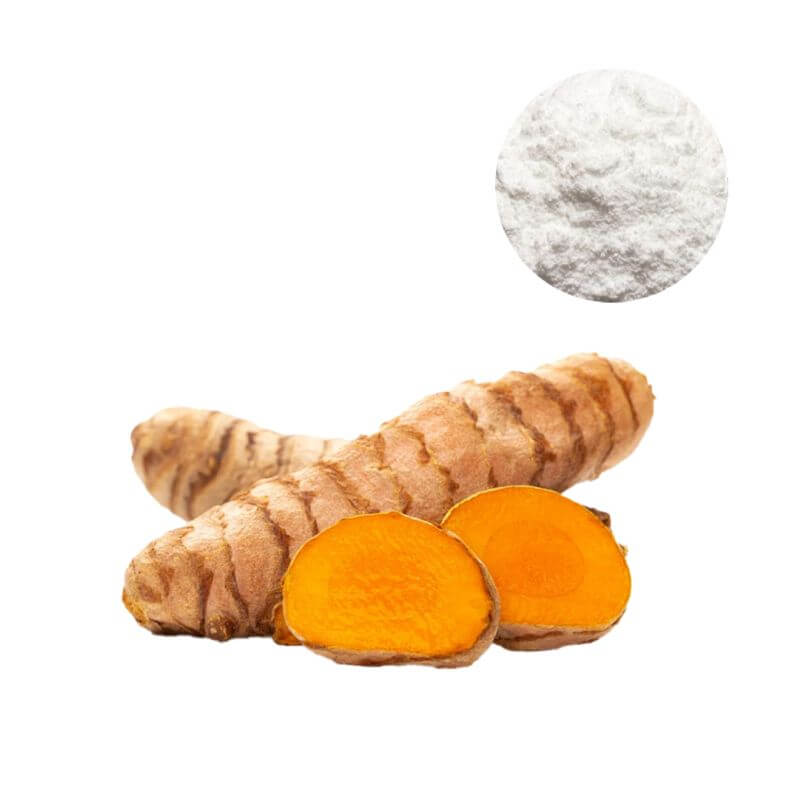
Tetrahydrocurcumin Powder
| Product Name | Tetrahydrocurcumin Powder |
| CAS Number | 36062-04-1 |
| Appearance | White to off-white crystalline powder |
| Purity | 98.0% min. (by HPLC) |
| Packaging | 1 kg/bag, 5 kg/bag, 25 kg/drum |
| MOQ | 1 kg |
Traceable Tetrahydrocurcumin Supply for Clean-Label Oral Beauty
Bulk Tetrahydrocurcumin powder destined for nutricosmetic brands carries a critical sourcing paradox: its white crystalline appearance avoids staining but opens a vulnerability where petrochemical mimics can match HPLC. Commercial lots therefore undergo ASTM D6866 radiocarbon authentication, confirming biobased carbon >98% as the sole gatekeeper against synthetic adulteration. Each batch COA integrates this isotopic benchmark, ensuring lot-to-lot source integrity and shielding downstream brands from litigation. In a heavily commoditized market, enforcing this forensic checkpoint directly determines whether a finished oral beauty product commands a premium tier position or gets relegated to generic pricing brackets.
Radiocarbon Forensics Distinguish Botanical THC from Petrochemical Substitutes
For Tetrahydrocurcumin powder, the risk is identity fraud, not purity. Petrochemical mimics carry zero modern carbon but HPLC cannot detect. AMS radiocarbon gives a decisive pMC reading confirming botanical origin.
| Authentication Parameter | Botanical-Derived THC | Synthetic Imposter | Procurement Decision Impact |
|---|---|---|---|
| Biobased Carbon (pMC) - ASTM D6866 | ≥ 98% | ~0% | Admissible evidence in supplier audits; eliminates “natural-equivalent” claims |
| HPLC Retention Time Match | Full conformity | Full conformity | Chromatography alone cannot intercept source substitution |
| Incoming Inspection Certainty | High - AMS conclusive | Undetectable by routine QC | Prevents costly retesting and production delays |
Mandating AMS radiocarbon verification on each batch turns a vulnerability into a compliance asset. For R&D, this provides irrefutable clean-label evidence, directly cutting legal and reputational costs linked to undisclosed synthetic origin - a risk HPLC alone cannot address.
Palladium Residue Eradication Aligns with ICH Q3D Customs Gateways
Conventional Pd/C hydrogenation inherently leaves palladium residues - an impurity that triggers automatic EU/US customs holds when exceeding 5 ppm. The industrial purification sequence deploys acidic chelation washing (L-cysteine hydrochloride) followed by gradient crystallization (acetone-hexane), driving residual Pd consistently below 0.05 ppm (LOQ by ICP-MS).
- Chelation-mechanical separation: Acidic complexation converts surface-adsorbed Pd(0) into water-soluble cysteine adducts, removed via centrifugation - this physical step depresses Pd concentration by >99% before crystallization initiates.
- Solvent purge validation: Acetone residues post-crystallization are driven below 5000 ppm (USP <467>), meeting ICH Q3C Class 2 limits without additional drying that might alter crystalline lattice integrity.
- Third-party LOD verification: Eurofins ICP-MS protocols routinely report “not detected (<0.05 ppm)” for palladium, granting procurement teams auditable documentation for FDA and EU import clearance without destination-port re-testing costs.
The established chelation-crystallization regime delivers robust risk mitigation for industrial supply chains. Converting a regulatory liability into supply assurance lowers quarantine costs and stabilizes lead times - a direct financial benefit. Supplier-auditable ICP-MS records also serve as a pre-emptive defense against intensified FDA elemental impurity spot-checks, effectively granting a multi-market regulatory fast-track status.
Oxidative Discoloration in Transit - Multi-Barrier Physical Containment
White Tetrahydrocurcumin powder exhibits low visual tolerance for oxidation: residual oxygen above 1% triggers free-radical quinone formation, shifting color from white to pale pink (ΔE*ab >1.5) - a change that often prompts batch rejection at warehouse inspection. Standard export packaging therefore employs quad-layer vacuum aluminum foil bags (OTR ≤0.5 cc/(m²·24h·atm)) with nitrogen flushing to lock headspace oxygen below 1%.
| Protection Layer | Specification | Protective Function against Transit Stress |
|---|---|---|
| High-barrier PET/AL/PA/PE foil | Oxygen transmission ≤0.5 cc/m2/day | Prevents atmospheric O2 ingress during 30-45 day sea/air journeys |
| Medical-grade molecular sieve desiccant | Internal RH ≤20% | Suppresses moisture-driven surface reactivity and caking |
| Nitrogen purging + vacuum sealing | Residual O2 ≤1% | Slows radical chain oxidation to <0.5% purity loss over shelf life |
| ISTA 3E-certified corrugated overpack | EPE foam cushioning + anti-vibration | Absorbs tarmac temperature spikes and mechanical shocks |
Upon container opening at the CMO, this system ensures powder flowability (angle of repose variation <3%) and chromaticity (ΔE*ab <1.0) match the COA. For formulators, it eliminates pre-production re-sieving and color-correction, protecting production scheduling and brand promise, cutting scrap and time-to-market. From a TCO standpoint, this physical containment strategy intercepts the primary cause of rejection-at-unpacking disputes, saving procurement from reorder expenses and production rescheduling penalties that typically amount to 8-12% of the landed batch cost.
Quantitative Antioxidant Profile and Formulation Advantages
In oral beauty applications, the intrinsic antioxidant potency of Tetrahydrocurcumin is well-documented through its DPPH radical-scavenging activity, which outperforms native curcumin in head-to-head cell-free assays. This benchmark directly correlates with reduced cellular oxidative burden in keratinocytes and melanocytes, supporting claims related to UV photodamage protection and glycation-related elasticity loss.
- Enhanced electron-donating capacity: The saturated heptadiene chain boosts radical neutralization per unit mass, allowing formulators to achieve equivalent antioxidant activity with lower inclusion levels - reducing capsule size and overall formulation cost.
- Superior bioavailability profile: Validated comparative pharmacokinetic (PK) trials demonstrate that Tetrahydrocurcumin achieves higher plasma concentration (Cmax) and area under the curve (AUC) than native curcumin following oral administration, enabling effective dosages without permeation enhancers.
- Formulation synergy potential: This profile allows combinability with non-denatured collagen peptides and oligomeric proanthocyanidins while maintaining a minimalist ingredient deck - a key attribute for premium “fewer, better” brand narratives.
For R&D teams, the validated DPPH assay protocol provides a direct in-house verification tool, eliminating reliance on expensive external efficacy studies during early-stage development. This reduces qualification timelines and accelerates regulatory submissions, as the quantitative antioxidant data can be directly incorporated into technical dossiers for global market access. Applying these kinetic metrics in pre-formulation leads to a measurable reduction in blend density per unit dose, which directly shrinks capsule dimensions and enables high-speed encapsulation lines to operate at lower compression forces with fewer mechanical stops.
Processing Compatibility with Collagen and OPC - Acidic Pre-Blending Shield
The standard ternary combination of Tetrahydrocurcumin with type II collagen peptides and oligomeric proanthocyanidins requires vigilant processing controls to avoid metal-induced discoloration. Ferric ions (common in iron-fortified matrices) chelate with THC's phenolic groups, producing green-brown complexes within 24 hours - degrading active purity by 8-12% and ruining visual appeal of clear softgels or powdered sticks.
- Acidic pre-mixing protocol: Pre-blending THC with ascorbyl palmitate or citric acid (1:2 ratio) establishes a localized acidic microenvironment (pH 4.5-5.5) that stabilizes the diketone structure and suppresses ferric chelation during subsequent blending.
- Thermal and humidity constraints: Keep granulation environment ≤25°C and RH ≤35%; alkaline excipients (calcium/magnesium carbonates) accelerate ring-opening degradation at elevated temperatures, increasing tablet hardness and extending disintegration time beyond USP limits.
- Preferred delivery formats: Veggie softgels and instant micronized sachets are the fastest-growing systems, as they bypass high-compression forces and minimize thermal exposure - preserving both white powder appearance and full antioxidant activity.
Adhering to these rules reduces batch failures and dissolution variability, directly cutting CMO rework and rejection rates. For procurement, this lowers TCO via reduced scrap and faster clearance, ensuring consistent label potency globally. When a formulation line handles multiple SKUs, adopting this acidic pre-blending shield also prevents cross-contamination carryover that could otherwise trigger color deviations in subsequent batches, eliminating a recurring quality-clearing bottleneck in complex co-packing environments.
Expedite Qualification with Verified THC Sample Kit
Spec-verified Tetrahydrocurcumin powder backed by ASTM D6866 isotopic evidence and ICP-MS palladium clearance offers a turnkey foundation for premium nutricosmetic launches. Each commercial lot ships with a comprehensive COA package that includes oxidative stability profiles and micronized particle size distribution, enabling seamless integration into veggie softgels or stick-pack formats without additional process development overhead.
Secure verified THC sample with full COA dossier to validate compatibility with your production platform and accelerate supplier qualification audits.
Frequently Asked Questions
Share this product
Related Products
Ready to get started?
Contact our team for technical specifications, pricing, and customized solutions.