
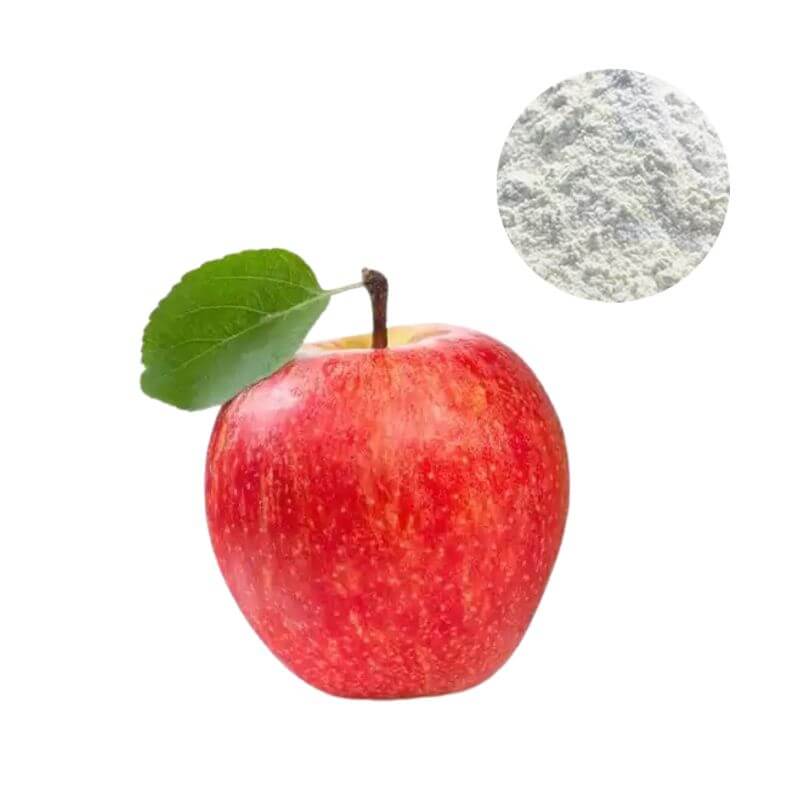
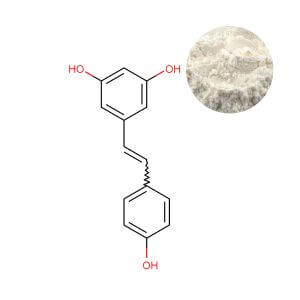
Phloretin Powder
| Product Name | Phloretin Powder |
| CAS Number | 60-82-2 |
| Appearance | White to off-white fine powder |
| Purity | 98% min. (by HPLC) |
| Packaging | 1 kg/foil bag, 5 kg/tin, 25 kg/cardboard drum |
| MOQ | 1 kg |
Phloretin Powder (≥98%): Bridging Metabolic Support and Formulation Innovation for Next‑Generation Supplements
For brands looking to move beyond basic antioxidant matrices, the ingredient selection directly defines product differentiation. Phloretin, a dihydrochalcone flavonoid naturally found in apple root bark, offers a scientifically distinct mechanism: it activates Nrf2‑driven antioxidant defenses while influencing GLUT4 and PPAR‑γ pathways (doi: 10.1093/jpp/rgae010). When standardized to ≥98% purity via HPLC, it provides consistent bioactivity – a prerequisite for reproducible finished products. For procurement teams evaluating bulk phloretin powder, the real value lies not in a single “high purity” claim, but in the batch‑to‑batch traceability and the scientific backing that supports formulation success. For formulators, this shifts the focus from generic antioxidant claims to targeted metabolic support – a key differentiator in crowded supplement categories. Understanding this scientific nuance is the first step toward building a defensible product story. Choosing a GMP‑compliant source with fully documented traceability effectively insulates your brand from reformulation delays and compliance risks, turning a raw material decision into a long‑term strategic asset.
Core Mechanism: Why Phloretin Powder Differs from Conventional Polyphenols
Most flavonoids act primarily as direct radical scavengers. Phloretin, however, operates through a multi‑target network that aligns with today’s metabolic health and healthy aging trends. Its most established role is the activation of the Keap1/Nrf2 pathway – the cell’s master antioxidant switch – which upregulates endogenous enzymes such as HO‑1 and NQO1. Beyond this, phloretin modulates GLUT4 translocation and PPAR‑γ activity, helping to maintain normal glucose and lipid metabolism.
From a strategic formulation perspective, this means phloretin can support both acute oxidative defense and longer‑term cardiometabolic resilience – a dual action rarely found in single‑molecule antioxidants. For brands developing products for blood sugar management or inflammatory stress, phloretin provides a clean‑label, plant‑derived alternative to synthetic agents. It is worth noting that its efficacy is tightly linked to bioavailability; as a BCS Class II compound (low solubility, high permeability), unformulated phloretin requires delivery technologies to realize its full potential – a challenge we address in section 3. Properly formulated, phloretin can achieve meaningful circulating levels, turning its mechanistic advantages into real-world consumer benefits. This is where formulation science directly impacts commercial success. Leveraging phloretin’s multi‑pathway activity allows brand developers to create products with fewer redundant ingredients, shrinking finished‑good costs and simplifying label claims while preserving clinical credibility.
Quality Benchmarks: What a GMP Phloretin Supplier Must Deliver
When sourcing bulk phloretin powder, the certificate of analysis (COA) should go beyond simple purity. Three critical indicators separate a premium ingredient from a commodity:
- HPLC assay ≥98% – ensures consistent bioactivity batch after batch.
- Loss on drying ≤5.0% and residue on ignition ≤0.5% – low moisture and ash content improve long‑term stability and reduce microbial risk.
- Heavy metals (Pb ≤2.0 mg/kg, As ≤1.0 mg/kg, Cd ≤1.0 mg/kg, Hg ≤0.1 mg/kg) – mandatory for global regulatory compliance (FDA, EFSA guidelines).
Equally important is understanding human variability. The AppleCOR study (doi: 10.1039/D3FO02985A) revealed a 70‑fold inter‑individual difference in phloretin metabolite excretion after apple consumption – a direct consequence of gut microbiota and enzyme phenotypes. Practically speaking, this means that a one-size-fits-all dosage may not be optimal; instead, brands can leverage this data to create personalized nutrition angles or to emphasize the importance of formulation technologies that mitigate variability. For procurement teams, this directly translates to the need for a supplier that provides full disclosure on particle size, solubility aids, and formulation guidance. Without such support, even a high‑purity batch may underperform in a finished product. A certified phloretin supplier offering batch‑specific COA and stability data reduces your regulatory and commercial risk. From a production efficiency standpoint, securing a supplier that pre‑validates dissolution performance cuts weeks off internal R&D timelines and prevents costly line rejections caused by non‑dispersible agglomerates.
Formulation in Practice: Overcoming Bioavailability Hurdles & Synergy Opportunities
Phloretin’s poor water solubility (typical of many flavonoids) is the main technical challenge. However, this is not a dead end – it is a design opportunity. Successful strategies include:
- Lipid‑based delivery (e.g., self‑emulsifying systems) to enhance solubilization.
- Cyclodextrin inclusion complexes or nanomicelle technology (recent studies show up to 5‑fold higher oral bioavailability).
- Co‑crystallization with suitable co‑formers to improve dissolution rate.
For solid dosage forms (capsules, tablets), micronization to ≥95% through 80 mesh improves content uniformity. When formulating ready‑to‑mix powders, a dry binder like isomaltulose or a small amount of polysorbate 80 can aid dispersion.
| Synergistic Combination | Rationale | Ideal for Product Type |
|---|---|---|
| Phloretin + Quercetin | Complementary Nrf2 activation and direct radical scavenging | Antioxidant blends, sports recovery |
| Phloretin + Berberine HCL | Dual GLUT4 / AMPK modulation for metabolic health | Glucose management, weight support |
| Phloretin + Vitamin C | Recycling of oxidized phloretin, extended antioxidant network | Skin health, immune formulas |
From a strategic formulation perspective, investing in bioavailability enhancement allows brands to use lower dosages (e.g., 50‑100 mg per serving) while achieving clinically relevant effects. This reduces capsule size, improves consumer compliance, and creates a clear premium positioning. For example, combining phloretin with piperine (black pepper extract) not only enhances its absorption but also extends its antioxidant half-life, allowing for lower yet effective serving sizes. Such synergies enable premium positioning without dramatically increasing raw material costs. Always request compatibility data from your phloretin supplier before scaling – some excipients (e.g., certain metal stearates) may adsorb phloretin and reduce dissolution.
Supply Chain Resilience & Total Cost of Ownership for Wholesale Phloretin
Price per kilogram is only one variable. The true cost of a phloretin ingredient includes testing delays, batch‑to‑batch variation, and the risk of supply interruptions. A reliable phloretin powder exporter maintains multiple qualified sources of apple root bark (or synthetic routes) to buffer against crop variability. Key sourcing considerations for procurement professionals:
- Traceability – from raw material to finished powder, documented in each COA.
- Stability data – 24 months under recommended storage (cool, dry, airtight, away from light).
- Regulatory support – ability to provide NDI‑ready dossiers, allergen statements, and GMP certificates.
For teams planning to buy phloretin powder in wholesale quantities, it is wise to evaluate the supplier’s quality management system: ISO 22000 or FSSC 22000 certification indicates rigorous process control. Additionally, request a retained sample from each production lot – this allows you to run dissolution tests in your own formulation matrix.
For procurement teams, this directly translates to lower rejection rates, faster time‑to‑market, and protection of your brand’s consistency. A cheap batch that fails disintegration testing will cost far more in rework than the savings on raw material. Ultimately, the most cost-effective phloretin powder is the one that performs consistently in your specific dosage form, from hard capsules to stick packs. Therefore, align your sourcing with partners that provide full technical documentation, not just a competitive quote. Adopting a total cost of ownership (TCO) lens – factoring in COA verification, stability retesting, and batch‑failure insurance – typically reveals that a marginally higher upfront price from a validated GMP source delivers 20‑30% lower landed compliance costs over two years.
Next Steps: De‑risk Your Phloretin‑Based Project Today
Phloretin powder (≥98%) offers a scientifically robust foundation for antioxidant, metabolic health, and healthy aging supplements. By choosing a GMP‑certified partner that provides batch‑specific COA, bioavailability guidance, and regulatory support, you transform a raw material into a competitive advantage. Begin your evaluation with a no‑obligation sample and complete technical dossier. Request your complimentary sample and technical dossier – including stability summary, HPLC chromatograms, and formulation checklist.
Frequently Asked Questions
Share this product
Related Products
Ready to get started?
Contact our team for technical specifications, pricing, and customized solutions.