
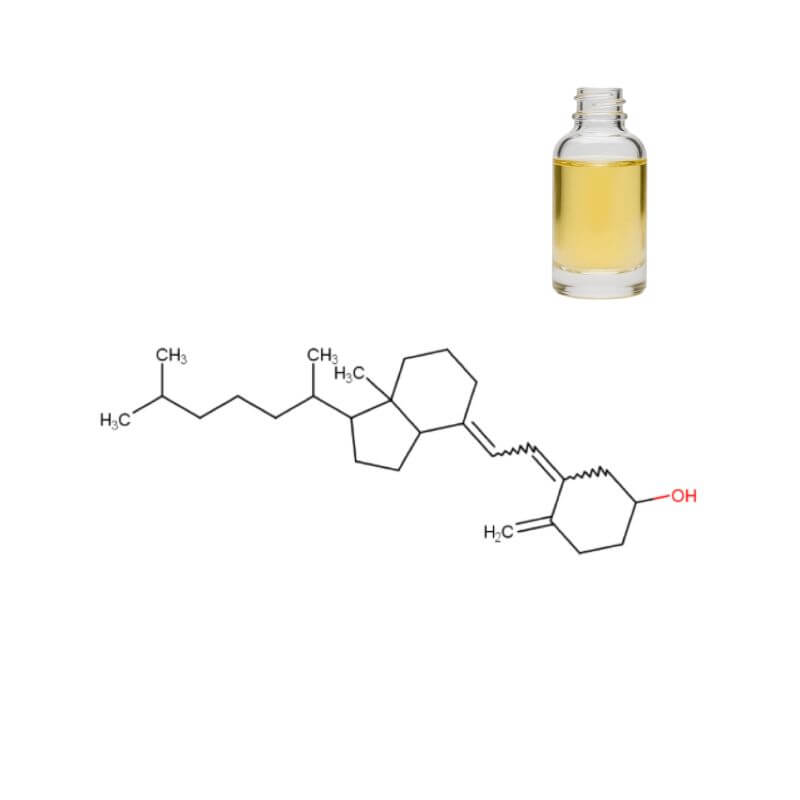
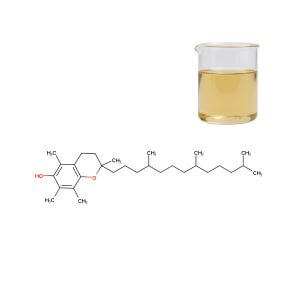
Vitamin D3 Oil
| Product Name | Vitamin D3 (Cholecalciferol) Oil |
| CAS Number | 67-97-0 / 8024-19-9 |
| Appearance | Clear yellow to golden oily liquid |
| Purity / Potency | 1,000,000 IU/g (by HPLC) |
| Packaging | 1 kg/bottle, 5 kg/bottle, 25 kg/drum |
| MOQ | 1 kg |
Bioavailable Cholecalciferol Oil for Premium Softgel & Oral Spray Formulations
A 36% higher AUC and 43% higher Cmax observed in human crossover trials position Vitamin D3 Oil as a clinically validated asset, not a commodity ingredient. Bulk Vitamin D3 Oil procurement directly impacts finished-product efficacy, while sourcing from a spec-verified Vitamin D3 Oil supplier ensures batch-to-batch pharmacokinetic consistency. This pharmacokinetic edge supports structure/function claims such as "supports normal immune function" and "contributes to normal calcium and phosphorus absorption and bone maintenance," creating a defensible DTC narrative. Lot-to-lot COAs and full traceability align R&D validation with procurement risk management.
Clinical Pharmacokinetics as a Brandable Asset for Immune and Bone Health Claims
The translational value of Vitamin D3 Oil lies in its quantifiable absorption metrics. A randomized crossover study (n=24) reported a 36% higher AUC0–120h and 43% higher Cmax for nanoemulsion-based D3 versus conventional softgels under fasted conditions (Journal of Orthopaedics, 2023). Lower active ingredient input per finished unit follows directly from these numbers—raw material costs compress without sacrificing clinical performance. Such pharmacokinetic superiority enables brand owners to craft premium DTC narratives around "superior absorption" and "science-backed potency." The same clinical evidence supports EFSA-approved health claims for normal immune function and calcium and phosphorus absorption and bone maintenance, providing a regulatory-safe language for packaging and digital marketing.
Carrier Engineering and Synergistic Co-Formulation for High-Loading Liquid Dosage Forms
With clinical proof established, the lipophilic nature of Vitamin D3 Oil demands sophisticated carrier strategies to maintain stability in softgels, sprays, and emulsions. Nanostructured lipid carriers (NLCs) with rhamnolipids achieve particle sizes of 92.1–108.1 nm and maintain physicochemical integrity for 60 days at 4 °C, with an active ingredient loading capacity of 85.3% (Food Chemistry, 2023; doi: 10.1016/j.foodchem.2023.136654). This carrier architecture mitigates oil exudation and creaming risks typical of conventional emulsified D3 formats during extended warehousing. Synergistic pairing with vitamin K2 (MK-7) and omega-3 fatty acids not only enhances osteo-cardiovascular synergy but also unlocks premium retail pricing—VD3+K2 softgel combinations routinely command substantial price premiums over single-ingredient products (per retail pricing analysis of top D3+K2 supplements across US and EU e-commerce platforms, 2025).
| Carrier System | Particle Size (nm) | Stability (4 °C) | Active Loading | Industrial Relevance |
|---|---|---|---|---|
| Conventional Oil Softgel | N/A (bulk oil) | Oxidation risk >12 months | ~100% (oil phase) | Standard, requires nitrogen blanketing |
| Nanoemulsion (NLCs) | 92.1–108.1 | 60 days intact PDI | 85.3% | Superior for clear liquids & sprays |
Adopting these advanced carriers removes lengthy stability troubleshooting from the development timeline, accelerating time-to-market and enabling clean-label positioning. A Food Chemistry-published, peer-reviewed stability profile supplies immediate credibility for regulatory submissions and DTC advertising—translating laboratory data into retail margin expansion. This pricing leverage gives procurement teams a defensible rationale for investing in higher-spec carrier systems rather than commoditized alternatives.
Oxidation Control and Cold-Chain Logistics for Softgel Manufacturing Integrity
Production scalability follows. Vitamin D3 Oil's sensitivity to light, heat, and oxygen necessitates rigorous oxidation management across the entire supply chain. In softgel production, nitrogen purging of bulk oil containers and the addition of natural tocopherols are standard practices to keep peroxide values below 10.0 mEq/kg and acid values under 2.0 mg KOH/g. These specifications directly impact manufacturing yield: consistent oxidation control reduces capsule reject rates, minimizes downtime for cleaning and re-calibration, and preserves active potency uniformity across millions of units. Recommended storage below 15 °C, with full light exclusion, further extends shelf life beyond 24 months, ensuring that finished products remain stable through global distribution.
- Nitrogen blanketing of oil drums reduces oxygen-driven rancidity, extending the induction period of both bulk oil and finished softgels.
- Low peroxide values (<10.0 mEq/kg) correlate with longer oxidative stability, directly reducing batch-to-batch variability and complaint risk.
- Cold-chain logistics (<15 °C) prevent thermal degradation during maritime and air freight, protecting the brand's investment in high-value inventory.
For procurement teams, this translates into lower total cost of ownership: higher batch consistency reduces wastage, and predictable stability profiles shorten the R&D validation cycle by eliminating the need for accelerated stability re-testing. A well-protected oil matrix delivers a reliable supply chain that safeguards brand equity and minimizes the risk of costly recalls.
Navigating US FDA and EU Regulatory Lanes for Market Access and Label Claims
In the US, vitamin D3 is recognized as GRAS under 21 CFR 184.1950 and is listed as an approved food additive in 21 CFR 172.380 for yogurt and fermented dairy products, with FDA facility registration under FSMA requiring biennial renewal. In the EU, vitamin D3 (cholecalciferol) is permitted in food supplements under Directive 2002/46/EC, with EFSA-approved claims for immune and bone health providing a safe vocabulary for labeling. The qualification cycle for vegan, halal, and kosher certifications can span 8-14 weeks, a timeline that brand owners must factor into their launch calendars. In feed-grade hydroxy vitamin D3 consignments, recent RASFF notifications (2024) highlight the importance of rigorous contaminant screening; a single chloramphenicol detection above 0.26 µg/kg can trigger import bans.
| Market | Regulatory Status | Key Limits | Certification Lead Time |
|---|---|---|---|
| USA | GRAS / Food Additive (21 CFR) | Conditional (novel processes only) | Variable (self-GRAS) |
| EU | Permitted (Directive 2002/46/EC) | Directive 2002/46/EC | 8-14 weeks |
For brand-side regulatory officers, this landscape demands a proactive compliance dossier. A documented audit trail—including heavy metal limits (Pb <0.5, As <1.0, Cd <0.5, Hg <0.1 mg/kg) and microbial specifications—streamlines customs clearance and pre-empts detention without physical examination under FDA Import Alert 99-45. Embedding these compliance parameters into supplier qualification accelerates market entry and protects the brand from costly delays or reputational damage.
Total Cost of Ownership: Bulk Sourcing and Supply Chain Resilience for Mature Nutrient Categories
Financial discipline anchors all technical decisions at this stage. China supplies approximately 70% of global vitamin D3 (IndexBox, 2026), with production concentrated in Zhejiang, Shandong, and Jiangsu; the top four manufacturers hold over 70% of the domestic market (Pacific Securities, 2026). Bulk Vitamin D3 Oil at 1,000,000 IU/g minimizes the introduction of carrier oil, directly lowering moisture and stability management costs in finished goods. MOQs typically start at 500 kg for bulk orders, and co-loading shipments with other food ingredients optimizes freight expenses. The average batch turnaround is 20-30 days, significantly shorter than Western competitors. For procurement directors, this translates into a predictable cost structure and reduced exposure to freight volatility. The analytical rigor and batch-to-batch consistency required for this performance profile are fully met by specification-grade material aligned with Oclean Nutra quality benchmarks.
- High-potency oil (1,000,000 IU/g) reduces filler oil volume, lowering both raw material cost per unit and warehouse space requirements.
- Standardized 20-30 day production cycles enable just-in-time inventory planning, minimizing working capital lock-up.
- Established supply chains for cholecalciferol provide price stability relative to novel vegan alternatives (USD 1,200-2,800/kg for lichen-derived D3 oil; IndexBox, 2026).
Choosing a high-specification Vitamin D3 Oil wholesale partner delivers consistent batch-to-batch quality, shorter lead times, and a lower total cost of ownership. This financial resilience, combined with clinical evidence, formulation adaptability, and regulatory readiness, creates a holistic business case.
Accelerate R&D Validation with Technical Dossiers and Pre-Qualified Samples
To move from specification review to production-ready formulation, qualified buyers are invited to Secure a pre-qualified sample of Vitamin D3 Oil with full technical dossier that includes batch-specific COAs, stability data, and regulatory compliance summaries. This eliminates the traditional back-and-forth on technical documentation, allowing R&D teams to bypass redundant testing and procurement to immediately assess supply chain feasibility. A sample MOQ of 1 kg facilitates small-scale pilot runs without overcommitting inventory. By aligning technical verification with commercial evaluation, brand owners can confidently advance to full-scale production, knowing that every lot meets established pharmacokinetic and purity standards.
Frequently Asked Questions
Share this product
Related Products
Ready to get started?
Contact our team for technical specifications, pricing, and customized solutions.