
Apigenin vs. Luteolin: Bioavailability, Cost-in-Use & Formulation Guide
Discover key differences between apigenin and luteolin in molecular structure, bioavailability, and cost-in-use. Solve formulation stability, scale-up, and compliance challenges for B2B brands.
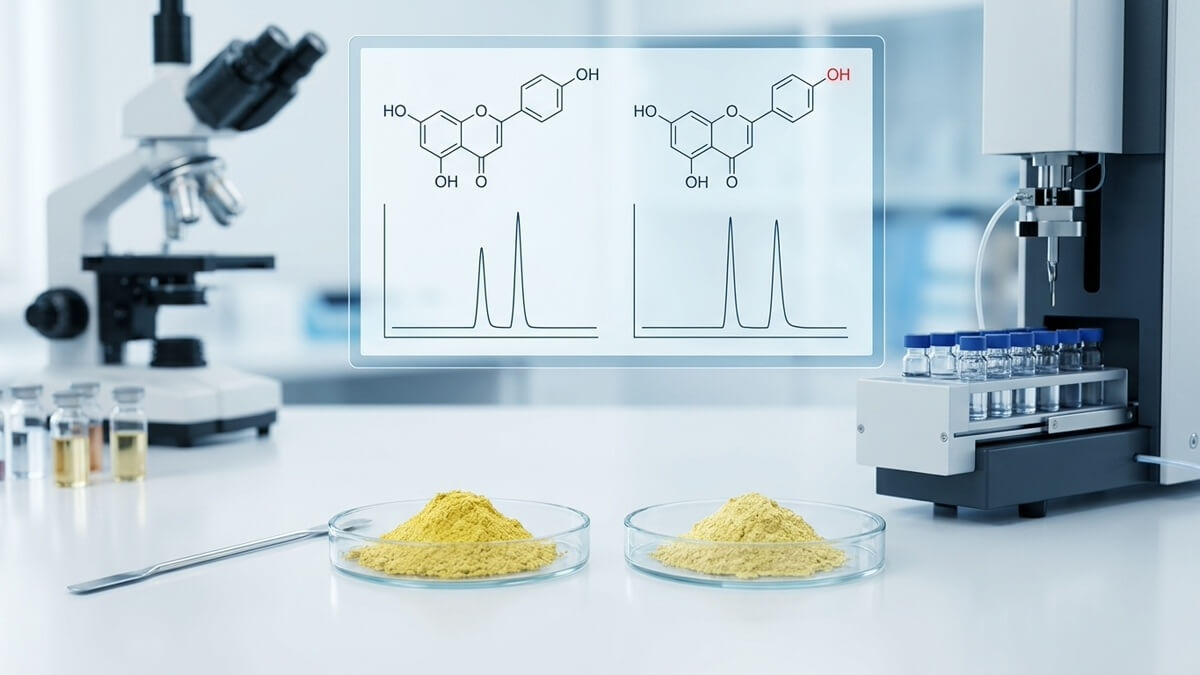
A common formulation failure starts with a category shortcut: treating apigenin and luteolin as interchangeable flavones. The result is often a beverage that sediments within weeks, a gummy that loses label claim after accelerated storage, or a capsule blend that fails identity testing because the supplier's assay could not separate structural neighbors. These are not minor QA events; they reset timelines and force reformulation. This guide compares the two flavones at the level that matters to R&D, procurement, and compliance teams: molecular structure, exposure, physical form, analytical proof, and per-serving cost logic.
Structural Chemistry and Physical Benchmarks That Decide Handling
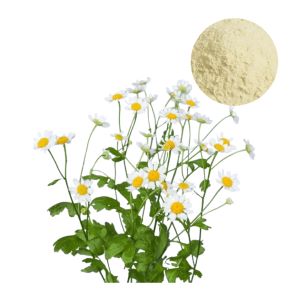
Apigenin and luteolin share the flavone skeleton but differ at the B-ring: apigenin carries a single 4'-hydroxyl, while luteolin carries a catechol 3',4'-dihydroxyl. That single hydroxyl changes antioxidant potential, phase II metabolism, and aqueous behavior. For formulation teams, the practical consequence is that both remain BCS Class II actives with poor aqueous solubility, yet apigenin's solubility remains low across pH 1.0-7.5, with a maximum of only 2.16 µg/mL at pH 7.5. A high-purity Apigenin Extract Powder is therefore specified less by label purity alone and more by particle size, crystalline form, and moisture control. Particle-size bands of 80-200 mesh and XRPD-confirmed crystalline form are more predictive of blend uniformity than label purity alone.
| Benchmark | Apigenin | Luteolin | Formulation implication |
|---|---|---|---|
| Aqueous solubility | ~1.35 µg/mL (water); max 2.16 µg/mL at pH 7.5, 37°C | Practically insoluble; catechol B-ring raises oxidation sensitivity | Both need solubilization or encapsulation for RTD and gummies |
| BCS class | II | II | Dissolution rate is limiting |
| Melting point | 345-350°C (literature range) | Not a process differentiator | Thermal risk is solution-state, not melting |
| pH stability | Most stable near pH 3; degradation rises toward neutral and alkaline | Catechol oxidation accelerates at neutral pH | Acidic bases favor apigenin; neutral systems need protection |
| Thermal threshold | Degradation at ≥80°C; severe loss at ≥100°C | Heat and oxygen drive oxidative loss | Gummy cooking at 90-105°C and retort at 121°C exceed the safe window |
The table explains why a 98% HPLC label is not a formulation answer. A crystalline apigenin powder with a tight particle-size distribution may blend cleanly into hard capsules, while the same chemistry in a coarse, electrostatic powder can bridge in feeding hoppers and cause assay variability. Luteolin's catechol group also raises sensitivity to oxidation, so headspace oxygen and trace metals become process variables, not warehouse afterthoughts. A Carr index of 23% places the powder in the passable flow range, while a repose angle above 40 degrees signals poor flow and raises feeder variability and hopper bridging potential in high-speed capsule filling unless a glidant or granulation step is added. Procurement teams should shift the comparison from USD/kg to cost-per-effective-dose, weighting label purity, exposure factor, and overage for degradation. A lower mass-based quote often loses once these supply-chain hard metrics are applied across the batch.
Bioavailability, Mechanism, and Label Claim Divergence
The two flavones are also not interchangeable in exposure. In a rodent study using a flavone-rich extract (FCE), luteolin showed an oral AUC/dose ratio of 0.0889 relative to the apigenin benchmark, with mean residence time of 3.43 h versus 7.31 h and terminal half-life of 2.39 h versus 5.73 h. Because the extract matrix differs from isolated aglycone dosing, these ratios should not be read as absolute AUC equivalence. For R&D teams, the gap still means the same milligram label can deliver very different systemic exposure. In cell-based and biochemical binding assays, luteolin has been reported to bind SIRT1 directly, while apigenin's SIRT1 effects are more commonly linked to upstream Ca2+-AMPK signaling in the models cited. Luteolin reduced PEPCK mRNA at 20 µM (p = 0.024), but apigenin was more potent in the dose-response arm; the between-flavone difference reached significance after FOXO1 knockdown (p = 0.004).
| Parameter | Apigenin benchmark | Luteolin | Claim implication |
|---|---|---|---|
| Oral AUC/dose ratio | Benchmark | 0.0889 relative | Exposure-adjusted dose differs |
| Mean residence time | 7.31 h | 3.43 h | Shorter residence changes dosing logic |
| Terminal t1/2 | 5.73 h | 2.39 h | Faster clearance |
| Mechanism | Ca2+/AMPK-linked SIRT1 and SIRT3 support | Direct SIRT1 binding (biochemical and cell-based) | Different structure/function wording |
These differences should shape label architecture. A formula built around apigenin can support AMPK-dependent metabolic support language, while a luteolin-led formula is better positioned around direct SIRT1 support and antioxidant capacity. A Luteolin Powder grade should therefore be selected with the intended claim and dose in mind, not as a generic flavonoid substitute.
From a commercial scale-up perspective, a 50-mesh shift in particle-size distribution or a 5-degree change in repose angle directly determines whether existing high-throughput capsule lines can run at target speed without hardware modification.
Scale-Up, Dosage Form, and the Encapsulation Decision
Scale-up exposes the physical limits that benchtop formulations hide. Free apigenin is stable near pH 3 but shows degradation at ≥80°C and severe loss at ≥100°C; it is also oxidation-sensitive in the presence of Fe2+/Fe3+ and Cu2+. Gummy cooking at 90-105°C and retort sterilization at 121°C both exceed that window. Chitosan-coated spray-dried liposomal encapsulation retained 86.55-95.42% of apigenin over 90 days at room temperature, with storage RH ceilings of <50% at 25°C, <60% at 35°C, and <70% at 45°C (Int. J. Food Sci. Technol., 2024; doi: 10.1111/ijfs.17112).
- Hard capsule: choose crystalline apigenin with controlled particle size and verify flow and assay uniformity.
- Tablet: avoid high-load free apigenin without granulation; monitor sticking and ejection force.
- RTD: do not rely on free apigenin solubility; use encapsulation or solubilization and add after heat cool-down.
- Gummy: protect from heat and oxygen; consider a liposomal or coated grade and control RH.
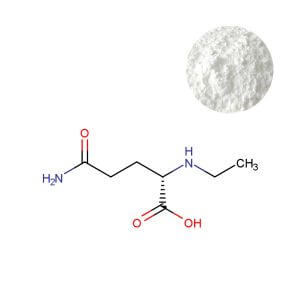
For relax and sleep matrices, L-Theanine Powder is a useful complementary active because it is water-soluble, thermally stable, and sensorially clean. In a four-week randomized, double-blind, placebo-controlled trial in 103 healthy adults, the PM arm contained 2 g Magnesium L-threonate (145 mg magnesium), 200 mg L-theanine, and 50 mg apigenin, giving a practical dose anchor for a multi-ingredient format. In such a matrix, L-theanine improves beverage and gummy feasibility while apigenin carries the flavone positioning.
Analytical Audit, Supplier Fraud Control, and Cost-in-Use Logic
Analytical method choice is a procurement control, not a lab detail. Reverse-phase HPLC-UV at 340-360 nm can separate apigenin from luteolin, chrysin, and apigenin glycosides. A UV-Vis reading at 335 nm or 268 nm cannot distinguish co-existing phenolics and can overstate apigenin purity. QA should ask for resolution between apigenin and luteolin under the supplier's HPLC conditions, not only a single area percent. An individual impurity of ≤0.5% and total impurities of ≤2.0% by HPLC set a practical audit threshold for synthetic apigenin routes.
- Natural extract route: review pesticide residue screening by GC-MS and process solvent data.
- Synthetic or semi-synthetic route: request a GC residual solvent profile, including ethanol against the ICH Q3C limit of ≤5000 ppm, and LC-MS/MS synthetic intermediate screening.
- All routes: require a validated HPLC identity method with structural-neighbor resolution and a defined particle-size distribution.
Cost-in-use should be modeled per serving, not per kilogram. The calculation combines label dose, assay purity, and relative exposure factor; a lower mass-based input can lose once the exposure factor and overage for degradation are applied. A supplier dossier that bundles HPLC identity, residual solvent data, and particle-size distribution into one audit trail shortens supplier qualification and removes the need for repeated retesting across batches.
The apigenin versus luteolin decision is a formulation and compliance decision, not a commodity swap. Start with the target claim, then match exposure, physical form, analytical method, and per-serving cost logic. Teams that need a specification review or a small stability sample can request a technical consultation through the technical consultation page.
Share this article
Found this helpful? Share it with others!
Related Products
Products mentioned in this article
Related Articles
You might also be interested in

Formulating for Sleep and Calm: The Science Behind 98% Apigenin Extract
As demand for natural sleep aids grows, 98% Apigenin extract emerges as a key ingredient. This article explores its science as a GABA modulator, explains why high purity is crucial for efficacy, and provides formulation insights for effective sleep and calm products.
Want to learn more?
Explore our products or contact our team for personalized solutions and expert advice.