
Citicoline vs. Alpha-GPC: Bioavailability, Cost, and Formulations
A technical guide comparing Citicoline and Alpha-GPC across pharmacokinetics, processability, and cost-in-use. Resolve hygroscopicity, dosing, and regulatory challenges to optimize your next nootropic formulation.
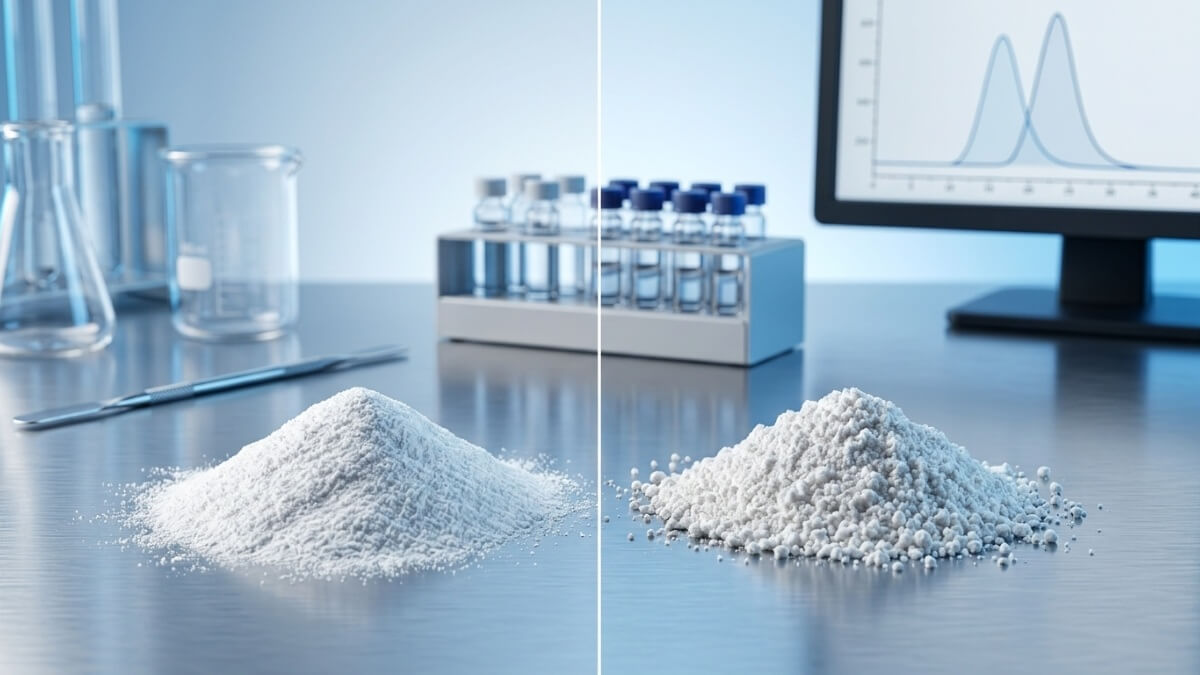
A brand developing a premium nootropic capsule may select a choline source based on choline percentage alone, only to discover the ingredient deliquesces on the encapsulation line, forces oversized tablets, or delivers an effective dose that erodes margins. The choice between Citicoline and Alpha-GPC is not a simple potency contest. It is a formulation strategy decision shaped by molecular structure, pharmacokinetics, processability, and cost-per-serving. This guide compares both ingredients across four technical dimensions to support R&D and procurement decisions.
Molecular Structure, Choline Load, and Physical Form
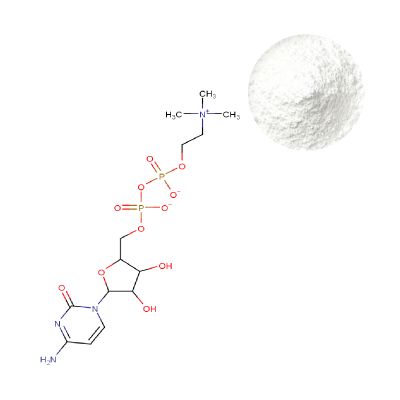
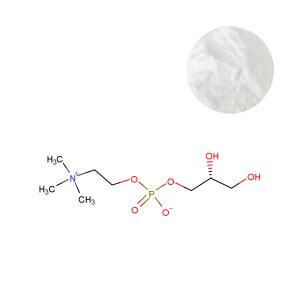
Citicoline (CDP-Choline) and Alpha-GPC differ fundamentally in molecular architecture. Citicoline is a nucleotide derivative supplied as a sodium salt with a molecular weight of 510.31 g/mol as the sodium salt, delivering approximately 18% choline by weight. Alpha-GPC is a smaller glycerophospholipid at 257.22 g/mol with a choline load of 40-41%. This 2.2-fold difference in choline density directly impacts dosage form size and excipient load. A formulation targeting 300 mg of elemental choline requires 1667 mg of Citicoline or 750 mg of Alpha-GPC.
The Citicoline CDP Choline Powder is commercially available as a direct-compression grade granule with an angle of repose at or below 35 degrees, bulk density of 0.55-0.70 g/mL, and a Hausner ratio of 1.12-1.25. These values support high-speed tableting without excessive glidant loading. Unglided Citicoline sodium powder exhibits an angle of repose above 40 degrees, but with glidant addition, tablet hardness exceeds 50 N and friability falls below 0.5%. Alpha-GPC, by contrast, requires microencapsulation onto dicalcium phosphate or silica for automated encapsulation, which reduces payload.
| Parameter | Citicoline (CDP-Choline) | Alpha-GPC |
|---|---|---|
| Molecular weight | 510.31 g/mol (sodium salt) | 257.22 g/mol |
| Choline content (by weight) | ~18% | ~40-41% |
| Dose to deliver 300 mg choline | 1667 mg | 750 mg |
| Water solubility | at or above 100 mg/mL | 500 mg/mL (with ultrasonic assistance); 105 mg/mL under standard agitation |
| Angle of repose (DC grade) | at or below 35 degrees | Pure form unsuitable; 50% microencapsulated: good flow |
| Bulk density | 0.55-0.70 g/mL | 0.40-0.80 g/mL (microencapsulated) |
| Hygroscopicity at 40% RH | Equilibrates at 12-13% moisture | Not applicable |
| Hygroscopicity at 50% RH | Stable | Deliquesces within 30 minutes |
From a procurement standpoint, the choline-load gap between these two ingredients should not be reduced to a per-kilogram price comparison. Cost-per-effective-dose, impurity profile, and processability metrics ultimately determine the true supply chain economics and finished-product margins.
Biochemical Mechanisms and Bioavailability Divergence
Citicoline functions as a dual precursor. After oral intake, it hydrolyzes to cytidine and choline. Cytidine deaminates to uridine, which crosses the blood-brain barrier through CNT2 transporters and converts to UTP and CTP, feeding the Kennedy pathway for phosphatidylcholine synthesis. Choline simultaneously supports acetylcholine production. Alpha-GPC delivers only choline, with glycerol phosphate as a byproduct. This mechanistic difference translates into distinct pharmacokinetic profiles and label claim opportunities.
A deuterium-labeled crossover trial in healthy adults quantified these metabolic differences. Phospholipid-bound choline (D9-POPC) administration produced a plasma D9-PC peak of 41.0 micromol/L, 2.3 times higher than water-soluble choline forms at 17.6 micromol/L. After 72 hours, D9-PC declined by 26.3 micromol/L in the D9-POPC group versus 7.2 micromol/L for water-soluble compounds. Critically, D9-TMAO was virtually absent after D9-POPC and D9-phosphorylcholine, while D9-GPC generated detectable D9-TMAO with a delayed rise (European Journal of Nutrition, 2023; doi: 10.1007/s00394-023-03121-z).
The Alpha GPC Powder offers rapid choline delivery. Intramuscular administration data show peak plasma choline at 0.25-0.5 hours. However, after correcting for choline content, the AUC difference versus Citicoline becomes non-significant. The formulation choice therefore depends on whether the product requires dual-pathway support or maximum choline density per milligram. For brands targeting long-term brain health without cardiovascular trade-offs, the TMAO divergence is a label claim differentiator.
From a commercial scale-up perspective, these microscopic physicochemical differences in hygroscopicity, solubility, and flowability directly dictate equipment selection, line speed, and rejection rates on high-throughput encapsulation and tableting lines.
Scale-up Dynamics: Gummies, Tablets, and Capsules
Industrial processing exposes physical weaknesses that laboratory-scale trials conceal. Citicoline sodium remains stable under dry heat at 100 degrees Celsius for 48 hours but is labile in acidic, alkaline, and oxidative conditions. In gummy manufacturing, where cooking temperatures reach 90-105 degrees Celsius, Citicoline should be added late in the process below 70 degrees Celsius. Its optimal pH window is 6.0-8.0, and water solubility exceeds 100 mg/mL. For liquid RTD formats, Citicoline disperses uniformly without sedimentation.
Alpha-GPC is sensitive to alkaline conditions, where the phosphate ester bond cleaves. Above 100 degrees Celsius, acyl chain oxidation and hydrolysis accelerate. Gummy matrices require protective co-ingredients to reduce degradation. For hard capsules, 50% microencapsulated Alpha-GPC on dicalcium phosphate exhibits acceptable flow, but the carrier reduces choline density to approximately 20%. The Phosphatidylserine Powder can be co-formulated with Citicoline to support membrane fluidity, creating a synergistic stack for cognitive support.
- Hard capsules: Citicoline DC grade at 0.55-0.70 g/mL bulk density; Alpha-GPC requires 50% microencapsulation on DCP or silica
- Tablets: Citicoline angle of repose at or below 35 degrees; glidant addition yields hardness above 50 N and friability below 0.5%
- Gummies: Citicoline added below 70 degrees Celsius; Alpha-GPC requires protective co-ingredients to reduce alkaline degradation
- RTD liquids: Citicoline solubility at or above 100 mg/mL; optimal pH window 6.0-8.0
Analytical Auditing and Cost-in-Use
Supply chain fraud often hides behind low-resolution testing. UV spectrophotometry at 262 nm cannot distinguish Citicoline from cytidine, CMP, or uridine. HPLC with a C18 column and tetrabutylammonium hydroxide mobile phase resolves Citicoline at approximately 3.5 minutes, 5'-CMP at 7.7 minutes, and CMP methyl ester at 11.3 minutes. Forced degradation studies under acid, base, oxidation, light, and heat confirm method stability-indicating capability. A high-purity Citicoline grade supplied under Oclean Nutra specifications provides consistent direct-compression flow and documented impurity profiles, reducing tablet rejection rates.
Cost-in-Use calculations must convert raw material pricing into cost per effective choline dose. With Citicoline at 18% choline, a 500 mg dose delivers 90 mg choline. Alpha-GPC at 41% choline delivers 205 mg from 500 mg. To match 90 mg choline, Alpha-GPC requires only 220 mg, but microencapsulation and handling premiums raise its effective per-dose cost. Procurement teams should model both ingredients based on actual choline delivery, not kilogram price. Regulatory status further shapes market access: Citicoline holds FDA GRAS self-determined status and EU Novel Food authorization, while Alpha-GPC's EU Novel Food authorization is currently under final review, with EFSA having issued a favorable safety opinion in May 2026.
- Verify HPLC retention times and resolution for CMP at 7.7 minutes and CMP methyl ester at 11.3 minutes
- Request forced degradation chromatograms under acid, base, oxidation, light, and heat conditions
- Calculate Cost-in-Use using actual choline delivery per serving, not raw kilogram pricing
Conclusion: Matching Raw Material to Formulation Intent
The decision between Citicoline and Alpha-GPC is a formulation strategy choice, not a binary quality judgment. Citicoline offers dual-pathway mechanisms, superior TMAO profile, and direct-compression processability for tableting and gummies. Alpha-GPC provides higher choline density per milligram but demands microencapsulation and tighter thermal controls. R&D teams should map these technical trade-offs against target dosage forms, label claims, and per-serving cost targets. To review specification sheets or request small-scale stability samples for bench testing, connect with the technical support team to discuss specific formulation parameters.
Share this article
Found this helpful? Share it with others!
Related Products
Products mentioned in this article
Related Articles
You might also be interested in

Key Trends Driving the Global Nootropic Market and Ingredient Sourcing
The global nootropic market is shifting from hype to science. This analysis uncovers the critical trends—from demand for clinically-backed ingredients like Citicoline to uncompromising supply chain transparency—that every brand needs to know to formulate winning products.
Want to learn more?
Explore our products or contact our team for personalized solutions and expert advice.