
Beyond Metabolic Health: Why Benfotiamine Is the Next Hero Ingredient for Anti-AGEs and Longevity Formulations
As anti-glycation moves from skincare to systemic longevity, benfotiamine powder offers a 5-fold bioavailability edge. Discover key US/EU compliance benchmarks and particle size specs for premium B2B blending.
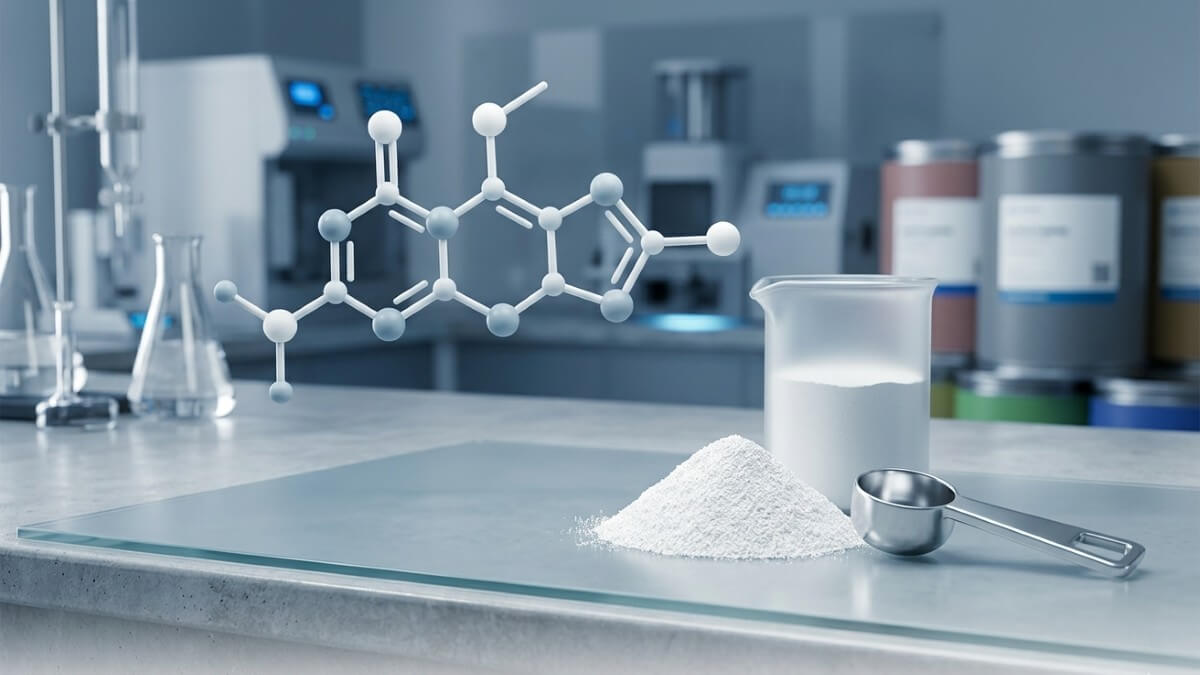
Consumer demand for “anti-glycation” and “cellular longevity” has moved beyond social media buzz. In 2025, 57% of global consumers prioritized aging well, and 55% were willing to spend over $100 per month on proactive health solutions (NIQ GfK, 2025). Yet most anti-aging supplement lines remain trapped in me-too formulations built around NMN, CoQ10, or generic plant extracts. Formulators and procurement leaders now face a critical question: which scientifically differentiated ingredient can anchor the next generation of high-margin longevity products? The answer lies in understanding advanced glycation end products (AGEs) as a root driver of biological aging—and in a specific form of vitamin B1 with unique biochemical leverage.
The Market Signal: Anti-AGEs Moves from Skincare to Systemic Longevity
The global anti-aging supplements market was valued at $4.99 billion in 2025 and is projected to grow at an 8.52% CAGR through 2033 (AnalystView, 2026). Within this space, the anti-glycation supplement segment alone is expanding at a 5.9% CAGR (WiseGuy Reports, 2025). But the more telling shift is in consumer perception: glycation is no longer viewed only as a cosmetic concern. From metabolic dysfunction to neuro-cognitive decline, AGEs are increasingly recognized as a systemic aging accelerator.
Anti-AGEs formulations are not skincare extras — they are systemic longevity interventions backed by clinical consensus.
- Research on AGEs and aging surged from roughly 375 papers in 2000 to roughly 2,184 in 2025 – a six-fold increase (NIH database, 2026).
- Non-invasive skin AGEs measurement devices are now entering routine health screenings, signaling mainstream clinical acceptance.
- Leading brands such as Life Extension and Pure Encapsulations have already launched benfotiamine-based formulas targeting AGEs management.
This convergence of clinical attention and consumer awareness creates a prime window for B2B buyers to move beyond generic antioxidants and secure a differentiated supply position.
Benfotiamine: The Biochemical Edge Against Endogenous AGEs
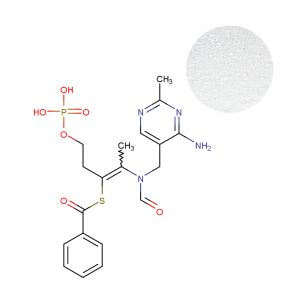
Standard vitamin B1 (thiamine HCl) has poor bioavailability and cannot effectively interrupt the AGEs formation pathway. Benfotiamine, a lipid-soluble thiamine derivative, solves both problems. Its oral bioavailability is approximately 5-fold higher than that of thiamine hydrochloride based on peak serum concentrations, enabling therapeutic tissue levels without carrier-mediated saturation. Once inside cells, it activates the enzyme transketolase—shunting glycolytic intermediates away from the AGEs-generating pathway and into the pentose phosphate shunt.
A 2025 comprehensive review (doi: 10.1016/j.biochi.2025.06.001) explicitly frames dietary and endogenous AGEs as a modifiable risk factor in age-related chronic diseases, including diabetes, cardiovascular disease, and neurodegenerative conditions. For product managers, this means benfotiamine offers a clinically plausible mechanism that can be communicated to increasingly science-literate consumers—without exaggerated claims.
Strategic Formulation: Building a Differentiated Longevity Stack
Benfotiamine works best as the anchor of a synergistic anti-AGEs and mitochondrial support stack. The following table outlines high-value pairings based on mechanistic complementarity.
| Synergistic Ingredient | Mechanistic Rationale | Target Consumer Benefit |
|---|---|---|
| Alpha Lipoic Acid Powder for Mitochondrial Support | Direct antioxidant and mitochondrial cofactor; complements benfotiamine’s AGEs interception at the cellular level. | Enhanced metabolic resilience + nerve health support |
| PQQ Disodium Salt for Cellular Energy Support | Stimulates mitochondrial biogenesis (PGC-1α pathway); addresses the energy decline aspect of aging. | Improved cellular energy and cognitive vitality |
Unlike single-ingredient me-too products, this multi-target stack allows brands to command premium pricing while offering a defensible scientific narrative. From a procurement perspective, securing consistent, high-purity grades of these ingredients becomes a competitive advantage.
From a commercial scale-up perspective, consumer preference for powder formats directly pressures procurement teams to verify particle size consistency and flowability across multiple lots — not just price per kilo.
Consumer Insight: Powder Formats and the Biohacking Wave
The global biohacking market—which includes performance-focused supplements and nutraceuticals—is growing at a staggering 23.4% CAGR, reaching $45.16 billion in 2025 (The Business Research Company, 2025). Within this space, powder formats (stick packs, scoopable jars, and functional beverage blends) are rapidly gaining share over traditional capsules. This shift is driven by the biohacker’s desire for dose flexibility, faster absorption, and integration into daily rituals (morning coffee, smoothies, or electrolyte drinks).
- Benfotiamine powder’s neutral taste and good solubility make it suitable for such applications.
- Powder formats also enable higher unit economics for brands while simplifying logistics for contract manufacturers.
For procurement teams, this trend reinforces the need to evaluate particle size distribution, flowability, and heavy metal profiles—specifications that directly impact blending uniformity and end-product stability.
Regional Market Access and Compliance Landscape
Ingredient regulation remains a critical differentiator for brands targeting multiple geographies. The table below summarizes key market access conditions for benfotiamine as of 2026.
| Region | Benfotiamine Regulatory Status | Practical Implication for Formulators |
|---|---|---|
| United States | NDI notified to FDA (2006); legal dietary ingredient | Straightforward market entry; recommended dose ≤300 mg/day |
| European Union & UK | Listed as unauthorized novel food (Novel Food Catalogue, Dec 2025) | Pre-market authorization required; not for routine supplement use |
| Japan & Other Asia | Varies; often classified as pharmaceutical ingredient | Check local pharmaceutical affairs laws before launching |
For B2B buyers targeting the US market, benfotiamine remains the most attractive high-bioavailability option. European brand owners, however, must evaluate novel food application costs or consider alternative AGEs-targeting ingredients.
Quality Benchmarks: What Procurement Must Verify
Not all benfotiamine powders are equal. To ensure batch-to-batch consistency and regulatory compliance, procurement teams should request the following from any potential supplier:
- HPLC purity – minimum 99% with full impurity profile
- Heavy metals – compliant with Prop 65 or USP standards (lead ≤1.0 ppm, arsenic ≤1.0 ppm)
- Particle size distribution – ≥ 95% through 80 mesh for blend uniformity in powder mixes
- Residual solvents – meet ICH Q3C guidelines
- Microbiological limits – total plate count <1000 CFU/g, no pathogens
Suppliers should provide a certificate of analysis (COA) from an ISO 17025-accredited third-party lab for each lot. Requesting stability data under accelerated conditions (40°C/75% RH for 6 months) is also prudent for formulations targeting a 24-month shelf life.
Commercial Outlook: From Specialty Ingredient to Mainstream Longevity Asset
Benfotiamine’s market trajectory reflects its transition from a niche diabetic neuropathy support to a broader healthy-aging platform. Global benfotiamine API sales were estimated at $425 million in 2024, with a projected 8.3% CAGR to $890 million by 2033 (MarketIntelo, 2025). The finished supplement segment is growing even faster, at 9.2% CAGR (MarketIntelo, 2025).
Driving this growth is the recognition that “metabolic health” and “longevity” are merging. Consumers want to maintain energy, cognition, and mobility as they age—and they are willing to pay for clinically backed solutions. Benfotiamine’s unique AGEs-blocking mechanism gives brand owners a clear lane distinct from generic NAD+ boosters or standard vitamins.
Strategic Action Points for CMOs and Product Managers
The anti-AGEs and longevity category is still open for first movers. To capture share, decision-makers should prioritize the following steps:
- Audit current product portfolios for AGEs-targeting claims – if none exist, consider a benfotiamine-centric launch.
- Differentiate through formulation: combine benfotiamine powder for advanced stability blending with ALA or PQQ to build a multi-mechanism longevity stack.
- Focus on powder formats (stick packs or functional sachets) to align with biohacking and on-the-go consumption habits.
- Secure supply chain resilience by qualifying at least two benfotiamine sources with matching COA specifications.
The window for differentiation is real. While large brands move slowly, agile formulators who launch a well-supported anti-AGEs product in 2026-2027 can establish brand equity before the category becomes crowded.
For technical specifications, third-party test reports, or formulation consultation, contact our technical sourcing team to request samples and discuss custom powder blends tailored to your brand’s positioning.
Share this article
Found this helpful? Share it with others!
Related Products
Products mentioned in this article
Want to learn more?
Explore our products or contact our team for personalized solutions and expert advice.