
Optimizing Prenatal & Cognitive Formulas: Why L-5-MTHF Calcium is the Superior Choice
Traditional folic acid often falls short due to genetic metabolic bottlenecks. This article examines why L-5-MTHF Calcium, combined with B12 and Alpha-GPC, is the new standard for science-backed, premium prenatal and cognitive supplement development.
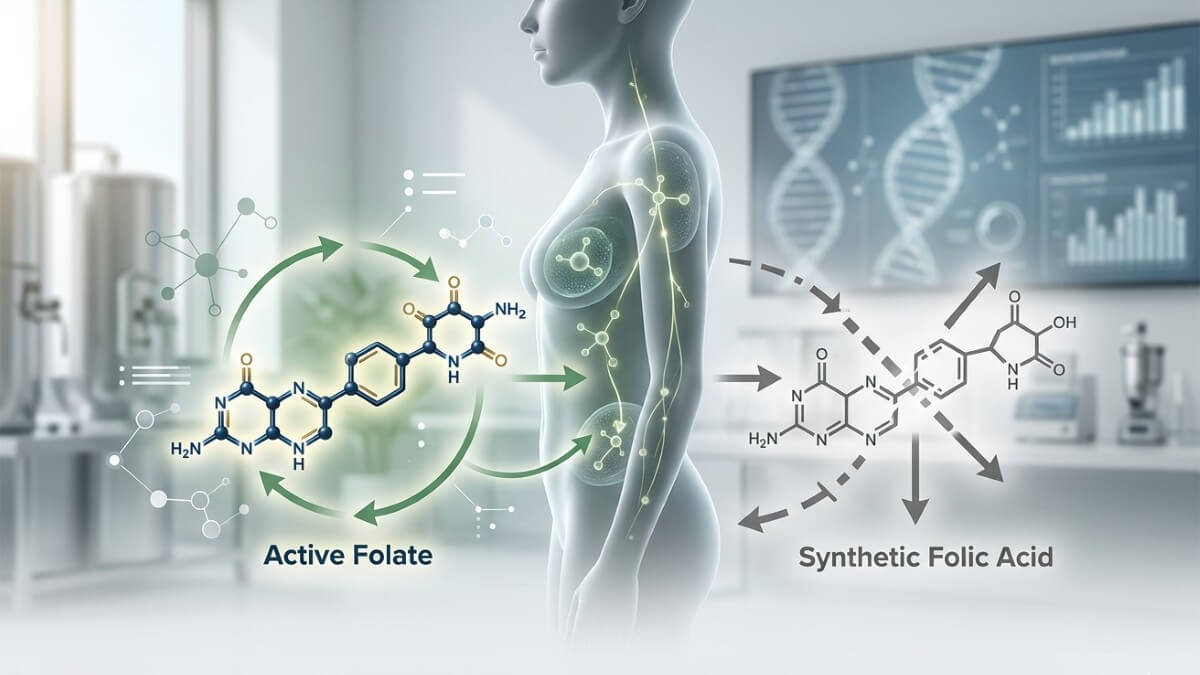
For decades, folic acid has been the gold standard in prenatal and cognitive health supplements. However, a growing body of clinical evidence challenges this assumption, pointing to a critical flaw: up to 40% of the global population carries MTHFR gene polymorphisms that impair the conversion of synthetic folic acid into its bioactive form, L-5-methyltetrahydrofolate (L-5-MTHF). This metabolic bottleneck directly impacts product efficacy and consumer trust. For R&D leaders and procurement specialists, reformulating with highly bioactive L-5-MTHF Calcium is no longer a niche innovation—it is a strategic necessity for developing premium, science-backed supplements. The brands that act now will define the next generation of maternal and cognitive nutrition; those that wait risk being perceived as outdated.
The Metabolic Divide: Why Traditional Folic Acid Falls Short
Folic acid is a prodrug that requires enzymatic reduction by dihydrofolate reductase (DHFR) and methylation by MTHFR to become biologically active. In individuals with MTHFR C677T or A1298C variants, this conversion efficiency drops by 30–70%. The result is suboptimal folate status despite adequate intake and the accumulation of unmetabolized folic acid (UMFA) in circulation—a phenomenon linked to immune and cognitive concerns. A recent 2026 randomized controlled trial directly addressed this issue in a prenatal setting (doi: 10.3389/fnut.2026.1679067). Researchers found that replacing folic acid with 6S-5-MTHF in prenatal multivitamins maintained total folate levels equally effectively while significantly reducing UMFA concentrations in both maternal blood and placenta (p < 0.01).
What this means for brand owners: The “folic acid is universally safe and effective” narrative no longer holds. Adopting L-5-MTHF not only matches the efficacy of the old standard but also eliminates a documented safety concern (UMFA). For any brand targeting health-conscious women or consumers with genetic predispositions, this is a clear upgrade—and a powerful marketing angle.
Formulating for Universal Bioavailability: The L-5-MTHF Advantage
Choosing the right folate source is a foundational decision that impacts every downstream benefit claim. Below is a comparative overview for procurement and R&D teams evaluating bulk raw materials:
| Parameter | Synthetic Folic Acid | L-5-MTHF Calcium (Active Folate) |
|---|---|---|
| Bioavailability (at ≥400 µg/day) | Baseline (DFE factor 1.7) | ~30% higher than folic acid |
| Metabolism required | Yes (DHFR + MTHFR) | No, directly usable |
| Suitable for MTHFR population | Poor | Yes |
| UMFA accumulation risk | High at moderate doses | Virtually none |
For brands targeting mass-market or personalized nutrition segments, L-5-MTHF calcium eliminates the genetic lottery, guaranteeing uniform efficacy across all consumers. This directly supports premium positioning and reduces the risk of negative product reviews based on individual metabolic differences. In a market where consumer trust is fragile, that reliability is a competitive moat.
Synergistic Pairing #1: L-5-MTHF + Methylcobalamin (B12) for Homocysteine Metabolism
The one‑carbon cycle that utilizes folate is intrinsically linked to vitamin B12. Methylcobalamin acts as an essential cofactor for methionine synthase (MS), the enzyme that transfers a methyl group from 5-MTHF to homocysteine, regenerating methionine. Without adequate B12, even high levels of active folate cannot prevent homocysteine accumulation, a recognized risk factor for cardiovascular and neurodegenerative conditions. A 2024 randomized controlled trial evaluated a combination of methylfolate, pyridoxal-5'-phosphate, and coenzyme-form Methylcobalamin (B12) in patients with MTHFR, MS, and MTRR polymorphisms (doi: 10.3390/nu16111550). The results were striking: homozygous mutation carriers experienced a 48.3% reduction in homocysteine levels (p < 0.01), significantly outperforming mixed allele carriers.
What this means for formulators: Isolated L-5-MTHF works, but pairing it with methylcobalamin unlocks a much larger therapeutic effect—especially for cardiovascular and cognitive health products. The synergy is not incremental; it is multiplicative. Brands that simply swap folic acid for active folate without reconsidering the rest of their B-vitamin complex are leaving efficacy on the table.
Synergistic Pairing #2: L-5-MTHF + Alpha-GPC for Prenatal and Cognitive Support
Beyond methylation, cholinergic nutrients play a critical role in early brain development and lifelong cognitive reserve. Alpha-GPC (L-alpha-glycerylphosphorylcholine) (L-alpha-glycerylphosphorylcholine) is a highly bioavailable choline donor that crosses the blood-brain barrier and serves as a direct precursor to acetylcholine—the neurotransmitter essential for memory and learning. Combining L-5-MTHF with Alpha-GPC is particularly compelling for two application segments:
- Premium Prenatal Nutrition: While folate prevents neural tube defects, choline supports hippocampal development and lifelong cognitive function. A dual-pathway approach addresses both mandatory and evolving maternal nutrition standards.
- Cognitive Health for Aging Populations: A 2023 systematic review and meta-analysis (PMID: 36683513) confirmed that Alpha-GPC alone or combined with donepezil significantly improved cognitive, behavioral, and functional outcomes in patients with cognitive impairment (MD: 3.50, 95% CI: 0.36 to 6.63).
The takeaway for R&D leaders: The most forward-thinking brands are moving away from single-ingredient “me-too” supplements and toward multi-pathway formulas. L-5-MTHF plus Alpha-GPC creates a unique position in both prenatal and nootropic categories—offering methylation support and neurotransmitter synthesis in one product. That is a story consumers (and retailers) remember.
Practical Formulation Considerations for R&D Teams
When migrating from folic acid to L-5-MTHF calcium, several technical parameters must be evaluated to ensure stability and consumer acceptance:
- Stability: L-5-MTHF is sensitive to oxidation, especially in liquid or high-moisture applications. Microencapsulation with ascorbate or using dry powder blends in capsules or tablets significantly improves shelf life. Published research shows that co‑encapsulation with ascorbic acid yields up to 97% recovery in baked goods and superior storage stability.
- Dosage alignment: Due to higher bioavailability, typical active folate dosages range from 400–800 µg DFE, whereas folic acid often uses 400–800 µg as well—but the effective delivered folate is lower. Adjust label claims based on the 2.0 conversion factor established by EFSA for 5-MTHF.
- Compatibility: L-5-MTHF calcium is compatible with most vitamins and minerals, but avoid direct contact with strong oxidizing agents. In combination with methylcobalamin and Alpha-GPC, no negative interactions have been reported in dry formulations.
Strategic insight: Do not treat L-5-MTHF as a drop‑in replacement. Its sensitivity to oxidation requires a re‑evaluation of your entire stability protocol. However, once solved, the payoff is a clean-label, bioactive ingredient that commands premium pricing.
Strategic Roadmap: From Ingredient Selection to Market Leadership
For procurement and brand strategy heads, the shift to active folate is not merely a reformulation—it is a repositioning opportunity. Consider the following decision matrix when evaluating suppliers and building your next-generation product pipeline:
| Decision Factor | Low-risk / Entry-level | High-differentiation / Premium |
|---|---|---|
| Folate source | Standard folic acid (economical, but limited efficacy for MTHFR carriers) | L-5-MTHF calcium (universal efficacy, premium claim) |
| Supporting actives | Single folate or folic acid + B12 (cyanocobalamin) | Active folate + methylcobalamin + Alpha-GPC (multi‑pathway support) |
| Clinical substantiation | General population studies on folic acid | Genotype‑specific RCTs (DOI: 10.3390/nu16111550) and UMFA safety data (DOI: 10.3389/fnut.2026.1679067) |
Brands that proactively adopt L-5-MTHF calcium can lead the conversation around “personalized nutrition without testing” — offering guaranteed efficacy for every consumer, regardless of genetics. This builds trust, reduces returns, and supports a higher price point. The window for first‑mover advantage in this ingredient shift is closing. Those who delay will find themselves defending an outdated formulation.
Conclusion: Future‑Proof Your Product Portfolio
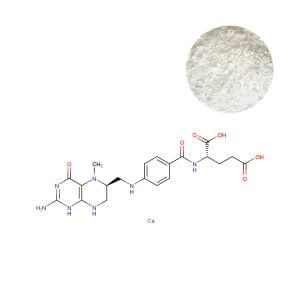
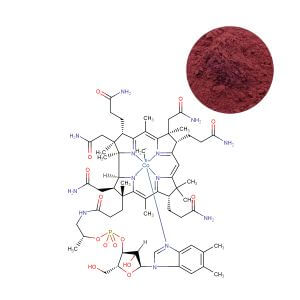
The science is clear: L-5-MTHF calcium is the metabolically superior, safer, and more inclusive folate source for modern dietary supplements. When combined with methylcobalamin B12 and Alpha-GPC, formulators can address homocysteine metabolism, prenatal neurodevelopment, and cognitive aging through integrated, multi‑target mechanisms. As the market shifts toward clinically backed, personalized, and premium offerings, the choice of active folate will become a key differentiator. Review our detailed product specifications for L-5-MTHF Calcium, Methylcobalamin B12, and Alpha GPC Powder to start your reformulation project today. For technical consultations or bulk pricing, contact our R&D support team for a customized formulation roadmap. The brands that lead the active folate transition will define the next decade of prenatal and cognitive health. Will yours be among them?
Share this article
Found this helpful? Share it with others!
Related Products
Products mentioned in this article

Want to learn more?
Explore our products or contact our team for personalized solutions and expert advice.