
Beyond NAD+ Supplementation: Synergizing NAD+ for Enhanced Cellular Energy
Move beyond NAD+ mono-ingredients. Explore science-backed synergistic combinations, including NMN, PQQ, and Resveratrol, to build high-efficacy longevity formulations that drive cellular energy, clinical results, and market competitiveness.
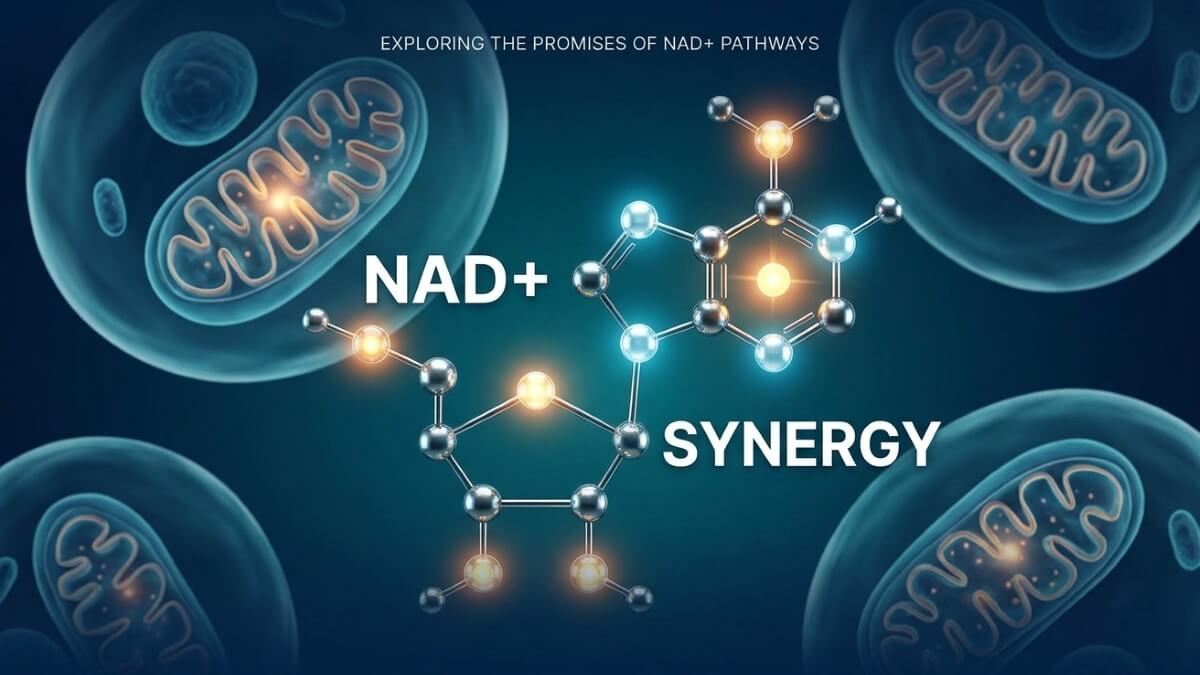
Consumer demand for cellular energy and healthy aging has never been stronger. NAD+ (nicotinamide adenine dinucleotide) has become a cornerstone ingredient in premium supplements, yet brands are discovering a critical limitation: simply adding NAD+ may not fully optimize mitochondrial function. The real formulation advantage lies in synergistic combinations that support NAD+ bioavailability, mitochondrial biogenesis, and genomic stability. This article examines science-backed pairing strategies for formulators seeking to build differentiated, high-efficacy anti-aging products.
The NAD+ Opportunity and Its Formulation Ceiling
Global NAD+ enhancer market reached USD 577 million in 2025 and is projected to grow at 15.2% CAGR through 2032 (QYResearch). The Vitamin Shoppe reported a 500% surge in NAD+ searches year-over-year, while TikTok anti-aging supplement content grew 217.2% annually (Spate 2026). Yet the gap between consumer enthusiasm and product efficacy remains wide. Oral NAD+ faces inherent bioavailability challenges due to its molecular weight and low membrane permeability. Single-ingredient NAD+ products often fail to deliver sustained cellular benefits because they address only one node in a complex mitochondrial network.
For brands sourcing bulk ingredients, the question is no longer “whether to include NAD+” but “how to build a multi-target formula that maximizes each component’s potential.” This requires understanding how complementary ingredients interact with NAD+ to create a closed-loop system for mitochondrial health. Single-ingredient approaches are insufficient. For brands seeking a foundational ingredient, utilizing a high-purity NAD+ active substrate provides the direct substrate, but its true potential emerges only when combined with targeted synergists.
What this means for formulators: The market is already moving beyond simple NAD+ supplements. Brands that wait for consumer education to mature will find themselves competing on price alone. Early adopters of synergistic blends can establish both scientific credibility and premium positioning before the category becomes crowded.
Three Synergists That Unlock NAD+ Potential
Recent literature identifies three scientifically validated partners for NAD+ formulations. Each addresses a distinct mechanism, and their combination offers superior results compared to any single ingredient alone.
| Ingredient | Primary Role | Key Mechanism | Optimal Daily Dose |
|---|---|---|---|
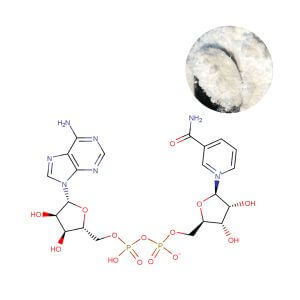
| NAD+ Powder | Immediate cellular fuel | Direct substrate for Sirtuins and PARP enzymes | 100–300 mg |
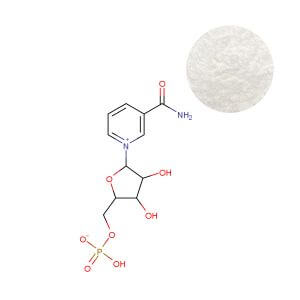
| NMN Powder | NAD+ precursor replenishment | Converts to NAD+ via NMNAT enzymes, sustains long-term levels | 125–500 mg |
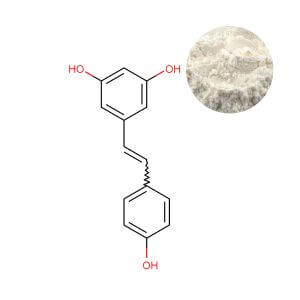
| Resveratrol Powder | SIRT1 activation | Allosterically activates SIRT1, requiring NAD+ as co-substrate | 75–250 mg |
| PQQ Disodium Salt | Mitochondrial biogenesis | Activates AMPK/PGC-1α pathway, promotes new mitochondria formation | 10–20 mg |
Each of these four ingredients addresses a distinct bottleneck in cellular energy production, making their combination exponentially more effective than any single compound alone.
The takeaway: A well-designed NAD+ formula is not a “cocktail” of random anti-aging compounds. It is a systems approach where every component compensates for a weakness of another. This shifts the formulation from commodity to proprietary science.
Why Single-Ingredient NAD+ Formulas Fall Short
Aging is characterized by simultaneous declines in NAD+ levels, mitochondrial density, and redox balance. A 2026 framework in Redox Biology (doi: 10.1016/j.redox.2026.104191) proposes that NAD+ homeostasis, mitochondrial quality control, and oxidative stability form an interconnected “tri-axis” system. The authors argue that single-pathway interventions—such as NAD+ alone—are insufficient to reverse age-related mitochondrial dysfunction. Instead, combining NAD+ precursors with mitochondrial biogenesis agents creates a closed-loop regulatory network.
Complementing this, a 2025/2026 systematic comparison in Ageing Research Reviews (doi: 10.1016/j.arr.2025.102992) directly compared PQQ and NMN/NR, concluding that their anti-aging mechanisms are distinct yet additive. PQQ enhances mitochondrial biogenesis via AMPK/CREB signaling, while NMN/NR replenish NAD+ pools. The review states that “combined use may provide a more effective anti-aging strategy” than either alone.
Why this matters for procurement: The scientific consensus is shifting from single-molecule efficacy to network pharmacology. Brands that continue to formulate with only NAD+ will soon face an uphill battle in consumer communication, as competitors will legitimately claim superior mechanisms.
Formulating with NAD+ Powder: A Layered Approach
To build a market-ready cellular energy supplement, brands should consider three formulation layers. Each layer addresses a specific physiological bottleneck and can be adapted to different price points and target demographics.
Layer 1: Immediate NAD+ Support
Include high-purity NAD+ Powder for direct substrate availability. This provides rapid but short-lived elevation—ideal for energy and acute cognitive support.
Layer 2: Sustained NAD+ Precursor
Integrate a highly stable NMN precursor ingredient to maintain NAD+ levels over 6–8 hours. NMN bypasses rate-limiting steps in the salvage pathway, ensuring continuous substrate supply for Sirtuins and PARP enzymes.
Layer 3: Mitochondrial Biogenesis & Protection
Incorporate a formulation-grade PQQ disodium catalyst and/or Resveratrol Powder. PQQ stimulates new mitochondria formation at as low as 10 mg daily, while resveratrol enhances SIRT1 activity—but only when sufficient NAD+ is present. This creates a virtuous cycle: NAD+ fuels SIRT1, SIRT1 improves mitochondrial function, and PQQ increases mitochondrial density. For a 500 mg daily serving, a 2:2:1:0.4 ratio of NAD+ to NMN to resveratrol to PQQ is a clinically inspired starting point.
The formulation insight: The layered approach transforms a “me-too” NAD+ pill into a differentiated cellular health solution. Moreover, it allows brands to create tiered product lines: a basic NAD+ + NMN entry product, and a premium version with PQQ and resveratrol for higher margins.
Stability and Delivery Considerations for Multi-Ingredient Blends
Formulators must address two practical challenges when combining NAD+, NMN, PQQ, and resveratrol:
- Oxidation protection: Highly active resveratrol powder and PQQ are sensitive to light and oxygen. Use opaque, nitrogen-flushed packaging and consider moisture-proof desiccants.
- pH sensitivity: NMN is unstable below pH 3.0 (gastric fluid), degrading to nicotinamide. Enteric coatings or liposomal delivery are recommended for oral solid dosage forms.
Liposomal technology has emerged as a validated solution. A 2025 study (Current Issues in Molecular Biology) demonstrated that liposomal NAD+ achieved 30% higher skin penetration than free NAD+. For oral supplements, lipid encapsulation can improve bioavailability by protecting ingredients from gastric degradation. These technical decisions should be reflected in your supplier specifications (e.g., requiring encapsulation-ready particle size distribution).
What experienced formulators know: Delivery technology is now the primary differentiator for NAD+ products. Without addressing stability, even the best multi-ingredient blend will underperform in vivo. This is why supplier capability in encapsulation or enteric coating matters as much as raw material purity.
Comparative Assessment: Single vs. Multi-Target NAD+ Formulas
The table below summarizes key differences that brand procurement teams should evaluate when selecting ingredient portfolios.
| Attribute | Single NAD+ Formula | Synergistic Multi-Target Formula |
|---|---|---|
| Onset of action | Fast (30–60 min) | Fast plus sustained (6–8 hr) |
| Mitochondrial biogenesis | None | Stimulated via PQQ (AMPK/PGC-1α) |
| Sirtuin activation | Dependent on endogenous NAD+ | Enhanced via resveratrol + NAD+ sufficiency |
| Differentiation potential | Low (commodity) | High (proprietary mechanism) |
| Cost per serving (raw materials) | Baseline | +40–70% (but higher retail margin) |
The data clearly shows that while multi-target formulas carry higher raw material costs, their ability to command premium pricing and consumer trust delivers superior margin potential.
Decision anchor for procurement: A 40–70% increase in ingredient cost is justifiable only if the finished product can retail at 2–3x the price of a single-ingredient alternative. The scientific story built around synergy directly enables that premium positioning.
From Concept to Commercial: What Procurement Teams Should Look For
When evaluating suppliers for a synergistic NAD+ stack, request the following technical documentation:
- COA from ISO 17025-accredited lab showing purity ≥99.0% by HPLC for each ingredient
- Heavy metal testing (Pb ≤1.0 ppm, As ≤1.0 ppm, Cd ≤0.5 ppm)
- Stability data at 40°C/75% RH for 6 months
- Particle size distribution (D90 ≤100 μm for powder blends)
- Allergen-free and GMO-free declarations
Working with a single supplier that provides all four ingredients with verified stability data significantly reduces formulation risk and time-to-market.
The procurement insight: Multi-sourcing each ingredient from different vendors introduces variability in particle size, residual solvents, and stability profiles—all of which are magnified when blending. A single qualified supplier for the entire stack ensures batch-to-batch consistency and simplifies regulatory filing.
Conclusion: The Future of NAD+ Formulation Is Synergistic
Consumer education around cellular health has matured. Savvy buyers now search for “NAD+ with PQQ” and “NMN plus resveratrol” rather than single-ingredient solutions. Backed by 2026 scientific frameworks and rapid market growth, multi-target NAD+ formulas represent the next standard in anti-aging supplements. For brands ready to move beyond basic NAD+ supplementation, combining immediate NAD+ with sustained precursors and mitochondrial biogenesis agents offers a defensible, high-value product story.
Share this article
Found this helpful? Share it with others!
Related Products
Products mentioned in this article
Related Articles
You might also be interested in
Beyond NMN Compliance: Unlocking Next-Gen NAD+ Powder with Enzymatic Purity & Multi-Regional Regulatory Clearance
As NMN faces multi-regional regulatory shifts, high-purity enzymatic NAD+ powder offers a compliant, clinically validated alternative for anti-aging brands, delivering cellular benefits and robust stability.
Want to learn more?
Explore our products or contact our team for personalized solutions and expert advice.