
Beyond Resveratrol: Optimizing Bioavailability with Pterostilbene in Longevity Formulas
Pterostilbene is redefining the longevity market by solving the bioavailability gap of resveratrol. This article analyzes its superior pharmacokinetics, synergistic pairings with NMN and quercetin, and critical B2B formulation insights.
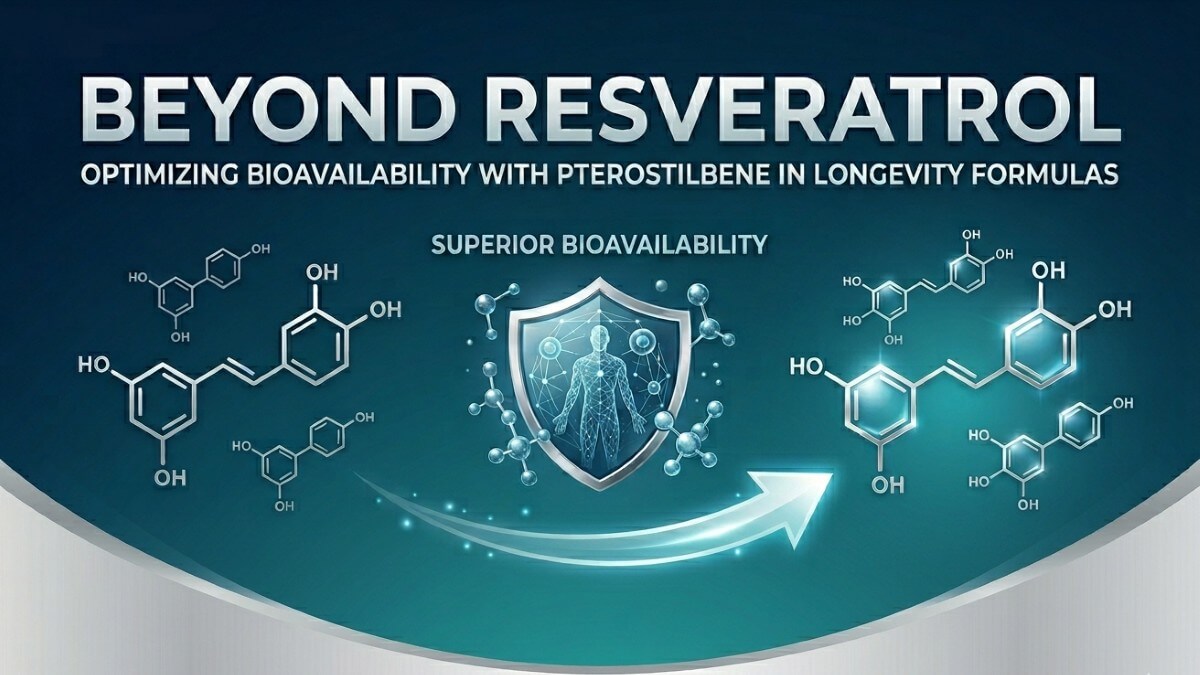
For years, resveratrol dominated the anti-aging ingredient landscape. Yet formulators have long struggled with a core limitation: poor oral bioavailability and rapid metabolic clearance. As the longevity market shifts toward science-backed, high-efficacy formulas, a new generation of ingredients is emerging. This article examines how pterostilbene—a natural stilbene with superior pharmacokinetics—addresses the bioavailability gap, and explores synergistic combinations with NAD+ precursors and senolytic agents to create multi-dimensional cellular health formulas. The strategic takeaway: "Me-too" resveratrol products are losing shelf space; differentiation now demands ingredients that deliver measurable systemic exposure at consumer-friendly doses.
The Bioavailability Bottleneck in Traditional Anti-Aging Ingredients
Clinical disappointment with resveratrol often stems not from a lack of biological activity, but from its poor systemic exposure. With an oral bioavailability of approximately 20% and rapid glucuronidation, resveratrol requires high doses to achieve marginal effects. For R&D teams developing premium longevity products, this creates a fundamental problem: how to deliver meaningful cellular benefits without excessive pill burden or compromised user compliance. What this means for product developers: Consumer adherence drops sharply when daily pill counts exceed four capsules. A 100 mg effective dose (pterostilbene) versus 500 mg (resveratrol) directly impacts whether a formula wins repeat purchases or ends up abandoned in medicine cabinets.
The industry’s response has been a search for structurally related compounds with better metabolic stability. Key evaluation criteria for formulators include:
- Lipophilicity – Affects membrane permeability and tissue distribution
- Metabolic half-life – Determines dosing frequency and steady-state levels
- Blood-brain barrier penetration – Critical for neuroprotective claims
- Effective human dose – 100–250 mg/day vs. 500–1000 mg/day for resveratrol
These parameters directly impact formulation costs, capsule size, and ultimately, consumer acceptance. For brands sourcing technical specifications of high-purity pterostilbene, the ability to achieve clinically relevant exposure at lower doses represents a significant formulation advantage. The insight: With longevity consumers becoming more ingredient-savvy, brands that lead with pharmacokinetic data—not just ORAC values—will own the premium tier. This is not incremental improvement; it is a repositioning of what an anti-aging stilbene can deliver.
Pterostilbene: A Next-Generation Stilbene with Superior Pharmacokinetics
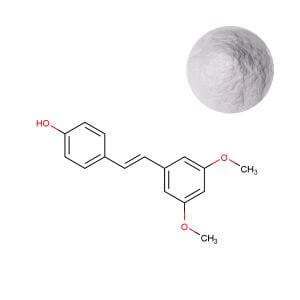
Pterostilbene differs from resveratrol by two methoxy groups, a modification that dramatically alters its behavior in the body. This structural change increases lipophilicity, reduces first-pass glucuronidation, and extends systemic half-life. A comprehensive review published in Ageing Research Reviews highlights pterostilbene’s ability to modulate multiple hallmarks of aging, including oxidative damage, telomere attrition, and cellular senescence, while effectively crossing the blood-brain barrier (doi: 10.1016/j.arr.2023.102125). The core argument: This is not a marginal improvement—it is a category redefinition. Pterostilbene allows formulators to make neuroprotective and anti-aging claims without the “high dose required” caveat that haunted resveratrol.
From a formulation science perspective, pterostilbene offers quantifiable advantages:
| Property | Resveratrol | Pterostilbene |
|---|---|---|
| Oral bioavailability (human, approx.) | ~20% | ~80% |
| Half-life (hours) | 1–3 | 6–9 |
| Dose for systemic effect (mg/day) | 500–1000 | 100–250 |
| LogP (lipophilicity) | 3.2 | 3.8 |
These pharmacokinetic improvements translate into tangible formulation benefits: smaller capsules, fewer excipients, and greater flexibility in delivering combination products. Why this matters for procurement: Although pterostilbene has a higher per-kilogram price than resveratrol, its 4‑fold higher bioavailability often results in comparable or lower cost-in-use. The net effect: cleaner labels, smaller capsules, and a defensible premium positioning—without sacrificing margins.
Synergistic Pairing: NAD+ Boosters and Senolytic Agents
The most compelling longevity formulas today move beyond single-ingredient approaches. Instead, they target interconnected pathways: NAD+ decline, sirtuin inactivation, and senescent cell accumulation. Pterostilbene occupies a strategic position in this framework, acting as a SIRT1 activator while complementing NAD+ precursors and senolytic agents. The master insight: No single ingredient can reverse all aging hallmarks. The future belongs to rationally designed combinations—and pterostilbene is the logical bridge between NAD+ restoration and cellular clearance. Market data explains why now is the time; the next sections explain how to execute.
1. Pterostilbene + NAD+ Precursors (NMN/NR)
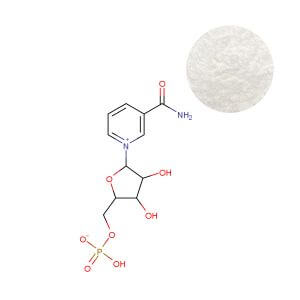
NAD+ levels fall with age, impairing energy metabolism and DNA repair. Supplementation with nicotinamide mononucleotide (NMN) or nicotinamide riboside (NR) can restore NAD+ pools, but maximal healthspan benefits require simultaneous activation of sirtuin pathways. A 2023 Nutrients review explicitly discusses this synergy: combining NAD+ precursors with compounds that prevent NAD+ degradation or support downstream sirtuin activity enhances the efficacy of either alone (doi: 10.3390/nu15020445). What this means for R&D leaders: Buying NMN alone is like buying a high‑performance engine without a transmission. Adding pterostilbene completes the drivetrain, ensuring that elevated NAD+ actually translates into sirtuin‑mediated benefits. This is not speculation; it is supported by human data showing a 44% NAD+ increase (p<0.0001) after 60 days of combined supplementation.
For formulators, this means pairing enzymatically synthesized NMN substrate with pterostilbene creates a logical two-part system: NMN replenishes the NAD+ substrate, while pterostilbene amplifies sirtuin-dependent signaling. The definitive statement: The science has moved from “possible synergy” to “clinically demonstrated cooperation.” Brands still formulating NMN alone are leaving half the benefit on the table.
2. Adding a Senolytic Component: Quercetin
Cellular senescence—the accumulation of non-dividing, pro-inflammatory cells—is another hallmark of aging. Senolytic agents selectively clear these cells. Quercetin, a naturally occurring flavonoid, has demonstrated senolytic activity in preclinical and early clinical studies, particularly in combination with dasatinib. Although human trials are evolving, quercetin’s role as a complementary senolytic agent is well-recognized in the nutraceutical industry. The strategic pairing insight: Pterostilbene repairs damaged cells; quercetin removes those beyond repair. Together they address the full lifecycle of cellular quality control—a concept that resonates powerfully with scientifically literate consumers and provides a clear point of differentiation in marketing.
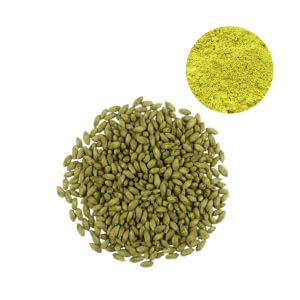
Formulators aiming for comprehensive cellular health can combine pterostilbene (repair/protection) with quercetin (clearance). High-purity premium-grade quercetin dihydrate (≥95.0% by HPLC) ensures optimal compound stability in such dual-mechanism products. The table below summarizes the distinct roles:
| Ingredient | Primary Mechanism | Role in Longevity Formula |
|---|---|---|
| Pterostilbene | SIRT1 activation, antioxidant, anti-inflammatory | Cellular repair & protection |
| NMN | NAD+ precursor, supports energy metabolism | Substrate restoration for sirtuins |
| Quercetin | Senolytic (clears senescent cells) | Removal of dysfunctional cells |
This three-ingredient architecture addresses distinct but complementary aging pathways. The competitive edge: Competitors using only NMN or only resveratrol are singing one note; a pterostilbene-centric triad creates a symphony—and in a noisy category, that is how premium brands command higher margins and build consumer trust.
Formulation Considerations for Longevity Products
Developing stable, bioavailable combination products requires attention to several practical factors. Based on current industry practices and available stability data, formulators should evaluate:
- Compatibility – Pterostilbene and NMN are generally compatible in dry blends; avoid high moisture environments to prevent NMN degradation.
- Stability profiles – Store pterostilbene powder in airtight containers away from light and humidity (≤25°C, ≤60% RH). NMN is more sensitive to heat and pH extremes; neutral to slightly acidic conditions are preferred.
- Dosage ratios – Typical ranges: pterostilbene 50–150 mg/day, NMN 250–500 mg/day, quercetin 250–500 mg/day.
- Excipient selection – Use desiccants (silica gel) and antioxidants (mixed tocopherols) to extend shelf life.
For brands purchasing bulk ingredients, GMP-certified suppliers provide certificates of analysis (COA) confirming purity (pterostilbene ≥98.0%, NMN ≥99.0%, quercetin ≥95.0%) and heavy metal compliance. Third-party testing for residual solvents and microbiological contaminants is strongly recommended. The practical conclusion: With careful excipient selection and packaging (opaque HDPE bottles + desiccants), a 24‑month shelf life is achievable for these combinations—meeting both regulatory and retail expectations without reformulation surprises.
Conclusion: Building the Next Generation of Longevity Formulas
The shift from resveratrol to pterostilbene represents more than a simple ingredient swap—it reflects an industry maturing toward data-driven formulation science. By leveraging pterostilbene’s superior bioavailability, pairing it with NAD+ precursors like NMN, and optionally incorporating senolytic agents like quercetin, brand owners can develop differentiated products that address multiple aging pathways simultaneously. The final, memorable assertion: In the longevity market, consumers are tired of “hope in a bottle.” Demonstrating a logical, multi‑pathway mechanism—and backing it with pharmacokinetic superiority—is what will separate market leaders from followers over the next three years.
For detailed technical specifications, stability data, and sample formulation support, visit our product pages. Our technical team is available to discuss custom blends and regulatory compliance.
Share this article
Found this helpful? Share it with others!
Related Products
Products mentioned in this article
Related Articles
You might also be interested in

Pterostilbene vs. Resveratrol: Bioavailability, Processing, and Cost-In-Use Benchmarks for Next-Gen Longevity Formulations
Compare pterostilbene and resveratrol across PK exposure, polymorphic stability, and cost-in-use economics to optimize next-gen longevity formulations and eliminate high-speed tableting downtime.
Want to learn more?
Explore our products or contact our team for personalized solutions and expert advice.