
Beyond NMN Compliance: Unlocking Next-Gen NAD+ Powder with Enzymatic Purity & Multi-Regional Regulatory Clearance
As NMN faces multi-regional regulatory shifts, high-purity enzymatic NAD+ powder offers a compliant, clinically validated alternative for anti-aging brands, delivering cellular benefits and robust stability.

While NMN faces fragmented regulatory scrutiny across key markets, an alternative pathway has emerged for brand leaders. Direct NAD+ supplementation via enzymatic routes offers a compliant, clinically validated alternative that positions premium NAD+ Powder as a cornerstone for next-generation formulations. This analysis examines the regulatory, clinical, and supply-chain factors driving this strategic shift.
The Regulatory Calculus: NAD+ Powder in a Post-NMN Compliance Era
The 2025-2026 regulatory cycle has fundamentally reshaped the NAD-boosting landscape. In the U.S., the FDA reversed its 2022 stance on NMN in September 2025, reopening the NDI pathway. However, the agency simultaneously elevated the NDI Final Guidance to highest priority as of May 2026, demanding explicit identity and robust safety substantiation for post-1994 novel ingredients. This dual shift has significantly extended the compliance bar and review queue.
Across the Atlantic, EFSA issued a positive safety opinion for β-NMN as a Novel Food in May 2026 (EFSA-Q-2023-00552), proposing a 300 mg daily limit for healthy adults. Yet this opinion is conditional: a 5-7 month review precedes formal authorization, and the applicant enjoys a 5-year data protection exclusivity. Brands not aligned with the approved applicant face effectively frozen market access during this window.
In the EU Novel Food regime, failing to secure a data-protected applicant relationship equals a de facto multi-year market ban for NMN-based products.
In Asia-Pacific, Australia's TGA listed NMN as a permissible ingredient for complementary medicines but, as of early 2026, restricted supply to a single authorised supplier, while China's Decree No. 280 (June 2026) mandates "three-certificate" documentation for imports, creating substantial entry barriers. Meanwhile, direct NAD+ powder occupies a distinct regulatory space in the EU - not yet the subject of a Novel Food application, thus preserving an independent pathway for brand applicants.
| Market | NMN Regulatory Status (2026) | NAD+ Powder Strategic Advantage |
|---|---|---|
| USA (FDA) | NDI pathway reopened; high scrutiny & queue congestion | Simplified compliance path; no precursor-specific NDI baggage |
| EU (EFSA) | Positive opinion; applicant-restricted; 5-year data lock | No Novel Food filing; open pathway |
| Australia (TGA) | Permissible; single authorised supplier | Alternative supply-chain flexibility |
| China (GAC) | Cross-border only; strict "3-certificate" rule | Not on the priority watchlist; lower regulatory friction |
This fractured regulatory map creates an urgent need for a compliant core ingredient. Direct NAD+ powder, independent of precursor approvals, offers that versatility - enabling consistent product pipelines across jurisdictions. Early adoption of enzymatically sourced NAD+ powder establishes a long-term policy firewall, insulating brands from future precursor-specific restrictions while capturing the premium margins that emerge during regulatory realignment windows.
Clinical Differentiation: Intracellular NAD+ Elevation Independent of Gut Microbiome
The 2026 RENEWAL-NAD+ randomized controlled trial (RCT) has strengthened the scientific case for direct NAD+ supplementation. This study (n=50; 5-day oral intervention) used a physicochemically modulated NAD+ formulation (LathMized NAD+) and produced a landmark finding: oral NAD+ administration elevated whole-blood intracellular NAD (icNAD) by 53% relative to placebo (p=5.48x10⁻¹⁴, Hedges' g=3.66), while leaving circulating plasma NAD (cirNAD) unchanged (p=0.60) (GeroScience, 2026; doi: 10.1007/s11357-026-02399-1). While this proof-of-concept validates the compartment-selective NAD+ supplementation mechanism, the magnitude of intracellular elevation may vary with formulation design and requires verification with specific NAD+ powder grades.
This compartment-selective profile is mechanistically distinct from NMN and NR, which rely on gut microbial conversion into nicotinic acid - a pathway susceptible to inter-individual microbiome variability. For a CSO, the implication is decisive: direct NAD+ delivers a consistent cell-targeted boost, decoupled from gut health. The trial's analysis revealed cirNAD tracks inflammatory markers, while icNAD reflects erythrocyte parameters. This duality enables differentiated narratives: systemic wellness via cirNAD or cellular energy via icNAD.
Pivoting from molecular mechanism to global regulatory frameworks, the clinical demonstration of compartment-selective intracellular NAD+ elevation directly accelerates policy acceptance by regulators, which in turn forces procurement teams to reassess their supplier qualification criteria and prioritize enzymatic purity over conventional chemical-grade specifications.
Supply-Chain Integrity: Thermal Stability, Chiral Purity, and the Enzymatic Edge
NAD+'s degradation kinetics complicate bulk distribution. In a controlled buffer system (pH 7.4), unmodified free NAD+ serving as the control in a silica nanoparticle tethering study exhibited a half-life of 34.5 hours at 37°C and 0.3 hours at 100°C (ACS Synthetic Biology, 2025; doi: 10.1021/acssynbio.5c00348).
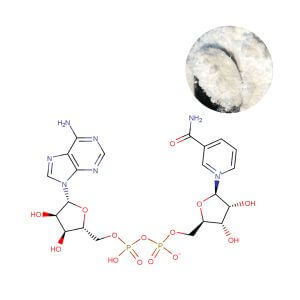
For QA and procurement, this data mandates a shift in COA evaluation. Standalone HPLC purity ≥98% is insufficient without corroborating stability data. Suppliers must provide accelerated stability profiles at 25°C and 40°C over 2-4 weeks, tracking degradation products (ADP-ribose, nicotinamide) via LC-MS. Chiral HPLC separation with a resolution ≥1.5 ensures β/α ratio exceeding 99:1, a critical spec for biological equivalence. Critically, the manufacturing route dictates stability and activity. Chemical synthesis often retains α-NAD+, a chiral isomer devoid of function. Enzymatic synthesis exclusively generates the active β-anomer. When evaluating bulk NAD+ powder, cross-reference COAs with stability records. High-specification suppliers such as Oclean Nutra track degradation byproducts at ppm level, offering verifiable supply-chain resilience that mitigates write-off risks.
Strategic Formulation Synergies: Co-Activating the NAD+ Axis
Direct NAD+ achieves maximum impact when paired with complementary ingredients engaging intersecting pathways. Three synergistic partners, each with distinct evidence, merit strategic consideration for any NAD+-based matrix.
SIRT1 Activation: Resveratrol
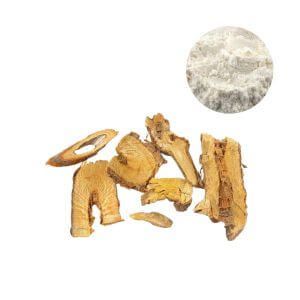
NAD+ serves as the essential substrate for Sirtuin enzymes. Co-administering Resveratrol Powder - specifically the 98% trans-resveratrol isomer - activates SIRT1, creating a "fuel and ignition" dynamic. An 8-week RCT in 122 healthy women (Frontiers in Aging, 2025, indexed in PMC and Scopus) confirmed that 75 mg twice daily of trans-resveratrol significantly reduced wrinkle scores vs. placebo, verifying its systemic bioavailability in a human model.
Mitochondrial Energy Coupling: Coenzyme Q10
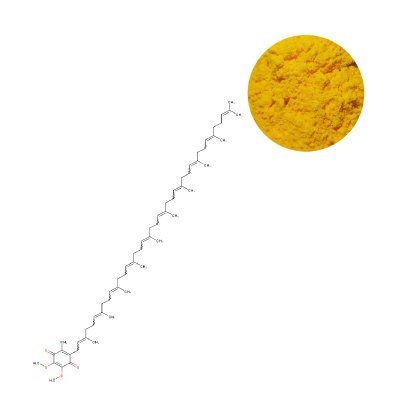
NAD+ optimizes the NADH/NAD+ ratio, facilitating ATP synthesis at Complex I. Ubiquinone CoQ10 Powder plays a complementary role as a membrane-bound electron carrier. A 2026 trial (n=111; 90 days; 200 mg ubiquinol/day) found that while ubiquinol supplementation did not produce group-level differences in cognitive function, regression analyses revealed a positive association between plasma CoQ10 change and memory performance in the ubiquinol group (Antioxidants, 2026).
Mitochondrial Biogenesis: PQQ
While NAD+ sustains existing mitochondrial function, PQQ drives the creation of new mitochondria via the PGC-1α pathway. A recent placebo-controlled trial (n=60; acute exercise model) showed that 20 mg of PQQ Disodium Salt Powder significantly improved the "body listening" subscale (p=0.016), indicating enhanced interoceptive awareness. The NAD+ + PQQ combination offers a "quantity and quality" dual mechanism, positioning formulations for the premium longevity segment.
Market Trajectory and Strategic Sizing
The NAD+ precursor market is scaling rapidly, projected from $347M (2025) to $557M by 2027, with CAGR 12-16% through 2035. The broader enhancer market is forecast from $577M to $1.53B by 2032 (CAGR 15.2%). NMN is tracking toward $11.16B by 2032, but contingent on regulatory clarity. Direct NAD+ powder, with lower geopolitical risk, offers a parallel growth vector for portfolio diversification. Premium enzymatically synthesized β-NAD+ commands a cost premium, but its higher activity vs. α-containing material reduces per-serving requirements, optimizing cost-in-use. This translates to a 15-20% lower active dose per unit, based on comparative bioavailability modeling against chemically synthesized batches.
Conclusion: A Strategic Pivot Beyond Precursor Dependency
Direct NAD+ powder, with enzymatic purity and thermal stability validation, provides a compliant, clinically substantiated alternative. The convergence of clinical data, multi-regulatory clarity, and growth projections makes it a rational choice for R&D and CSOs planning pipelines. Procurement and QA should prioritize suppliers providing chiral purity profiles (β/α ratio), stability data at warehousing temperatures, and degradation byproduct documentation.
For expert guidance on evaluating NAD+ Powder specifications, accessing independent third-party analytical reports, or requesting a reference sample for formulation feasibility, please connect with our technical advisory team. Request a full technical dossier and stability data package to secure your position in the next-generation NAD+ market.
Share this article
Found this helpful? Share it with others!
Related Products
Products mentioned in this article
Related Articles
You might also be interested in
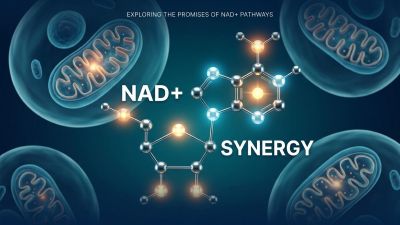
Beyond NAD+ Supplementation: Synergizing NAD+ for Enhanced Cellular Energy
Move beyond NAD+ mono-ingredients. Explore science-backed synergistic combinations, including NMN, PQQ, and Resveratrol, to build high-efficacy longevity formulations that drive cellular energy, clinical results, and market competitiveness.
Want to learn more?
Explore our products or contact our team for personalized solutions and expert advice.