
Phosphatidylserine (PS) Sourcing & Formulation Guide: Sunflower vs. Soy-Derived PS and Synergies with Alpha-GPC
Compare sunflower vs. soy phosphatidylserine on stability, EU compliance, and Alpha-GPC synergy to optimize your cost-in-use. Request COAs and samples to resolve formulation bottlenecks.
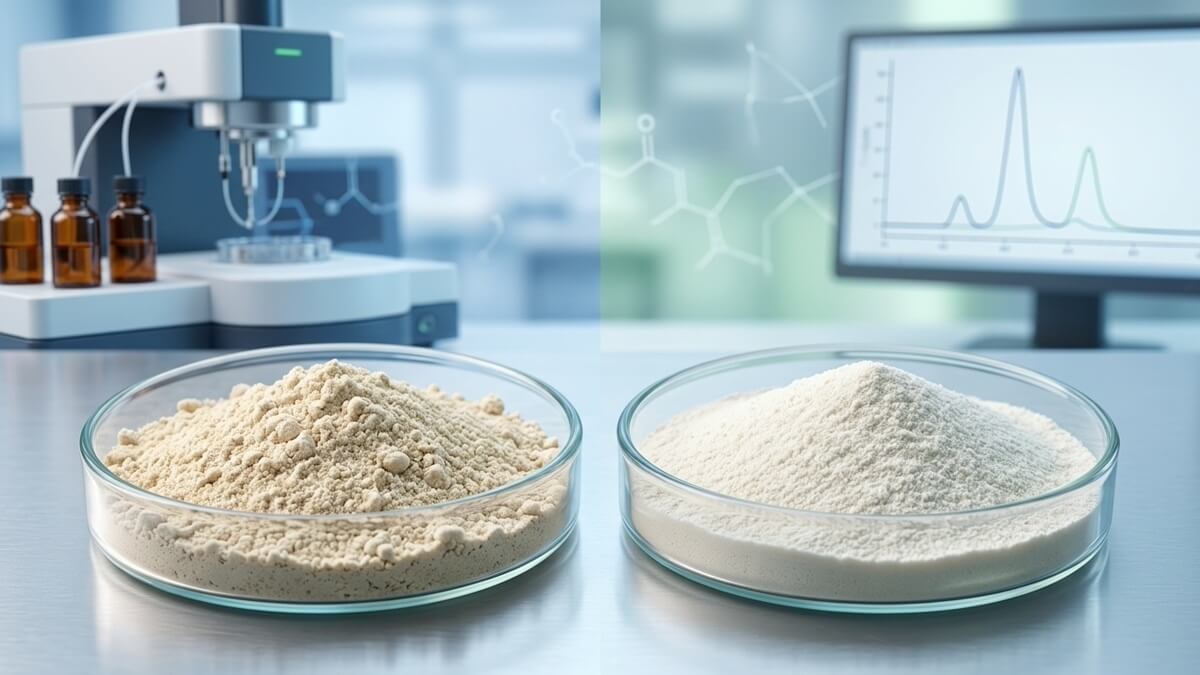
Selecting the right PS source for a cognitive health formulation often begins with a single question-soy or sunflower? That decision quickly branches into deeper trade-offs: allergen labeling, Non-GMO compliance, fatty acid profiles, and whether to pair the ingredient with a choline precursor like Alpha-GPC. This guide dissects each variable from a supply-chain and R&D perspective, using clinical PK data and physical stability benchmarks to inform procurement and formulation decisions.
Source-Level Divergence: Sunflower-PS vs. Soy-PS
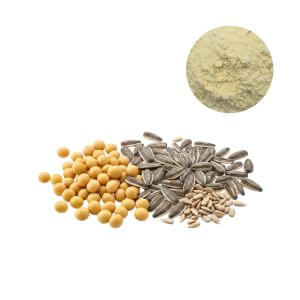
Although both sources deliver the same bioactive serine headgroup, their fatty acid fingerprints and impurity profiles create meaningful differentiation for brand owners. Soy-derived PS contains approximately 47% linoleic acid (C18:2, omega-6) and 7% alpha-linolenic acid (C18:3, omega-3), while sunflower-derived PS contains a substantially higher linoleic acid content, typically in the range of 48-74% depending on the specific product and processing. This higher linoleic load contributes to slightly better thermal stability below 80°C.
For brands targeting clean-label or allergen-free positioning, sunflower-PS offers a natural advantage: it carries no soy allergen risk and is inherently Non-GMO, as commercial sunflower varieties have no transgenic counterparts. Soy-PS, by contrast, requires third-party Non-GMO verification and allergen segregation, adding 5-15% to procurement costs without altering the active PS molecule itself. This cost differential illustrates a common procurement pitfall: comparing per-kilogram pricing alone ignores the effective-dose ratio. Shifting focus to cost-per-effective-dose-factoring in purity and dispersibility-reveals that sunflower-PS often delivers superior value in high-solubility applications.
| Attribute | Soy-Derived PS | Sunflower-Derived PS |
|---|---|---|
| Linoleic acid (C18:2) | Approx. 47% | 48-74% |
| Alpha-linolenic acid (C18:3) | Approx. 7% | 2-5% |
| Water dispersibility (relative) | Baseline (1x) | Superior |
| Non-GMO status | Requires certification | Naturally Non-GMO |
| Allergen risk | Soy allergen present | No common allergens |
| EU Novel Food status | Authorized (2011/513/EU) | Not currently listed |
For R&D teams, this source-level distinction affects both label claims and clinical evidence portability. A 2025 randomized controlled trial in phosphatidylserine powder formulations using sunflower-PS in 209 healthy children aged 8-12 years found no significant differences in primary or secondary outcomes in the total cohort, though a pre-defined subgroup analysis suggested potential benefits in children with below-median baseline cognitive performance (Nutrition Journal, 2025; doi: 10.1186/s12937-025-01264-9). This highlights the need for further research in targeted populations while confirming the safety and tolerability of sunflower-PS.
Synergy with Alpha-GPC: Dual-Pathway Cognitive Support
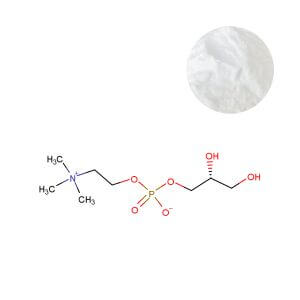
Pairing PS with Alpha-GPC addresses two distinct but complementary mechanisms. PS integrates into neuronal membranes, supporting membrane fluidity and protein kinase C (PKC) activation-pathways critical for synaptic signaling and long-term potentiation. Alpha-GPC, as a highly bioavailable choline donor, crosses the blood-brain barrier and directly fuels acetylcholine synthesis, the primary neurotransmitter for memory and attention.
- PS: Membrane structural integrity + PKC signaling support
- Alpha-GPC: Acetylcholine precursor delivery
- Combined effect: Simultaneous structural and neurotransmitter support
- Target pathways: Cholinergic system + synaptic membrane function
A 12-month randomized double-blind trial in 190 older adults with age-related cognitive concerns demonstrated that a formula combining PS with choline-pathway nutrients (ALA and B vitamins) produced a serum acetylcholine increase of β = 0.441 (95% CI: 0.415-0.468), alongside significant cognitive gains in arithmetic (β = 0.688) and short-term memory (β = 0.600) (Journal of Affective Disorders, 2025; doi: 10.1016/j.jad.2024.09.131). This provides clinical rationale for combining PS with Alpha GPC Powder, though direct combination studies are warranted.
From a procurement standpoint, the dual-ingredient approach consolidates supply chains. Brand owners can negotiate combined volumes for both PS and Alpha-GPC with a single technical partner, reducing supplier qualification overhead and ensuring batch-to-batch consistency across both materials.
From a commercial scale-up perspective, these biochemical synergies must translate into physical process stability, where particle morphology and bulk density directly dictate high-throughput encapsulation line efficiency.
Formulation Scale-Up: Thermal Limits, Hygroscopicity, and Dosage Forms
PS presents specific physical challenges during commercial manufacturing that vary by source and purity grade. Thermal degradation follows a clear temperature-dependent pattern: processing below 80°C for under 30 minutes keeps PS loss below 5%, while exposure to 80-120°C for 30-60 minutes increases degradation to 10-20%. Soft-gel manufacturing, which often involves moderate heat, requires antioxidant protection-0.05% vitamin E reduces degradation by over 50% during 30-minute 100°C exposure.
Hygroscopicity is the second critical variable. PS powder absorbs moisture rapidly above 45% relative humidity (RH), forming semi-colloidal sticky agglomerates that block hoppers and disrupt capsule filling.
At >45% RH, PS flowability collapses, triggering hopper blockages and capsule fill-weight deviations that halt high-speed lines.
Storage below 45% RH and processing at <40% RH are recommended for consistent flow. For gummy applications, which involve 105-110°C cooking, PS must be added via secondary mixing after the slurry cools below 60°C to avoid thermal breakdown. Direct exposure to 105-110°C cooking temperatures would result in substantial PS degradation-with losses potentially exceeding 20% (based on thermal degradation data of 10-20% loss for unsaturated PS at 80-120°C for 30-60 minutes)-which is why secondary mixing below 60°C is the recommended industrial practice.
- Softgels: Use MCT or tocopherol carriers; process <40°C
- Gummies: Secondary mixing below 60°C; keep water activity <0.45
- RTD beverages: 0.02% vitamin E + 0.01% rosemary extract extends 25°C half-life to >6 months
- Tablets/capsules: Maintain ambient humidity <40% RH; avoid high-shear granulation
Sunflower-PS offers a slight edge in aqueous systems due to its higher linoleic content, which improves dispersion in ready-to-drink formulations. Soy-PS, with its higher saturated fatty acid fraction, performs comparably in lipid-based carriers like softgels but requires additional emulsifiers for clear beverage applications.
Analytical Auditing, Supplier Integrity, and Regulatory Mapping
Not all PS purity claims are equal. Routine HPLC-UV testing reports total PS percentage but cannot distinguish phospholipid composition from adulteration with cheaper phosphatidylcholine (PC) or phosphatidylethanolamine (PE). 31P NMR provides a hard countermeasure: it quantifies PS as a molar percentage of total phospholipids without requiring purified PS reference standards (typically with an internal calibrant such as triphenyl phosphate for molar quantification), directly exposing any PC/PE dilution. In supply-chain auditing practices, technical procurement teams require both HPLC purity data and 31P NMR phospholipid profiles as standard release criteria.
Solvent residues represent another layer of process-related risk. n-Hexane, commonly used in extraction, must be controlled to ≤25 ppm, while ethanol residues should fall below 500 ppm. Peroxide value (≤10.0 meq/kg) and acid value (≤5 mg/g) serve as oxidation sentinels-values above these thresholds indicate either aged inventory or improper storage during transit. Brand owners should request these specific parameters in each certificate of analysis (CoA) and test them against supplier declarations.
Regulatory access remains the ultimate gatekeeper for multi-market launches. The table below summarizes the current clearance status across major jurisdictions:
| Market | Soy-PS | Sunflower-PS | Key Restriction |
|---|---|---|---|
| USA (FDA) | GRAS (GRN 186,197,223) | GRAS (GRN 545) | NDI notification may apply |
| EU (EFSA) | Novel Food authorized | Not currently listed | Sunflower-PS requires a full Novel Food application under Regulation (EU) 2015/2283; the "substantial equivalence" concept is no longer applicable under the current regulatory framework |
| Australia (TGA) | Listed medicine | Status unclear | Soy-PS concentration ≤15% in medicines |
| China | New food raw material | New food raw material | Daily limit: 300 mg |
EU authorization is exclusive to soy-derived material under Commission Implementing Decision 2011/513/EU. For global brands, soy-PS remains the only source with confirmed access to all four markets. Sunflower-PS, while fully GRAS in the US, is not currently listed in the EU Novel Food catalogue and requires a full Novel Food application under Regulation (EU) 2015/2283, involving a centralized EFSA safety assessment and European Commission authorization regardless of chemical similarity to the soy-derived version.
Reputable technical suppliers, including those meeting Oclean Nutra's specification framework, typically provide full 31P NMR phospholipid fingerprints alongside standard HPLC purity data, allowing QA teams to verify both identity and purity in a single analytical workflow.
Conclusion: A Decision Framework for PS Sourcing
The optimal PS source depends on three core filters: target regulatory markets, dosage form requirements, and label positioning. Sunflower-PS offers clean-label and allergen-free advantages with preliminary pediatric data, yet lacks EU Novel Food clearance. Soy-PS provides the broadest regulatory coverage and a more established supply base, yet requires allergen segregation and Non-GMO verification. Pairing either source with Alpha-GPC adds clinical rationale through the acetylcholine pathway and consolidates procurement logistics.
Conduct small-scale stability trials under actual process conditions for both sources before full-scale commitment. For technical support, custom blend inquiries, or sample requests, please contact our technical support team.
Share this article
Found this helpful? Share it with others!
Related Products
Products mentioned in this article
Want to learn more?
Explore our products or contact our team for personalized solutions and expert advice.