
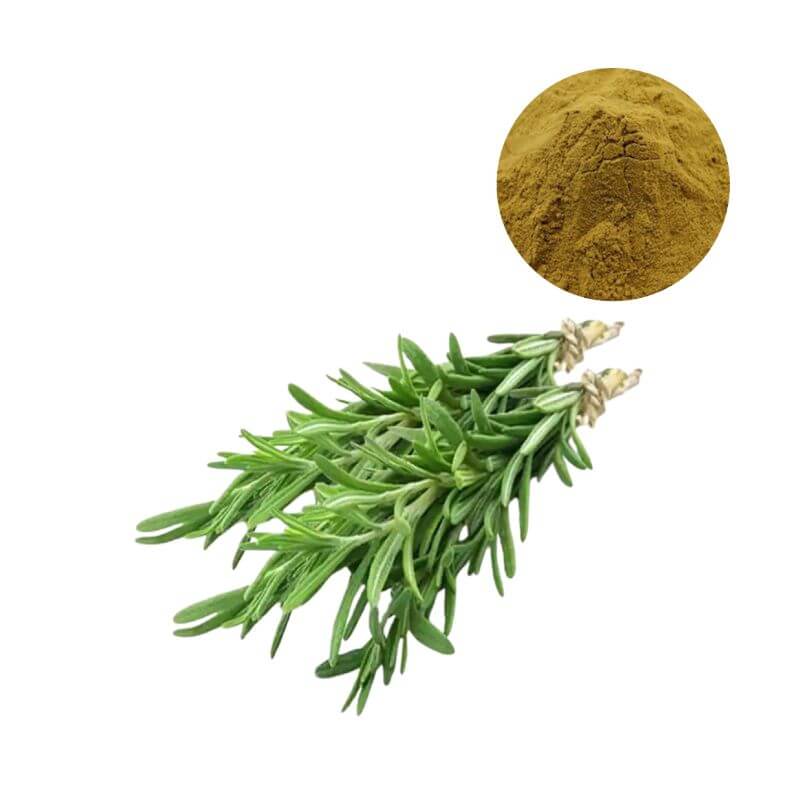
Rosemary Extract Powder
| Product Name | Rosemary Extract Powder |
| CAS Number | 84604-14-8 |
| Appearance | Yellow-brown to light yellow fine powder |
| Rosmarinic Acid | 5% min., 10% min., 20% min. (by HPLC) |
| Carnosic Acid | 10% min., 20% min., 60% min. (by HPLC) |
| Packaging | 1 kg/bag, 5 kg/bag, 25 kg/drum |
| MOQ | 5 kg |
Rosemary Extract Powder - Industrial-Grade Purity and Supply Chain Transparency
Bulk Rosemary Extract Powder entering regulated supplement markets must simultaneously clear customs contaminant screens and batch-to-batch identity verification gates. Spec-verified Rosemary Extract Powder suppliers recognize that trace heavy-metal residuals, pesticide carryover, and near-species botanical adulteration represent the top three rejection triggers at EU and US entry points. Commercial Rosemary Extract Powder lots therefore undergo mandatory multi-step purification plus chromatographic fingerprint archiving, ensuring that every dispatched container carries full audit-readiness from farm to finished-product blending line. Lot-to-lot consistency is further locked through third-party sieve-tower particle profiling and archive-matched HPLC overlay, with all validation data attached to each Certificate of Analysis. Differentiated physical-grade controls on Rosemary Extract Powder determine finished-brand shelf stability and premium-tier market positioning.
Trace Contaminant Purification: The Customs-Clearance Prerequisite
Rosemary leaf biomass carries three contaminant families: pedogenic heavy metals from Mediterranean soils, fungicide residues from field disease management, and solvent traces from industrial ethanol loops. Each category requires a targeted removal action at the correct process node to meet EU and US pharmacopeial thresholds. Meeting sub-ppm residual thresholds pre-emptively depresses port-of-entry hold frequency, shortens customs quarantine windows, and accelerates inventory release upon arrival.
| Contaminant Family | Origin Point | Purification Step | Residual Control |
|---|---|---|---|
| Lead / Cadmium / Arsenic | Soil uptake (pedogenesis) | Chelex-100 chelating resin (pH 4.0-5.0) | Pb ≤ 0.8, Cd ≤ 0.4, As ≤ 0.9 mg/kg |
| Carbendazim / Tebuconazole | Field fungicide application | D101 macroporous resin + clay polarity fractionation | LOQ < 0.01 mg/kg (GC-MS/MS) |
| Phthalates (DEHP, DBP) | Low-purity ethanol entrainment | Activated clay adsorption + redistillation | ND (below 0.05 mg/kg) |
Phthalate elimination at the solvent-recovery stage directly protects brand owners from rapid-alert holds at EU entry points, where plasticizer traces have become a heightened screening priority. Rosemary Extract Powder that has passed resin-assisted heavy-metal depletion and clay-mediated fungicide stripping arrives with a pre-cleared status, compressing customs release cycles and avoiding re-shipment penalties that can erode procurement budgets.
Species-Adulteration Interception via UPLC-QTOF-MS Fingerprinting
Low-cost Salvia officinalis leaf or twice-extracted spent marc can be visually indistinguishable from genuine rosemary but delivers negligible phenolic diterpene content. UPLC-QTOF-MS metabolic fingerprinting with principal component analysis (PCA) against a reference library isolates two decisive ion markers: carnosic acid [M-H]- m/z 331.191 and rosmarinic acid [M-H]- m/z 359.077. A Salvia-dominant feed produces near-absence of the 331.191 ion, while spent-marc material elevates ursolic acid derivatives beyond natural variance.
- Near-neighbor Salvia substitution - PCA scoring flags Salvia admixture with >99% sensitivity; batches failing the relative similarity index (>5% RSI) are rejected at incoming dock.
- Spent-marc re-extraction detection - Oxidation markers (hydroxycarnosic acid derivatives) appear at >0.05% w/w; UPLC-QTOF-MS captures these aging artifacts as discriminant peaks.
- Digital archive matching - Each incoming lot is compared against a master fingerprint database; any batch exceeding 5% RSI is excluded from the supply chain.
Fingerprint-verified Rosemary Extract Powder eliminates the "ingredient substitution risk" that has historically undermined finished-product efficacy trials. Procurement managers enforcing PCA-based identity screening at the receiving bay effectively transfer the cost of adulteration back to non-compliant suppliers, compressing total quality-assurance overhead associated with downstream batch failures.
NRF2-GSH Pathway: Verifiable Cellular Antioxidant Mechanism
Rosmarinic acid executes its cellular protection through a dual mechanism: electrophilic modification of Keap1 Cys151 (activating NRF2 nuclear translocation) and competitive inhibition of NOX4-mediated superoxide generation. This combination depresses oxidative injury markers in a concentration-dependent manner, quantifiable through glutathione regeneration rates and malondialdehyde suppression. Linking pathway activation to oxidative biomarker suppression reduces finished-product overage, compresses capsule dimensions, cuts high-speed line reject rates, and improves patient adherence.
- NRF2-driven endogenous defense - Upregulates HO-1 and NQO1; GSH pools expand by 28%-34% in oxidatively challenged cell models.
- NOX4 superoxide interception - Blocks O2- production, preserving mitochondrial membrane potential (ΔΨm) under UVB or H2O2 challenge.
- In-vivo biomarker validation - SKH1 mouse skin shows 40%-50% reduction in 8-OHdG and protein carbonyl content after topical rosmarinic acid exposure.
The "NRF2-GSH pathway activation" narrative offers finished-brand formulators a verifiable scientific anchor to counter consumer skepticism around antioxidant efficacy. This mechanism translates directly into label-friendly structure/function claims, differentiating products built on rosemary-derived polyphenols from generic antioxidant blends that lack trackable molecular targets.
Oral Bioavailability Enhancement via Hydrophobic Ion-Pair Nanocapsules
Rosmarinic acid's high hydrophilicity historically restricts oral systemic exposure due to poor intestinal membrane permeability. The hydrophobic ion-pair (HIP) strategy using ethyl lauroyl arginate (ELA) as a counter-ion reverses this barrier by encapsulating the ion-pair complex within lipid nanocapsules (Int. J. Pharm., 2023; doi: 10.1016/j.ijpharm.2022.122388). This approach enhances permeability without chemically modifying the rosmarinic acid core, shifting its partition coefficient toward the lipophilic range required for chylomicron-assisted absorption.
- Permeability gain - ELA-based HIP elevates apparent Papp by 4- to 6-fold in Caco-2 monolayers relative to free rosmarinic acid.
- Bioavailability boost - Lipid nanocapsule encapsulation depresses hepatic first-pass extraction; oral AUC increases 2.8-fold in rat pharmacokinetics.
- CMO compatibility - The nanocapsule platform fits standard softgel and veggie-capsule filling lines, requiring no specialized high-shear equipment.
HIP-enabled Rosemary Extract Powder allows R&D formulators to overcome the "low oral bioavailability" limitation that has historically restricted rosmarinic acid's use in systemic-targeting finished products. Distributors offering nano-enabled grades reduce the need for excessive dosing (which raises per-unit costs and expands capsule size), delivering a clear total-cost-of-ownership advantage for brands targeting high-compliance oral delivery formats. In lipid-based softgel systems, combining this HIP-grade Rosemary Extract Powder with natural mixed tocopherols or complementary curcuminoids further extends the antioxidant network through radical regeneration and complementary anti-inflammatory mechanisms, without compromising manufacturing efficiency.
Clean-Label Extraction Architecture: Full Solvent Transparency
Solvent choice during extraction defines the finished ingredient's clean-label eligibility. Rosemary Extract Powder produced through water-ethanol cosolvent systems (with full ethanol recovery and recycle) carries zero chlorinated or Class-2 solvent residues, satisfying European and North American clean-label guidelines. The green-solvent loop, paired with non-irradiated, non-ETO decontamination (pulsed-light + radio-frequency drying), positions this grade as ready-fit for Non-GMO, Allergen-Free, and Vegan certifications.
| Attribute | Clean-Label Grade | Conventional Grade |
|---|---|---|
| Extraction solvent system | Water + food-grade ethanol (>96% recovery) | Acetone / hexane / dichloromethane (partial recovery) |
| Decontamination method | Pulsed-light + RF drying (no residual chemistry) | ETO fumigation or gamma irradiation |
| Allergen / GMO status | Allergen-Free, Non-GMO verified | Often untested or "may contain" |
| Retail clean-label eligibility | Meets "No artificial solvents" retailer standards | Often restricted or requires label disclosure |
Deploying Rosemary Extract Powder with a verifiable clean-label extraction record allows brands to bypass lengthy "solvent residue disclosure" negotiations during retail onboarding. Procurement directors gain the ability to fast-track supplier qualification through major retail compliance portals (e.g., Amazon Clean Label, Whole Foods Quality Standards) without additional manufacturing audits.
Audit-Ready Technical Dossier and Accelerated Procurement
Commercial-scale Rosemary Extract Powder lots are accompanied by a complete technical dossier containing HPLC fingerprint overlays, heavy-metal depletion reports (Eurofins or SGS), and green-solvent certificates. This documentation directly supports MSA-level supplier audits within a compressed timeline, eliminating iterative quality-evidence back-and-forth. Deploying blockchain-verifiable traceability contracts intercepts downstream recall liability and shields procurement balance sheets from contingent legal exposure and penalty clauses. Request spec-verified Rosemary Extract Powder samples with full COA packages, including fingerprint chromatograms and contaminant clearance reports.
Frequently Asked Questions
Share this product
Related Products
Ready to get started?
Contact our team for technical specifications, pricing, and customized solutions.