
Overcoming Bioavailability and Processing Bottlenecks of Luteolin in Solid Dosage Forms via Advanced Delivery Systems
Overcome luteolin's low solubility, thermal sensitivity, and poor flowability in solid dosage manufacturing. This technical guide evaluates advanced microencapsulation platforms and equipment scale-up parameters for reliable production.
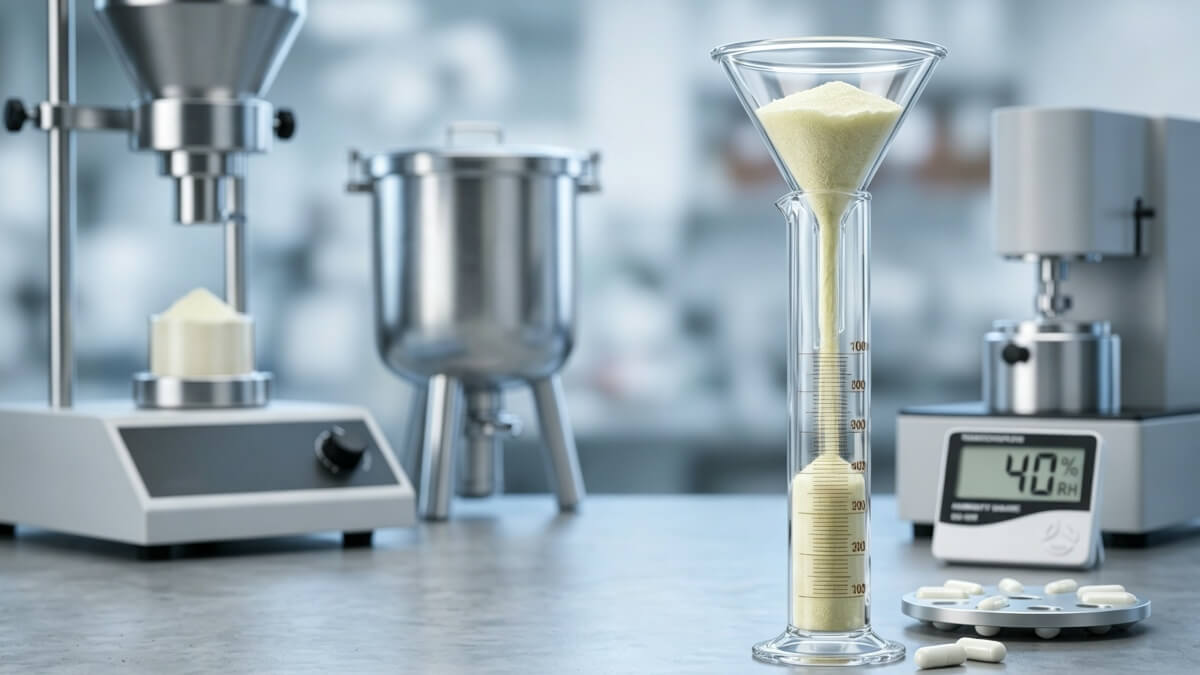
Premix formulations often turn problematic when active ingredients introduce conflicting physical properties-poor flow leads to feeder blockage, hygroscopicity causes caking, and low solubility undermines systemic absorption. For formulators scaling solid-dose luteolin products, these interrelated failures routinely derail pilot runs and inflate batch rejection rates. This guide dissects the fundamental physical chemistry behind luteolin's processing difficulties, maps advanced microencapsulation and carrier-based strategies validated by quantitative performance data, and establishes equipment-specific control parameters for reliable commercial production.
Physical-Chemical Barriers Defining Luteolin's Processing Limits
Luteolin (3',4',5,7-tetrahydroxyflavone) presents a combination of solid-state and solution-phase properties that directly compromise both powder handling and oral absorption. Its moderate lipophilicity (XLogP3 = 2.53) and low aqueous solubility (luteolin powder typically exhibits 3.01 µg/mL solubility at 35°C) create a dissolution-rate-limited absorption profile. This thermodynamic barrier is compounded by thermal degradation that accelerates at elevated temperatures, with an activation energy of 51.4 kJ/mol (Journal of Food Processing and Preservation, 2017), following first-order kinetics-meaning that standard granulation or spray-drying inlet temperatures significantly accelerate activity loss.
From a powder engineering standpoint, uncompressed luteolin exhibits a bulk density range of 0.30-0.60 g/mL (typical 0.47) and a tapped density of 0.40-0.80 g/mL (typical 0.61). These translate to a calculated Carr Index of approximately 23% and a Hausner Ratio of 1.30, placing the material at the "Passable flowability" grade per USP <1174>. This grade indicates that the powder "may hang up" during high-speed encapsulation (40,000-100,000 capsules/hour), and its documented hygroscopicity further exacerbates feeder clogging and content uniformity drift when exposed to ambient moisture.
Carrier-Based Delivery Systems: Dissolution and Bioavailability Benchmarks
Effective delivery architectures must address both the dissolution barrier and the thermal sensitivity of luteolin simultaneously. The β-Cyclodextrin Metal-Organic Framework (CD-MOF) carrier system offers a validated platform with a 14.67 wt% loading capacity. This architecture transforms crystalline luteolin into an amorphous state within the MOF matrix, producing a 4.50-fold increase in dissolution rate (International Journal of Pharmaceutics: X, 2024; doi: 10.1016/j.ijpx.2024.100250). Pharmacokinetic profiles in healthy rats confirmed a 4.04-fold oral bioavailability improvement, rising to 11.07-fold in liver-compromised models-demonstrating that carrier selection directly determines the therapeutic exposure achievable from a given luteolin dose.
Beyond CD-MOF platforms, lipid-based carriers provide processing-specific advantages where thermal protection is paramount. Whey protein isolate (WPI)-coated liposomes achieved an 86.44% encapsulation efficiency with uniform 188.17 nm particle size (PDI 0.174) (full-text data from the same study), and differential scanning calorimetry confirmed enhanced thermal stability relative to uncoated vesicles (Food Chemistry, 2024; doi: 10.1016/j.foodchem.2023.137786). Crucially, the encapsulated luteolin retained 86.36% DPPH scavenging activity and 82.86% reducing power-quantitative evidence that protection against processing heat does not compromise the active's antioxidant functionality, a critical factor for finished product label claims. This technological differentiation directly enables premium label claims such as "heat-stable antioxidant activity" or "clinically-relevant absorption kinetics," positioning finished products above commodity-grade luteolin offerings that lack validated delivery-system performance data.
As a comparative industrial benchmark, solid dispersion with PVP40 has demonstrated approximately 250-fold solubility enhancement and 95% dissolution at 120 minutes, with beagle dog studies reporting 348% relative bioavailability. While effective, the carrier-to-active ratio in solid dispersions is typically higher than CD-MOF systems, making the latter more attractive for high-dose or size-restricted capsule formats.
From a commercial scale-up perspective, these validated carrier platforms directly inform capital equipment decisions-dictating blender capacity, dryer residence time, and dehumidification system sizing for multi-ton batch production. The transition from laboratory-scale feasibility to factory-floor reliability hinges on translating these performance benchmarks into actionable equipment specifications.
Scale-Up Dynamics: Equipment Matching and Process Window Definition
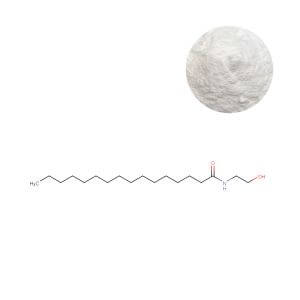
Transitioning from lab-scale blends to production-scale runs requires strict control over powder rheology and environmental conditions. The modified luteolin premix-incorporating palmitoylethanolamide powder as a co-processing aid-should achieve a target Carr Index below 20% and Hausner Ratio under 1.25 to ensure reliable auger feeding at production speeds.
Key scale-up parameters derived from rheological assessment include: V-blender fill volume maintained at 50-65% of total capacity; geometric mixing sequence (1:1 → 1:5 → 1:10 stepwise incorporation); total post-lubrication mixing time not exceeding 5 minutes to avoid over-blending that promotes segregation; and a maximum manufacturing area relative humidity of 45% to prevent moisture-induced cohesion. For rotary tablet presses, the lubricated premix should be evaluated for sticking tendency using compression force profiling across 5-25 kN, with ejection force monitoring as the primary sticking indicator. For encapsulation lines, weight variation sampling should be performed every 15 minutes during line qualification to confirm that fill weight RSD remains within USP <905> acceptance criteria. For high-speed rotary presses, pre-compression at 2-4 kN and main compression at 12-18 kN maintain 6-10 kP hardness and prevent capping.
Finished Product Quality Auditing and Stability Specifications
Procurement and quality assurance teams should establish a technical specification framework that moves beyond basic identity and purity tests, focusing instead on performance-linked quality attributes. For solid dosage forms containing encapsulated luteolin, Oclean Nutra recommends the following critical audit parameters as benchmarks for supplier qualification:
| Quality Attribute | Acceptance Criteria | Test Method Reference |
|---|---|---|
| Bulk / Tapped Density | 0.40-0.70 g/mL / 0.55-0.85 g/mL | USP <616> / <1174> |
| Carr Index (target) | < 20% (improved from ~23% unmodified) | Calculated from USP <616> |
| Particle Size Distribution (D90) | < 250 µm for carrier blends | Laser diffraction, USP <429> |
| Water Activity (Aw) at release | < 0.35 | Chilled-mirror dew point |
| Encapsulation Efficiency | ≥ 80% for carrier-based systems | HPLC assay, USP <621> (refer to DOI: 10.1016/j.foodchem.2023.137786) |
For accelerated stability assessment, 40°C / 75% RH testing over 6 months should demonstrate luteolin assay retention within 95-105% of initial label claim, with dissolution profile remaining above 80% at 45 minutes in pH 6.8 phosphate buffer. Suppliers should provide documentary evidence of GMP compliance at a minimum; certification to FSSC 22000 or NSF/IPEC GMP further strengthens supply chain integrity. Capsule disintegration in SGF should not exceed 15 minutes, and 12-month dissolution at 25°C/60% RH must stay within ±10% of the initial release profile.
Accelerated stability at 40°C/75% RH remains the definitive gatekeeper; batch rejection from caking or potency drift erodes profitability faster than any raw-material cost differential.
Formulating for the Cognitive Health and Inflammation Response Segment
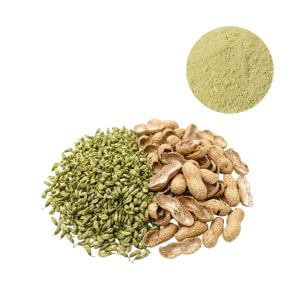
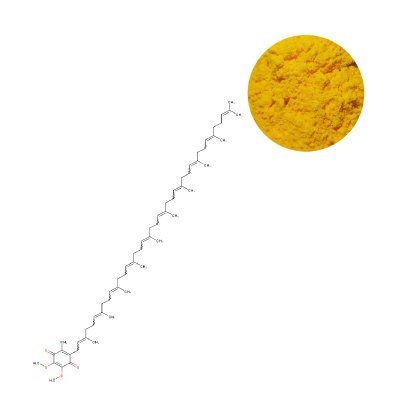
For brands targeting neuro-inflammatory pathways and cognitive support, pairing a bioenhanced luteolin carrier system with a complementary ingredient stack creates label claims that resonate with active, aging consumers. cold-water-dispersible CoQ10 powder offers strong synergy through its mitochondrial energy support mechanism, particularly when formulated alongside palmitoylethanolamide (PEA). Research on the co-ultraPEALut combination points to enhanced mast cell stabilization and microglial modulation-complementary pathways that reinforce the oxidative defense and inflammatory balance narrative. This three-ingredient architecture can be delivered in a single hard-shell capsule using the pre-blended, flow-enhanced luteolin premix as the foundational carrier for the entire active matrix.
From Technical Data to Production-Ready Premix: Next Steps
The quantitative evidence presented-spanning carrier loading capacity, dissolution enhancement, thermal protection, and processability metrics-establishes clear performance boundaries for commercial-scale luteolin formulations. Realizing these benefits requires a partner capable of translating these parameters into a consistent, validated premix at lot sizes matching your production volume.
To accelerate your development timeline, request the "Luteolin Flowability-Enhanced Premix Sample Kit" containing pre-weighed active and functional excipients for direct compression or encapsulation trials. The formulation team is available for technical consultations addressing your specific process challenges-from roller compaction parameters to encapsulation weight variation troubleshooting. Access technical datasheets and initiate sample requests through our dedicated formulation support team.
Share this article
Found this helpful? Share it with others!
Related Products
Products mentioned in this article
Want to learn more?
Explore our products or contact our team for personalized solutions and expert advice.