
Berberine HCl vs. Phytosome vs. Dihydroberberine: A B2B Selection Guide to Bioavailability, Formulating Cost, and Global Compliance
Scale metabolic formulations with confidence. This B2B guide compares Berberine HCL, Phytosome, and Dihydroberberine across bioavailability, powder processing, Cost-in-Use, and global compliance to streamline procurement decisions.

Choosing a berberine format based solely on single-dose AUC often leads to production nightmares - poor powder flow, sticky punches, or failed stability tests in tropical climates. For R&D and procurement leaders, the real decision matrix includes processability, supply chain traceability, and region-specific regulatory tolerance. This guide dissects the technical boundaries between crystalline HCl, phospholipid phytosomes, and the reduced dihydroberberine metabolite, using empirical industrial metrics rather than marketing claims.
Physicochemical Benchmarks: Crystalline Forms and Bulk Powder Behavior
Standard Berberine HCl is a crystalline hydrochloride salt with a decomposition point of 204-206°C. Its solid-state complexity arises from multiple hydrate forms: the anhydrate and monohydrate are highly hygroscopic and convert to the dihydrate at just 12% relative humidity, a critical storage and processing threshold. For high-speed tableting, using a granulated grade of crystalline Berberine HCl Powder with a narrow 80-100 mesh fraction ensures stable bulk density (≥0.400 g/mL) and a repose angle near 37°, which calls for 0.5-1.0% glidant addition to avoid hopper bridging. XRPD patterns confirm the anhydrate form undergoes rapid conversion at elevated humidity, while 80-100 mesh particles enhance blend uniformity in high-shear mixers.
| Physical Property | Berberine HCl (crystalline) | Phytosome complex | Dihydroberberine |
|---|---|---|---|
| Solid-State Nature | Polymorphic (anhydrate/dihydrate) | Amorphous lipid aggregate | Reduced congener (limited data) |
| Bulk Density (g/mL) | ≥0.400 (granulated) | <0.30 | Not standardized |
| Hygroscopic Onset (ERH%) | 12% (anhydrate → dihydrate) | ~40% (lipid barrier) | Unknown |
| Angle of Repose | ~37° (glidant recommended) | Cohesive, >45° | Not characterized |
Phytosome complexes lack a defined crystal lattice, leading to poor blending uniformity and lower bulk density, complicating die filling in rotary presses. Dihydroberberine remains insufficiently profiled for continuous manufacturing; its particle morphology and flow parameters are not publicly benchmarked, introducing scale-up uncertainty.
Bioavailability Divergence: From P-gp Efflux to Gender-Specific PK
Oral absorption of Berberine HCl is inherently constrained to less than 1% of the administered dose, primarily due to P-glycoprotein (P-gp) efflux in enterocytes and hepatic CYP3A4-mediated first-pass metabolism. A 2022 comprehensive review consolidates the mechanistic evidence that both transporters constitute rate-limiting checkpoints for systemic exposure (Beni-Suef University Journal of Basic and Applied Sciences, 2022; doi: 10.1186/s43088-022-00196-1). This dual barrier explains why standard HCl requires 1,500 mg daily to achieve minimal plasma levels.
Phytosome formulations improve AUC by approximately 10-fold through enhanced membrane partitioning, yet this gain requires proprietary carriers and incurs patent-related costs. Dihydroberberine is the reduced (hydrogenated) form of berberine that bypasses the rate-limiting intestinal microbial reduction step required for standard berberine absorption, achieving a 5-fold higher absorption rate and superior AUC at one-fifth the molar dose, but its supply chain is limited to small-batch synthesis. A recent human PK study (published in 2025) revealed an additional dimension: females exhibited a 2.8-fold higher AUC and a 3.6-fold higher Cmax than males (P < 0.001) after identical oral dosing, suggesting that sex-specific absorption may outweigh formulation differences in certain demographics.
From a commercial scale-up perspective, PK metrics are not merely academic - they dictate whether a formulation can be run on high-throughput rotary presses without compromising fill-weight uniformity or requiring costly post-processing steps. Translating absorption data into production reality demands a parallel assessment of powder mechanics and equipment tolerance.
Production-Scale Processing: Flow, Compression, and Gummy Integration
In high-speed rotary tableting, crystalline HCl shows moderate compressibility but tends to laminate at high drug loads without wet granulation.
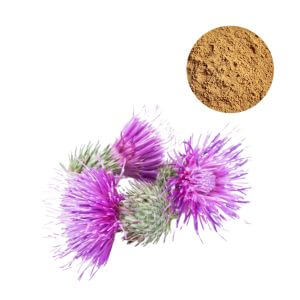
Granulation is not optional for high-load HCl tablets - it determines whether a production run yields 98% or 82% of target core weight.Its thermal stability - 91.1% recovery after dry-heat stress - supports standard 90-105°C gummy cooking cycles, though the intense bitterness demands microencapsulation or cyclodextrin complexation, adding 15-20% to formulation costs. For stick-pack and beverage applications, photodegradation is a quantifiable risk: simulated sunlight reduces berberine content by 8.8% under near-neutral pH, necessitating UV-opaque packaging or inclusion of light stabilizers. When combining with polyphenolic co-actives, a stabilized Milk Thistle Extract Powder must be evaluated for water-activity compatibility to prevent moisture migration and caking during storage. Carr index of 17.5% and Hausner ratio of 1.21 indicate acceptable flow for standard encapsulation but require lubrication optimization for rotary presses.
Phytosome complexes, due to their lipid nature, increase oxidation risk during prolonged mixing and may require nitrogen blanketing. Dihydroberberine's processing parameters are less extensively characterized in open literature compared to crystalline HCl, making it a higher-risk choice for automated lines without extensive in-house validation. For gummy producers, the HCl form remains the most heat-stable option, provided that a robust taste-masking strategy is implemented.
Supply Chain Forensics: Impurity Profiling and Cost-In-Use Realities
The impurity fingerprint of Berberine HCl directly reflects its production route. Botanical extraction yields up to seven related alkaloids (jatrorrhizine, palmatine, berberrubine, etc.), whereas synthetic routes typically show only five process-related impurities. The critical supply chain vulnerability lies in nitrosamine formation: synthetic pathways using secondary amines and nitrites require strict ICH M7 risk assessments and detection limits at 10-9 g/g via LC-MS. By contrast, aqueous botanical extraction inherently avoids these reagents, offering a cleaner toxicological profile. A 2023 salt-form study demonstrated that while physical mixing of berberine and silybin leads to inconsistent dissolution, a co-processed salt achieved 2.2-fold higher plasma AUC and 4.5-fold greater liver distribution of silybin in animal models (Journal of Ethnopharmacology, 2023; doi: 10.1016/j.jep.2023.117238). This validates the inherent synergy of the berberine-silybin pair, independent of proprietary carriers.
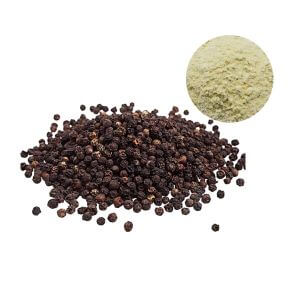
For procurement directors, the primary sourcing error is anchoring on price-per-kilogram rather than cost-per-effective-dose. A format with 2x higher raw material cost but 5x better absorption often yields superior unit economics. The Cost-In-Use calculation clearly favors physical blends. Adding Piperine 95% Powder at 5-10% of the berberine dose increases formulation COGS by only 10-20% while leveraging piperine's documented bioavailability-enhancing properties (30-200% range reported across various compounds in the 2022 review). In contrast, phytosome or DHB routes incur 2-5x higher per-serving costs without proportional gains in processability or supply security. Supply chains adhering to the Oclean Nutra technical specification require full HPLC-Q-TOF-MS/MS impurity profiling and validated nitrosamine testing, ensuring batch-to-batch reproducibility across multi-ton campaigns.
Regulatory Crossroads: Navigating the EU, US, and Australian Frameworks
The regulatory outlook for berberine varies sharply by region. In the United States, it holds GRAS status and is marketed as a dietary supplement under DSHEA, with annual sales exceeding $96 million. Australia maintains a clear TGA listed medicine pathway, with multiple active ARTG entries requiring mandatory warning labels. The European Union, however, poses the highest near-term risk: EFSA's January 2026 draft opinion concluded that no safe intake level could be established, potentially leading to Annex III restrictions under Regulation (EC) 1925/2006. Brands planning multi-regional launches must therefore adopt flexible formulation strategies that can pivot to alternative bioenhancer combinations if EU restrictions materialize.
- United States: GRAS status; structure/function claims permitted; avoid disease treatment language.
- European Union: EFSA draft opinion (2026) - "no safe level" - possible Annex III ban.
- Australia: TGA listed medicine; multiple active ARTG entries; mandatory warning labels (post-July 2023 batches).
- Canada/Japan: NHP and functional food frameworks; pre-market approval required.
Technical Verdict and Next Steps for Formulators
The most commercially resilient berberine format is not necessarily the one with the highest single-dose AUC, but the one that offers predictable flow, low hygroscopic risk, supply chain transparency, and regulatory flexibility. Crystalline HCl combined with conventional bioenhancers (piperine or silymarin) delivers an optimal balance of cost, processability, and compliance for global mass-market products. For specialized premium lines with limited regional distribution, phytosome or DHB may offer short-term differentiation, provided that patent and regulatory costs are fully accounted. To discuss customized particle-size specifications, stability protocols, or multi-component blend design for your production environment, consult our application specialists for tailored technical support.
Share this article
Found this helpful? Share it with others!
Related Products
Products mentioned in this article
Related Articles
You might also be interested in

Breaking Berberine HCL Bioavailability Limits: Next-Gen Delivery Carriers and Frontier Glycemic Mechanisms
Explore how next-gen delivery systems, updated clinical evidence, and shifting global regulatory boundaries reshape berberine HCL formulation strategies to bypass absorption limits and safeguard market access.
Want to learn more?
Explore our products or contact our team for personalized solutions and expert advice.