
Pterostilbene vs. Resveratrol: Bioavailability, Processing, and Cost-In-Use Benchmarks for Next-Gen Longevity Formulations
Compare pterostilbene and resveratrol across PK exposure, polymorphic stability, and cost-in-use economics to optimize next-gen longevity formulations and eliminate high-speed tableting downtime.

For R&D and procurement leaders, upgrading a longevity formulation requires more than comparing purity percentages. The real differentiators lie in polymorphic stability, systemic exposure, scale-up behavior, and supply-chain analytics. This guide contrasts pterostilbene and resveratrol across these high-impact dimensions, delivering the quantitative framework needed to justify a science-backed ingredient transition without compromising production economics or regulatory standing.
Polymorphic Forms, Solubility, and Physical Processing Constraints
Pterostilbene exists in at least five polymorphic modifications (Forms I-V). Form I, with a melting point of 94-96°C, is the thermodynamically stable commercial standard. Lower-melting forms such as Form IV (76°C) introduce scale-up risk, as heat from blending or compaction can induce polymorphic conversion, altering dissolution rates and bioavailability. In contrast, resveratrol (mp 253-255°C) shows no such polymorphism concerns but both compounds are practically insoluble in water, and resveratrol undergoes extensive first-pass metabolism. Pterostilbene is classified as BCS Class II (low solubility, high permeability) with Log P 3.6. For solid dosage forms, crystalline trans-pterostilbene powder generally provides adequate flowability, but formulators should validate performance on rotary presses, particularly regarding punch-face sticking at active loads exceeding 30%. For standard powder blends, 80-mesh sieving ensures content uniformity with an RSD below 3%, supporting consistent die fill during high-speed encapsulation.
| Physical Property | Pterostilbene (Form I) | Resveratrol | Scale-Up Impact |
|---|---|---|---|
| Melting Point | 94-96°C | 253-255°C | Pterostilbene compatible with moderate heat; resveratrol tolerates higher temps |
| Aqueous Solubility | ~0.021 mg/mL (practically insoluble) | ~0.03 mg/mL (practically insoluble) | Both require advanced delivery for aqueous matrices |
| Log P (octanol-water) | 3.6 | 3.1 | Pterostilbene offers superior membrane penetration |
| Polymorphs Reported | 5 (Form I-V) | Multiple (incl. amorphous) | Form I mandatory to avoid processing-induced changes |
| BCS Class | II | II | Permeability high; solubility is the rate-limiting step |
Pharmacokinetic Differentiation: AUC, Clearance, and Dose Efficiency
Equimolar oral dosing in validated rat models reveals striking differences: pterostilbene achieves ~80% bioavailability versus ~20% for resveratrol - a fourfold advantage. Total systemic exposure (AUC0-inf) is 4,090 ng·h/mL for pterostilbene compared to 906 ng·h/mL for resveratrol, a 4.5x increase. Peak concentration (Cmax) reaches 7,340 ng/mL versus 3,450 ng/mL. Clearance for pterostilbene is markedly slower, with an apparent oral clearance (CL/F) of 11.4 L/h/kg compared with 21.3 L/h/kg for resveratrol, yielding a quantifiable half-life of 2.9 hours for pterostilbene, whereas resveratrol is cleared much more rapidly with no reliably quantifiable terminal half-life. From an analytical perspective, HPLC separation at 254 nm effectively excludes cross-interference from other stilbenoids, ensuring quantitative specificity for the target analyte. These differences are enzymatically grounded: pterostilbene demonstrates greater structural stability during hepatic metabolism, effectively resisting rapid Phase I/II conjugation compared to resveratrol (Molecules, 2022; doi: 10.3390/molecules27196316). For formulation teams, this means that trans-resveratrol 98% powder at 250 mg can be replaced by 100 mg of pterostilbene, achieving superior systemic exposure with a 60% dose reduction - directly translating to smaller capsules, lower excipient costs, and improved consumer adherence. The procurement conversation should pivot from per-kilogram quotes to cost-per-effective-dose: at 4.5x higher AUC, the effective-dose economics of pterostilbene consistently outperform resveratrol across realistic premium scenarios.
From a commercial scale-up perspective, these pharmacokinetic advantages must be weighed against each ingredient's behavior on automated high-throughput lines - where particle size distribution, flowability, and compaction response directly determine production yield and equipment wear.
Scale-Up Dynamics: Thermal Stability, Aqueous Systems, and Synergistic Pairing
Industrial processing exposes pterostilbene to heat, shear, and light. The compound is stable under normal conditions but degrades under UV exposure and sustained high temperatures. For soft-gel or gummy production (90-105°C), formulators must incorporate antioxidants and light-protective packaging to limit degradation. For RTD beverages or liquid shots, the low solubility (practically insoluble) demands cyclodextrin inclusion, cocrystal formation, or nanoemulsion strategies - eight cocrystals have been characterized, including those with picolinic acid and nicotinamide. These approaches improve bioaccessibility up to 2.5x but add complexity. In high-speed tableting, the sticking rate for stable Form I pterostilbene is typically below 0.5%, whereas metastable forms may exhibit rates above 3% under equivalent shear forces, making this a critical supplier audit checkpoint.
Polymorphic form verification is not academic - it directly dictates sticking rates that can shift from 0.5% to over 3% on high-speed rotary presses.Beyond its standalone performance, pterostilbene complements NAD+ precursors. A 2023 review identified nicotinamide riboside co-administered with pterostilbene as a leading human NAD+-boosting combination (The Journals of Gerontology: Series A, 2023; doi: 10.1093/gerona/glad106). This synergy extends to high-purity NMN powder, where NMN elevates NAD+ substrate while pterostilbene supports SIRT1 activity, delivering complementary pathway coverage that helps maintain cellular energy balance and oxidative stress modulation - a strong proposition for premium combination products.
- Request polymorphic confirmation via PXRD to verify Form I
- Specify isomer purity ≥99% trans; the cis-isomer shows significantly lower activity in antioxidant assays
- Evaluate particle size distribution and bulk density for high-speed filling
- Conduct stability trials under actual processing conditions (heat, light)
- Validate solubilization strategy for aqueous formats early in development
Analytical Rigor, Isomer Verification, and Supply-Chain Integrity
Quality assurance demands method specificity. The validated HPLC method with UV detection at 254 nm (C18 column) achieves a detection limit (LOD) of 2.65 ng/g, linear range 1-75 μg/g, and recovery rates of 98.10-101.93%. This surpasses the capability of simple UV-Vis spectrophotometry, which cannot distinguish trans- from cis-isomers or detect synthesis-related impurities. For cis-pterostilbene - an inactive or weakly active degradation product - verification of trans-isomer purity is non-negotiable. Residual solvent and catalyst profiles must be audited based on the production route (synthetic vs. plant-derived), as each route carries a distinct impurity fingerprint that requires targeted analytical methods for proper characterization. Technical specifications such as the Oclean Nutra grade routinely require isomer verification and polymorphic form release. Supplier audits should include full chromatographic data, not just summary COAs, to ensure batch-to-batch consistency and intercept any potential adulteration.
Cost-In-Use Modeling and Regulatory Status Summary
Cost-In-Use (CIU) analysis reframes the economic calculus. With a typical pterostilbene dose of 100 mg versus 250 mg for resveratrol, and assuming a per-kilogram price premium of 3-4x, the per-serving cost for pterostilbene becomes 1.2-1.6x that of resveratrol - not the 3-4x implied by raw material quotes. Beyond raw unit cost, the overall synthetic yield differential (e.g., 85% versus 72% per batch) directly influences the single-impurity accumulation profile, affecting long-term supply economics. This premium is often offset by savings in excipients, capsule shells, packaging, and shipping, along with the ability to command higher retail prices for premium science-backed formulations. Regulatory clarity is also critical. Pterostilbene holds self-affirmed GRAS status in the U.S. (ADI 30 mg/kg) and is considered a novel food requiring pre-market authorization in the EU. Procurement directors should request full GRAS documentation and verify source-specific regulatory clearance for their target markets.
Conclusion: A Data-Driven Upgrade Decision
The technical evidence is compelling: pterostilbene delivers 4.5x higher systemic exposure, a 60% dose reduction, and a clear mechanistic synergy with NMN, all while maintaining manageable processing constraints through proper polymorphic and formulation controls. The CIU analysis shows that the per-serving cost differential is modest and often recoverable through secondary savings. For R&D, procurement, and compliance leaders, transitioning from resveratrol to pterostilbene is not a speculative upgrade - it is a mathematically justified, data-backed strategic move for next-generation longevity products.
Access complete specification documentation and request a technical sample for stability verification.
Contact the technical support team for detailed COA review and custom trial guidance: Connect with the technical support team.
Share this article
Found this helpful? Share it with others!
Related Products
Products mentioned in this article
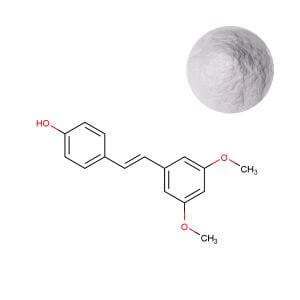

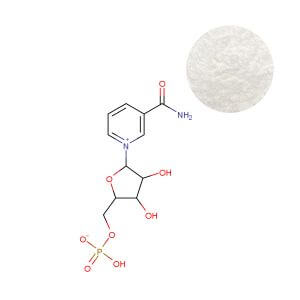
Related Articles
You might also be interested in
Beyond Resveratrol: Optimizing Bioavailability with Pterostilbene in Longevity Formulas
Pterostilbene is redefining the longevity market by solving the bioavailability gap of resveratrol. This article analyzes its superior pharmacokinetics, synergistic pairings with NMN and quercetin, and critical B2B formulation insights.
Want to learn more?
Explore our products or contact our team for personalized solutions and expert advice.