
Spermidine 3HCl in Low-Dose Capsules: Solving Segregation & Moisture via Microencapsulated Premix
Low-dose spermidine 3HCl capsules fail content uniformity and assay in scale-up due to segregation and moisture bridging. Microencapsulated premix moves uniformity and moisture control to the intermediate.

A capsule batch that should never have failed content uniformity failed instead, even though the lab-scale trial three months earlier had been flawless. The filler was not malfunctioning, and the blend time had not been shortened. The culprits were particle size and density mismatch between the low-dose active and excipient carriers, compounded by the intrinsic hygroscopicity of the trihydrochloride crystal, which began bridging and segregating the moment hopper shear and station residence time entered the picture. This guide dissects the engineering roots of both failure modes and outlines a microencapsulated premix architecture that moves uniformity and moisture control from the finished-blend stage to the intermediate stage.
Two Distinct Failure Modes: Particle Segregation and Moisture-Induced Crystal Bridging
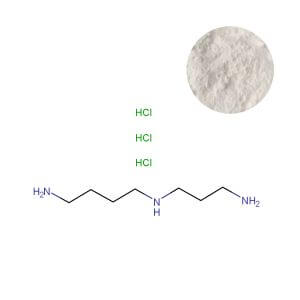
Randomized trials of oral spermidine have used daily doses as low as 0.9-1 mg delivered in capsule form, and spermidine trihydrochloride powder presents as a micron-scale crystalline powder whose particle size differs significantly from standard excipients such as MCC or dibasic calcium phosphate. When such a blend enters a V-blender or hopper, particle size and density differences drive convective and shear segregation. The active migrates and settles, producing content uniformity failure that remains invisible in small-scale manual mixing.
Meanwhile, the three protonated amine groups of the trihydrochloride form confer high hydrophilicity to the crystal lattice. Industry technical guidance places the onset of rapid moisture uptake at RH 45%-50%, where the crystalline powder begins absorbing ambient moisture, forming liquid bridges between particles and triggering agglomeration, hopper bridging, and localized assay dilution. This localized dilution reflects a moisture-driven shift in the as-is basis and should be distinguished from chemical degradation, which requires stability-indicating analytical methods for confirmation. The two mechanisms compound, explaining why scale-up failure surfaces during accelerated stability audits while its root cause sits in powder engineering.
| Material | Bulk/Tapped Density | Carr Index | Moisture | Observed Risk |
|---|---|---|---|---|
| Spermidine trihydrochloride (liposomal grade) | 410 / 710 g/L | approximately 42% | Not disclosed | High hygroscopicity; low bulk density |
| NMN (granulated) | ≥0.7 g/mL | Not disclosed | Not disclosed | Hygroscopic; hydrolysis-prone |
| Resveratrol blend | Not disclosed | 23%-35% | 3.95%-5.67% | Mixed flow; upper range poor |
The 42% Carr index is calculated from a liposomal spermidine trihydrochloride COA (bulk 410 g/L, tapped 710 g/L); bare-crystal flow parameters are not publicly standardized, so the case for premix design rests on the RH 45%-50% industry-guidance onset range and particle-size mismatch with excipient carriers. NMN and resveratrol figures reflect supplier specifications and published blend studies and serve as comparative references, not absolute material constants.
Microencapsulated Premix: Confining Moisture Behind the Wall System
Microencapsulation shifts the formulation logic from making the finished blend uniform to delivering an intermediate that is already uniform and moisture-protected. In a W/O/W emulsion architecture, spermidine trihydrochloride is encapsulated within an aqueous phase stabilized by soy protein isolate, dextran, and sodium alginate through external gelation, then freeze-dried into microcapsules.
Published work on freeze-dried microcapsules loaded with beech mushroom-derived spermidine reports encapsulation efficiency of 56.44%-98.13%, water activity of 0.2139-0.2279, microcapsule moisture content of 2.14%-2.88%, and emulsion-stage encapsulation efficiency of 92.90%-99.76% (Foods, 2026; doi: 10.3390/foods15101734). These data describe that specific system and serve as a wall-system design reference, not as direct performance proof for the trihydrochloride salt.
For capsule formulators, a properly engineered wall system can hold the active in a micro-environment at aw of approximately 0.22; because aw and ambient RH are different dimensions, this value should not be read as a direct numerical offset against the RH 45%-50% industry-guidance onset range. The moisture driving force relocates from the active particle surface to the wall exterior, where incoming moisture meets a buffer layer before reaching the core.
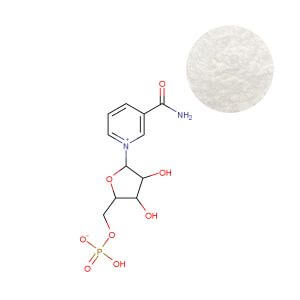
The logic extends when spermidine trihydrochloride is considered for co-microencapsulation with NMN powder in the same premix; NMN is likewise a low-dose, high-value active with hygroscopicity and N-glycosidic bond hydrolysis susceptibility.
For brands, a microencapsulated premix architecture converts a formulation decision into a defensible label claim - shifting from 'contains spermidine' toward a quantifiable delivery-system difference in shelf-life assay retention and content uniformity that commodity raw-material sourcing cannot replicate.
Co-Microencapsulation for Flow-Challenged Actives
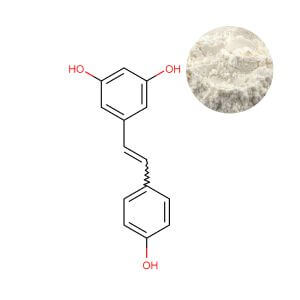
Resveratrol, a common synergistic active in longevity formulations, illustrates why simple physical blending is unreliable. Resveratrol-containing active blends report Carr indices spanning the passable to very poor range (approximately 23%-35% per USP <1174>), with the upper portion of that range indicating flow behavior that becomes increasingly difficult to fill uniformly without flow-aid or premix intervention.
When this active is considered for co-processing as resveratrol powder alongside spermidine trihydrochloride, both actives could be evaluated within a single premix architecture rather than chasing uniformity separately at the finished-blend stage - consolidating uniformity acceptance into a single intermediate criterion, subject to project-level feasibility testing.
From a commercial scale-up perspective, the aw and uniformity specifications defined in the premix architecture translate into plant-floor capital decisions - dehumidifier capacity, blender sizing, and filling station environmental controls must all be configured against those lab-derived parameters before a single production batch runs.
Scale-Up Controls: RH, Blending, and Capsule Filling
Scale-up control splits into three layers: the dispensing environment, mixing dynamics, and the filling station.
- Dispensing room RH is held at 40% or below, and open-container exposure is kept under 30 minutes.
- In model-drug V-shell studies, fill fractions of 22%-27% and rotation rates in the 9.5-32 rpm range have delivered RSD at or below 5% with all individual values within 90%-110%; for a hygroscopic low-dose active like spermidine trihydrochloride, these represent starting-point conditions to be re-validated against the actual blend's flow behavior, not fixed setpoints.
- Processing guidance for the 99% grade recommends RH at or below 30% to mitigate sticking and content uniformity risk; the exact control band should be verified against the specific formulation, equipment, and environment.
- HPMC capsule shells typically carry 4%-7% native moisture (grade-dependent) versus 13%-16% for gelatin; HPMC is the default choice for hygroscopic fills.
| Control Point | Setpoint | Engineering Meaning |
|---|---|---|
| Industry guidance: onset of rapid moisture uptake | RH 45%-50% | Rapid pickup and crystal bridging |
| Dispensing room RH ceiling | RH ≤ 40% | Open-container exposure under 30 minutes |
| Filling station RH control guidance | RH ≤ 30% | Mitigate sticking and CU risk |
| HPMC shell moisture (grade-dependent) | 4%-7% | Default for hygroscopic fills |
| Gelatin shell moisture | 13%-16% | Internal moisture source; unsuitable for hygroscopic fills |
Buyers evaluating premix grades can request batch CoA and technical data sheets available through the Oclean Nutra premix service, to verify whether aw limits and particle size distribution are controlled at the intermediate stage rather than only at raw-material batch release.
Quality Audit: What to Demand From a High-Performance Premix
Quality teams auditing a microencapsulated spermidine trihydrochloride premix should require the following data:
- Dissolution profile in the target medium, not just total assay;
- Water activity limits for the freeze-dried microcapsules, targeting below 0.30;
- Accelerated stability data at 40°C/75% RH for 6 months as an early signal, plus the supplier's actual long-term data (for example, 24-month assay retention) and corresponding acceptance criteria for the specific premix system;
- Carr index and Hausner ratio acceptance at production scale, not just lab scale.
These metrics separate a premix that genuinely protects shelf life from one that merely satisfies raw-material release.
Conclusion: Move the Problem to the Intermediate, Not the Mixer
Formulation failure in low-dose spermidine trihydrochloride capsules is a powder-engineering problem, not an efficacy problem. By front-loading uniformity and moisture control into a microencapsulated premix, formulators remove segregation and hygroscopicity from the finished blend and relocate them into an intermediate specification. For brands evaluating capsule or stick-pack projects, the rational next step is to request a dosage-specific pilot sample kit or schedule a technical consultation to review premix architecture matched to the target filling equipment and dosage form (Request a custom premix review).
Related Products
Products mentioned in this article
Related Articles
You might also be interested in

Spermidine 3HCl vs. Wheat Germ Extract: Selecting Forms for Heat Stability, Hygroscopicity, and Dosing Accuracy
Spermidine Trihydrochloride (99%) outperforms wheat germ extract in dosing accuracy and stability, but requires low humidity (RH ≤30%). Read our guide to audit supplier COAs and ensure smooth GMP scale-up.
Need Help With Your Formulation?
Tell us what you are working on. Our team can help with ingredient selection, technical specifications, samples, and supply options.